
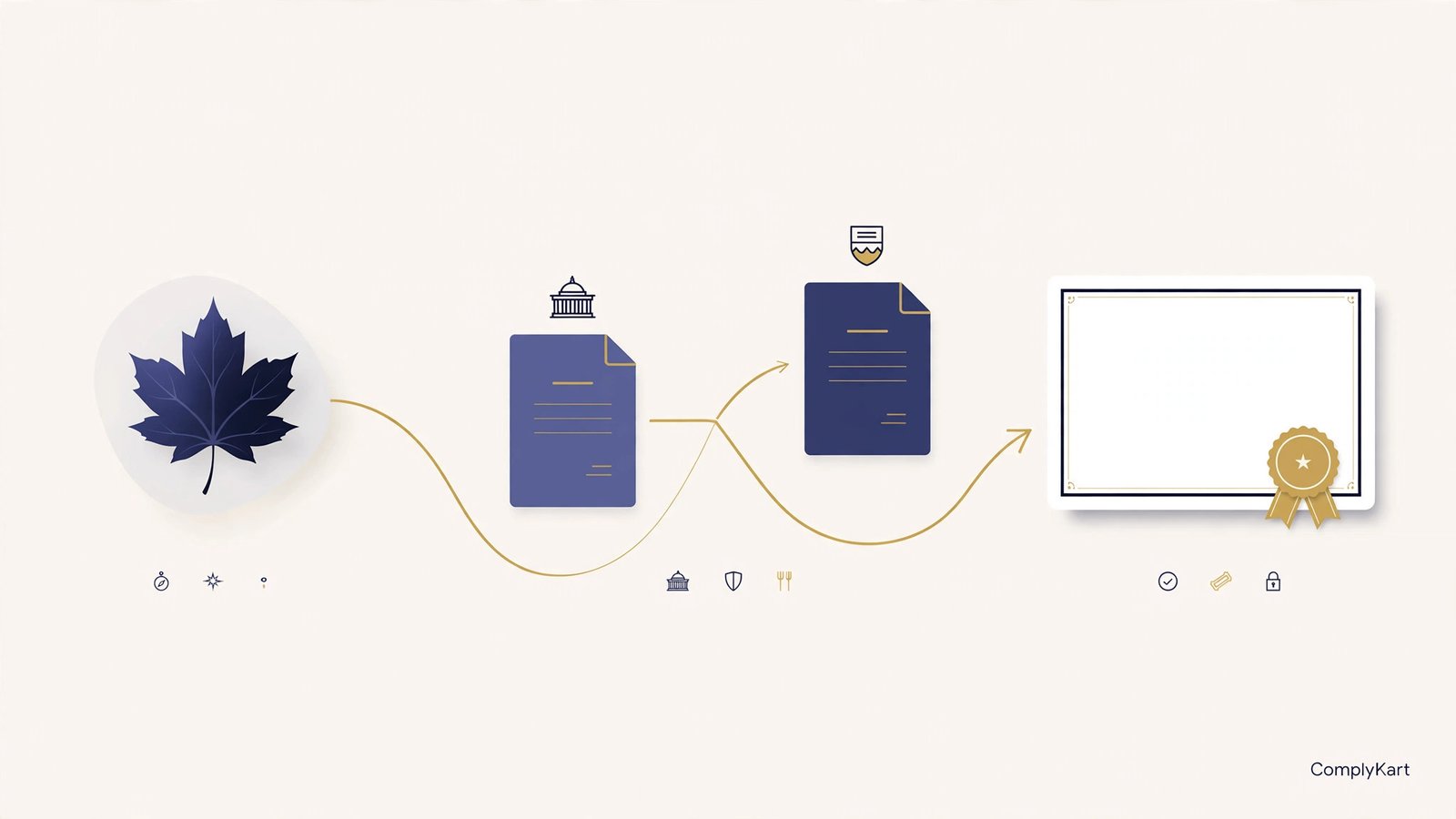
The short answer: Yes — an Indian founder can form a Canadian company with an all-Indian board, provided you incorporate in the right place. Ontario, BC, Alberta, Nova Scotia and Quebec have no director residency requirement; federal (CBCA) incorporation still requires 25% resident-Canadian directors, which is why most Indian founders choose Ontario.
Canada, minus the confusion
Canada attracts Indian founders for honest reasons: a stable legal system, a large diaspora, real North American market access, and an immigration system that wants entrepreneurs. But Canada does not have one company law — it has fourteen. Let me untangle the questions I hear most, starting with the biggest one.
Key takeaways
- Two doors: federal incorporation under the CBCA (national name protection) or provincial incorporation — Ontario's OBCA is the most common pick for Indian founders. Extra-provincial registration applies wherever you actually operate.
- The CBCA still generally requires 25% resident-Canadian directors; Ontario removed its residency requirement in July 2021, as have BC, Alberta, Nova Scotia and Quebec. Pick the province first and the director question often solves itself.
- Every corporation needs a CRA Business Number; GST/HST registration becomes mandatory once taxable supplies cross CAD 30,000 in a year.
- On the India side, FEMA's Overseas Investment Rules, 2022 apply: report through your Authorised Dealer bank, file the Annual Performance Report by 31 December each year, and note the USD 250,000 annual LRS cap on personal funding.
Federal or provincial — which incorporation do I pick?
You have two doors. Door one is federal incorporation under the Canada Business Corporations Act (CBCA), processed by Corporations Canada. A federal corporation gets name protection across the whole country and can operate in any province — though you still register in each province where you actually do business (called extra-provincial registration).
Door two is provincial incorporation — Ontario's Business Corporations Act is the most common choice for Indian founders, given Toronto's pull. A provincial corporation is simpler and cheaper to set up, but its name protection is provincial, and if you later operate in British Columbia or Alberta, you register extra-provincially there too.
The practical rule: operating mainly in one province, incorporate there; planning a genuinely national footprint from day one, go federal. Neither choice is permanent — continuance between jurisdictions is possible, though it involves its own filings.
Do I need a Canadian director? This is where it gets interesting.
Here is the nuance most articles get wrong. Federal incorporation under the CBCA still generally requires at least 25% of directors to be "resident Canadians" — at least one, if your board has fewer than four.
Ontario, however, removed its 25% residency requirement in July 2021. British Columbia, Alberta, Nova Scotia, and Quebec have no director residency requirements either. So an all-Indian board is entirely possible — you just incorporate in the right jurisdiction. This single distinction is why most Indian founders I work with choose Ontario or BC over federal incorporation. Pick the province first, and the director question often solves itself.
What does the CRA need from me?
Once incorporated, your company needs a Business Number from the Canada Revenue Agency — the company's nine-digit master tax identity, to which all tax accounts attach. Depending on activities, you open program accounts under it: corporate income tax, GST/HST (mandatory once taxable supplies cross CAD 30,000 a year), payroll if you hire, and import/export if you trade cross-border.
Do this early, not when the first invoice is due — CRA processing is not instant, and retroactive registration eats time you do not have.
How long does it take, and what does it cost?
Provincial incorporation in Ontario can be completed in a day or two once your name search (NUANS report) and documents are ready; federal takes a few business days. Government fees are modest — typically a few hundred Canadian dollars, though you should check current figures as they are revised periodically. Professional fees vary widely by provider; ask for the full first-year picture (incorporation, registered office, minute book, annual filings) rather than comparing headline incorporation prices.
One cost founders forget: the registered office. Your corporation needs a real address in its jurisdiction of incorporation for service of legal documents. If you have no Canadian address, your service provider supplies one — budget for it annually.
I want to move to Canada eventually — does the company help?
It can, through the Start-up Visa Program. This is a genuine immigration pathway, not a loophole: you need a qualifying innovative business, a letter of support from a designated Canadian organisation (a venture fund, angel group, or business incubator on the government's list), and you must meet language and settlement-fund requirements. The company you incorporate can be the vehicle — but the visa is granted to you on the strength of the business, not automatically because a corporation exists.
Be realistic about timelines: immigration processes are measured in months, sometimes well over a year. Incorporate the company for the business reasons, pursue the visa in parallel, and do not make business decisions that only make sense if the visa arrives on schedule.
What about taxes — will I pay twice?
Canada taxes corporations on worldwide income if they are resident in Canada (incorporation in Canada generally makes the company Canadian-resident). The combined federal-plus-provincial corporate rate varies by province — Ontario's is in the mid-twenties, so check the current combined rate for your province. The India–Canada tax treaty prevents the same income being fully taxed in both countries: it allocates taxing rights and provides relief mechanisms, typically through foreign tax credits on your Indian return for taxes paid in Canada.
Where founders stumble is not the treaty but the paperwork: transfer pricing between your Indian and Canadian entities, and the perennial question of where management and control actually sits. If every real decision is made in Mumbai but the company is "Canadian," both tax authorities may have opinions. Keep board minutes, keep them honest, keep them in the right country.
And the India side?
Same discipline as any foreign setup. Under FEMA's Overseas Investment Rules, 2022, your Canadian company is an Overseas Direct Investment: report it through your Authorised Dealer bank, file the Annual Performance Report each year by 31 December, and remember the USD 250,000 annual LRS cap on personal funding. The Canadian and Indian compliance calendars run on different clocks — diarise both.
Frequently asked questions
Federal or Ontario — which incorporation should I choose?
If you will operate mainly in one province, incorporate there — it is simpler, cheaper, and avoids the CBCA's 25% resident-Canadian director requirement. Choose federal incorporation only for a genuinely national footprint from day one, and budget for the director-residency rule that comes with it.
Do I need a Canadian address for the company?
Yes — every corporation needs a real registered-office address in its jurisdiction of incorporation for service of legal documents. With no Canadian address of your own, your service provider supplies one; budget for it as a recurring annual cost alongside the other first-year items.
What is a CRA Business Number?
It is the company's nine-digit master tax identity issued by the Canada Revenue Agency. Corporate income tax, GST/HST, payroll deductions, and import/export accounts all attach to it as program accounts. Apply early — registering for GST/HST retroactively is the kind of administrative headache that eats a week you do not have.
Can my Canadian company help me immigrate?
Potentially, through the Start-up Visa Program — but the visa is granted to you on the strength of a qualifying innovative business backed by a designated Canadian organisation, not automatically because a corporation exists. Be realistic: immigration timelines run to months, sometimes well over a year.
Will I be taxed twice on the same income?
No — the India–Canada tax treaty allocates taxing rights and provides relief mechanisms, typically through foreign tax credits on your Indian return for taxes paid in Canada. The real trap is not the treaty but the paperwork: transfer pricing between your entities and where management and control genuinely sits.
Canada rewards founders who do the paperwork properly and punishes no one for asking questions first. If you want the incorporation, the CRA registrations, and the India-side FEMA reporting handled as one coordinated job rather than three separate vendors, ComplyKart's team does exactly that — talk to us before you file anything.


Comments
No comments yet — ask the first question below.
Join the discussion
Questions go straight to our expert desk. Comments appear after a quick review — no spam, no noise.