Five steps, no guesswork — you always know exactly what comes next. Tap a step to see what it involves.
12345
You pay securely. Payment is confirmed instantly, and your receipt with the written fee breakup lands in your inbox.
Overview
A letter from the Copyright Office is not a rejection. It is the start of a conversation — and how you conduct that conversation decides whether your application becomes a registration certificate or dies in the file.
Every copyright application in India passes through scrutiny after the mandatory 30-day objection window. The examiner reads your Form XIV, checks the particulars against the work you submitted, and looks for anything that does not add up. When something needs clarification, the Office writes to you. That letter has different names depending on who is asking the question: a discrepancy letter when the examiner spots a problem in your own application, and an objection when a third party claims a competing interest in the work. The two look similar in your inbox but follow different tracks, and confusing them is the first mistake applicants make.
The key legal fact: an objection opens an inquiry; it does not decide your application. Rule 70(11) lets the Registrar hold such inquiry as deemed fit. The process exists to resolve doubt, not punish it — and Rule 70(12) requires the Registrar to give you a hearing before rejecting any application. Nobody can kill your application on paper alone.
That said, the process rewards prompt, precise, evidence-backed replies and punishes silence. Miss a deadline without explanation and the examiner infers you had no answer. A holding reply asking for time is always better than none.
This guide walks through both tracks — what each letter means, what the Office is really asking, how to structure your reply, what happens at the hearing, what it costs, and where the appeal lies if the decision goes against you.
The two different "objections" — know which one you received
Before drafting a single sentence, identify which track you are on. The reply strategy differs.
Track 1: Examiner discrepancy. After the 30-day window closes with no third-party objection, the examiner scrutinises the application. If particulars are incomplete, inconsistent, or raise questions, you get a discrepancy letter listing specific points — ownership mismatches, vague descriptions, wrong fee slabs, missing copies, defective POAs, unclear publication details. You reply in writing to each point. If the examiner is satisfied, registration proceeds; if not, a re-scrutiny letter follows, and then a hearing is fixed.
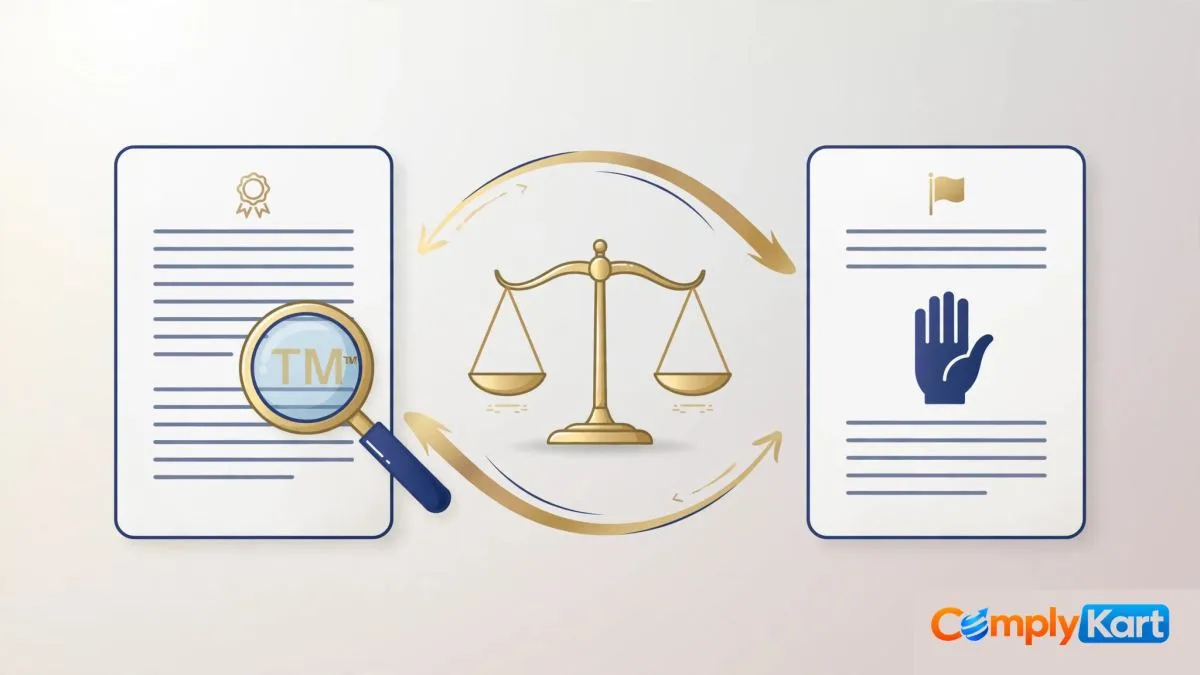
Track 2: Third-party objection. During the 30-day window after your diary number is issued, any person can object — typically claiming they own the work, that it infringes their earlier work, or that your particulars are false. The Registrar sends letters to both you and the objector. Both sides file their positions. Then the Registrar holds a hearing with both parties present and decides. If the objection is rejected and no discrepancy is found, your application proceeds. If the objection is rejected but a discrepancy surfaces, you get a discrepancy letter and the Track 1 process begins. If the objection is accepted, the application is rejected.
The practical difference: in Track 1 you are answering the Office's questions about your own filing; in Track 2 you are defending your claim against a rival. Track 1 replies are technical and documentary. Track 2 replies are adversarial and need a litigation mindset — evidence of authorship, priority of creation, and the weakness of the rival claim.
What must be decided before you reply
Read the letter twice. The first reading tells you the deadline and the general subject. The second reading — slower, with your application file open beside it — tells you exactly which particulars are under question. Examiners write in shorthand; "clarify ownership" can mean the assignment deed is missing, the employer's name does not match the applicant, or the statement of authorship contradicts the work itself. Do not guess which one. Match each query to the exact field in your Form XIV.
Pull your complete file. You need the application as filed, the diary number, every attachment, the fee receipt, the copies of the work submitted, and any correspondence so far. Most weak replies fail here — the applicant answers from memory instead of from the file, and contradicts something already on record.
Decide whether the particulars need correction or only explanation. Some discrepancies are pure clarification: the examiner misread something, or a detail needs spelling out. Others require you to correct the record — a wrong publication date, a misclassified work category, an incomplete statement of authorship. Corrections are fine and expected; the Rules contemplate the Registrar entering such particulars as considered necessary after inquiry. What you must not do is quietly rewrite history — backdating publication or inventing authorship details will surface at the hearing and destroy credibility.
Check the deadline and the extension position. There is no standing mechanism in the Rules for extending a reply deadline, and no express entitlement to extra time — though the Office has granted extensions by notice in the past. The only safe course: reply in writing before the date passes. If you genuinely need more time to gather documents, file a holding reply before the deadline — acknowledge the letter, state what you are arranging, and ask for a specified period. That puts your position on the file and shows diligence.
The most common grounds — and how each is answered
Ownership and chain of title. The most common discrepancy. Who created the work, and how did the applicant become its owner? Authors should support the claim with drafts, dated files, or publication records. Employee-created works need employment terms showing copyright vesting; freelancer-created works need a written assignment — Section 19 requires it, and an oral understanding will not satisfy the examiner. Bridge gaps with fresh confirmatory assignments.
Vague work description. The description should let a stranger identify the work: title, version, language, duration, contents. For software, the first and last ten pages of source code must correspond to the described program.
Publication particulars. Published or unpublished — and if published, when and where. Any inconsistency between the stated date and verifiable evidence (upload dates, ISBN records, app-store listings) draws a query. Align particulars with provable dates before replying.
Wrong fee slab. ₹500 per work for literary, dramatic, musical, and artistic works; ₹2,000 for sound recordings; ₹5,000 for films and software. Filing software at the literary rate triggers a fee query — pay the differential and say so.
Copies of the work. Two copies if unpublished, one if published, and they must match the described work. A trailer for a film application, or screenshots for a source-code application, creates a mismatch.
Authority to file. Agent-filed applications need a proper POA or vakalatnama. Unsigned, undated, or narrowly worded POAs are common and easily fixed.
Third-party ownership claims. The objector says the work is theirs or derived from theirs. Answer with priority evidence — dated creation records, earlier publication, development logs — and address their claim directly but factually. Bare denials carry no weight.
The objection reply process — step by step
Step 1 — Read the letter twice, then calendar the deadline
First pass for the deadline and subject; second pass with your filed application open, mapping each query to the exact Form XIV field. Put the deadline in your calendar with a reminder a week before — not on the day. If multiple letters have arrived (discrepancy plus re-scrutiny), sequence them by date.
Step 2 — Pull the complete file
Application as filed, diary number, all attachments, fee receipt, copies of the work, POA, and every prior communication. If you filed through a consultant, get the complete file from them now — not a summary. You cannot answer precisely without seeing exactly what the examiner saw.
Step 3 — Identify your track
Examiner discrepancy or third-party objection? If the letter lists queries about your particulars, you are on Track 1 — technical, documentary, fixable. If it forwards a rival's claim, you are on Track 2 — adversarial, evidence-heavy, heading for a contested hearing. The track determines the tone, the evidence, and whether you should involve counsel immediately.
Step 4 — Assemble the evidence
For each query, decide what proves the point: assignment deeds for ownership, dated drafts or version history for authorship, publication records for dates, corrected fee challans for slab errors, fresh POA for authority defects. Where the record needs correction, prepare the corrected particulars as formal annexures — not as casual explanations buried in a paragraph.
Step 5 — Draft the reply point by point
Mirror the letter's structure: quote or number each query, then answer it directly underneath with the evidence attached as numbered annexures. Lead with the strongest documentary proof, not with argument. Keep the tone respectful and factual — the examiner is not your opponent in Track 1. State what you are enclosing, and where a correction is offered, say so explicitly rather than hoping it passes unnoticed.
Step 6 — File the reply and get it on record
File through the proper channel and keep proof of filing — the acknowledgement, the postal receipt, the portal confirmation. If you are asking for time, that request must itself be in writing before the deadline passes. A phone call to the Office is not a filing.
Step 7 — Prepare for the hearing if one is fixed
If the examiner is not satisfied with the reply, or if a third-party objection is contested, the Registrar fixes a hearing. Rule 70(12) guarantees you this opportunity before any rejection. Prepare a brief: the queries, your answers, the annexures, and — for Track 2 — your attack on the rival claim. You must sign the papers yourself, but you do not have to argue alone: Rule 84 gives you the right of audience through a pleader or duly authorised person. Carry originals of every annexure.
Step 8 — After the order: registration, re-scrutiny, or appeal
Three outcomes. If the Registrar is satisfied, the application proceeds to registration and extracts are issued. If questions remain, you may face a re-scrutiny letter — treat it as seriously as the first, because patience is thinning. If the application is rejected, the order will state the reasons, and you have three months to appeal to the High Court under Section 72.
The hearing — what actually happens
Copyright hearings before the Registrar are administrative proceedings, not court trials — but treat them with court-level seriousness. Both sides (in Track 2) present their case; the Registrar asks questions. The single most persuasive thing you can bring is a coherent paper trail: creation records predating the dispute, a clean chain of title, publication evidence with verifiable dates.
The person who signs the application must be the applicant, but the person who argues need not be — engage counsel experienced before the Copyright Office. If you attend personally, answer only what is asked, refer to annexures by number, and do not volunteer facts absent from your written reply.
Timelines — what to realistically expect
A clean application with no queries typically completes in 2 to 6 months: diary number on filing, 30-day objection window, scrutiny, certificate. A discrepancy reply adds weeks to months depending on how quickly you respond and whether the reply satisfies the examiner at the first attempt. A re-scrutiny round adds another cycle. A contested third-party objection with a hearing commonly stretches the matter to 6 to 12 months from filing.
There is no official expedited track — no tatkal, no priority processing on payment of a higher fee. Anyone promising a fixed timeline for a contested matter is selling certainty the system does not offer. What you can control is your own speed: reply fast, reply completely, and never let a deadline pass in silence.
How ComplyKart helps in this entire process
Letter diagnosis. We read the discrepancy or objection letter against your filed application and tell you plainly which track you are on, what the examiner is really asking, and what evidence will answer it. No generic advice — a point-by-point diagnosis.
Evidence assembly. Ownership chains, assignment deeds, publication records, corrected particulars — we identify the gaps and help you close them before the reply goes out, rather than discovering them at the hearing.
Reply drafting. Structured replies that mirror the examiner's queries, with numbered annexures and precise references to the file. In Track 2 matters, we frame the defence against the rival claim with the evidence that actually moves a Registrar.
Hearing representation. Where a hearing is fixed, we brief and engage counsel experienced before the Copyright Office, prepare the brief with indexed annexures, and make sure originals are in the room.
Appeals. If the order goes against you, we assess the appeal to the High Court under Section 72 within the three-month window — honestly, including whether the order is worth challenging.
What we will not do: We will not file a reply that invents authorship, backdates publication, or manufactures evidence — a dishonest reply poisons the entire registration. We will not promise timelines the Copyright Office does not offer. And we will not advise you to ignore a third-party objection in the hope it goes away; uncontested objections get accepted.
If the application is rejected — the appeal
Rejection is not the end of the road, but the road changes character. Appeals against the Registrar's orders lie to the High Court under Section 72 of the Copyright Act, as substituted by the Tribunals Reforms Act, 2021. The appeal must be filed within three months of the order or decision, it is heard by a single Judge, and a further appeal lies to a Division Bench within three months.
Note for readers of older guides: references to the Copyright Board or the Intellectual Property Appellate Board are out of date. The appellate tribunal framework was abolished and jurisdiction moved to the High Court. Any adviser still citing the Board has not updated their knowledge since 2021 — ask them to confirm the current position before engaging them.
An appeal is a fresh legal proceeding with court fees, counsel, and timelines measured in months to years. Before filing, get an honest assessment: was the rejection based on a curable defect (in which case a fresh application with correct particulars may be cheaper and faster) or on a finding you genuinely dispute? Appeals make sense for the second category, rarely for the first.
Common mistakes and how to avoid them
Replying from memory instead of from the file. The examiner is looking at your filed application. If your reply contradicts it — even innocently — credibility is damaged. Always have the file open when drafting.
Answering only half the queries. A reply that addresses three of five points reads as an admission on the other two. Mirror every query, number your answers, and state explicitly if a point needs no action and why.
Treating a third-party objection as a formality. Some applicants assume objections are routine and file a cursory denial. If the objector shows up at the hearing with dated evidence and you show up with assertions, the Registrar's decision writes itself.
Missing the deadline in silence. The Rules create no standing right to an extension. A holding reply before the deadline preserves your position; silence after it invites rejection.
Filing a fresh application to dodge the objection. A second application for the same work while the first is under objection does not reset the clock — it creates two files with inconsistent histories and hands the objector more ammunition.
FAQ
Frequently asked questions
20 answers from our consultants.
You pay for our expert's time — document checking, filing, follow-ups — not the government. The government fee goes to the government; our fee is for the work we do so you don't have to figure it out yourself.
A written query from the Copyright Office examiner, raised during scrutiny after the 30-day objection window closes. It lists specific points — ownership, work description, fee slab, publication details, missing documents — that need clarification before registration can proceed. Your written reply, with supporting evidence, decides whether the application moves forward, faces a second scrutiny round, or is fixed for hearing.
The letter states a deadline — treat it as firm. The Rules create no standing right to an extension, though the Office has granted time by notice in the past. If you cannot file a complete reply in time, send a written holding reply before the deadline: acknowledge the letter, state what you are arranging, and ask for a specific period. Never let the date pass in silence.
There is no express entitlement under the Rules. The safe course is to reply in writing before the deadline passes — even a holding reply asking for time puts your diligence on record. A request made after the deadline has expired carries very little weight.
Not legally required, but strongly advisable beyond simple clerical clarifications. You must sign the papers yourself, but Rule 84 lets a pleader or authorised person argue the hearing for you. For third-party objections especially, counsel experienced before the Copyright Office knows how Registrars weigh evidence.
The Registrar hears the matter — in third-party objections, both sides present their cases and answer questions. It is administrative, not a court trial, but it decides your application. Bring originals of every annexed document and an indexed brief. Rule 70(12) guarantees this hearing before any rejection.
The examiner proceeds on the record as it stands. Unanswered queries are treated as unanswerable, and the application will typically go to hearing and then be rejected. A holding reply asking for time costs nothing and preserves everything — silence is the one response with no upside.
Yes — within the 30-day window after your diary number issues, any person may object, usually claiming ownership or prior creation. The Registrar notifies both sides and holds a hearing. Frivolous objections are rejected, but a serious one with dated evidence must be met with equally serious evidence of your own priority.
Dated proof of creation predating the rival claim: version-controlled files, dated drafts, publication with verifiable timestamps, and a clean chain of title through written assignments. Bare denials without documents carry no weight at the hearing.
A well-answered discrepancy can clear within weeks of filing the reply. A re-scrutiny round adds another cycle. A contested third-party objection with a hearing commonly takes 6 to 12 months from filing to final order. There is no expedited track — your own response speed is the variable you control.
Ownership and chain-of-title gaps (missing freelancer assignments, employer mismatches) top the list. Then vague work descriptions, publication-date inconsistencies, wrong fee slabs, mismatched copies of the work, and defective powers of attorney. Nearly all are fixable with documents if answered honestly and completely.
If the rejection was for a curable defect — wrong category, defective POA, thin particulars — a fresh, correct application may be faster and cheaper than an appeal. But if it followed a contested third-party objection, refiling the same work just creates a second file with the same dispute. Get advice on which route fits before refiling.
To the High Court under Section 72, as substituted by the Tribunals Reforms Act, 2021 — within three months of the order, heard by a single Judge, with a further appeal to a Division Bench within three months. References to the Copyright Board or IPAB in older guides are outdated.
For clerical matters, yes — Rule 71(1) allows amendment of Section 49 entries on Form XV, after an opportunity to show cause wherever practicable. Substantive disputes about wrongly made or omitted entries go to the High Court under Section 50.
A second round of queries when the examiner is not satisfied with your first reply. Treat it as a warning light — patience is thinning and a hearing is likely next. Answer it more precisely than the first, close every remaining gap, and consider counsel before it escalates.
No. Copyright exists from creation, with or without registration — the objection challenges your application, not the underlying right. Even after rejection you still own the copyright; you simply lack the certificate's evidential advantages and must prove authorship from scratch in any dispute.
Mirror the letter — number each query, answer directly beneath it, lead with documentary proof, attach everything as numbered annexures, and state explicitly where you are correcting the record. Keep it factual and respectful. Save legal advocacy for hearings and Track 2 matters.
The structured third-party route is 30 days from the diary number. After that, scrutiny takes over — but the Registrar's general inquiry powers under Rule 70(11) allow serious complaints to be examined whenever they surface. The window is the main route, not the only one.
No separate government fee for filing a reply — the cost is professional time for diagnosis, evidence, drafting, and any hearing. Fee-slab corrections mean paying the duty differential. High Court appeals involve court fees and counsel. Delay, and replies that fail twice, are what make it expensive.
In third-party proceedings, yes — positions are exchanged and argued before the Registrar, so draft assuming the rival reads every word. In pure discrepancy matters there is no third party, and your reply goes only to the examiner.
What clients say about working with us
Real stories from businesses we've worked with.
Trademark Registration“
Our Trademark was applied in all the classes with a short span of time by Complykart Trademark Experts and I can say the level of expertise and commitment they carry is remarkable. It's an A+ from my side. We are now sticking to ComplyKart only.
Company Registration“
I found the professionalism of the staff at complykart.com, a pleasure to work with. As a foreigner to India, they took the time to explain the documentation and assisted in every question I raised. I was pleased that complykart.com made it easy for my Business.
Merger & Acquisition“
Trust, Commitment, Dedication and responsiveness are the best things with ComplyKart. Thanks for handling our Merger assignment with so much care. After my business disputes, complykart handles all things with own sense of understanding.
Senior Consultant · ESOP, Trademark & General Advisory · 14+ years experience
Pankaj Jain is a senior consultant covering ESOP structuring, trademark and IP protection, accounting advisory and legal documentation. With the broadest practice at the firm, he handles the matters that don’t fit neatly in one box.
Last reviewed: 16 November 2026
Get a free consultation
Talk to a ComplyKart professional about Copyright Objection. The first consultation is free.