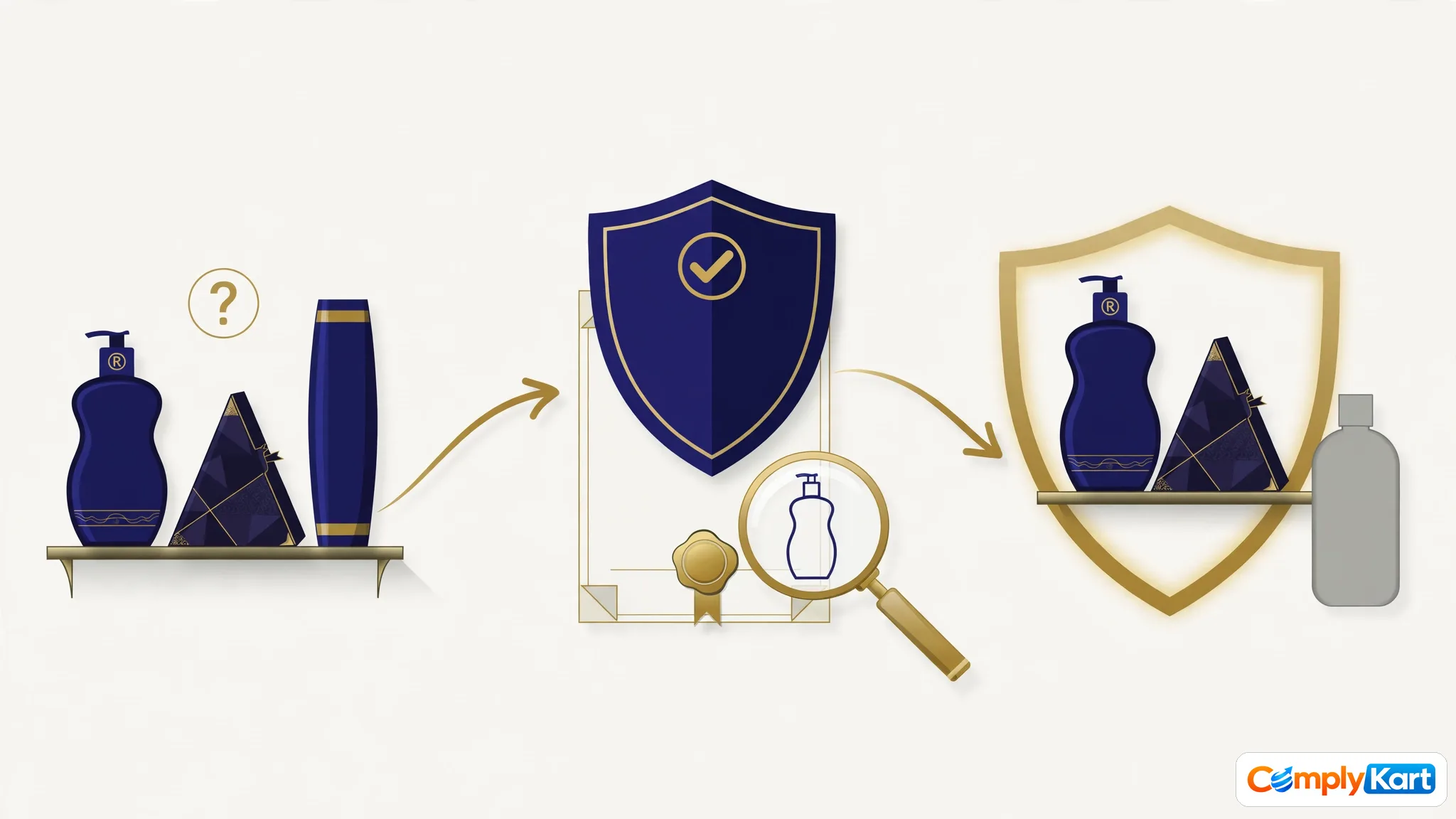
If our experts find your requirement can't be fulfilled as scoped, you get a full refund of the professional fee — no questions, no fine print. Government charges already paid are pass-through and go to the government, not us.
Written breakup before you pay
Every quote shows the professional fee, government charges and taxes as separate lines — you approve the full breakup in writing before paying anything.
Government charges are pass-through
Filing fees and department charges go to the government, not to us. They vary by state and case, so we show them separately for your situation.
No payment without your sign-off
The free consultation comes first. You only pay after you have seen the exact scope, the exact breakup and the expected timeline — no surprises later.
1
Free consultation. Tell us what you need; a CA, CS or advocate maps the exact scope.
2
Written quote. You receive the plan, the line-by-line breakup and the timeline in writing.
3
You approve, then pay. Work starts only after you sign off on the quote.
Design Registration Package Inclusions
Design novelty search
Representation sheets preparation (7 views)
Form 1, 2 filing with the Design Office
Examination reply support
Registration certificate (10+5 years)
Clear scope
You know exactly which filings, documents and handover items belong to your selected plan.
Extra costs shown separately
State-specific and case-specific government charges are shown separately.
No blind upgrade
Choose the tier around the way you plan to operate, not simply the highest price.
After you pay
What happens after you pay
Five steps, no guesswork — you always know exactly what comes next. Tap a step to see what it involves.
12345
You pay securely. Payment is confirmed instantly, and your receipt with the written fee breakup lands in your inbox.
Overview
Every product has two kinds of value: what it does and how it looks. Patent law protects the first. Design law protects the second. When a customer picks your bottle off a shelf because of its silhouette, chooses your chair because of its curve, or recognises your phone case from its pattern — that visual appeal is a commercial asset. Design registration is how the law lets you own it.
Under the Designs Act, 2000, a "design" means the features of shape, configuration, pattern, ornament, or composition of lines or colours applied to an article — whether two-dimensional, three-dimensional, or both — by any industrial process or means. The definition in Section 2(d) is precise about what counts and, just as importantly, what does not: it excludes any mode or principle of construction, any mere mechanical device, trademarks and property marks as defined in the trade mark law, and artistic works as defined in the Copyright Act.
Registration gives the proprietor the exclusive right to apply the design to the article in the class in which it is registered. In practical terms: nobody else can make, sell, or import articles bearing your registered design (or a fraudulent or obvious imitation of it) without your licence. Section 22 makes infringement actionable, with the infringer liable to pay up to ₹25,000 per offence, capped at ₹50,000 per design, recoverable as a contract debt.
The system runs on a first-to-file basis. If two people independently create similar designs, the one who files first wins the registration. There is no grace period for public disclosure in India — unlike some jurisdictions, India does not forgive a pre-filing reveal. Show the product at a trade fair, post it on Instagram, launch a crowdfunding page, and the novelty is gone. The examination will find the publication and refuse the application.
The authority is the Controller General of Patents, Designs and Trade Marks (CGPDTM), operating through the Patent Office. Design applications are filed at the head office in Kolkata or the branch offices in New Delhi, Mumbai, and Chennai. Branch filings are transmitted to Kolkata for processing and prosecution. Everything centres on Form 1 — the application for registration of a design — accompanied by representation sheets showing the article from every relevant angle.
Designs are classified under the Locarno Classification, the international system for industrial designs. You file in the class that matches your article — and the exclusive right you get is confined to that class. The fee is refreshingly simple compared to trademarks: ₹1,000 for a natural person, ₹4,000 for applicants other than natural persons, per application. Protection runs 10 years from the date of registration, extendable once for a further 5 years — 15 years total, then the design enters the public domain permanently.
Is design registration the right move for your business?
If the way your product looks influences buying decisions, the answer is usually yes — and the filing cost is among the lowest in the IP system. But design registration is a precision tool, not a blanket. Here is how to assess it.
You should register if:
Your product's appearance drives sales — consumer goods, furniture, lighting, packaging, jewellery, textiles, phone accessories, automotive parts, fashion items. If a competitor copying your look would steal customers, register the look.
You are about to launch, exhibit, or publicise the product. Filing before any public disclosure is not just advisable — it is essential, because disclosure kills novelty.
You manufacture at scale. The Section 15 trap (explained below) means unregistered designs lose even copyright protection once applied to more than 50 articles industrially. Mass production without design registration is legally naked.
You license designs to manufacturers. A registered design is a licensable asset with a certificate, a number, and a defined term — everything a licence agreement needs.
You export. Buyers and distributors in design-sensitive markets expect registered rights, and an Indian registration supports priority claims abroad within the 6-month convention window.
You can reasonably skip it if:
The appearance is purely functional — the shape exists only because the product would not work otherwise. Functional features are not registrable as designs (and may be patentable instead if technically novel).
The design is a minor workshop variation — a trivial tweak to an existing article with no real visual distinction. The examiner will reject it as not new or original.
The product lifecycle is shorter than the registration timeline. If your fashion item lives for one season, a 6-to-12-month registration process may not pay off — though the filing itself creates a priority date.
What you really want to protect is the brand (trademark) or the creative artwork (copyright), not the product's shape. Use the right tool.
What registration does not do:
It does not protect how the product works — that is patent territory. It does not protect the brand name on the product — that is trademark. It does not give rights outside India. It does not stop independent creation of a similar-looking product that is not a copy or obvious imitation (though in practice, similarity plus access is hard to explain away). And after 15 years, the protection ends permanently — unlike trademarks, designs cannot be renewed indefinitely.
What must be decided before filing
Six decisions, made carefully, separate smooth registrations from refused ones.
1. Is it actually a "design" under Section 2(d)?
Run your product through the definition's exclusions before spending anything. Is the feature you want to protect visual or functional? A bottle's distinctive fluted shape is visual. Its airtight seal mechanism is functional — not a design. Is it a trademark or property mark? Logos applied as brand identifiers belong in trademark filings. Is it an artistic work under the Copyright Act — a painting, a sculpture as art? The Designs Act expressly excludes those.
The hardest cases are the hybrids: a textile pattern (design), a chair (design for appearance, patent for a novel reclining mechanism), a phone (design for the casing shape, patent for the antenna layout). When in doubt, protect both aspects separately.
2. Is it new and original?
Novelty is judged globally and absolutely. The design must not have been previously registered in India, published in India or elsewhere before the filing date, or disclosed to the public in any way. "Original" means originating from the author — not copied — and significantly distinguishable from known designs.
Do a clearance search before filing. The Patent Office maintains a design database; professional searchers also check international registers, e-commerce listings, and trade publications. A search costs far less than a refused application.
3. Which Locarno class?
The Locarno Classification divides industrial designs into 32 classes (plus sub-classes). Your application must specify the class matching the article — Class 6 for furniture, Class 9 for packaging, Class 12 for transport, Class 14 for electronics, and so on. The exclusive right is class-bound: registration for a chair design does not stop someone applying a similar pattern to a textile.
One application covers one design in one class. If the same visual concept spans multiple product categories, you need multiple filings.
4. What the representation sheets will show
The application lives or dies on its representation sheets: photographs, line drawings, or computer graphics of the article from every angle that shows the design — perspective, front, rear, top, bottom, left side, right side. Seven views is the standard preparation.
The sheets must be on white A4 paper of durable quality (for physical filing), one side only, with each sheet numbered, each view named, a statement of novelty identifying exactly which features are claimed as new, any necessary disclaimers (for portions not claimed), and the applicant's or agent's signature and date. For e-filing, the same content is uploaded digitally — but the formal requirements do not relax.
The statement of novelty deserves special care. It defines the scope of your monopoly. Claim too broadly and the examiner finds prior art; claim too narrowly and competitors design around you with trivial changes.
5. Who the applicant is — and the fee slab
A natural person pays ₹1,000. Any other applicant — company, LLP, firm, institution — pays ₹4,000. If a natural person's application is later transferred to a company, the fee difference must be paid with the transfer request. Get the applicant identity right at filing to avoid the top-up paperwork later.
6. Priority claims — are you filing abroad?
If you plan to seek protection in other countries, India is a Paris Convention member: you can claim the Indian filing date as your priority date abroad if you file in the convention country within 6 months. Decide the international strategy before the Indian filing, because the priority clock starts on the Indian filing date and does not wait.
Advantages of design registration
Exclusive commercial control of the product's appearance
Registration confers the exclusive right to apply the design to the article in its class. Competitors cannot legally produce, sell, or import articles carrying your design or a fraudulent or obvious imitation. For design-driven businesses, this is the difference between owning a market position and watching it erode.
Enforceable against copycats
Section 22 gives you a direct infringement action. The infringer faces payment of up to ₹25,000 per offence, capped at ₹50,000 per design — plus injunctions to stop the copying. The certificate shifts the dynamic of every enforcement conversation from "prove it's yours" to "here is the registration number."
First-to-file certainty
Design rights go to the first filer, not the first creator. Registration converts your design from a vulnerable secret into a dated, numbered, government-certified priority claim. In a dispute between two claimants, the register settles it.
Licensing and assignment revenue
A registered design can be licensed to manufacturers or assigned outright, with the transaction recorded. For design studios, independent creators, and product companies, the registered design is a revenue-generating asset — not just a defensive shield.
Customs and marketplace enforcement
Registered designs support border enforcement against infringing imports and takedown actions on e-commerce platforms. A registration certificate attached to a complaint moves it from assertion to documentation.
The Section 15 trap — avoided
This is the advantage nobody tells you about until it is too late. Under Section 15 of the Copyright Act, if your design could have been registered under the Designs Act but was not, copyright protection ceases once the design is applied to more than 50 articles by an industrial process. Design registration is the only way to keep protection alive for mass-produced articles. Skip registration, scale production past 50 units, and you may have no IP protection at all.
Investor and acquirer confidence
Registered designs appear in IP audits and due diligence as verified intangible assets with defined terms and clear ownership. For product companies raising capital or preparing for acquisition, a portfolio of registered designs is diligence-ready in a way that unregistered claims never are.
Documents and information required
For the Form 1 application:
Applicant details — full name, nationality, address, and address for service in India. For companies: incorporation details and the authorised signatory.
Article identification — the name of the article to which the design is applied, and its Locarno class number.
Representation sheets — four sets (for physical filing) of A4 sheets with photographs, drawings, or computer graphics from all relevant angles. Each sheet: sheet number, view names, statement of novelty, disclaimers if any, signature, and date.
Statement of novelty — identifying the specific features claimed as new and original.
If filing through an agent:
Power of attorney — authorising the agent to file and prosecute the application.
If claiming convention priority:
Priority document — certified copy of the foreign application, filed within the 6-month priority window, with an English translation if the original is in another language.
Fee payment — ₹1,000 (natural person) or ₹4,000 (other applicants), payable with Form 1.
Addresses must be accurate: if the applicant's address changes before registration, a fresh Form 1 with the new address and fee is required. After registration, address changes go on Form 22.
Design registration process — step by step
Step 1: Clearance search
Before drafting anything, search the Indian design register and relevant international sources for identical or similar designs. A professional search covers the Patent Office database, Locarno-class-specific listings, and commercial sources. If a conflicting design surfaces, you redesign now — not after paying the fee.
Step 2: Prepare representation sheets
Produce the seven standard views (perspective, front, rear, top, bottom, left, right) as photographs, line drawings, or computer graphics. Draft the statement of novelty with precision — it defines your monopoly. Add disclaimers for any non-claimed portions (mechanical features, text matter, trademarks visible in the views).
Step 3: File Form 1
File at the Patent Office — head office Kolkata, or branches at New Delhi, Mumbai, Chennai. Branch filings are transmitted to Kolkata for examination. The application gets a filing number and filing date on receipt, with a filing receipt issued to the applicant or agent. For convention applications, include the priority document.
Step 4: Formality check
The Designs Office checks that the application is complete: correct form, correct fee, representation sheets in order, applicant details valid. Defects are communicated to the applicant. Applications with non-compliant representation sheets are not accepted — the formal requirements are enforced strictly.
Step 5: Substantive examination
The examiner assesses novelty and originality: Is the design new? Is it significantly distinguishable from known designs? Does it fall within the Section 2(d) definition, or hit an exclusion? Is the classification correct? Objections are communicated, and the applicant responds with arguments, amendments to the statement of novelty, or additional views.
Step 6: Registration and certificate
Once the application is found in order, it is accepted and the Designs Office issues the registration certificate. The serial number assigned at filing becomes the registered design number. The registration is entered in the Register of Designs, maintained at the Patent Office, Kolkata — open to public inspection on payment of the prescribed fee.
Step 7: Marking (recommended)
While not strictly mandatory, marking articles with the registered design number (or "Registered Design No. XXXXX") puts infringers on notice and strengthens enforcement. It removes the "we didn't know" defence.
How long does it take?
Filing to filing receipt: Immediate on submission — the Designs Office issues the filing number and date at once.
Formality check: 1 to 3 months.
Substantive examination: 3 to 9 months, depending on pendency and whether objections are raised. Straightforward applications with clean representation sheets move faster; novelty disputes slow things down.
Certificate: Typically 6 to 12 months from filing for an unopposed, unobjectionable application. There is no opposition procedure in design law comparable to trademarks — no journal, no 4-month opposition window — which is why the timeline is shorter.
Total realistic range: 6 to 12 months, barring complications.
Government fees — the complete table
Per the First Schedule of the Designs Rules, 2001 (as substituted by the Designs (Amendment) Rules, 2013):
Matter
Form
Natural person
Other than natural person
Application for registration of design
Form 1
₹1,000
₹4,000
Extension of copyright (second 5-year term)
Form 3
₹2,000
₹8,000
Restoration of lapsed design
Form 4
₹1,000
₹4,000
Additional fee on restoration (if allowed)
—
₹1,000
₹4,000
Petition for cancellation of design
Form 8
₹1,500
₹6,000
Inspection of registered design
Form 5
₹500
₹2,000
The two-slab structure (natural person vs. others) is the verified position under the 2013 amendment schedule. Some practitioner sources describe a small-entity/startup slab — this could not be verified against the gazette schedule and is marked accordingly below.
How ComplyKart helps in this entire process
Registrability assessment first. We run your product through the Section 2(d) definition and the novelty requirement before you spend a rupee — visual vs. functional, prior art, classification. If it is not registrable as a design, we tell you what is (patent? trademark? copyright?) rather than filing a doomed application.
Clearance search. Professional search of the Indian register and international sources in your Locarno class, with an honest opinion on registrability — not a rubber stamp.
Representation sheets and statement of novelty. The most technically demanding part of the filing. We prepare compliant sheets from your CAD files, photographs, or prototypes, and draft the novelty statement to claim the right scope — broad enough to matter, narrow enough to survive examination.
Form 1 filing and prosecution. Filing at the appropriate Patent Office, tracking the application, responding to examiner objections, and seeing it through to certificate.
Post-registration management. Extension diary (the 10-year deadline), licensing documentation, assignment recordals, and infringement support.
What we will not do: We will not file a design you have already disclosed publicly without warning you that novelty is likely destroyed. We will not draft an overbroad novelty statement that invites refusal. And we will not promise that registration alone stops determined infringers — enforcement is a separate exercise, and we will tell you what it involves.
What happens after the certificate arrives
The registration is entered in the Register of Designs at Kolkata, with your design number, filing date, proprietor details, and classification. The register is open to public inspection — your competitors can see it, which is partly the point.
Mark your articles. Add the registered design number to the product, packaging, or documentation. It is notice to the world and strengthens any future infringement claim.
License or assign deliberately. If manufacturers will produce the article, put the design licence in writing — scope, territory, term, royalties, quality control. Record assignments with the Designs Office so the register reflects true ownership.
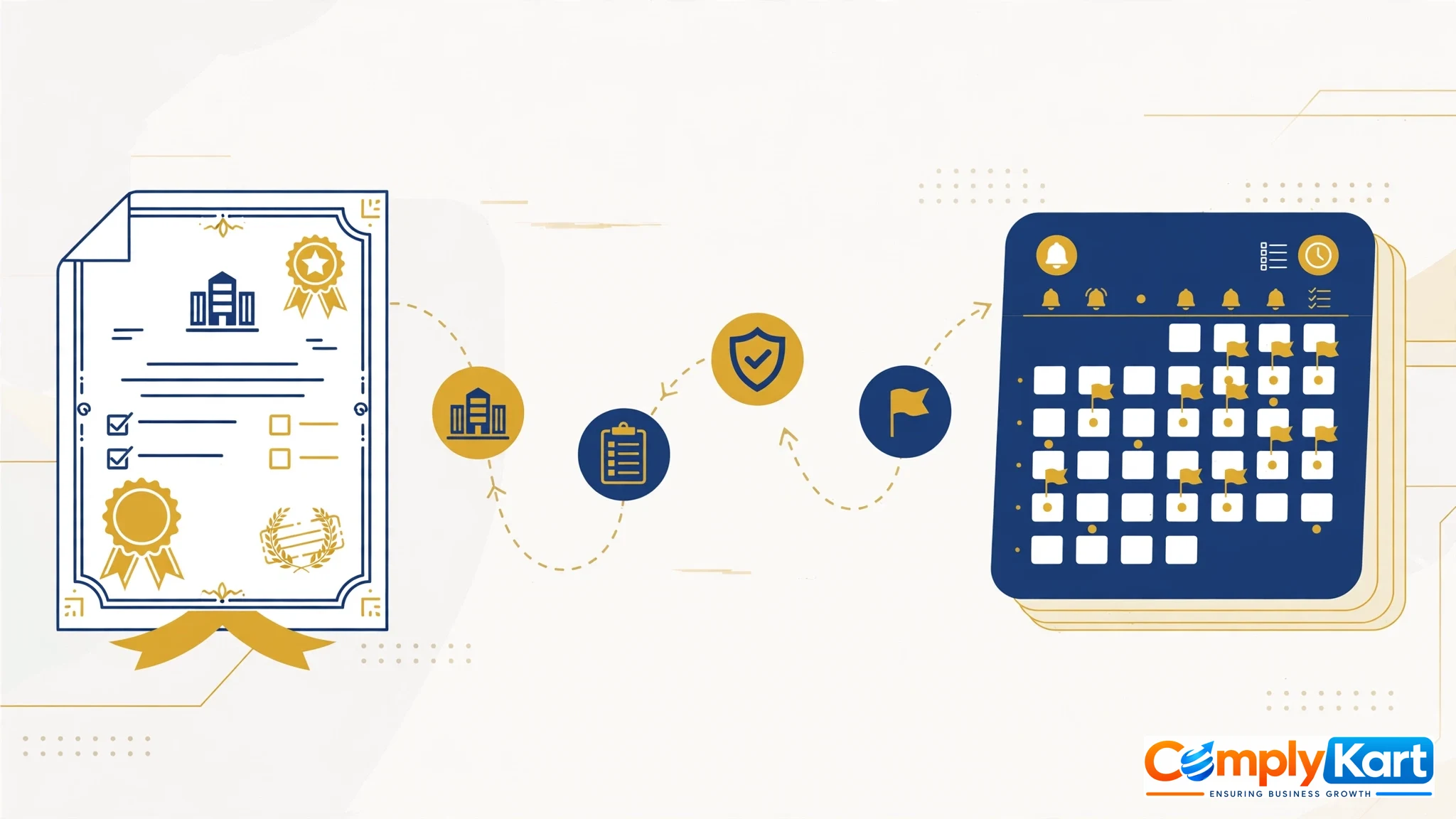
Calendar the extension. The initial 10-year term runs from the date of registration. The extension application (Form 3, with fee) must be filed before the 10 years expire. Set the diary entry now — restoration after lapse is possible within a year, but it costs extra and creates a gap in protection.
Watch the market. Registration does not self-enforce. Monitor competitors, trade fairs, and e-commerce listings for imitations. The proprietor's duty to police infringement is real — courts have limited sympathy for owners who sleep on their rights.
Recurring obligations and the 15-year lifecycle
Design registration is refreshingly low-maintenance compared to other IP — but it is not zero-maintenance:
Year 10: extension decision. Apply on Form 3 with the extension fee (₹2,000 / ₹8,000) before the initial term expires. This is the single most important deadline in the design's life. Miss it and the design lapses.
If lapsed: restoration within 1 year. File Form 4 with the restoration fee (₹1,000 / ₹4,000). If allowed, pay the additional fee (₹1,000 / ₹4,000) plus the pending extension fee. Restoration is discretionary — the Controller must be satisfied the lapse was unintentional.
Record ownership changes. Assignments, licences, and address changes should be recorded (Form 22 for address changes post-registration) so the register stays accurate.
Year 15: expiry. After the extended term, the design enters the public domain permanently. There is no further renewal. Plan product lifecycle and successor designs accordingly.
The Section 15 trap — read this before you decide
This deserves its own section because it destroys more IP value than any other single provision in Indian design law.
Section 15 of the Copyright Act, 1957 says: where a design that could be registered under the Designs Act is not registered, copyright in that design ceases as soon as the article to which the design has been applied has been reproduced more than fifty times by an industrial process.
In plain terms: you design a beautiful lamp. You do not register the design. You manufacture 51 lamps. Your copyright protection — the only IP right you had — evaporates. Not for the 51st lamp. For the design entirely.
If the design IS registered under the Designs Act, copyright does not subsist in it at all (Section 15(1)) — but you have the design registration instead, which is stronger for industrial articles anyway.
The practical rule: if you will manufacture more than 50 units of a designed article, register the design. Copyright alone will not save you. This is the single most common IP mistake among Indian product startups, and it is irreversible once the 50th unit ships.
Common mistakes and how to avoid them
Disclosing before filing. The trade fair, the Instagram launch, the crowdfunding campaign, the investor deck shared widely — any public disclosure before the filing date can destroy novelty. India has no grace period. File first, reveal later. No exceptions worth relying on.
Filing the functional instead of the visual. Trying to register a mechanism, a principle of construction, or a purely functional shape. The examiner will reject it under the Section 2(d) exclusions. Protect function with patents, appearance with designs.
Weak representation sheets. Blurry photographs, missing views, no statement of novelty, or sheets that do not comply with the formal requirements. The Designs Office rejects non-compliant sheets outright — the application does not even reach substantive examination.
Wrong Locarno class. Filing a furniture design in the wrong class, or assuming one filing covers the design across product categories. The monopoly is class-bound. Multi-category protection needs multi-class filing.
Ignoring the 50-article rule. Manufacturing at scale on unregistered-design copyright and discovering, during an infringement dispute, that Section 15 wiped out the right at unit 51.
Missing the 10-year extension. Treating the certificate as permanent. The extension deadline is the design's most important date after filing — diary it the day the certificate arrives.
Assuming Indian registration protects abroad. It does not. Each country needs its own filing (or a Hague System application). Use the 6-month Paris Convention priority window from your Indian filing date.
Overlapping with trademark. Trying to register a logo or brand identifier as a design. The Designs Act excludes trademarks. File the brand as a trademark; file the product shape as a design.
A well-protected product often carries several: the mechanism gets a patent, the shape gets design registration, the marketing gets copyright, the brand gets trademark. That layered portfolio is what makes copying commercially pointless.
Designs Rules, 2001 — as amended by the Designs (Amendment) Rules, 2013 (fee schedule, First Schedule)
First Schedule fee table: verified against the gazette notification PDF hosted on ipindia.gov.in (Entry 1: Form 1, ₹1,000 / ₹4,000; Entry 3: Form 3 extension, ₹2,000 / ₹8,000; Entry 9: Form 8 cancellation, ₹1,500 / ₹6,000)
Patent Office: head office Kolkata; branch offices New Delhi, Mumbai, Chennai
Locarno Classification (WIPO) — international classification of industrial designs
*Procedures and fee slabs verified as of the drafting date against the gazette schedule and Patent Office practice. The Designs Office occasionally updates e-filing workflows — check ipindia.gov.in for the current filing interface.*
FAQ
Frequently asked questions
19 answers from our consultants.
You pay for our expert's time — document checking, filing, follow-ups — not the government. The government fee goes to the government; our fee is for the work we do so you don't have to figure it out yourself.
The visual features of an article — its shape, configuration, pattern, ornament, or composition of lines or colours — applied by any industrial process. Think: the shape of a bottle, the pattern on a textile, the ornament on jewellery, the configuration of a lamp. What you cannot register: functional features, principles of construction, mechanical devices, trademarks, and artistic works as defined in copyright law.
10 years from the date of registration, extendable once for a further 5 years — 15 years maximum. The extension must be applied for before the initial 10-year term expires. After 15 years, the design enters the public domain permanently; unlike trademarks, there is no indefinite renewal.
Typically 6 to 12 months from filing to certificate for a straightforward application. Design prosecution is faster than trademarks because there is no journal advertisement or opposition procedure — just formality check and substantive examination for novelty and originality.
Almost certainly not. India has no grace period for pre-filing disclosure. Any public disclosure — trade fairs, social media, crowdfunding, press coverage — before the filing date destroys novelty, and the examiner can cite it to refuse the application. This is the strictest novelty rule among the major IP rights in India. File first, reveal later.
A design protects how a product looks; a patent protects how it works. The curved shape of a kettle is design territory. A novel heating element inside it is patent territory. The same product can — and often should — carry both. Design examination tests visual novelty; patent examination tests technical novelty, inventive step, and industrial applicability.
An Indian registration protects only India. For other countries, file separately in each jurisdiction or use the Hague System for international design registration (where available for your target markets). As a Paris Convention member, India gives you a 6-month priority window: file abroad within 6 months of your Indian filing date and you keep the Indian date as your priority.
The international classification system for industrial designs, with 32 classes covering everything from foodstuffs to furniture to electronics. Your application must specify the class matching your article, and your exclusive right is confined to that class. Correct classification matters — file in the wrong class and the registration may not cover your actual product.
The design lapses. You can apply for restoration on Form 4 within one year of the lapse, paying the restoration fee — but restoration is discretionary, not automatic. The Controller must be satisfied the failure was unintentional. Even if restored, there is a gap in protection. Diary the extension deadline the day your certificate arrives.
Sue for infringement under Section 22. Remedies include injunctions to stop the copying and payment of up to ₹25,000 per offence, capped at ₹50,000 per design. Start with a cease-and-desist citing your registration number — many disputes settle here. For systematic copying, file the infringement suit and consider parallel complaints to e-commerce platforms and customs.
Yes. Registered designs are licensable and assignable assets. Put the licence in writing — scope (which articles, which territory), term, royalties, quality control, and whether it is exclusive. Record assignments with the Designs Office so the register reflects the true proprietor.
Section 15(2) of the Copyright Act: if your design could have been registered under the Designs Act but was not, copyright in it ceases once the design has been applied to more than 50 articles by an industrial process. Manufacture 51 units of an unregistered design and you may have no IP protection left at all. This is why product companies must register designs before scaling production.
They protect different things, but one product can carry both: the bottle's shape gets design registration, the brand name on it gets trademark registration. What you cannot do is register a trademark (a logo, a brand identifier) as a design — the Designs Act expressly excludes trademarks and property marks from the definition of "design."
No. You need representation sheets — drawings, photographs, or computer graphics showing the design applied to the article. CAD renders are routinely accepted. The design must be capable of being applied to the article by an industrial process, but the article does not need to exist yet at filing.
Yes. Joint applicants are permitted — co-designers, or a designer and the company that commissioned the work (with proper assignment). Sort out the ownership shares in writing before filing; the register will reflect all proprietors.
Respond with arguments, amended statements of novelty, or additional representation views addressing the objection. Most objections concern novelty (prior art cited) or formal defects (non-compliant sheets). A well-prepared reply resolves most cases. Persistent novelty disputes may require narrowing the claim.
No. Design law has no journal advertisement or opposition window. Examination is between the applicant and the Designs Office. Third parties who believe a registered design is invalid can petition for cancellation on Form 8 (fee ₹1,500 / ₹6,000) on grounds including prior registration, prior publication, or lack of novelty.
Yes, by petition to the Controller on Form 8 under Section 19, on grounds that: the design was previously registered in India; it was published in India or elsewhere before the registration date; it is not new or original; or it is not registrable under the Act. The fee is ₹1,500 for a natural person, ₹6,000 for others.
Both — separately. File the shape as a design (Form 1, Designs Act) and the mechanism as a patent (provisional or complete specification, Patents Act). They are examined under different laws, by different standards, with different terms (15 years max for design, 20 for patent). Filing only one leaves the other aspect unprotected.
What clients say about working with us
Real stories from businesses we've worked with.
Trademark Registration“
Our Trademark was applied in all the classes with a short span of time by Complykart Trademark Experts and I can say the level of expertise and commitment they carry is remarkable. It's an A+ from my side. We are now sticking to ComplyKart only.
Company Registration“
I found the professionalism of the staff at complykart.com, a pleasure to work with. As a foreigner to India, they took the time to explain the documentation and assisted in every question I raised. I was pleased that complykart.com made it easy for my Business.
Merger & Acquisition“
Trust, Commitment, Dedication and responsiveness are the best things with ComplyKart. Thanks for handling our Merger assignment with so much care. After my business disputes, complykart handles all things with own sense of understanding.
Senior Consultant · ESOP, Trademark & General Advisory · 14+ years experience
Pankaj Jain is a senior consultant covering ESOP structuring, trademark and IP protection, accounting advisory and legal documentation. With the broadest practice at the firm, he handles the matters that don’t fit neatly in one box.
Last reviewed: 16 November 2026
Get a free consultation
Talk to a ComplyKart professional about Design Registration . The first consultation is free.