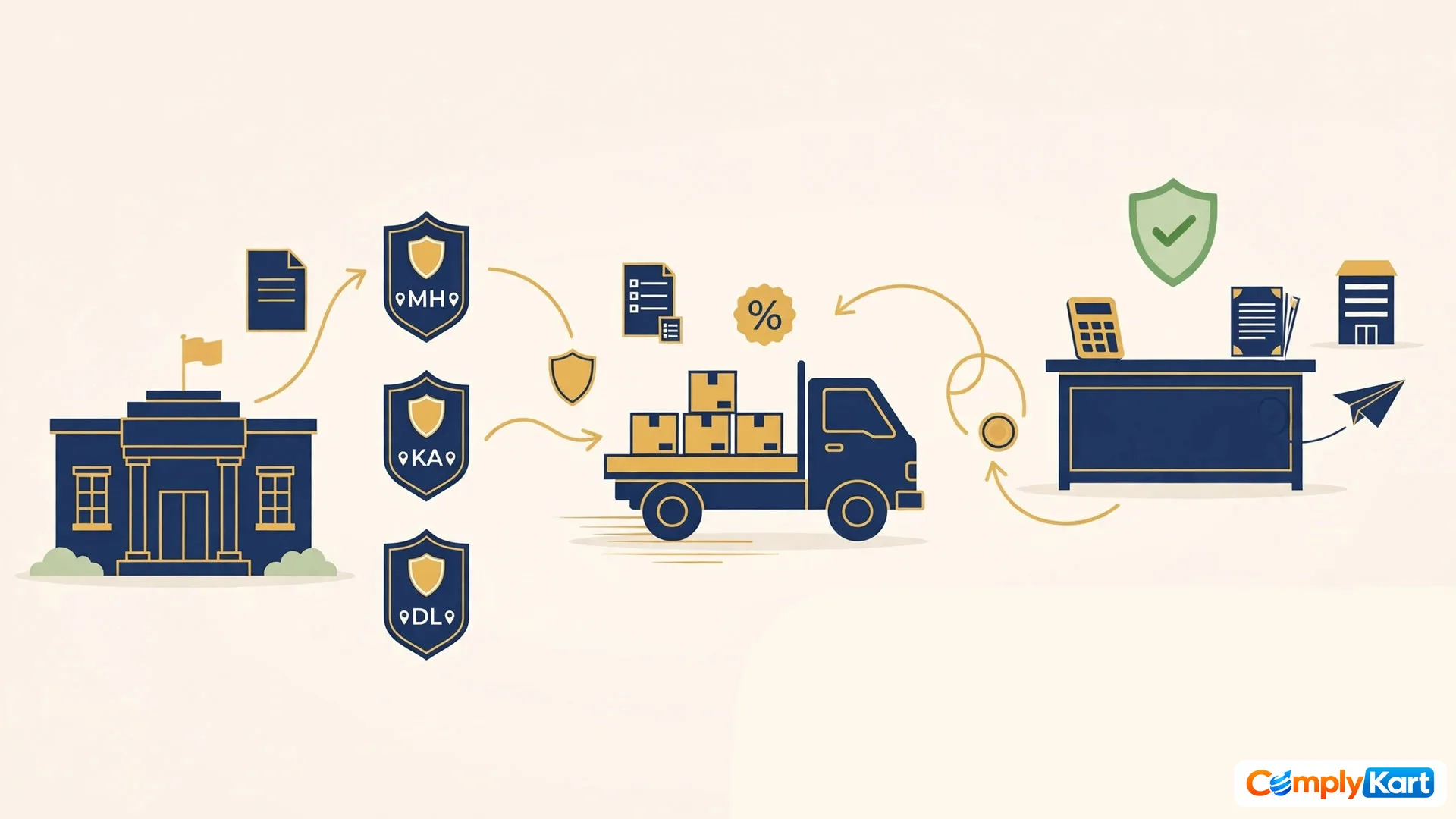
Five steps, no guesswork — you always know exactly what comes next. Tap a step to see what it involves.
12345
You pay securely. Payment is confirmed instantly, and your receipt with the written fee breakup lands in your inbox.
Transfer Pricing in India: the Complete Compliance Guide
If your Indian company buys from, sells to, lends to, or provides services to a related company abroad, the tax department does not simply accept the price you agreed between yourselves. It asks a pointed question: would you have charged the same price to a complete stranger? That single question is the whole of transfer pricing law — and answering it badly can cost multiples of the tax itself in adjustments and penalties.
Think of it like a family selling its house to a cousin at half the market rate to save stamp duty. The registrar is not bound by your family discount; the property has a circle rate, an objective market value. Transfer pricing works the same way. The "circle rate" here is called the arm's length price (ALP), and the tax officer — through the Transfer Pricing Officer, or TPO — gets to substitute it for your price if yours looks like a family discount.
This guide covers the full framework as it stands for FY 2025-26: associated enterprises, international and specified domestic transactions, the five ALP methods, documentation, Form 3CEB, master file and country-by-country reporting, safe harbour, advance pricing agreements, assessments, secondary adjustments, and penalties.
Who the rules apply to: associated enterprises
Transfer pricing applies to transactions between "associated enterprises" (AEs) — defined in Section 92A. Two enterprises are associated if one participates, directly or indirectly, in the management, control, or capital of the other. The Act then deems association through 13 specific limbs. The headline ones:
26% voting power: one enterprise holds 26% or more of the voting power in the other, directly or indirectly — or the same person holds 26%+ in both.
51% loan dependence: a loan from one enterprise constitutes 51% or more of the book value of the other's total assets.
Board control: one enterprise appoints more than half of the other's board or executive directors.
Technology dependence: the business is wholly dependent on the other's know-how, patents, or copyrights.
Supply dependence: 90% or more of raw materials come from the other enterprise with influenced pricing.
Common control: both enterprises controlled by the same individual, HUF, or relatives.
The 26% and 51% and 90% figures are bright lines. Cross one and you are an AE for the whole previous year, whether or not the transaction itself was at market price. Many Indian subsidiaries of foreign groups discover they are AEs through the loan limb — an intercompany loan that quietly grew past 51% of total assets — without ever issuing a single share to the parent.
What counts as an international transaction
Section 92B defines an international transaction as any transaction between two or more AEs, where at least one is a non-resident, that has a bearing on profits, income, losses, or assets. The list is deliberately wide:
Purchase, sale, or lease of tangible or intangible property
Provision of services, including software development, back-office, and management services
Lending or borrowing money, including guarantees
Cost-sharing and cost-contribution arrangements
Business restructuring or reorganisation — even where the transaction has no immediate bearing on profits
Two traps catch people here. First, deemed international transactions: a transaction with a third party is treated as international if there is a prior agreement between that third party and your AE, or the terms are in substance determined by the AE. Routing through an unrelated intermediary does not cleanse the transaction. Second, specified domestic transactions (SDTs): certain domestic transactions — inter-unit transfers under Section 80A, dealings under Sections 80-IA(8)/(10), transactions under Sections 10AA, 115BAB(6), or 115BAE(4) — fall under transfer pricing where their aggregate exceeds ₹20 crore in the financial year.
The five arm's length methods, and how to choose
Section 92C requires the ALP to be determined by the most appropriate method, considering the nature of the transaction, the functions performed, assets employed and risks assumed (the FAR analysis), and the availability of reliable data. Rule 10B prescribes five methods; Rule 10AB adds a sixth "other method" for cases the five cannot handle.
1. CUP — Comparable Uncontrolled Price. You compare the price charged in your controlled transaction with the price in a comparable uncontrolled transaction. Strongest method where it works — commodity sales, standard interest rates on intercompany loans, royalty rates for standard licences. It dies on comparability: if no genuinely similar uncontrolled transaction exists, CUP produces fiction, not price.
2. RPM — Resale Price Method. Start from the price at which your enterprise resells to an independent customer, subtract an appropriate gross margin, and the remainder is the arm's length purchase price from the AE. Built for distributors and marketing entities. The margin must reflect the functions performed — a bare logistics reseller and a full marketing operation earn very different margins.
3. CPM — Cost Plus Method. Take the costs incurred, add an appropriate mark-up. The method of choice for contract manufacturers, contract R&D outfits, and captive service providers — the classic Indian captive (GCC) model. The fight is always about the cost base: which costs count, and what mark-up comparables earn.
4. PSM — Profit Split Method. Where both sides contribute unique intangibles or the transaction is too integrated to price one-sidedly, you split the combined profit the way independent parties would. Used for joint development of intangibles and highly integrated value chains. Data-hungry and the most judgmental of the five.
5. TNMM — Transactional Net Margin Method. Compare the net profit margin of the tested party against comparable independent companies. In practice this is India's workhorse — applied to the widest range of tested parties, because net margins tolerate imperfect comparability better than prices do. Most Indian captive service providers and distributors are benchmarked this way.
The tolerance band and the range. Where the ALP computed under the most appropriate method varies from your actual price, the second proviso to Section 92C(2) gives a tolerance: no adjustment if the variation is within ±3% of the ALP (1% for wholesale traders), per Notification No. 46/2023. Where multiple comparable prices exist, Rule 10CA constructs an arm's length range — the interquartile concept — and no adjustment is made if your price falls within it. Miss the range and the adjustment is to the median, not the edge.
Documentation: what you must maintain, and when
Section 92D read with Rule 10D requires prescribed transfer pricing documentation — the "local file" — where aggregate international transactions exceed ₹1 crore, or SDTs exceed ₹20 crore, in the financial year. The documentation must be contemporaneous: maintained as the transactions occur and in place by the due date for filing Form 3CEB and the return of income.
The local file is not a form; it is a dossier. Rule 10D prescribes its contents: ownership structure, group profile, business description, the controlled transactions, a full FAR analysis, records of uncontrolled transactions considered, the comparability analysis, method selection with reasons for rejecting the others, and the ALP computation. A benchmarking study that picks comparables without documenting why others were rejected is the single most common documentation failure we see.
Form 3CEB: the accountant's report
Section 92E requires every person entering international transactions (or SDTs above threshold) to obtain a report from a chartered accountant in Form 3CEB and furnish it by the specified date — 31 October of the assessment year, one month before the 30 November return-filing date for transfer pricing cases. The CA certifies the transactions, the methods used, and that documentation is maintained. It is filed electronically with a digital signature.
Practical point: the 31 October date is a hard stop, not a target. Unlike the return of income, there is no routine condonation culture for late 3CEB, and the documentation should already exist — a report cannot certify records created after the fact.
Master file and country-by-country reporting
Two further layers apply to larger groups.
Master file — Form 3CEAA. Under Section 92D(4) read with Rule 10DA, every constituent entity of an international group that enters an international transaction files Part A. Part B kicks in where all three conditions hold: consolidated group revenue exceeds ₹500 crore in the preceding year, aggregate international transactions exceed ₹50 crore, or intangibles-related international transactions exceed ₹10 crore. The due date for FY 2025-26 is 30 November 2026; where multiple Indian constituent entities exist, Form 3CEAB (designating who files) is due 31 October 2026. Failure attracts ₹5 lakh under Section 271AA(2).
Country-by-country report — Form 3CEAD. Under Rule 10DB, where consolidated group revenue exceeds ₹6,400 crore (roughly EUR 750 million) in the preceding year, the group files its CbCR within 12 months of the financial year-end — so 31 March 2027 for FY 2025-26. The CbCR allocates income, taxes paid, and economic activity across every jurisdiction the group operates in. It is the document tax authorities worldwide exchange with each other.
Safe harbour: opting out of scrutiny
Rules 10TA to
FAQ
Frequently asked questions
22 answers from our consultants.
You pay for our expert's time — document checking, filing, follow-ups — not the government. The government fee goes to the government; our fee is for the work we do so you don't have to figure it out yourself.
Tell us your situation in plain words — what you're trying to do, not which form you think you need. Half our job is stopping clients from buying the wrong service. The first consultation is free and honest.
Yes. We quote professional fee + government charges + taxes separately, in writing, before you pay. The number doesn't change midway. If the government fee changes, we show you the notification.
Every engagement gets a tracker — you see what's filed, what's pending and what's next. No chasing on WhatsApp for status updates.
Both. Startups get incorporation + early compliance bundles; established companies get annual retainers. About half our clients started with us at incorporation.
It is the tax rule that says transactions between related companies must be priced as if the companies were strangers. If your Indian subsidiary provides software services to its US parent, the fee must match what an independent vendor would charge. The mechanism is the arm's length price, computed through five prescribed methods.
Shareholding is only one of 13 limbs. Check the others: does a group loan exceed 51% of your total assets? Does the parent appoint most of your board? Are you wholly dependent on its technology? Any single limb triggers AE status for the year.
If the aggregate value of your international transactions in a financial year exceeds ₹1 crore, you must maintain the prescribed transfer pricing documentation under Rule 10D and get Form 3CEB from a chartered accountant. Below that, the documentation rules do not bite — but the ALP principle still applies to the transactions themselves.
It is the accountant's report under Section 92E on your international transactions: what they were, what methods were used, and confirmation that documentation is maintained. A chartered accountant signs it with a digital signature, and it is filed electronically by 31 October of the assessment year — one month before the 30 November return-filing date for transfer pricing cases.
Usually the Cost Plus Method or TNMM. Captives typically earn a cost-plus return, so CPM on the cost base or TNMM on the operating margin against comparable service companies both work. The choice depends on data quality — TNMM tolerates weaker comparability, which is why it dominates in practice.
CUP compares prices directly — your price versus an uncontrolled price for the same thing. TNMM compares profit margins — your net margin versus comparable companies' margins. CUP is more precise but needs near-identical transactions; TNMM is more forgiving and therefore far more used.
No adjustment. The second proviso to Section 92C(2) provides a ±3% tolerance band (1% for wholesale traders). Fall outside it and the adjustment is computed on the ALP itself, not just the excess over 3%.
A group-level document describing the multinational's structure, businesses, intangibles, and financing, filed in Form 3CEAA. Every Indian constituent entity of an international group files Part A; Part B applies where consolidated group revenue exceeds ₹500 crore plus transaction thresholds. Due 30 November.
The country-by-country report (Form 3CEAD) breaks down the group's income, taxes paid, and activity across every jurisdiction. It applies where consolidated group revenue exceeds ₹6,400 crore in the preceding year, and is due within 12 months of the financial year-end.
Safe harbour rules let you declare a prescribed margin — for example 15.5% operating margin for IT services after Budget 2026 — and avoid transfer pricing audit entirely. It suits stable, profitable captives. If your real margins run below the prescribed floor, safe harbour costs you money and you should document instead.
A binding agreement with the tax department fixing your transfer pricing method for up to five future years, with rollback for earlier years. Unilateral, bilateral, or multilateral. Slow and costly to obtain, but it ends the annual argument. APAs in force continue unchanged under the Income-tax Act, 2025.
A specialist officer to whom the Assessing Officer refers the ALP computation under Section 92CA in scrutiny cases. The TPO's order on the arm's length price binds the Assessing Officer. Your documentation is, in effect, written for the TPO's desk.
After a primary TP adjustment, Section 92CE requires the excess money to actually come back to India within the prescribed time. If it does not, the amount is treated as an advance to the AE, interest is imputed, and additional tax applies. The adjustment is not just a paper entry — cash must move.
Failure to maintain documentation: 2% of each transaction's value (Section 271AA). Master file failure: ₹5 lakh. Separate penalties apply for CbCR defaults and for failing to furnish information the TPO calls for. Reasonable cause under Section 273B can protect against some of these.
Yes, through deemed international transactions. If your deal with an unrelated party is backed by a prior agreement with your AE, or its terms are in substance set by the AE, it is treated as an international transaction. Interposing a third party does not defeat the provisions.
Often a decade from TPO order to final appellate resolution. That duration is the economic argument for safe harbour and APAs: certainty has a price, but so does ten years of litigation.
At the start of the financial year, not the end. Contemporaneous documentation is a legal requirement, and benchmarking databases, intercompany agreements, and FAR interviews are all harder to reconstruct in November than to record in April.
What clients say about working with us
Real stories from businesses we've worked with.
Trademark Registration“
Our Trademark was applied in all the classes with a short span of time by Complykart Trademark Experts and I can say the level of expertise and commitment they carry is remarkable. It's an A+ from my side. We are now sticking to ComplyKart only.
Company Registration“
I found the professionalism of the staff at complykart.com, a pleasure to work with. As a foreigner to India, they took the time to explain the documentation and assisted in every question I raised. I was pleased that complykart.com made it easy for my Business.
Merger & Acquisition“
Trust, Commitment, Dedication and responsiveness are the best things with ComplyKart. Thanks for handling our Merger assignment with so much care. After my business disputes, complykart handles all things with own sense of understanding.
Senior Consultant · ESOP, Trademark & General Advisory · 14+ years experience
Pankaj Jain is a senior consultant covering ESOP structuring, trademark and IP protection, accounting advisory and legal documentation. With the broadest practice at the firm, he handles the matters that don’t fit neatly in one box.
Last reviewed: 16 November 2026
Get a free consultation
Talk to a ComplyKart professional about Transfer Pricing. The first consultation is free.