
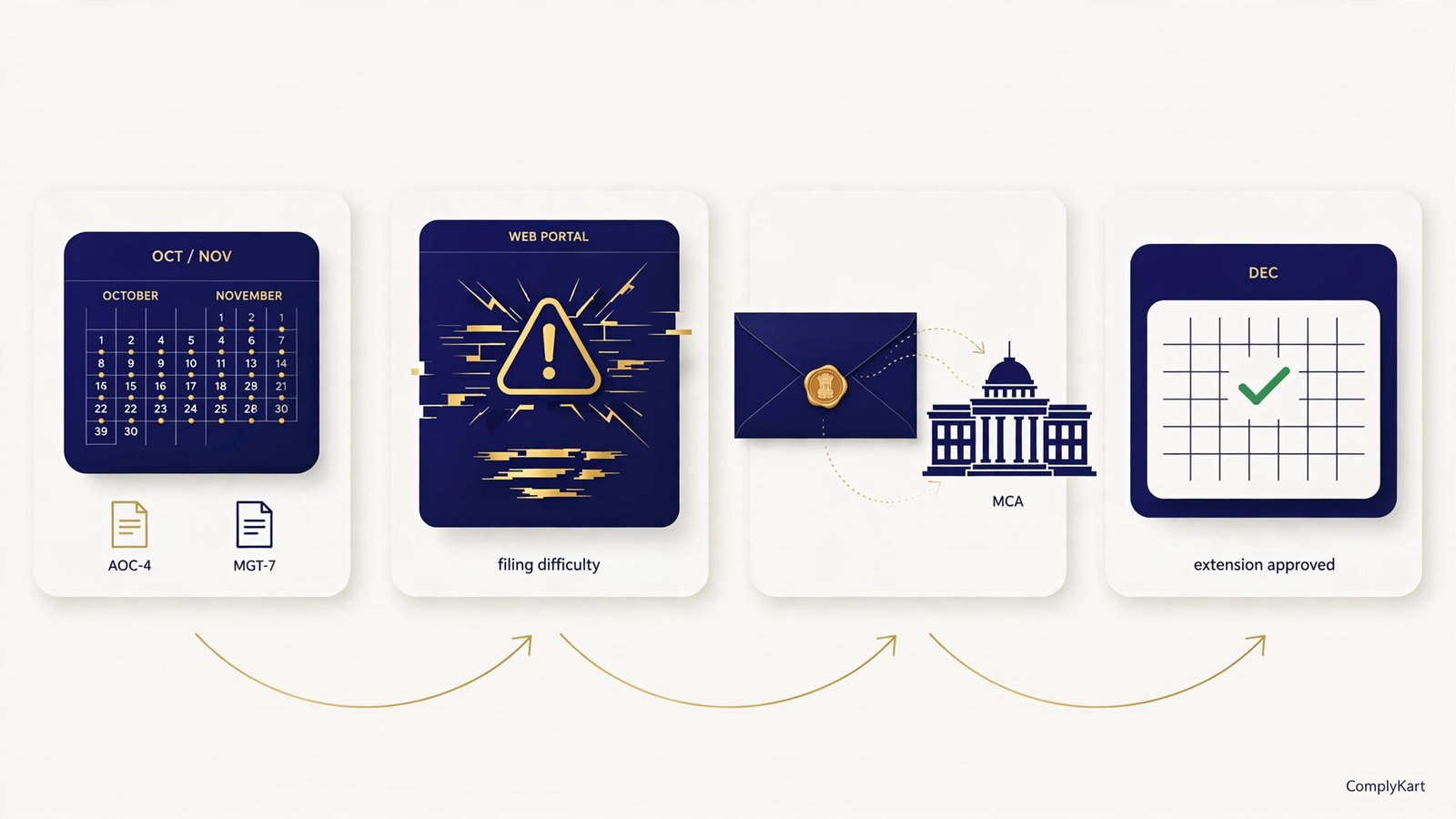
You may have seen the headline this week: ICSI has asked the MCA to push the annual filing deadlines to 31 December 2026 — with no additional fees. If you run a company, that probably sounded like a gift. Before you rearrange your calendar, let me tell you exactly what this is, what it isn't, and what you should do for the next two months.
On 9 October 2026, the Institute of Company Secretaries of India sent a formal representation to Dr. Pallavi Jain Govil, Secretary in the Ministry of Corporate Affairs. The letter, signed by ICSI Secretary CS Asish Mohan, asks for a one-time extension of the annual filing forms under the Companies Act, 2013 — till 31 December 2026 — without the additional fees that late filing usually attracts.
The forms named in the request are the ones that matter most this season: AOC-4 (financial statements), AOC-4 (CFS), AOC-4 (XBRL), the two NBFC Ind AS variants of AOC-4, MGT-7 and MGT-7A (annual returns), ADT-1 (auditor appointment), and — a little unusually for an "annual filing" letter — DIR-12 (changes in directors and KMP).
Why ICSI asked for it
The Institute didn't ask for more time on a whim. The letter points to the MCA-21 V3 portal and says, in effect, that the system keeps tripping people up at every step. Stakeholders reported frequent downtime, slow responses, sessions timing out mid-filing, and automatic logouts while forms were being prepared. Login and profile problems, DSC association glitches, validation errors thrown at perfectly good data, SRN generation hiccups, payment and challan failures, and trouble even viewing, downloading, or tracking forms that were already filed — the complaint runs the whole filing journey, not just one screen.
There is a second, quieter problem in the letter. The V3 annual forms are genuinely harder to fill than the ones they replaced. AOC-4 and MGT-7 now capture far more information inside the form itself, with less hiding in attachments. That is better for transparency. It also takes longer to prepare. XBRL filers have it worst — tagging every number, validating it, reconciling it — and then feeding it into a portal that crashes during working hours. The letter says the portal often buckles under traffic between 11 a.m. and 6 p.m., the exact window when every professional in India is awake and filing.
So the argument is really two-fold: the forms ask for more, and the portal gives less. Together, they make timely compliance harder than it should be.
The precedent ICSI is leaning on
The letter openly borrows its logic from the income tax side. CBDT Circular No. 07/2026, dated 28 September 2026, extended the tax audit report deadline for AY 2026–27 from 30 September to 21 October 2026, and the corresponding income tax return deadline for audit cases from 31 October to 21 November 2026. ICSI's point is simple: if practical difficulties justified extensions there, the same difficulties exist in company law filings.
That is a reasonable argument. It is also just an argument. Which brings us to the part that matters.
Here is the part most headlines skipped
A representation is not a decision. Writing to the MCA asking for an extension is like applying for leave from work: you still show up until the leave is approved. No deadline has moved. No fee has been waived. The 31 December date is what ICSI is asking for, not what the Ministry has granted — and it will only become real when the MCA says so through its own circular or notification.
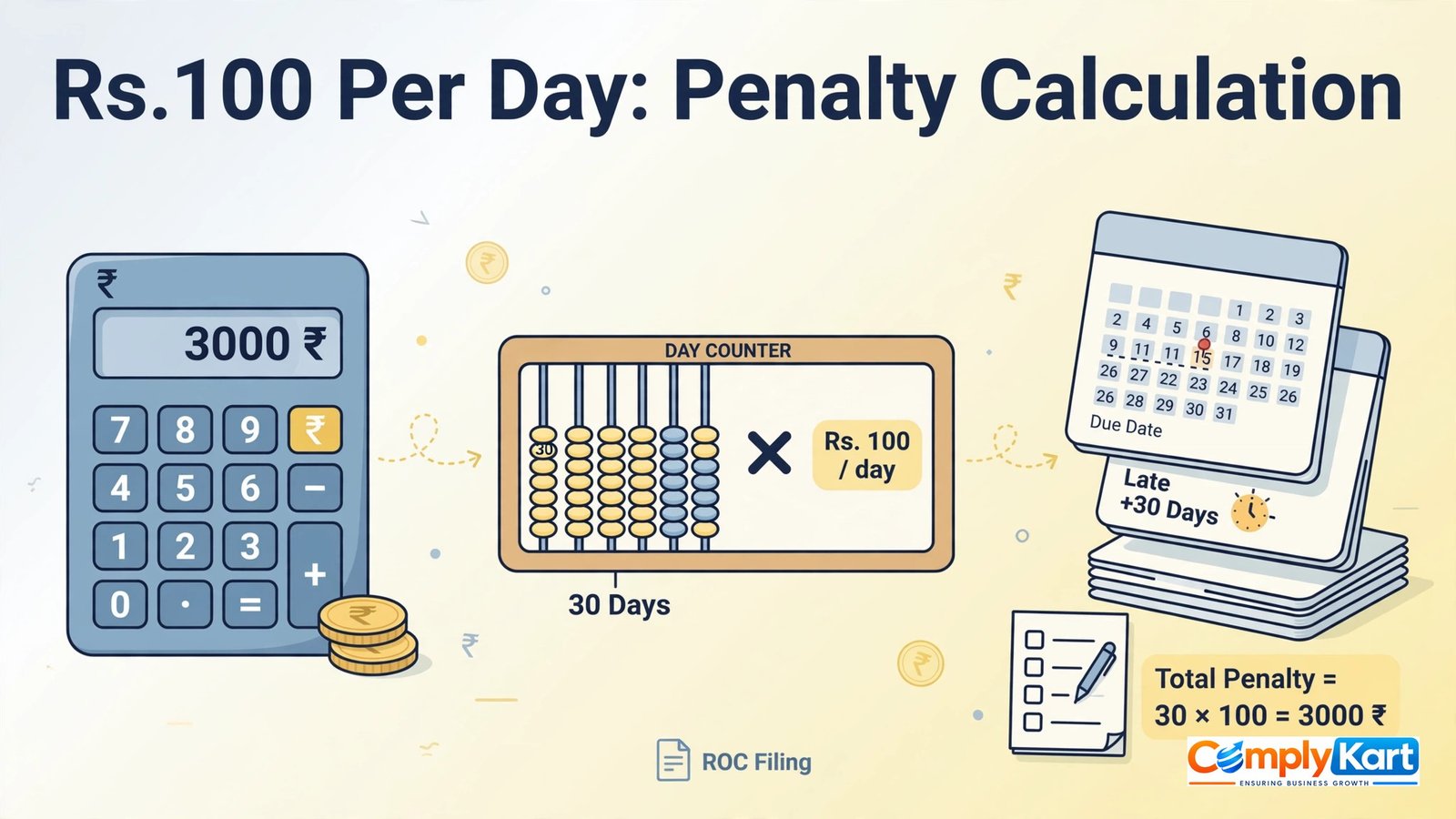
This is the trap I watch people walk into every year. An institute asks, news portals report it, and company directors mentally shift their deadlines two months to the right. Then the MCA says nothing, or grants a shorter extension, or grants one with fees — and the people who waited learn what escalating additional fees feel like.
Do not be that person. Treat the original deadlines as your deadlines until you see the MCA's own announcement.
What your actual deadlines look like
The statutory dates haven't changed. AOC-4 (financial statements) goes within 30 days of your AGM. MGT-7 (annual return) goes within 60 days. ADT-1 (auditor appointment) goes within 15 days of the AGM.
For the typical company that held its AGM on 30 September 2026, that means:
- ADT-1: due 15 October 2026 — this one may already be breathing down your neck.
- AOC-4: due 30 October 2026.
- MGT-7: due 29 November 2026.
- DIR-12: within 30 days of any director change, whenever that happened.
If the MCA does grant relief, the most likely shape is an extension without additional fees till 31 December — exactly what was asked for. But "most likely" is not "certain," and a prudent director plans for the statute, not the headline.
What to do this week
One: keep your filings moving on the original dates. If your financial statements are ready, file AOC-4 when it's due. An extension you didn't need costs you nothing; a deadline you missed costs you additional fees and a very awkward conversation with your board.
Two: start your MGT-7 data early. The V3 form asks for more detail than older versions, and the first filing in a new form always takes longer than the second. Give yourself the month of November properly.
Three: if the portal actually blocks you, document it. Screenshot the error, note the date and time, save the SRN or payment reference. MCA-21 has a ticket mechanism, and if a wave of relief ever does come — or if you ever need to explain a delay — contemporaneous evidence of portal failure is worth far more than a complaint made afterwards.
Four: watch for the MCA's own word, not ICSI's. The announcement will come as a circular or general circular from the Ministry. Your auditor or your company secretary will flag it the moment it lands.
The ICSI letter is a welcome sign. It tells you the professional fraternity is pushing for the breathing room everyone can see companies need, and it puts real portal problems on the official record. That matters. But until the Ministry answers, your compliance calendar is still the law as written — and the law, as always, does not read the news.



Comments
No comments yet — ask the first question below.
Join the discussion
Questions go straight to our expert desk. Comments appear after a quick review — no spam, no noise.