

Rule 14A is a simplified GST registration route for small B2B taxpayers whose monthly B2B output tax does not exceed ₹2.5 lakh. With mandatory Aadhaar authentication, registration is granted electronically within 3 working days, with no physical verification. It was introduced through Notification 18/2025-CT, effective 1 November 2025.
Search interest in "GST Rule 14A" has shot up over the past few weeks, and for once the buzz has a solid reason behind it. A new fast-track registration route — introduced through Notification 18/2025-CT, effective 1 November 2025 — is now live in the CGST Rules. If you are starting a small business and the old registration stories (weeks of waiting, physical verification visits) scared you, this one is worth understanding properly.
Key takeaways
- Rule 14A grants GST registration within 3 working days to taxpayers with monthly B2B output tax of ₹2.5 lakh or less — a cap on tax, not turnover.
- Aadhaar authentication (OTP or biometric) is mandatory; there is no alternative route into the scheme.
- Introduced through Notification 18/2025-CT, effective 1 November 2025; exit is through Form REG-32.
- Fast grant does not mean light compliance — Rule 10A still requires bank account details within 30 days of grant.
What Rule 14A actually does
In one line: it gives small B2B taxpayers a simplified, fully electronic registration that is granted within 3 working days.
The eligibility test is specific. Your monthly B2B output tax — the GST you charge on sales to other registered businesses — must be ₹2.5 lakh or less. Note what that is and is not: it is a cap on output tax, not on turnover. At an 18% rate, ₹2.5 lakh of monthly output tax corresponds to roughly ₹1.4 crore of monthly B2B sales. Small, but not tiny. If your business is B2C-heavy, the B2B portion is what counts toward the cap.
Aadhaar authentication is mandatory — OTP-based or biometric. This is the trade the rule makes: because your identity is strongly verified up front, the department skips the physical verification of your premises and grants registration electronically within 3 working days of a complete application.
Who should opt in to Rule 14A?
The natural fit is the small supplier selling to GST-registered buyers: a new distributor, a job-work unit, a small manufacturer supplying larger companies, a service provider billing corporate clients. If your buyers need your GSTIN on their purchase invoices to claim input tax credit, getting registered fast has direct commercial value — and three working days beats the standard timeline comfortably.
It also suits first-time registrants who are nervous about the process. The Aadhaar-based route removes the most unpredictable part of registration (the officer visit), which is where most delays and most anxiety live.
Who should not use Rule 14A?
Three situations where Rule 14A is the wrong door.
First, if you are anywhere near the cap. The ₹2.5 lakh monthly B2B output tax limit is monitored. A business growing fast can breach it within months of registering — and then you are dealing with an exit (Form REG-32) and a transition to the normal scheme mid-year. If your order book says you will cross the line by quarter two, save yourself the churn and register normally from day one.
Second, if your customers are mostly unregistered or end consumers. The entire design of Rule 14A is B2B. A B2C business gains little from the fast track and inherits its constraints.
Third, if you cannot complete Aadhaar authentication. No Aadhaar auth, no fast track — the rule is explicit, and there is no workaround through a representative or an alternative document.
How do you exit Rule 14A?
Leaving the scheme is done through Form REG-32. The practical point: plan your exit before you need it. If growth is the reason — and growth is the good reason — time the transition so there is no gap in your buyers' ability to claim credit on your invoices. A week of unregistered limbo can cost you a customer relationship that took months to build.
The 3 working days, day by day
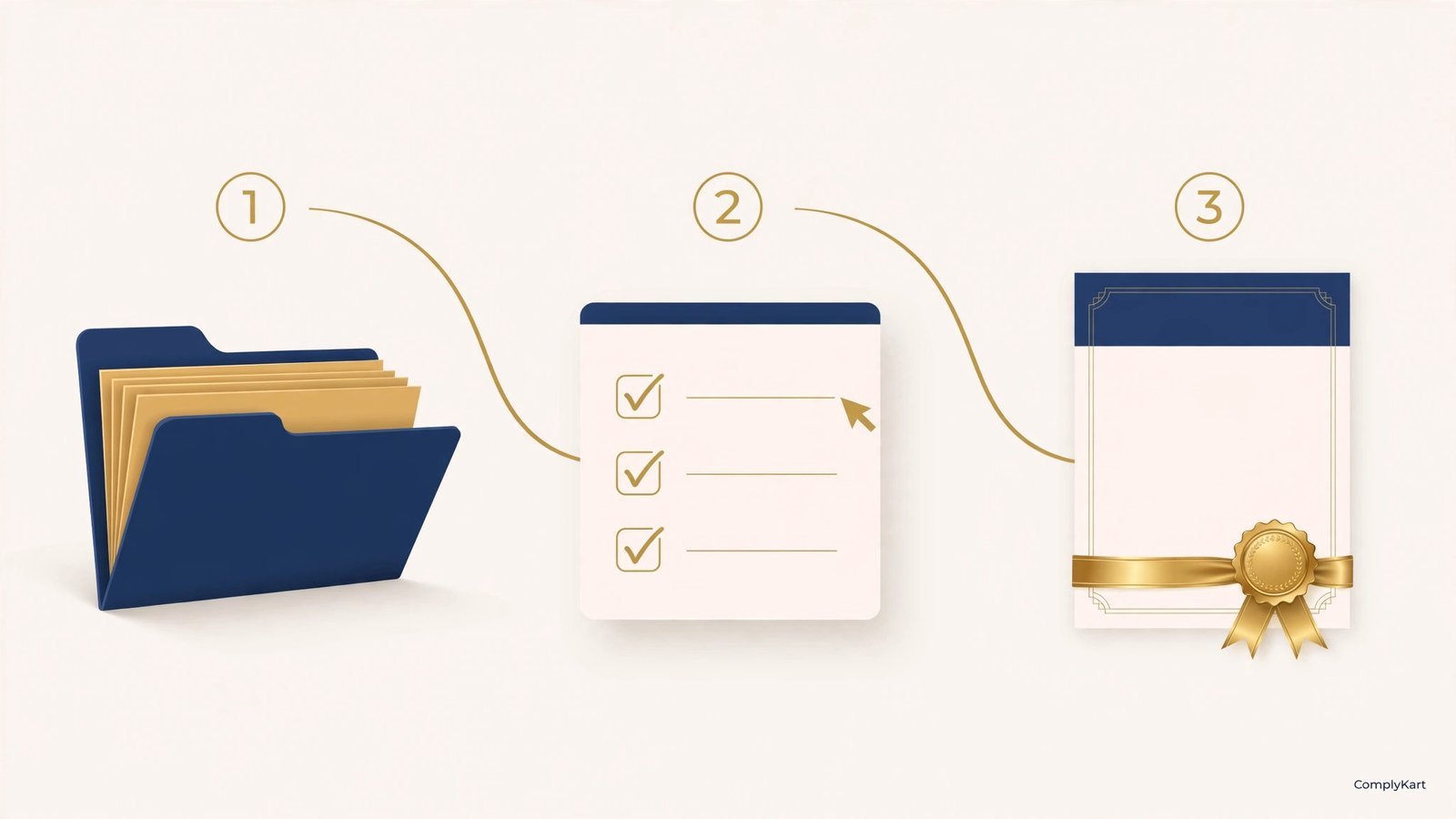
What does "granted within 3 working days" look like in practice? Day one: you submit the complete application with Aadhaar authentication — OTP or biometric — and the system validates your PAN and identity details automatically. Days two and three: the officer reviews the application on screen. Because identity and address are already verified, there is no site visit to schedule, no inspector's diary to wait for. The registration certificate lands electronically, and the GSTIN is active.
"Working days" means what it says — Sundays and gazetted holidays do not count, so an application filed on a Saturday effectively starts its clock on Monday. And the 3-day promise assumes a complete, correct application. A query on day two restarts the waiting, which is why the document checklist matters as much as the rule itself.
My honest read
Rule 14A is a genuine improvement for the segment it targets — small, verifiable, B2B businesses that were previously stuck in the slowest part of the registration queue. It is not a loophole, not a shortcut around compliance, and not for everyone. The Aadhaar requirement keeps it honest; the output-tax cap keeps it small.
The mistake to avoid is treating "fast" as "casual." The application still needs correct documents, a genuine principal place of business, and accurate HSN and service descriptions. Speed of grant does not mean leniency of scrutiny later — Rule 10A still requires your bank account details within 30 days, and a suspended registration helps no one.
Starting a business and wondering whether the fast-track route fits your situation? A short conversation with a GST professional before you apply costs little and can save you a rejected application — or a wrong-scheme registration you have to unwind later.
Frequently asked questions
Is the ₹2.5 lakh Rule 14A cap on turnover or on tax?
On tax — specifically, your monthly B2B output tax. At an 18% rate that corresponds to roughly ₹1.4 crore of monthly B2B sales. Businesses with heavy B2C sales count only the B2B portion. Misreading this as a turnover cap is the most common eligibility mistake.
What happens if I cross the ₹2.5 lakh cap after registering?
You exit the scheme through Form REG-32 and transition to normal registration. Plan the timing so there is no gap in your buyers' ability to claim input credit on your invoices — a week of limbo can cost a customer relationship that took months to build.
Can a B2C business use Rule 14A?
Technically yes if it meets the cap, but it gains little. The scheme is designed around B2B dynamics — buyers who need your GSTIN for input credit. A B2C business inherits the cap's constraints without the commercial upside of fast registration.
Is Aadhaar authentication really compulsory?
Yes. OTP-based or biometric Aadhaar authentication of the authorised signatory is the price of the fast track — it replaces physical verification. Without it, your application simply goes through the standard route instead. Make sure the person who completes the authentication stays available for any follow-up the system requests.
Does the 3-day grant mean the department scrutinises less later?
No. Speed of grant is not leniency of scrutiny. Post-registration compliance — returns, the Rule 10A bank-account update within 30 days, accurate HSN descriptions — applies in full, and a suspended registration helps no one. Treat the fast grant as a head start on compliance, not a holiday from it.



Comments
No comments yet — ask the first question below.
Join the discussion
Questions go straight to our expert desk. Comments appear after a quick review — no spam, no noise.