
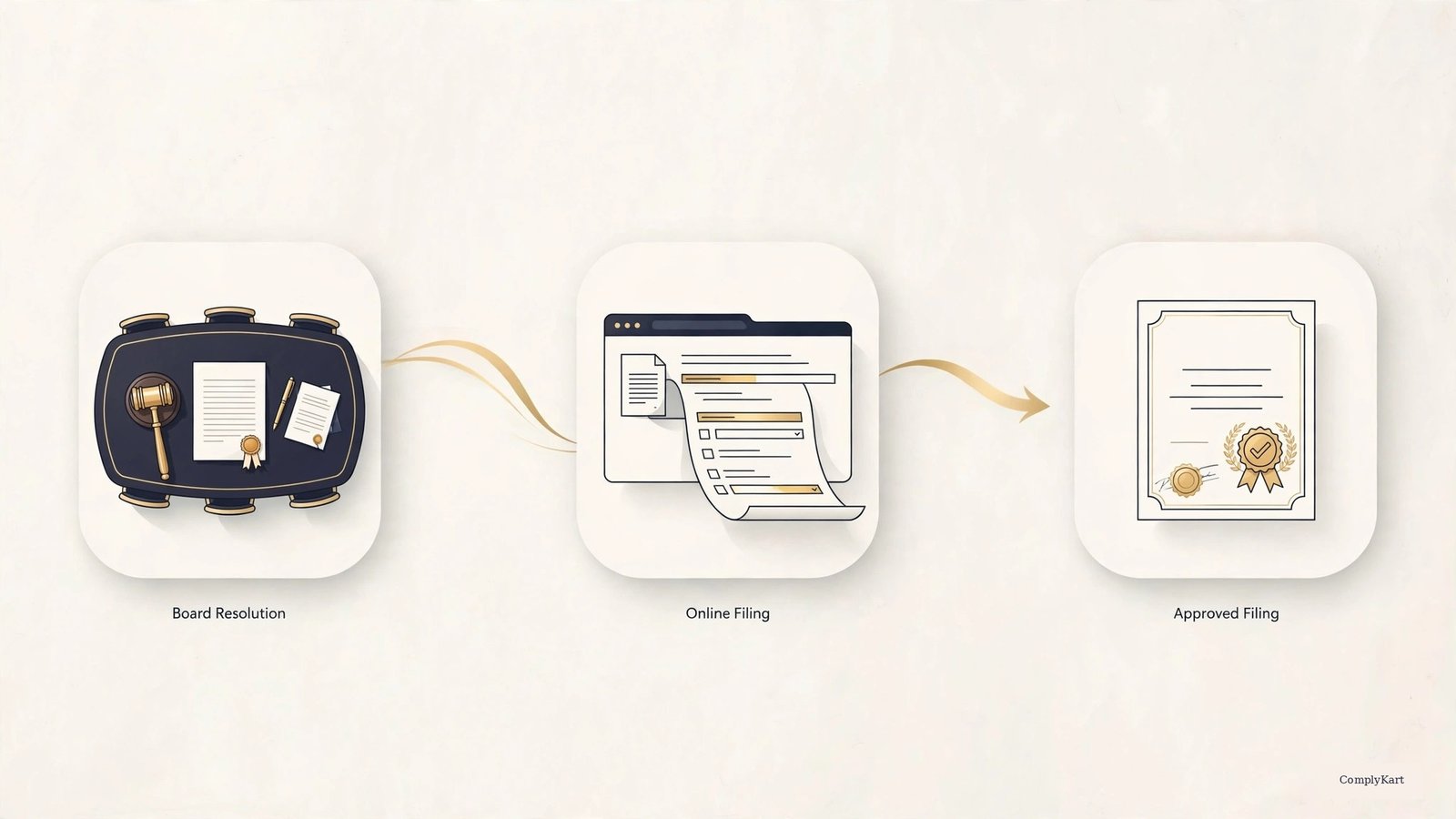
If your board passed a resolution this October, the form you file it on has changed. MCA has retired the old MGT-14 e-form and moved filings to a web form on the MCA V3 portal, effective 1 October 2026. Same resolution. Same thirty-day clock. New filing experience.
Miss the details of the new form and you will do what many companies do every time MCA changes a form: file late, file wrong, and pay additional fees for the privilege.
What MGT-14 actually is
Section 117 of the Companies Act, 2013 requires companies to file a copy of certain resolutions and agreements with the Registrar of Companies within thirty days of passing them. Rule 24 of the Companies (Management and Administration) Rules, 2014 tells you which ones: special resolutions, and the key board resolutions listed there — the Section 179(3) matters like issuing securities, borrowing money, investing funds, granting loans, approving financial statements, diversifying the business, and approving amalgamations or takeovers, along with resolutions where your articles demand a special resolution.
Routine board resolutions — the ordinary operational stuff — do not need MGT-14. This is the first mistake. People file resolutions that need no filing, and miss the ones that do.
What changed on 1 October
The form itself moved from a downloadable e-form to a web form on the MCA V3 portal. You now fill it in directly on the portal instead of uploading a PDF-based form. The new version asks for a classification and purpose of the resolution, details of the board or general meeting where it was passed, the resolution date, the relevant supporting documents, and links to connected forms wherever applicable.
Think of it like passport applications moving from a printed form to a guided online application. The information is friendlier to enter. But the portal is stricter: it will not let you leave a mandatory box blank, and it will not let you file what you have not attached. The old form forgave sloppy uploads at the cost of a rejection weeks later. The new one simply refuses to proceed.
The thirty-day filing window did not change. Section 117(1) still runs from the date the resolution is passed, and the additional-fee meter for delayed filing still climbs the longer you wait.
Why the web form trips people up
Classification matters now. The new form asks you to classify the resolution — what kind it is and what purpose it serves. Pick the wrong classification and the filing does not match your board minutes. Before opening the form, decide in plain words: what did the board actually resolve, and under which section?
Attachments have to be the right ones. The web form expects the certified copy of the resolution, and where applicable, the explanatory statement and meeting extracts. Attach a scan of the wrong meeting's minutes — easy to do when you have four board meetings in a folder — and the filing is defective.
Meeting details must be exact. Date of the meeting, type of meeting, and the resolution date must line up with your minutes book. A single transposed digit is a rejection.
A practical checklist for your next filing
1. Confirm the resolution needs filing. Is it a special resolution, a Section 179(3) matter, or required by your articles or another provision? If none of those, stop — no MGT-14 needed.
2. Pull the certified true copy. A director or the company secretary certifies the copy. Keep the wording identical to the minutes.
3. Gather the supporting documents. Explanatory statement, notice and agenda extracts where relevant. Name the files clearly — your future self will thank you.
4. Check your DSC. The form is signed digitally by a director or key managerial personnel. An expired DSC on filing day is the most avoidable delay in company law.
5. File within thirty days and save the SRN. Count from the resolution date. Save the Service Request Number and the challan. Track the filing to approval.
The cost of getting it wrong
Late filing attracts additional fees, and the fee structure punishes delay — the longer you wait, the steeper it gets. A defective filing costs you twice: the rejection, then a re-filing that is now further from the thirty-day window. On the new web form, most defects come from rushed attachments and wrong classification, both entirely preventable with a slow ten-minute review before submitting.
The web form is not harder. It is just less forgiving of carelessness. Treat the classification and the attachments with the same care you gave the resolution itself, and the filing becomes routine.
If you are unsure which resolutions from your last board meeting need filing, check your meeting calendar against your statutory due dates — our compliance calendar maps every filing to its deadline so the thirty-day clock never sneaks up on you.




Comments
No comments yet — ask the first question below.
Join the discussion
Questions go straight to our expert desk. Comments appear after a quick review — no spam, no noise.