
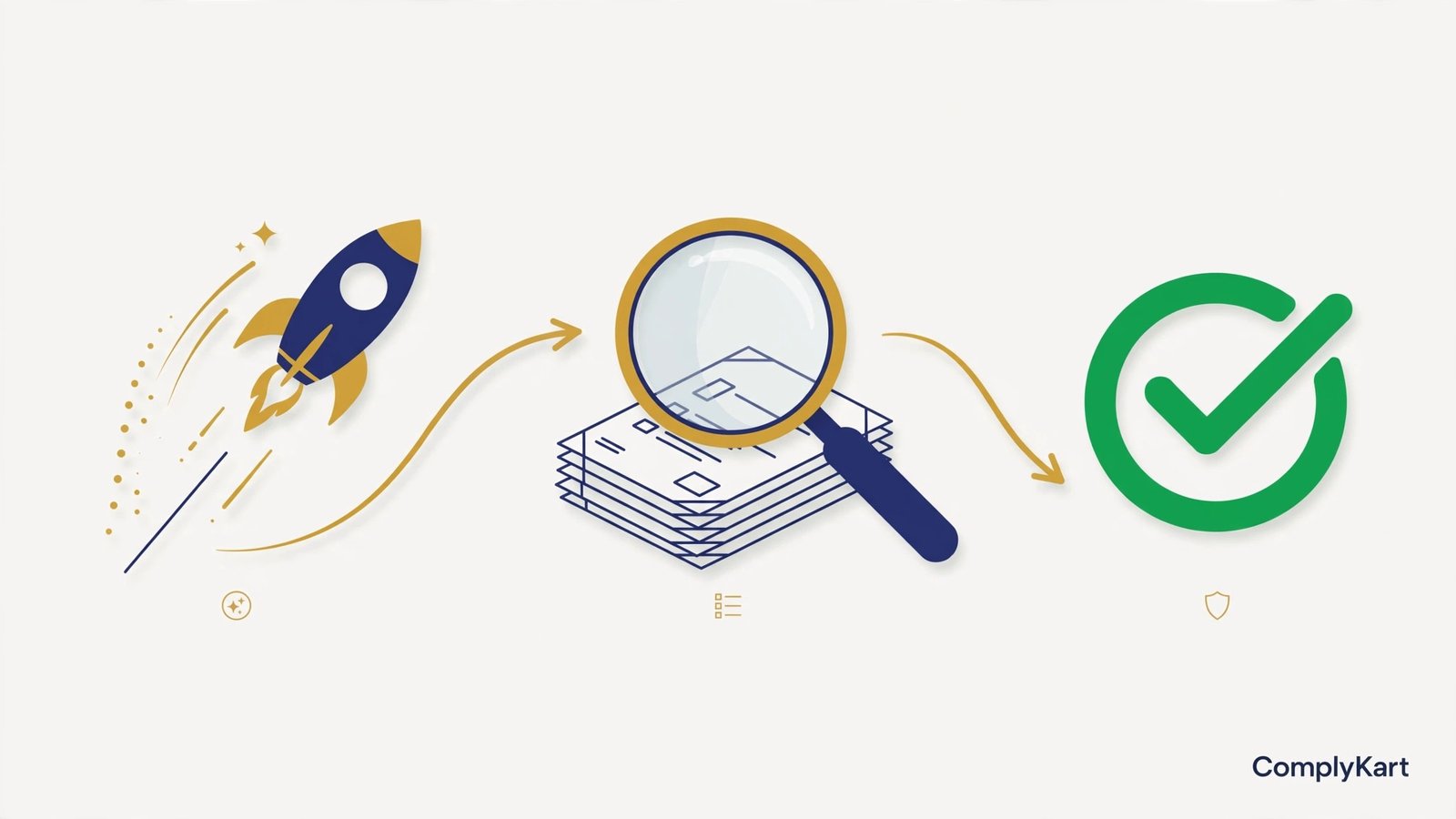
The short answer: DPIIT recognition does not exempt your startup from ROC annual filing — not from the AGM, not from AOC-4 (audited financials, within 30 days of the AGM, around 29 October 2026), not from MGT-7 (annual return, within 60 days, around 29 November 2026). The Startup India benefits are real; an ROC holiday is not among them. Most DPIIT startups qualify as small companies and may file the shorter MGT-7A.
Nobody incorporates a startup dreaming of AOC-4.
You were thinking product, users, that first cheque. Somewhere between the DPIIT recognition certificate and the pitch deck, the Companies Act tapped you on the shoulder. It's still tapping.
Let me say the thing most founders learn embarrassingly late: DPIIT recognition exempts you from nothing on the ROC calendar. The Startup India benefits are real — the tax holiday, self-certification under labour laws, easier public procurement. An exemption from annual filing is not among them. Your private limited company files exactly like every other private limited company, recognition certificate and all.
Key takeaways
- DPIIT recognition gives zero ROC exemptions — your private limited company files exactly like any other.
- AOC-4 around 29 October 2026, MGT-7 around 29 November 2026 (for a 30 September AGM); late fee ₹100/day per form, no cap.
- Startups with paid-up capital up to ₹4 crore and turnover up to ₹40 crore file the shorter MGT-7A instead of MGT-7.
- Investors' lawyers read your MCA filings before your deck — a mismatched cap table delays rounds by weeks while everyone reconstructs the paperwork.
What does the ROC calendar demand from a startup?
AGM within six months of year-end. AOC-4 — your audited financials — within 30 days of the AGM, which lands around 29 October 2026 if your AGM was 30 September. MGT-7 — the annual return — within 60 days, around 29 November.
Plus ADT-1 for your auditor's appointment, within 15 days of the AGM. Yes, you need a statutory audit. Yes, even pre-revenue, even when the financials are basically a list of expenses and hope. The auditor who signs your financials is the same auditor the ROC wants on record.
One small mercy: if you qualify as a small company — paid-up capital up to ₹4 crore and turnover up to ₹40 crore, which covers most DPIIT startups — you file MGT-7A, the shorter annual return. Same deadlines, less paperwork. Take it.
The late fee is ₹100 per day, per form, with no cap. It is the most boring way to burn runway ever invented.
Why do investors read your MCA filings before your pitch deck?
Here's the part that turns compliance from chore into strategy. When a fund does diligence, their lawyers pull your MCA filings before they finish reading your deck. The MGT-7 shows your shareholding pattern. The AOC-4 shows your financials. Your filings are a public record of whether this company is run properly — and "properly" is exactly what a fund is buying.
A mismatch between your cap table and your filed shareholding doesn't kill a deal. It does something almost worse: it delays it by six weeks while everyone reconstructs what happened in that 2024 angel round. Six weeks, in the middle of a fundraise, is a lifetime. Momentum dies, other investors get nervous, the lead starts re-trading terms. All because a PAS-3 wasn't filed.
Clean filings are a signal. They say: these founders run a tight ship. In a market where every seed-stage company claims to be execution-focused, your MCA record is execution you can actually prove.
Startup filing tripwires: ESOPs, founder loans, DPT-3, auditor
Share allotments. Every ESOP grant, every convertible note conversion, every top-up round — each one needs its board resolution, shareholder approval where required, PAS-3 filing, and updated statutory registers. Founders who tell themselves they'll "do the paperwork after the round closes" often discover, eight months later, that the round closed and the paperwork never started. The register of members should match reality at all times, not at fundraising time.
Founder money moving around. Loans from founders to the company, the company paying for the founder's laptop, the co-working deposit paid from a personal account — the Act has things to say about related-party transactions. Get the board approvals on record when they happen, not during diligence when your lawyer finds them missing and goes pale.
The registered office. Moved from the co-working space to an actual office? Shifted cities? The ROC wants to know within the prescribed time. Diligence lawyers notice stale addresses. It reads as sloppiness, and sloppiness is contagious in an investor's mind — if the address is wrong, what else is?
DPT-3. Due 30 June every year, covering deposits and exempted borrowings. Startups that took money from friends, family, or directors as "temporary loans" are often surprised to find these need reporting. Check whether yours did.
The auditor conversation. Pick your statutory auditor before year-end, not in September when every firm is drowning. A good auditor for a startup does more than sign the financials — they'll flag the ESOP accounting, the revenue recognition calls, and the related-party disclosures while there's still time to fix them. The cheapest audit is the one that starts early; the most expensive is the one that starts with "we need this signed by Friday."
Fix your filings before the round, not during it
The cheapest time to fix your filings is right now, when nobody is watching and nobody is billing by the hour. The most expensive time is week three of diligence, when your lawyer is reconstructing two years of allotments at urgency rates while the investor's team waits.
So block a day. Pull your full MCA filing history. Reconcile the cap table against every PAS-3 ever filed. Confirm the auditor appointments are on record. File what's pending, pay the additional fees without flinching — they're the cheapest problem you'll solve this quarter — and walk into your next investor meeting with a public record that matches your story.
Frequently asked questions
Does DPIIT registration exempt us from ROC annual filing?
No. DPIIT recognition brings tax holidays, self-certification under labour laws, and easier public procurement — but the Companies Act applies to your private limited company in full. AGM, AOC-4, MGT-7, ADT-1: all of it, every year, recognition certificate or not. Confusing Startup India benefits with an ROC exemption is the most common compliance mistake I see in new companies.
We're pre-revenue. Do we still need a statutory audit?
Yes. Every company needs an annual statutory audit, even when the financials are mostly expenses and hope. The auditor who signs those financials must also be on the ROC's record via ADT-1, filed within 15 days of the AGM. A good early auditor pays for themselves — they catch ESOP and related-party issues while they're still cheap to fix.
What is MGT-7A, and do we qualify?
MGT-7A is the shorter annual return for One Person Companies and small companies — business activity, shareholding, directors, meetings. If your paid-up capital is up to ₹4 crore and turnover up to ₹40 crore, you file MGT-7A instead of MGT-7. Same deadlines, less paperwork.
Our cap table doesn't match our MCA filings. How bad is this?
It won't usually kill a fundraise, but it will slow one down — expect weeks of reconstruction while lawyers reconcile every allotment against PAS-3 filings. Fix it now, when nobody is billing by the hour, not in week three of diligence.
When should we appoint our statutory auditor?
Before year-end, not in September when every firm is drowning. An early auditor flags ESOP accounting, revenue recognition, and related-party disclosures while there's still time to fix them. The cheapest audit starts early; the most expensive starts with "we need this signed by Friday." Your future diligence lawyer will thank you.
Founders have enough fires. The ROC calendar shouldn't be one of them. Our team at ComplyKart runs startup annual filing on autopilot through the whole October–November rush — filings, reconciliations, the lot — so you can stay in build mode while the paperwork gets done properly.




Comments
No comments yet — ask the first question below.
Join the discussion
Questions go straight to our expert desk. Comments appear after a quick review — no spam, no noise.