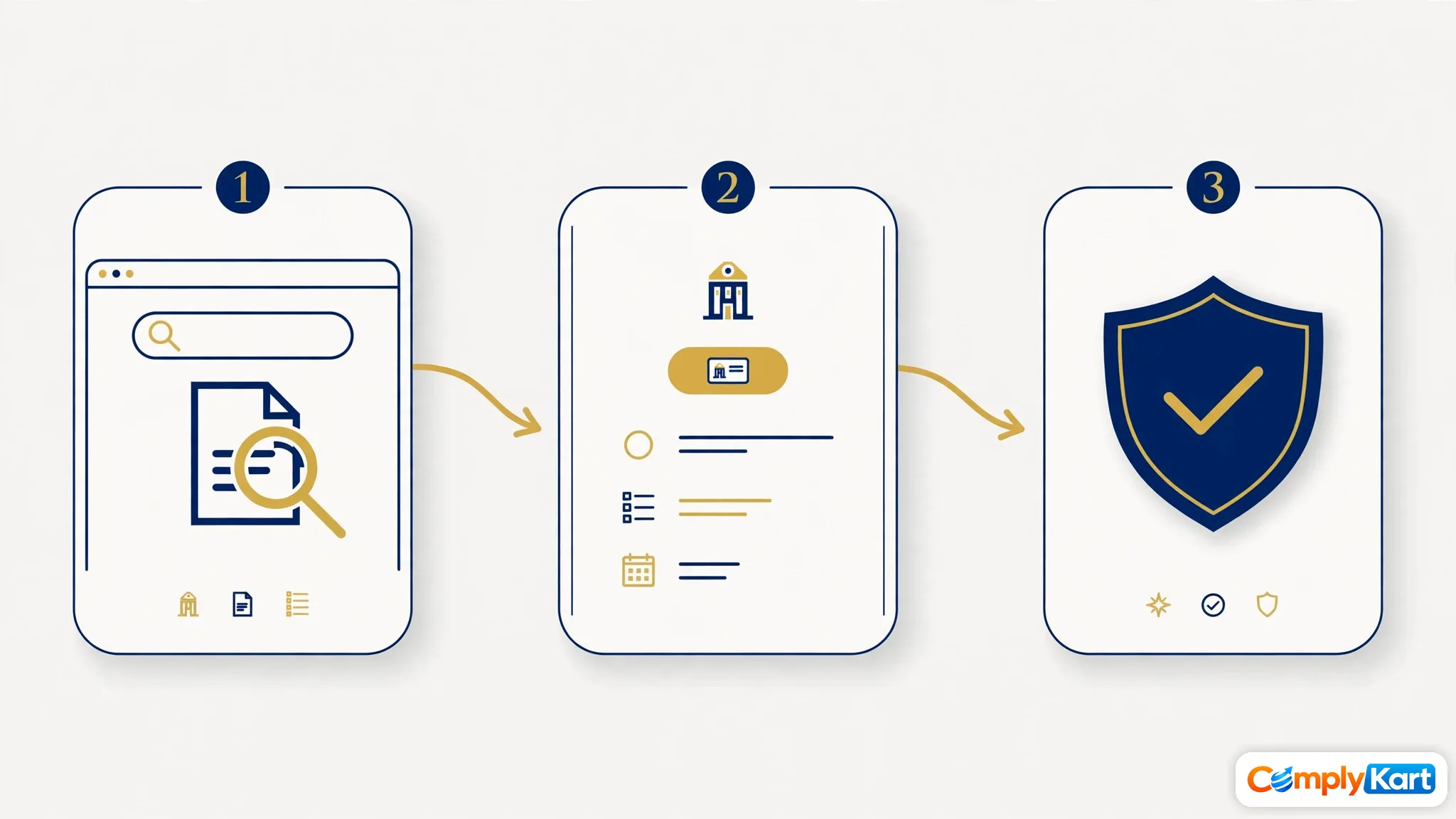
Five steps, no guesswork — you always know exactly what comes next. Tap a step to see what it involves.
12345
You pay securely. Payment is confirmed instantly, and your receipt with the written fee breakup lands in your inbox.
Is an MSA the right instrument for you?
You need an MSA if any of these fit:
You will do repeated or ongoing work with the same counterparty — development phases, monthly retainers, managed services, successive campaigns — and you are tired of renegotiating legal terms every time.
You are a service provider (IT, SaaS, agency, consultancy) who wants one set of protective terms — liability cap, IP position, payment discipline — applied consistently across all clients or across all work for one client.
You are a client engaging vendors for multi-phase work where scope will evolve, and you want the commercial terms adjustable per phase without reopening the legal framework.
The relationship involves confidential information, IP creation, or data handling in every engagement — the things that must be settled once and then relied upon.
A single service contract may be enough when:
The engagement is genuinely one-off: one project, defined scope, no expectation of follow-on work. A well-drafted standalone services agreement is simpler and proportionate.
The value at stake does not justify framework negotiation — a short, fixed-fee assignment with no IP or data complications.
Consider a different instrument when:
What you are buying is *goods*, not services — components, materials, traded products. That belongs in a vendor agreement, where the Sale of Goods Act and quality/inspection mechanics apply.
The relationship is employment — salary, benefits, and control over how work is done point to an employment agreement, not a services framework. Misclassifying employees as contractors creates PF, ESI, and tax exposure.
One party is really acting as the other's agent or distributor. Agency and distribution create different legal duties and need their own agreements.
What must be decided before drafting — and where each decision lives
The single most important drafting discipline in an MSA engagement is deciding what belongs in the MSA and what belongs in the SOW. Get this wrong and you get the two classic failures: an MSA bloated with project details that must be renegotiated every engagement, or SOWs so thin that every scope question becomes a legal dispute.
Decisions that belong in the MSA (the stable framework):
1. The commercial model. Time-and-materials, fixed-fee, retainer, or a mix — and the invoicing mechanics: invoice frequency, payment terms in days, taxes, expenses, and interest on late payment. The MSA sets the principles; individual SOWs set the actual rates and amounts.
2. IP ownership — the clause that decides disputes years later. India has no automatic "work for hire" rule. The MSA must state expressly whether IP in deliverables is assigned to the client on creation (or on payment), or retained by the provider with a licence to the client — and what happens to pre-existing IP and tools each side brings in (background IP). For software, this means source code, not just the running application. Vague IP clauses are the most litigated part of Indian services contracts.
3. Confidentiality and data. A confidentiality clause covering the relationship (or a reference to a standalone NDA), plus data-protection obligations reflecting the DPDP Act, 2023 where personal data is handled: purpose limitation, security measures, breach notification, and restrictions on sub-processors. If the provider will process customer data, this section needs care, not boilerplate.
4. Limitation of liability. The cap (commonly expressed as fees paid in the preceding 12 months, or a fixed amount), the exclusion of indirect and consequential damages, and the carve-outs neither side will accept a cap on — typically fraud, wilful misconduct, IP infringement, and breach of confidentiality, sometimes with a higher "super cap" for data-breach claims. Liability for fraud cannot be excluded at all under Section 23 of the Contract Act.
5. Indemnity. Who compensates whom for third-party claims: the provider indemnifies for IP infringement in the deliverables and breach of its warranties; the client indemnifies for misuse of the deliverables and breach of its obligations. The indemnity should name covered claims specifically and state whether it sits inside or outside the liability cap.
6. Term, termination, and exit. Initial term, renewal mechanics, termination for material breach (with a cure period, typically 30 days), termination for convenience (with notice, typically 30–90 days, if agreed), and what happens on exit: transition assistance, handover of materials and credentials, return or deletion of data, and payment for work performed. Exit provisions are the most under-drafted part of most MSAs.
7. Dispute resolution and governing law. Litigation or arbitration; if arbitration, the seat, the rules, the number of arbitrators, and the language. For cross-border MSAs, governing law needs explicit attention — Indian clients should think carefully before accepting a foreign governing law they have never litigated under.
Decisions that belong in the SOW (per engagement):
Scope of services and explicit out-of-scope items
Deliverables, milestones, and acceptance criteria (who accepts, within how many days, what counts as acceptance)
Timeline and dependencies on the client (data, access, decisions — with consequences for client-caused delay)
Pricing for this engagement: fixed fee, rate card, or retainer amount; payment milestones
Service levels and service credits for this engagement (or a reference to the SLA schedule)
Key personnel, if specific people matter — and what happens if they become unavailable
The order-of-precedence rule. The MSA must state what governs if an SOW conflicts with the MSA. The standard formulation: the MSA prevails except where the SOW expressly states it is overriding a specific MSA provision. Without this clause, a conflict between the two documents is litigated instead of resolved.
Advantages of a proper MSA + SOW structure
New work starts in days, not weeks. Once the MSA is signed, each engagement needs only a commercial SOW — scope, timeline, price. The legal negotiation that consumed weeks on the first project does not repeat. For providers, this is a sales accelerator; for clients, it is procurement that keeps pace with the business.
Legal terms stay consistent. The liability cap, the IP position, the confidentiality duty, the termination rights — identical across every engagement. Inconsistency across one-off contracts is how companies discover, mid-dispute, that different projects with the same vendor have different liability caps. The MSA eliminates that.
Risk is allocated once, by people who understand it. The hard clauses — indemnity, liability, IP — are negotiated once, carefully, by lawyers. SOWs are then negotiated by commercial teams within boundaries the lawyers already set. This is a better division of labour than having commercial teams accidentally renegotiate liability on every project.
Scope disputes have a home. A well-structured SOW with acceptance criteria, out-of-scope items, and a change-control procedure gives scope arguments a contractual venue. "That wasn't in scope" is answered by the SOW, not by reconstructing a six-month-old conversation.
It professionalizes the relationship. Enterprise clients expect an MSA. Having a clean, balanced framework ready signals that the provider operates at a level where legal hygiene is handled — which matters in vendor empanelment, due diligence, and funding rounds.
Exit is orderly. Termination provisions with notice periods, transition assistance, and handover obligations mean the relationship can end — for convenience or for cause — without the client's operations collapsing the next morning or the provider's people being stranded mid-project.
It scales across the business. One MSA can govern dozens of SOWs across teams, locations, and years. Amendments to commercial terms happen in SOWs; the legal framework endures. The MSA becomes infrastructure, not paperwork.
Documents and information we need from you
An MSA is built from the commercial shape of the relationship. Precision here determines whether the framework actually fits the work.
About the parties and the relationship:
Full legal names, registered addresses, and authorized signatories. GSTINs where invoicing between Indian entities is involved.
The nature of the services: IT development, SaaS, consulting, marketing, support, or a mix — and whether the relationship is already running under informal or one-off contracts we should replace.
About the commercial model:
How you charge or pay: time-and-materials, fixed-fee per project, monthly retainer, or usage-based. Current rate cards or fee structures.
Invoicing and payment practices: frequency, credit period, and any history of payment friction the MSA should address.
About IP and data:
What IP will be created: software, designs, content, reports, configurations. Whether background IP and third-party components are involved, and under what licences.
Whether personal data will be processed, whose data, and where it will be stored — this shapes the data-protection clauses.
About risk appetite:
Any liability caps, indemnity positions, or insurance requirements already discussed. Existing client or vendor paper (their standard MSA) if we are redlining rather than drafting fresh.
Regulatory or customer requirements that flow down into the agreement (data localization, security certifications, audit rights).
About exit and disputes:
Desired term, renewal mechanics, and any termination rights already promised. Preferred dispute forum: arbitration (seat and rules) or courts (which city).
Execution formalities:
State of execution, for correct stamp duty. E-stamping is available in most states.
The drafting process — step by step
Step 1: Relationship mapping. A call or questionnaire captures the services, the commercial model, the IP picture, the data picture, and the history — including any past disputes with this counterparty that the framework should make unrepeatable.
Step 2: Structure confirmation. We confirm the MSA-plus-SOW structure fits (it usually does for ongoing relationships), agree what a model SOW will contain, and decide whether SLAs and service credits apply generally or per engagement.
Step 3: Term sheet on the hard clauses. Liability cap, IP ownership, indemnity scope, termination rights, payment terms — the clauses that actually get negotiated are agreed in plain language first. Everything downstream is faster when these are settled.
Step 4: MSA draft. We draft the full framework: definitions, scope of the relationship, ordering procedure (how SOWs are created and approved), fees and payment, IP, confidentiality, data protection, warranties, indemnity, limitation of liability, term and termination, transition, force majeure, governing law, and dispute resolution — plus a model SOW template as an annexure.
Step 5: Negotiation. The counterparty's markup is expected. We distinguish the cosmetic (wording), the commercial (rates, caps, credit periods — your decision), and the structural (deleted IP assignment, uncapped indemnity, removed termination rights — we push back). We handle the rounds until both sides' lawyers are done.
Step 6: SOW template finalization. The model SOW annexure is tuned so commercial teams can actually use it without legal help each time: scope, deliverables, acceptance, timeline, pricing, dependencies, and signature blocks.
Step 7: Stamping, execution, and handover. Final MSA on stamp paper of the correct denomination or e-stamped, executed by authorized signatories. You receive the executed framework with a one-page operating summary — how to issue an SOW, the payment clock, the termination notice period, the escalation contacts — so the framework is used, not filed.
How long does it take?
A standard MSA — settled commercial model, no unusual IP or data complications — is drafted within 5 working days of receiving complete inputs. Negotiation is the variable: a balanced first draft with a reasonable counterparty typically converges in 2 to 4 weeks; a heavily one-sided first draft from the other side, or multi-stakeholder enterprise procurement, can take 6 to 8 weeks. Stamping and execution add a few days. Plan for one to two months end to end for a negotiated MSA; the SOWs that follow take days.
How ComplyKart helps
We draft frameworks, not just contracts. The MSA-versus-SOW separation, the order-of-precedence clause, the model SOW annexure — the structural decisions that determine whether the framework actually works in practice, not just on paper.
We get the IP clause right for India. No reliance on foreign "work for hire" assumptions. Express assignment language that satisfies Section 19 of the Copyright Act, clean handling of background IP and third-party components, and source-code escrow provisions where the client's business depends on code it does not own.
We negotiate enterprise paper. Large clients send their standard MSAs — often aggressive on liability caps, indemnity, termination, and IP. We redline them against market norms, tell you which positions are genuinely dangerous versus merely aggressive, and negotiate the changes that matter in language their counsel respects.
We make SLAs operational. Service levels with measurable definitions, sensible exclusions, credit mechanics that actually trigger, and termination rights for repeated failure — not SLA schedules that look impressive and pay nothing.
What we will not do: We will not draft an MSA that misclassifies employees as contractors — if the relationship is really employment, we will tell you and draft accordingly. We will not promise that a liability cap protects you against every claim; fraud and wilful misconduct sit outside caps as a matter of law. And we will not let an SOW silently override the MSA's protections — the order-of-precedence discipline runs both ways.
What happens after signing
Issue SOWs under the framework. Every engagement gets an SOW referencing the MSA ("issued under the Master Service Agreement dated ___"). This keeps the MSA's liability cap, IP assignment, and termination rights governing each project — not whatever terms someone pastes into an email.
Operate the acceptance discipline. Deliverables should be formally accepted (or rejected with reasons) within the SOW's acceptance window. A client who uses deliverables in production for months and then claims they were never accepted will struggle — but only if the acceptance procedure was actually followed and documented.
Track service levels. Where SLAs apply, measure and report as the agreement requires. Service credits that are never claimed because nobody measured are a discount the provider keeps.
On breach: Follow the agreement's procedure — written notice specifying the breach, the cure period (commonly 30 days), then the contractual remedies. Terminating without giving the required cure period can itself be a breach. For repeated SLA failures, check whether the agreement gives a termination right before the relationship deteriorates further.
At renewal: Review the commercial terms — rates, caps, service levels — against how the relationship actually performed. The legal framework usually renews as-is; the commercial terms in new SOWs should reflect what was learned.
MSA vs SOW — the structure that makes it work
This section exists because the distinction is the whole point of the instrument, and because most businesses get it wrong in one of two directions.
The MSA is the constitution. It answers the questions that are the same for every engagement: How does payment work? Who owns what is created? How is liability limited? What is confidential? How can the relationship end? Where do disputes go? These answers should not change between Project 1 and Project 7, so they are negotiated once, by lawyers, and then left alone.
The SOW is the legislation. It answers the questions unique to this engagement: What exactly will be done? What will be delivered, and when? What does acceptance look like? What does it cost? What does the provider need from the client, and what happens if the client does not provide it? These answers change every time, so they live in a short commercial document that commercial teams can negotiate without lawyers.
The two classic failures. Failure one: the MSA contains project specifics — named deliverables, this quarter's rates, a particular timeline. The next engagement needs different specifics, so the MSA must be amended — which means the lawyers renegotiate the whole framework, defeating its purpose. Failure two: the SOW is two paragraphs saying "services as discussed," with no acceptance criteria, no dependencies, no change control. The first scope dispute then has no contractual home, and the MSA's careful legal framework is irrelevant because the commercial terms were never written down.
The ordering procedure matters. The MSA should define how SOWs come into existence: who can propose one, who approves it, what form it takes, and when it becomes effective (on signature by both sides, typically). An SOW process that requires dual signatures prevents the "we thought the email thread was the SOW" dispute.
Change control belongs in the SOW template. Scope will change mid-engagement — it always does. The model SOW annexure should include a change-request procedure: written request, impact assessment (time and cost), written approval before the changed work begins. Work performed on verbal change instructions is the most common source of unpaid-scope disputes in Indian IT services.
What the MSA must say about the SOW. Three provisions: (1) SOWs are governed by the MSA; (2) the order of precedence if they conflict (MSA prevails unless the SOW expressly overrides a named provision); (3) termination or expiry of the MSA does not automatically terminate SOWs already in force — or does, if that is what the parties want. Silence on any of these is a dispute waiting for a forum.
Service levels and service credits — how the SLA actually works
Service Level Agreements are where MSAs promise performance and where most of them quietly fail to deliver remedies. Understanding the mechanics is the difference between an SLA that protects you and one that decorates the annexure.
What an SLA measures. Uptime or availability (for hosted services and support), response and resolution times (for support and maintenance), delivery milestones (for project work), or quality metrics (defect rates, error budgets). Each metric needs four things: a precise definition, a measurement method and source of truth, a measurement window (monthly is standard), and exclusions. An SLA without exclusions is a promise the provider cannot keep — scheduled maintenance, client-caused incidents, force majeure, and third-party failures must be carved out, or the metric is meaningless.
The 99.9% illusion. A 99.9% monthly uptime commitment sounds near-perfect. It permits roughly 43 minutes of downtime per month. Whether that is acceptable depends on the service — for an internal reporting tool, fine; for a payments gateway, catastrophic. Negotiate the number against the business impact, not against what sounds impressive. And check whether the SLA measures what you actually care about: uptime of the login page is not the same as successful transaction processing.
How service credits work. When the provider misses a service level, it grants a credit — a percentage reduction on the fee for the affected period, applied against the next invoice. Credits are pre-agreed liquidated adjustments, not damages: they compensate for reduced service value without requiring proof of loss. Typical structures are tiered (deeper misses earn larger credits) and capped — commonly around 5% of the monthly fee, though critical services negotiate higher.
The "sole remedy" trap. Most provider-drafted MSAs state that service credits are the client's sole and exclusive remedy for SLA failures. Read that sentence carefully: it means that even if a month of downtime costs you real business, your contractual recovery is capped at the credit — often 5% of one month's fee. For business-critical services, negotiate carve-outs: repeated SLA failure (say, three consecutive months, or four in twelve) as a termination-for-cause right, and the express preservation of damages claims for defined serious failures. Credits handle the routine; the contract must handle the catastrophic.
Credits must be claimed. Many SLAs require the client to claim credits within a window (commonly 30 days after the month of failure), with supporting data. Credits that require a claim and are never claimed are simply not paid. Diary the measurement cycle.
SLA failure vs material breach. A single missed service level is rarely a material breach justifying termination — that is what credits are for. But a pattern of misses, or a miss so severe it defeats the purpose of the engagement, can cross into material breach. The MSA should say so expressly: define the threshold (consecutive failures, aggregate downtime) at which SLA failure becomes a termination right. Without that bridge, you have credits for the small failures and no remedy for the big one.
Common mistakes that weaken MSAs
Project details in the MSA. Named deliverables, specific timelines, this engagement's pricing — in the framework document. The next project needs different details, forcing a framework amendment and a fresh legal negotiation. Keep the MSA structural; keep the SOW specific.
The missing IP assignment. Assuming the client automatically owns what it paid for. Under Indian law it does not — the creator owns the copyright unless assigned in writing. Every MSA without an express IP assignment clause is a future ownership dispute, usually discovered during due diligence for a funding round or acquisition.
"Work for hire" language copied from US templates. India has no work-for-hire doctrine. A clause stating that deliverables are "works made for hire" has uncertain effect under the Copyright Act, 1957. Use express assignment language that satisfies Section 19 instead — and make sure the assignment covers all relevant rights (reproduction, adaptation, communication to the public) for the full term.
Source code silence. The MSA assigns "intellectual property in the deliverables" but never mentions source code. The provider delivers the running application and treats the code as its proprietary tool. If the client's business depends on that code, the MSA must expressly include source code in the assignment — or provide for escrow with release triggers (provider insolvency, support failure).
Liability cap with no carve-outs — or carve-outs with no cap. An unlimited liability cap exposes the provider to bet-the-company risk and will be renegotiated under pressure anyway. Conversely, carve-outs so broad (every indemnity uncapped) that the cap is meaningless will be rejected by the provider's counsel. The market position: cap at 12 months' fees, carve out fraud, wilful misconduct, IP infringement, and confidentiality breach — with a higher super-cap for data-breach claims where data is involved.
Service credits as the only remedy, unexamined. Accepting "sole remedy" language for SLA failures without considering what a serious failure would actually cost. Negotiate the termination bridge for repeated failures.
No exit provisions. Termination rights drafted, but nothing about what happens after: transition assistance, handover of materials, credentials, documentation, data return or deletion, and payment for work in progress. The exit clause is tested exactly when the relationship is at its worst — draft it for that day.
SOWs that don't reference the MSA. Engagements run on email threads and verbal instructions, never formalized as SOWs under the framework. When the dispute comes, the MSA's protections arguably do not apply to work never brought under it. The discipline of issuing SOWs is operational, not legal — but the legal consequences of skipping it are real.
Data protection as an afterthought. Personal data processed under the MSA with a one-line confidentiality clause and no DPDP Act compliance: purpose limitation, security safeguards, breach notification timelines, sub-processor controls, data return on exit. Regulatory exposure now attaches to the client as data fiduciary — the MSA must allocate these duties expressly.
MSA vs one-off service contract — when each fits
Question
MSA + SOWs
Single service contract
Relationship shape
Ongoing or repeated engagements with the same counterparty
One project, defined scope, no expected follow-on
Legal negotiation
Once — the framework; SOWs are commercial
Per engagement — full legal review each time
Speed of new work
Days — new SOW under existing framework
Weeks — new contract negotiation
Consistency
Liability cap, IP, confidentiality identical across engagements
Terms may drift between contracts with the same party
Upfront cost
Higher — framework negotiation takes 1–2 months
Lower — one document, one negotiation
Best for
IT services, SaaS, retainers, phased consulting, managed services
Single fixed-scope projects, pilot engagements, low-complexity services
The practical rule: if you can picture a second engagement with this counterparty, the MSA is worth the upfront investment. The first SOW under a signed MSA is where the return starts.
Sources
Indian Contract Act, 1872 — Sections 10 (valid contracts), 23 (lawful object), 27 (restraint of trade), 73–74 (damages), 124–125 (indemnity)
Specific Relief Act, 1963 — Section 14 (determinable contracts not specifically enforceable)
Information Technology Act, 2000; Digital Personal Data Protection Act, 2023 (data-protection duties)
Indian Oil Corporation Ltd. v. Amritsar Gas Service, (1991) 1 SCC 533 — termination for convenience; determinable contracts
Arbitration and Conciliation Act, 1996 (where arbitration is chosen)
Registration Act, 1908 — MSAs not compulsorily registrable
State Stamp Acts (duty on agreements is a state subject)
*Last verified: October 2026. Agreement drafting reflects the law as it stands; we update this page when statutes or key rulings change.*
FAQ
Frequently asked questions
11 answers from our consultants.
You pay for our expert's time — document checking, filing, follow-ups — not the government. The government fee goes to the government; our fee is for the work we do so you don't have to figure it out yourself.
An MSA is the umbrella — it sets all legal terms once. Each project then runs on a short SOW. A regular contract bundles everything per project, which means renegotiating legal terms every time.
Typically 5–7 working days for the MSA plus SOW template.
Common benchmarks are the fees paid in the preceding 12 months, or a fixed multiple. We advise based on your risk profile and industry norms.
Whoever the MSA says — typically the client owns project deliverables while you retain your pre-existing tools and methods. We draft the split explicitly.
Yes, as a starting template — though enterprise clients will negotiate changes. We draft a strong base position for those negotiations.
Yes — MSA review and negotiation is frequent work for us. We redline from your side and explain every material change.
Tell us your situation in plain words — what you're trying to do, not which form you think you need. Half our job is stopping clients from buying the wrong service. The first consultation is free and honest.
Yes. We quote professional fee + government charges + taxes separately, in writing, before you pay. The number doesn't change midway. If the government fee changes, we show you the notification.
Every engagement gets a tracker — you see what's filed, what's pending and what's next. No chasing on WhatsApp for status updates.
Both. Startups get incorporation + early compliance bundles; established companies get annual retainers. About half our clients started with us at incorporation.
What clients say about working with us
Real stories from businesses we've worked with.
Trademark Registration“
Our Trademark was applied in all the classes with a short span of time by Complykart Trademark Experts and I can say the level of expertise and commitment they carry is remarkable. It's an A+ from my side. We are now sticking to ComplyKart only.
Company Registration“
I found the professionalism of the staff at complykart.com, a pleasure to work with. As a foreigner to India, they took the time to explain the documentation and assisted in every question I raised. I was pleased that complykart.com made it easy for my Business.
Merger & Acquisition“
Trust, Commitment, Dedication and responsiveness are the best things with ComplyKart. Thanks for handling our Merger assignment with so much care. After my business disputes, complykart handles all things with own sense of understanding.
Senior Consultant · ESOP, Trademark & General Advisory · 14+ years experience
Pankaj Jain is a senior consultant covering ESOP structuring, trademark and IP protection, accounting advisory and legal documentation. With the broadest practice at the firm, he handles the matters that don’t fit neatly in one box.
Last reviewed: 16 November 2026
Get a free consultation
Talk to a ComplyKart professional about Master Service Agreement. The first consultation is free.