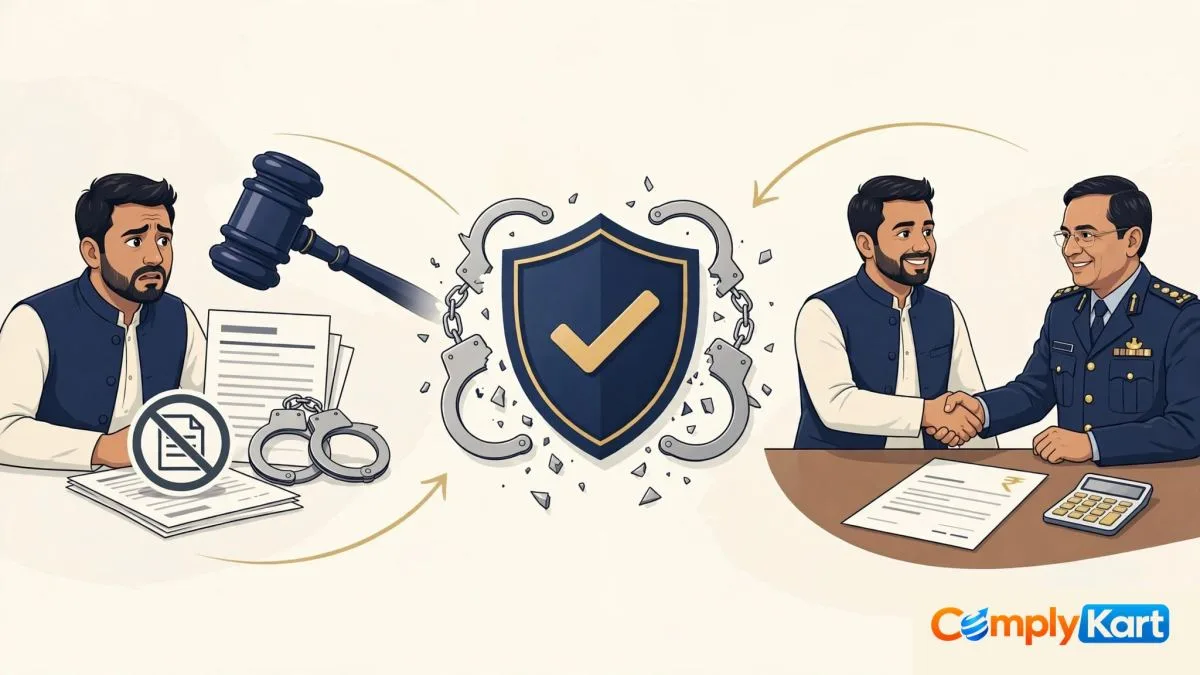
Five steps, no guesswork — you always know exactly what comes next. Tap a step to see what it involves.
12345
You pay securely. Payment is confirmed instantly, and your receipt with the written fee breakup lands in your inbox.
Is a power of attorney the right document for you?
You need a PoA if any of these fit:
You are an NRI who needs someone in India to manage, rent, sell or buy property on your behalf.
A parent or relative is unwell or unavailable and someone must operate bank accounts, sign papers or handle litigation.
You are buying or selling property but cannot be present at the sub-registrar's office on the registration date.
A business owner needs a manager or partner to sign contracts, appear before authorities or handle compliance in another city.
Co-owners of a property want one of them to handle the sale process, from negotiation to registration.
You probably do not need a PoA if:
You want to transfer property ownership to someone — a PoA does not do that. You need a registered sale deed or gift deed. A PoA can authorize the agent to execute that deed, but it cannot replace it.
You want to appoint someone to make medical decisions after you lose capacity — India has no codified healthcare PoA, and a standard PoA ends on mental incapacity. Speak to a lawyer about the alternatives.
The task is a one-time signature and the person can simply be present — a PoA adds cost and risk where a personal appearance would do.
You want to give someone your property "without the paperwork" — that is the SA/GPA/WILL structure the Supreme Court struck down in Suraj Lamp. It does not work and it creates defective title.
What must be decided before drafting
GPA or SPA. This is the first and most consequential choice. A General Power of Attorney grants the agent authority across a range of matters — banking, litigation, property management, contracts. A Special Power of Attorney confines the agent to one defined act, such as "execute and register the sale deed for Flat 402, Tower B, on my behalf." For a single transaction, the SPA is almost always the right call: it is narrower, harder to misuse, and cheaper to stamp in most states. Reserve the GPA for genuine ongoing delegation — an NRI managing a portfolio, a business owner empowering a manager.
Who the agent is. Choose someone you trust absolutely, because the law treats the agent's acts as your acts. Banks, registrars and courts do not look behind a valid PoA. For property transactions, buyers prefer SPAs given to family members — and several state stamp schedules price family and non-family PoAs very differently.
Exactly what the agent may do. List the powers precisely: which accounts, which documents, which authorities, which property (full address, survey numbers). Vague phrases like "do all acts necessary" invite disputes; specific enumerations protect both sides.
Whether it can be revoked, and how. Most PoAs are revocable at will — say so explicitly. An "irrevocable" PoA is possible only where the agent has an interest in the subject matter (Section 202, Contract Act), and even then it does not transfer title.
Duration and stamp duty. A PoA can run until revoked or carry an expiry date. Stamp duty depends on state, PoA type and relationship — confirm the schedule before execution, since under-stamping is the most common reason PoAs get rejected at registration.
Advantages of a properly drafted power of attorney
Transactions happen when you cannot be there
An NRI in Toronto can close a sale in Hyderabad; a founder in Delhi can have a manager register a lease in Chennai. The PoA puts a trusted person in your legal shoes, and the Registration Act recognizes instruments executed under a valid PoA as your own acts.
One instrument, many doors
A well-drafted GPA can cover banking, litigation, property management and government filings in a single document — replacing a stack of separate authorizations and repeated consulate visits for NRIs and frequent travelers.
Narrow authority means narrow risk
The SPA's advantage is the mirror image: limiting the agent to one named transaction caps what can go wrong. A buyer seeing an SPA for "registration of the sale deed for this flat" knows exactly what the agent can and cannot do — which is why banks and buyer advocates prefer SPAs in property deals.
Registration creates a public record
A registered PoA is searchable at the sub-registrar's office. That verifiability is what makes third parties willing to rely on it. An unregistered PoA for property purposes invites suspicion and rejection.
Revocability keeps you in control
A revocable PoA is authority on a leash. The moment the task is done — or trust wavers — a registered revocation deed ends it. That control is the practical difference between delegation and surrender.
Cost is modest compared to the alternative
Stamp duty and registration typically run into hundreds or low thousands of rupees — trivial against an international flight to attend a registration, or a transaction collapsing because nobody could sign.
GPA vs SPA vs durable PoA — the distinction that decides everything
Prospects search for "GPA vs SPA" constantly, and for good reason: picking the wrong form is the single most common PoA mistake.
General Power of Attorney. Broad authority across many kinds of acts — operate bank accounts, manage property, file and defend cases, sign contracts. The 1882 Act does not use the terms "general" and "special"; the classification comes from practice and judicial interpretation. A GPA suits ongoing delegation: an NRI's portfolio manager, a business owner's trusted lieutenant. Its danger matches its breadth — a GPA in the wrong hands can sell property and drain accounts. For property transactions it must be registered, and several states levy higher stamp duty on GPAs authorizing sale, especially to non-relatives.
Special Power of Attorney. Authority for one defined act — "appear in Civil Suit No. 123/2025," "execute and register the sale deed for Flat 402." The SPA ends when the task is done. It is the instrument courts, banks and buyer advocates prefer for property transactions, because its limits are written on its face. Stamp duty is typically a modest fixed fee.
Durable PoA. A PoA that expressly survives the principal's mental incapacity. Indian law does not codify this — under the Contract Act's agency provisions, authority ends when the principal becomes of unsound mind. Some documents carry "durable" language for institutional use, but it has no settled statutory backing here. Do not rely on it for succession planning; a will and nominations are the tools for that.
The rule of thumb: if you can name the transaction, use an SPA. If you genuinely need ongoing, multi-matter delegation, use a GPA — and give it to someone you would trust with your bank password, because functionally that is what you are doing.
PoA for property sale — the Suraj Lamp rules
More property disputes in India trace to misunderstood PoAs than to any other single document.
A PoA does not transfer title. Ever. In Suraj Lamp & Industries Pvt. Ltd. v. State of Haryana, decided 11 October 2011, the Supreme Court held that a power of attorney "is not an instrument of transfer in regard to any right, title or interest in an immovable property." It creates an agency: the agent acts in the principal's name, and those acts bind the principal. That is all it does. The Court examined the widespread SA/GPA/WILL practice — sale agreement plus GPA plus will, used as a substitute for a registered sale deed — and declared it invalid as a mode of transfer. Immovable property, the Court held, "can be legally and lawfully transferred/conveyed only by a registered deed of conveyance."
Why the practice existed. The judgment is candid: GPA sales evolved to avoid stamp duty and registration charges, to avoid capital gains tax, to invest unaccounted money, and to dodge development authorities' transfer restrictions. The Court directed that municipal and revenue authorities must not mutate records on the basis of SA/GPA/WILL documents.
What this means for you, practically:
If someone offers to "sell" you property through a GPA alone — no registered sale deed — you are not buying ownership. You are buying litigation.
A PoA can authorize an agent to execute and register a proper sale deed on the owner's behalf. That is its legitimate role in property transactions, and how NRIs routinely sell property.
Even an "irrevocable" PoA does not transfer title — the Court addressed this directly.
An agreement to sell creates no interest in the property either (Section 54, Transfer of Property Act) — it supports a suit for specific performance, not a conveyance.
Before buying from a PoA holder, verify the PoA is registered, the principal is alive, the PoA has not been revoked, and the sale deed is duly stamped and registered.
Genuine uses survive. The Court did not outlaw PoAs — it outlawed their misuse as sale substitutes. Giving your brother a registered PoA to manage your flat, authorizing an agent to register a sale deed you have agreed to, empowering a manager to handle litigation: all perfectly valid.
Documents and information needed
From the principal: identity proof (Aadhaar/PAN/passport; NRIs: passport), address proof, passport-size photographs, the agent's full details and relationship, and — for property PoAs — complete property details with survey/khasra numbers and title documents.
From the agent: identity and address proof, photographs, and presence at registration with two witnesses (for property PoAs).
For NRI execution: passport copy, the PoA executed on plain paper abroad and attested (consulate or notary-plus-Apostille), and proof of the receipt date in India — the three-month adjudication clock runs from receipt.
Power of attorney process — step by step
1. Decide GPA vs SPA and define the powers
Map the exact acts the agent must perform. If it is a single transaction — one sale, one registration, one court case — draft an SPA naming it. List powers specifically; avoid blanket authorizations unless a GPA is genuinely needed.
2. Draft the deed
The deed recites the principal and agent, the recitals (why the PoA is needed), the enumerated powers, the property details if any, the duration, and the revocation clause. For property PoAs, the description of the property must be precise — vague descriptions get rejected at registration.
3. Execute on proper stamp paper
In India, execute on non-judicial stamp paper of the value your state's schedule prescribes. Both principal and agent sign, with two witnesses. For non-property matters, notarization after execution is standard and usually sufficient.
4. Register it (property matters)
Present the PoA at the sub-registrar's office with jurisdiction over the property (or the principal's residence for non-property PoAs). The agent is typically presented with two witnesses. Pay the registration fee. The sub-registrar records it and returns the registered original.
5. For NRIs: attest abroad, adjudicate in India
Execute on plain paper abroad. Get it attested by the Indian Consulate, or notarized locally and Apostilled if you are in a Hague Convention country. Courier the original to India. Within three months of receipt, present it to the District Registrar for adjudication — where Indian stamp duty is paid. Then register it at the sub-registrar if it touches property.
6. Notify everyone who needs to know
Send copies to the banks, the sub-registrar, the housing society, tenants — wherever the agent will act. An PoA nobody has seen is an PoA that will be questioned at every counter.
7. Revoke when done
When the task completes, execute and register a revocation deed and notify all concerned parties in writing. Do not leave live PoAs floating around after their purpose is served.
How long does it take?
Drafting: 1–2 days once instructions are clear. Execution and notarization in India: same day. Registration at the sub-registrar: 1–3 working days in most cities. NRI route: consulate attestation usually a day; courier 3–5 days; adjudication 2–3 weeks — budget 3–4 weeks end to end, and watch the three-month adjudication deadline from the date the document reaches India. Revocation: 1–3 days plus notification time.
Stamp duty and registration fees
Stamp duty on a PoA is state-specific and depends on the type of PoA and the relationship between principal and agent. As a sense of the range: several states charge a modest fixed fee (₹100–₹500) for SPAs; GPAs authorizing property transactions attract higher duty, and some states levy ad valorem duty — for instance, a GPA to a non-family member authorizing sale can attract 1% of market value in some schedules. Registration fees at the sub-registrar are typically a few hundred to a thousand rupees.
For NRI PoAs adjudicated in India, the stamp duty is assessed under the state Stamp Act at adjudication, and missing the three-month window can attract penalties running to multiples of the duty — one more reason to diary the receipt date. Always confirm your state's current schedule before execution; these figures move.
How ComplyKart helps in this entire process
Choosing the form. We tell you honestly whether you need a GPA or an SPA — most people who ask for a GPA need an SPA. Narrower is safer and cheaper.
Drafting. Enumerated powers, precise property descriptions, duration and revocation terms — the specifics that make registrars accept the deed and buyers trust it.
Stamp duty assessment. We check your state's current schedule for your exact situation (GPA vs SPA, relative vs non-relative, property vs non-property) so the document is neither under- nor over-stamped.
Execution and registration. We arrange execution, witnessing, notarization and presentation at the sub-registrar's office, and track the file to registration.
NRI execution. We prepare the plain-paper draft for consulate attestation or the notary-plus-Apostille route, brief you on your country's exact procedure, and handle adjudication and registration in India within the three-month window.
Revocation. When the job is done, we draft and register the revocation deed and prepare the notification letters.
What we do not do: we cannot make a PoA transfer property title — nobody can, after Suraj Lamp. We will not draft PoAs designed to evade stamp duty or disguise a sale, and we cannot validate a PoA whose principal has died or lost capacity.
What happens after the PoA is executed
In the first 30 days: circulate certified copies to every institution where the agent will act — banks (most have their own PoA acceptance formalities, taking 7–15 days), the housing society, the sub-registrar's office, tenants. Confirm acceptance before the agent needs to use it.
Diaries to maintain: the expiry date if any, and — for NRI PoAs — the adjudication deadline. A PoA is a live instrument; treat it like one. When the task completes, revoke: execute and register a revocation deed and notify all concerned parties. Do not leave live PoAs floating around after their purpose is served.
Revocation and termination — ending a PoA
Voluntary revocation. Execute a revocation deed — ideally registered at the same sub-registrar's office — and notify in writing every person and institution where the agent has acted. Registration is what makes revocation effective against third parties; an unregistered letter may not protect you against someone who dealt with the agent in good faith.
Automatic termination. A PoA ends by operation of law on the principal's death, mental incapacity, or — for an SPA — completion of the task. Buyers must verify the principal is alive: a sale deed executed under a dead person's PoA is void.
What revocation does not undo. Acts performed while the PoA was valid remain binding. Revocation stops future acts; it does not unwind past ones.
If the principal is outside India (NRI execution)
This is where most PoAs fail — not in drafting, but in the cross-border formalities.
Two valid routes. First, attestation by a Consular Officer at the Indian Embassy or Consulate, recognized under the Diplomatic and Consular Officers (Oaths and Fees) Act and Section 33(1)(c) of the Registration Act. Second, notarization plus Apostille under the Hague Convention of 1961 (India acceded in 2005) — valid for the USA, UK, UAE, Canada, Australia and EU states, with no further embassy stamp needed, though some registrars still prefer seeing consulate attestation.
The three-month adjudication clock. A PoA executed abroad on plain paper carries no Indian stamp. Within three months of its receipt in India, present it to the Collector of Stamps/District Registrar for adjudication — assessment and payment of Indian stamp duty. Miss the window and you face condonation with penalties up to ten times the duty. Keep the courier receipt; it proves your receipt date.
Adjudicate in the right state. Stamp duty is state-specific. A PoA adjudicated in Delhi does not satisfy a sub-registrar in Maharashtra. Adjudicate where the property is, then register the PoA at the sub-registrar's office with jurisdiction over it.
Common mistakes and how to avoid them
Using a GPA where an SPA would do. Broad authority is broad risk. If the task is one transaction, draft for one transaction.
Assuming the PoA transfers ownership. It does not — Suraj Lamp settled this. A GPA "sale" without a registered deed buys you a lawsuit, not ownership.
Skipping registration for property PoAs. A notarized-but-unregistered PoA will be rejected when the agent presents the sale deed. Register first, transact after.
Missing the NRI adjudication deadline. The three-month clock starts when the document reaches India, not when you signed it. Diary the courier receipt date.
Vague powers. "To do all acts necessary" invites dispute. Name the acts, the property, the accounts, the case numbers.
Leaving PoAs alive after their purpose. A PoA that outlives its task is a loaded instrument. Revoke it, register the revocation, notify everyone.
Not checking the principal is alive. A PoA ends at the principal's death. Buyers must verify — through a life certificate or direct confirmation — before paying.
Under-stamping. The sub-registrar will reject it and you will re-execute. Check the schedule first.
Sources
This page is built on the Powers of Attorney Act, 1882 (particularly Sections 1A, 2 and 4), the Registration Act, 1908 (Sections 17 and 33), the Indian Stamp Act, 1899 (provisions on instruments executed out of India and the three-month stamping requirement), the Indian Contract Act, 1872 (Sections 201–202 on termination of agency), the Transfer of Property Act, 1882 (Section 54), and the Supreme Court's decision in Suraj Lamp & Industries Pvt. Ltd. v. State of Haryana (decided 11 October 2011). State stamp schedules and registration practices vary and change — we verify the current position for your state at the time of engagement.
FAQ
Frequently asked questions
20 answers from our consultants.
You pay for our expert's time — document checking, filing, follow-ups — not the government. The government fee goes to the government; our fee is for the work we do so you don't have to figure it out yourself.
Tell us your situation in plain words — what you're trying to do, not which form you think you need. Half our job is stopping clients from buying the wrong service. The first consultation is free and honest.
Yes. We quote professional fee + government charges + taxes separately, in writing, before you pay. The number doesn't change midway. If the government fee changes, we show you the notification.
Every engagement gets a tracker — you see what's filed, what's pending and what's next. No chasing on WhatsApp for status updates.
Adjudication is the process of paying Indian stamp duty on a document executed abroad. The Collector of Stamps assesses the duty under the state Stamp Act and endorses the document. Without adjudication, the PoA is not duly stamped and cannot be used for registration.
You must apply for condonation of delay before the Collector of Stamps, pay the original duty plus a penalty that can range from a few hundred rupees to ten times the duty depending on the delay. The PoA cannot be used for registration until this is resolved.
Yes. But several states charge significantly higher stamp duty when a property-related GPA is given to a non-relative compared to a family member, and buyers and banks scrutinize non-relative PoAs more closely. For property transactions, an SPA to anyone is generally cleaner than a GPA to a stranger.
Execute a revocation deed — preferably registered at the same sub-registrar's office as the original — and notify in writing every bank, authority, tenant and buyer where the agent has acted. Until third parties have notice, acts done in good faith under the PoA may still bind you.
Immediately and automatically. Agency ends with the principal. No one can lawfully act under a deceased person's PoA, and any transaction done so is void. This is why buyers dealing with a PoA holder must confirm the principal is alive at the time of the deal.
It varies by state, by GPA vs SPA, and by whether the agent is a relative. SPAs often carry a modest fixed fee (₹100–₹500 in several states); GPAs authorizing property dealings can attract ad valorem duty. Confirm your state's current schedule before execution.
Only in narrow circumstances — where the agent has an interest in the subject matter of the agency (Section 202, Contract Act). Even an irrevocable PoA does not transfer property title and ends on the principal's death. "Irrevocable" on the document does not make it a sale.
No. Notarization authenticates execution, but a PoA used to deal with immovable property must be registered at the sub-registrar's office. An unregistered PoA will be rejected when the agent presents the sale deed for registration.
Yes, if each property is described precisely — full address, survey numbers, flat details. But separate SPAs per transaction are cleaner and reduce the blast radius if something goes wrong. For unrelated properties, consider separate instruments.
A durable PoA is one that continues after the principal's mental incapacity. Indian law does not codify this — under the Contract Act, agency ends on unsoundness of mind. Some documents carry durable language for institutional use, but it has no settled statutory backing here. Use wills and nominations for succession planning instead.
Yes. A company executes through a board resolution authorizing the signatory, and the PoA is stamped and registered like any other. This is routine for authorizing managers, advocates and consultants.
The principal executes; for property PoAs the agent (attorney holder) is typically presented before the sub-registrar with two witnesses at registration. Requirements vary slightly by state — confirm with the local office.
No — not through the GPA alone. Suraj Lamp held that SA/GPA/WILL transactions do not convey title. However, the Court also noted that transactions already acted upon need not be disturbed, and prior agreements remain available for contractual remedies including specific performance or subsequent registration. Get a lawyer to examine your specific chain and consider perfecting title through a registered conveyance now.
Only if the PoA expressly authorizes it, and even then it invites challenge — an agent acting against the principal's interest breaches fiduciary duty. Self-dealing transactions under PoAs are among the most litigated. If you are the principal, forbid it in writing unless you genuinely intend it.
A PoA with no expiry runs until revoked, or until the principal dies or becomes incapacitated. An SPA for a transaction ends when the task completes. You can also write in a fixed expiry date. There is no universal statutory validity period.
Either is valid where e-stamping is available — most states now issue e-stamps through SHCIL and authorized centers. Verify the e-stamp certificate's genuineness on the SHCIL portal before execution. Physical non-judicial stamp paper remains valid where still issued.
What clients say about working with us
Real stories from businesses we've worked with.
Trademark Registration“
Our Trademark was applied in all the classes with a short span of time by Complykart Trademark Experts and I can say the level of expertise and commitment they carry is remarkable. It's an A+ from my side. We are now sticking to ComplyKart only.
Company Registration“
I found the professionalism of the staff at complykart.com, a pleasure to work with. As a foreigner to India, they took the time to explain the documentation and assisted in every question I raised. I was pleased that complykart.com made it easy for my Business.
Merger & Acquisition“
Trust, Commitment, Dedication and responsiveness are the best things with ComplyKart. Thanks for handling our Merger assignment with so much care. After my business disputes, complykart handles all things with own sense of understanding.
Senior Consultant · ESOP, Trademark & General Advisory · 14+ years experience
Pankaj Jain is a senior consultant covering ESOP structuring, trademark and IP protection, accounting advisory and legal documentation. With the broadest practice at the firm, he handles the matters that don’t fit neatly in one box.
Last reviewed: 16 November 2026
Get a free consultation
Talk to a ComplyKart professional about Power Of Attorney. The first consultation is free.