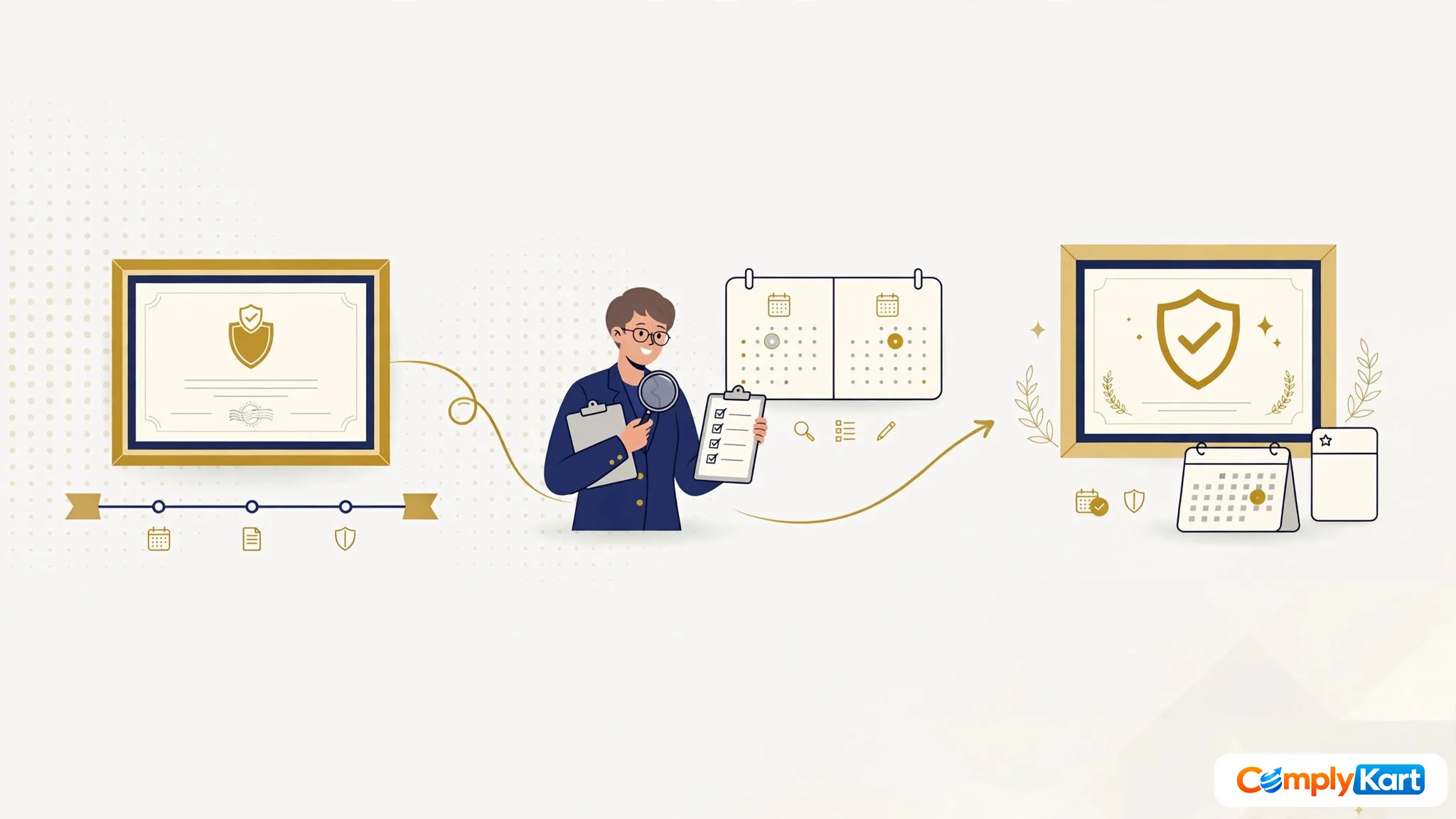
Five steps, no guesswork — you always know exactly what comes next. Tap a step to see what it involves.
12345
You pay securely. Payment is confirmed instantly, and your receipt with the written fee breakup lands in your inbox.
Is ZED certification right for your business?
ZED fits well if:
You are a manufacturing MSME with valid Udyam registration — making products, not just trading or services. The scheme covers the manufacturing sector.
You supply to OEMs, large corporates, or government buyers — ZED Silver and Gold differentiate you in vendor evaluations where quality credentials decide.
You export or plan to — Gold-level ZED signals quality and sustainability maturity that overseas buyers recognize.
You want government financial support for quality upgradation — the testing, handholding and technology subsidies are the real prize, and certification is the key that opens them.
You are a women-owned, SC/ST-owned, or North-East/Himalayan/aspirational-district MSME — the enhanced subsidies make the economics overwhelming.
Reconsider or defer if:
You are a pure trading or service MSME — the scheme is for manufacturing units.
Your Udyam registration is not in place — get that first; it is the eligibility gateway.
You need an internationally recognized certificate for export contracts specifically — ZED is an Indian government scheme; pair it with ISO 9001 or sector ISO standards for global buyers.
What must be decided before you apply
Your Udyam registration. Valid Udyam registration as a manufacturing MSME is the entry ticket. Confirm your enterprise category (micro, small, medium) — it determines your subsidy percentage and your net fee.
Which level to target. Bronze is the entry credential — 5 parameters, self-assessment, effectively free with the joining reward. Silver (14 parameters) is where the commercial differentiation starts — only a few thousand Silver units exist nationally. Gold (20 parameters) is the elite tier. Most units start at Bronze and climb; ambitious suppliers target Silver directly.
The ZED Pledge. Every applicant takes the pledge on the portal — the formal commitment to Zero Defect, Zero Effect values. It is step one, before level selection.
Documentation readiness. Udyam details, GST/TAN, quality system documents, energy and environment practices evidence — the assessment checks documented practice, not just intent. A gap review before applying avoids assessment failures.
Advantages of ZED certification
It costs almost nothing to start
The ₹10,000 joining reward covers the entire Bronze fee. For a micro enterprise, Silver costs around ₹8,000 net after the 80% subsidy; Gold around ₹18,000. Women-owned units pay nothing at any level. There is no cheaper credible certification in Indian manufacturing.
Testing and certification subsidies up to ₹50,000
After achieving a ZED level, eligible MSMEs can claim up to 75% of testing, system or product certification costs — capped at ₹50,000. This funds the product testing, BIS certification or ISO certification that buyers demand.
Handholding and consultancy up to ₹2 lakh
The scheme funds expert guidance to move to the next level — up to ₹2 lakh for consultancy and handholding support. For a small unit, this is effectively free consulting to upgrade quality systems.
Technology upgradation up to ₹3 lakh
Up to ₹3 lakh for adopting zero-effect solutions, pollution control measures and cleaner technologies. This is the sustainability half of "Zero Effect" made tangible — subsidized equipment and process upgrades.
Priority in government schemes and tenders
ZED-certified units get preference across Ministry of MSME schemes and stronger standing in government procurement. With 22 States and UTs integrating ZED into their industrial policies, state-level incentives stack on top.
Financial institution concessions
19 financial institutions offer ZED-certified enterprises concessions on processing fees and interest rates. For a unit borrowing for expansion, the interest saving alone can exceed the certification cost many times over.
OEM and export differentiation
Only a few thousand Silver and Gold units exist nationally. In vendor evaluations — OEM supply chains, large corporate procurement, export buyer audits — ZED Silver or Gold is an instant differentiator that most competitors cannot match.
A stepping stone to ISO and global standards
The ZED parameters — quality management, process control, energy, environment, safety — overlap heavily with ISO 9001, ISO 14001 and ISO 50001 requirements. Units that achieve ZED Silver or Gold find subsequent ISO certification significantly easier; the discipline is already built.
Documents required for ZED certification
Enterprise documents: Valid Udyam registration certificate, PAN, GST registration, TAN, business address proof, bank account details.
Quality and process documents: Quality policy or statement, process flow descriptions, inspection and testing records, non-conforming product handling records, customer complaint records (if any), calibration records for measuring equipment.
Safety and environment documents: Workplace safety practices evidence, waste management practices, energy consumption records, pollution control measures (where applicable), statutory compliance records (factory license, consents as applicable).
Level-specific: Higher levels (Silver, Gold) require more extensive evidence across their 14 and 20 parameters respectively — energy audits, environmental monitoring data, structured training records, management review evidence. The portal's parameter checklist for your target level is the definitive guide.
ZED certification process — step by step
Step 1: Confirm Udyam registration and category
Verify your Udyam registration is active, correctly categorized (micro/small/medium), and reflects manufacturing activity. Your subsidy percentage follows from this.
Step 2: Register on the ZED portal and take the pledge
Create your account on zed.msme.gov.in, link your Udyam details, and take the ZED Pledge — the formal commitment to Zero Defect, Zero Effect principles.
Step 3: Choose your certification level
Select Bronze, Silver or Gold based on your readiness and ambition. Review the parameter checklist for the level — 5 for Bronze, 14 for Silver, 20 for Gold — and honestly assess your evidence.
Step 4: Upload documents and complete self-assessment
Submit the required documents and complete the assessment questionnaire for your level. Bronze is largely self-assessment; Silver involves desktop/remote verification; Gold involves onsite assessment.
Step 5: Assessment
The assessment is conducted per the level's methodology — desktop review for Bronze/Silver, onsite for Gold. Assessors verify your documented practices against the parameters. Non-conformities, if any, are communicated for correction.
Step 6: Close non-conformities (if any)
Address any gaps identified — missing records, undocumented practices, unimplemented controls. Resubmit evidence within the stipulated window.
Step 7: Certification and subsidy settlement
Receive your ZED certificate from the Ministry of MSME. The applicable subsidy is adjusted — for most units, you pay only the net fee after subsidy. Claim the ₹10,000 joining reward if not already adjusted.
Step 8: Claim the linked benefits
With the certificate in hand, apply for the testing subsidy (up to ₹50,000), handholding support (up to ₹2 lakh), and technology upgradation support (up to ₹3 lakh) — the benefits that make ZED genuinely valuable.
How long does it take?
Bronze — largely self-assessment — can be completed in 2 to 4 weeks from pledge to certificate, assuming documents are ready. Silver, with desktop/remote assessment, typically takes 4 to 8 weeks. Gold, with onsite assessment scheduling, takes 2 to 4 months. The linked benefit claims (testing, handholding, technology) follow their own processing timelines after certification.
ZED and MSME subsidies — the full benefit linkage
This is the section that makes ZED worth understanding, because the certificate is really a key to a larger set of doors.
The certification subsidies themselves. 80% for micro, 60% for small, 50% for medium — plus 10% additional for women-owned, SC/ST-owned, and units in the North-East, Himalayan region, LWE areas, islands or aspirational districts, plus 5% more for SFURTI or MSE-CDP cluster units. Women-owned MSMEs currently receive 100% subsidy — free certification at every level. The ₹10,000 joining reward, available on taking the pledge, covers the Bronze fee entirely.
Testing and product certification — up to ₹50,000. After achieving a ZED level, claim up to 75% of the cost of product testing, system certification or product certification — BIS, ISO, lab testing that buyers require. This is where ZED directly funds your next quality credential.
Handholding — up to ₹2 lakh. Consultancy support to implement improvements and move to the next ZED level. For a small unit without in-house quality expertise, this is the most practically valuable benefit — expert guidance, subsidized.
Technology upgradation — up to ₹3 lakh. For zero-effect solutions: pollution control equipment, cleaner production technology, energy-efficient upgrades. The environmental half of ZED, funded.
State industrial policy integration. 22 States and UTs have written ZED into their industrial policies with additional incentives — capital subsidies, interest subsidies, priority allotments. Check your state's policy; the central benefits may be only half the picture.
Financial institution benefits. 19 banks and financial institutions offer processing-fee concessions and interest-rate benefits to ZED-certified units. When borrowing for the expansion that growth requires, mention your ZED status early in the conversation.
Total scheme disbursement. Over ₹913 crore in financial assistance had been provided under the scheme as of mid-2026 — this is not a paper scheme; money is moving.
The strategic view. Think of ZED as the foundation credential in a stack: Udyam registration → ZED Bronze (free) → testing subsidy funds ISO 9001 → handholding funds the climb to Silver → technology subsidy funds cleaner production → Gold positions you for OEM and export supply chains. Each step funds the next. That is the scheme's design, and it works for units that pursue it deliberately.
How ComplyKart helps in this entire process
Eligibility and level strategy. We confirm your Udyam status and category, assess your readiness honestly against the Bronze/Silver/Gold parameter checklists, and recommend the level that maximizes benefit for minimum rework.
Documentation preparation. We compile the quality, safety, energy and environment evidence the assessment requires — organized against the parameters, not scattered across files.
Portal filing and pledge. We handle the zed.msme.gov.in registration, the ZED Pledge, level selection and document upload — correctly the first time.
Assessment preparation. For Silver (remote) and Gold (onsite) assessments, we prepare your team for what assessors check and conduct a pre-assessment review so there are no surprises.
Non-conformity closure. If the assessment identifies gaps, we help close them with proper corrective evidence within the window.
Benefit claims. We help you claim the linked benefits — testing subsidy, handholding support, technology upgradation — with complete applications that don't stall for missing documents.
MSME scheme stacking. Where you qualify for state industrial policy incentives or other MSME schemes, we map the full benefit picture so ZED is one part of a larger subsidy strategy, not an isolated certificate.
What we do not do: we cannot influence the assessment outcome, guarantee a level, or fabricate evidence — the assessment verifies real practice, and that integrity is what makes the certificate valuable.
What happens after the certificate arrives
In the first 30 days: update your vendor registration documents, tender submissions and buyer qualification files with the ZED certificate. Inform your bank relationship manager — the financial institution concessions require you to claim them. Brief your team that the practices must continue; the next level's assessment will check.
In the first 6 months: file your linked benefit claims — testing subsidy for the product certifications your buyers want, handholding support for the climb to the next level. These have their own windows; don't let the certificate sit idle.
The recurring compliance you are signing up for
Certificate validity and renewal. ZED certifications carry validity periods per the scheme guidelines — confirm your certificate's validity and renewal requirements on the portal. Higher levels may require periodic re-assessment.
Ongoing practice maintenance. The parameters assessed — quality records, safety practices, waste management, energy tracking — must continue as routine, not as pre-assessment theater. Surveillance or re-assessment will check.
Progressing levels. Many units certify Bronze, then use the handholding subsidy to reach Silver within a year or two. Plan the climb deliberately — each level's benefits compound.
Udyam continuity. Your ZED certification rests on valid Udyam registration. Keep Udyam details current — category changes (micro to small, small to medium) affect future subsidy eligibility.
Common mistakes and how to avoid them
Applying at the wrong level. Overreaching for Gold without the evidence wastes months; under-aiming at Bronze when Silver is within reach leaves differentiation and benefits on the table. Assess honestly first.
Treating it as a paperwork exercise. Assessors — especially at Silver and Gold — verify practice, not just documents. Records reconstructed the week before assessment are detectable.
Missing the joining reward. The ₹10,000 reward that makes Bronze free must be claimed through the proper process — don't pay full fee and forget to claim.
Letting the certificate sit idle. The real money is in the linked benefits — testing, handholding, technology subsidies. Units that certify and never claim leave most of the scheme's value untouched.
Ignoring state policy stacking. The central ZED benefits are only part of the picture in the 22 States/UTs with integrated industrial policies. Check both.
Confusing ZED with ISO. They are different instruments — a government recognition scheme vs international standards. Many buyers want both. Plan for both rather than assuming one covers the other.
Comparison: ZED vs ISO certifications
ZED (Bronze/Silver/Gold)
ISO 9001
ISO 14001
Issued by
Ministry of MSME (government)
Accredited certification body
Accredited certification body
Recognition
Indian government + PSU/tender ecosystem
International, all industries
International, environment
Cost to micro unit
~₹0 (Bronze) to ~₹18,000 (Gold)
Higher (private audit fees)
Higher (private audit fees)
Linked subsidies
Yes — testing, handholding, technology
No
No
Assessment
Self/desktop/onsite by level
Two-stage audit
Two-stage audit
Best for
MSME government benefits + domestic credibility
General quality credential, tenders
Environmental compliance
Sources
This page is built on the MSME Sustainable (ZED) Certification Scheme guidelines, Ministry of MSME press releases and statements (including the August 2026 certification statistics), the zed.msme.gov.in portal's published fee and subsidy structure, and state industrial policy documents referencing ZED integration. Subsidy percentages, fee figures and benefit caps change by notification — we verify the current position at engagement.
FAQ
Frequently asked questions
19 answers from our consultants.
You pay for our expert's time — document checking, filing, follow-ups — not the government. The government fee goes to the government; our fee is for the work we do so you don't have to figure it out yourself.
Tell us your situation in plain words — what you're trying to do, not which form you think you need. Half our job is stopping clients from buying the wrong service. The first consultation is free and honest.
Yes. We quote professional fee + government charges + taxes separately, in writing, before you pay. The number doesn't change midway. If the government fee changes, we show you the notification.
Every engagement gets a tracker — you see what's filed, what's pending and what's next. No chasing on WhatsApp for status updates.
Zero Defect Zero Effect certification — the Ministry of MSME's scheme recognizing manufacturing MSMEs for product quality (zero defect) and environmental responsibility (zero effect). Three levels: Bronze, Silver, Gold — assessed on quality, safety, energy, environment and process parameters via the zed.msme.gov.in portal.
Bronze (5 parameters, self-assessment) is the entry credential for basic quality and safety. Silver (14 parameters, remote assessment) covers process control, waste, energy and safety — the commercial differentiator. Gold (20 parameters, onsite assessment) is full ZED maturity for elite positioning with OEMs and exporters.
Register on zed.msme.gov.in with your Udyam details, take the ZED Pledge, choose your level, upload the required documents, complete the assessment (self/desktop/onsite per level), close any non-conformities, and receive your certificate from the Ministry of MSME.
Bronze is effectively free — the ₹10,000 joining reward covers the ₹10,000 fee. Women-owned MSMEs get 100% subsidy at all levels. Other micro units pay 20%, small 40%, medium 50% of Silver/Gold fees after subsidies.
Up to ₹50,000 for product testing and certification costs, up to ₹2 lakh for handholding/consultancy, up to ₹3 lakh for cleaner technology adoption, priority in government schemes and tenders, concessions from 19 financial institutions, and additional incentives in 22 States/UTs with integrated industrial policies.
No. The scheme is for manufacturing MSMEs — units engaged in production. Your Udyam registration must reflect manufacturing activity.
A one-time ₹10,000 reward available on taking the ZED Pledge, which effectively makes Bronze certification free. Claim it through the portal process — don't overlook it.
Yes — women-owned MSMEs receive 100% subsidy on ZED certification at all levels (in effect since November 2023), plus enhanced support under the linked benefit components.
The assessment criteria counts per level: Bronze assesses 5 basic parameters (quality and safety fundamentals), Silver 14 (adding process control, waste management, energy, safety systems), Gold 20 (full maturity across quality, environment, sustainability, and management). The portal publishes the detailed checklist per level.
ZED is an Indian government scheme — its recognition is strongest within India's PSU, tender, OEM and institutional ecosystem. For export contracts requiring international credentials, pair ZED with ISO 9001 or sector-specific ISO standards.
ZED is a government recognition scheme with subsidies and linked financial benefits, assessed on its own parameters. ISO 9001 is a voluntary international quality standard from a private certification body with no subsidies. They complement each other — many MSMEs hold both, and ZED discipline makes ISO certification easier.
Non-conformities are communicated with a window for correction. You address the gaps — missing records, undocumented practices — and resubmit evidence. It is a corrective process, not a one-shot pass/fail.
Yes — and the scheme is designed for it. The handholding subsidy (up to ₹2 lakh) specifically supports consultancy to move to the next level. Many units certify Bronze, then climb to Silver within a year or two.
Bronze self-assessment is manageable without one for organized units. Silver and especially Gold — with 14-20 parameters and remote/onsite assessment — benefit significantly from structured preparation. The handholding subsidy can fund the consultancy.
22 States and Union Territories have integrated ZED into their industrial policies with additional incentives — capital subsidies, interest subsidies, priority allotments varying by state. Check your state's current industrial policy for the specifics.
What clients say about working with us
Real stories from businesses we've worked with.
Trademark Registration“
Our Trademark was applied in all the classes with a short span of time by Complykart Trademark Experts and I can say the level of expertise and commitment they carry is remarkable. It's an A+ from my side. We are now sticking to ComplyKart only.
Company Registration“
I found the professionalism of the staff at complykart.com, a pleasure to work with. As a foreigner to India, they took the time to explain the documentation and assisted in every question I raised. I was pleased that complykart.com made it easy for my Business.
Merger & Acquisition“
Trust, Commitment, Dedication and responsiveness are the best things with ComplyKart. Thanks for handling our Merger assignment with so much care. After my business disputes, complykart handles all things with own sense of understanding.
Senior Consultant · ESOP, Trademark & General Advisory · 14+ years experience
Pankaj Jain is a senior consultant covering ESOP structuring, trademark and IP protection, accounting advisory and legal documentation. With the broadest practice at the firm, he handles the matters that don’t fit neatly in one box.
Last reviewed: 16 November 2026
Get a free consultation
Talk to a ComplyKart professional about Zed Certification. The first consultation is free.