
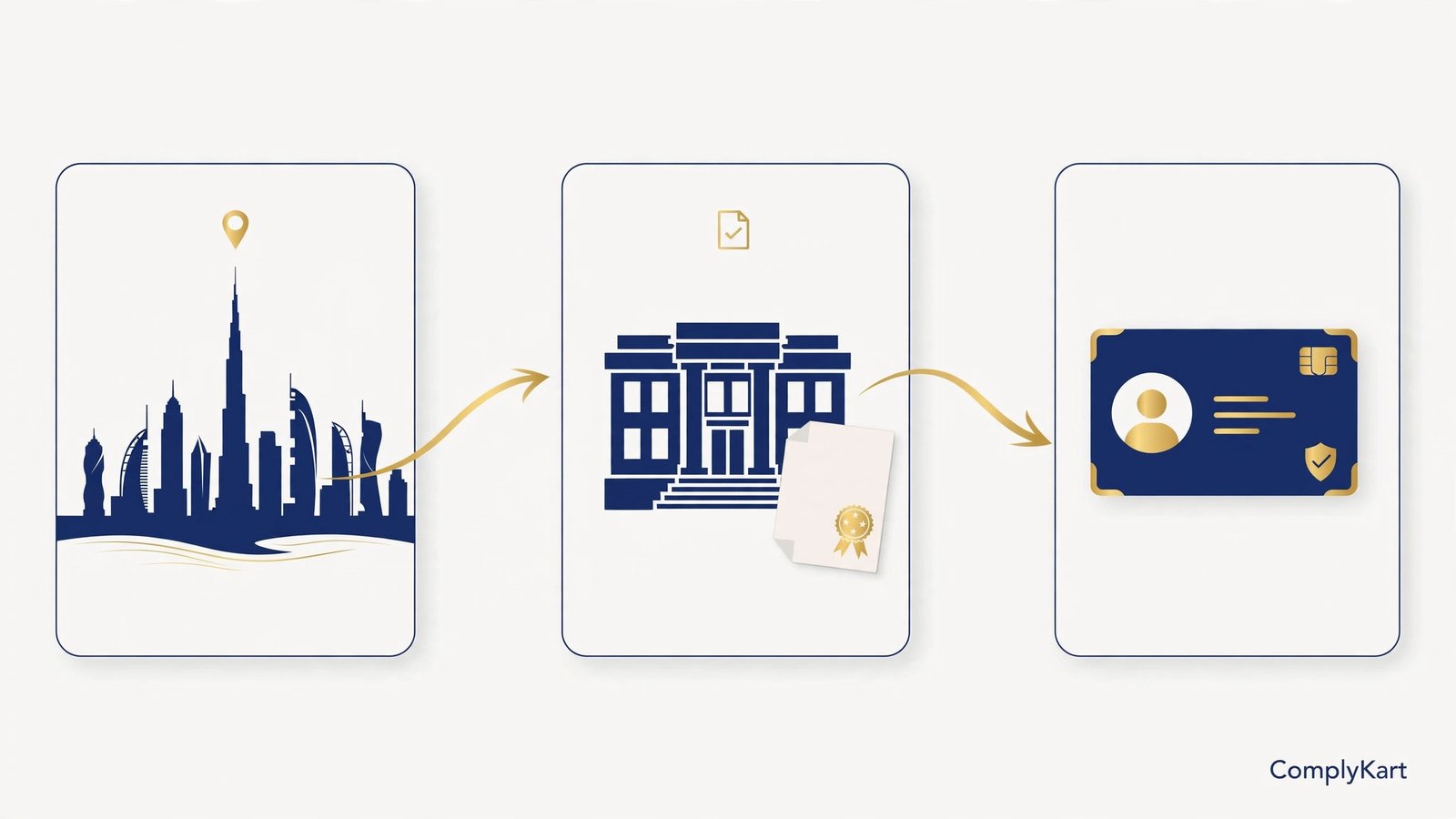
The short answer: yes, an Indian founder can own 100% of a UAE mainland company since the 2021 reform; budget roughly AED 30,000–45,000 for year one; profits above AED 375,000 face 9% corporate tax; and India-side FEMA reporting (LRS or Overseas Investment Rules) is mandatory and separate. Mainland fits when your customers are inside the UAE.
First, the honest framing: what mainland is actually for
A UAE mainland company is for selling inside the UAE — customers in Dubai, Abu Dhabi, Sharjah, the actual domestic market. If your business is really about invoicing international clients from a Dubai address, a free zone will usually cost you less. I say this upfront because half the mainland setups I see could have been free zones, and the founder only found out at renewal time.
With that out of the way, here are the questions I get asked, in the order I get them.
Key takeaways
- 100% foreign ownership of UAE mainland companies is routine since the 2021 reform, except in a small list of restricted activities.
- A realistic year-one budget for a single-founder setup is AED 30,000–45,000; licences, tenancy, and visas all renew annually.
- The UAE levies 9% corporate tax on profits above AED 375,000 and 5% VAT past AED 375,000 in taxable supplies — the "zero tax" era is over.
- India-side FEMA compliance (LRS USD 250,000/year for individuals; Overseas Investment Rules + yearly APR by 31 December for companies) is separate and non-negotiable.
"Can I really own 100% of it?"
Yes — for most activities. This is the single biggest change in recent UAE company law. Until 2021, a mainland company in most sectors needed a UAE national holding 51%. The 2021 reform scrapped that requirement for the great majority of activities. You can now hold the entire company yourself.
The caveat: a small list of strategic or restricted activities still carries ownership conditions, and professional licences sometimes need a local service agent — not a shareholder, just an agent for government liaison. Check your specific activity before you assume. But for ordinary trading, services, and contracting, 100% foreign ownership on the mainland is now routine.
"What will it actually cost me?"
Ranges, not single figures — anyone quoting one number is quoting a fantasy. Three moving parts: the licence, the office, and the visas.
The trade licence — from the emirate's Department of Economic Development — typically runs in the low tens of thousands of dirhams before activity approvals. Then the office: mainland needs a real tenancy contract (Ejari in Dubai), and this is where budgets move — modest business-district space costs meaningfully more than flexi, and visa quota tracks office size. Then the investor visa and Emirates ID, a few thousand dirhams per person.
All in: roughly AED 30,000–45,000 for year one (licence, modest office, one visa). Heavier offices or more visas push it up. And always ask for the year-two number — licences, tenancy, and establishment cards all renew annually.
"How long does it take?"
The licence itself moves fast — often within a week or two of clean documents. What takes time is everything around it: the visa process (entry permit, medical, Emirates ID), and above all, the bank account — typically two to six weeks for a new company with Indian shareholders, because banks run real compliance checks. Plan four to eight weeks from "let's go" to "money can move."
"Do I have to fly there?"
For the company formation itself, mostly no — an advisor can incorporate with attested documents while you sit in India. For the visa, yes: the medical test and biometrics for your Emirates ID happen in the UAE. Most founders do one trip of a week or so. After that, no live-there requirement — though your visa has stay conditions, so check the current terms.
"Do I get a residence visa?"
Yes. A mainland company lets you sponsor your own investor visa, then employee and family visas within limits. The quota tracks your office size — bigger office, more visas. This is one of the genuine draws of the mainland route: the visa pipeline is straightforward.
"What about tax? I heard the UAE is tax-free."
It was. It isn't, quite, anymore. The UAE introduced federal corporate tax at 9% on taxable profits above AED 375,000, effective for financial years starting on or after June 2023. Profits below that are taxed at 0%. There's also 5% VAT once taxable supplies cross AED 375,000. Registration is free and mandatory even if you owe nothing. The "zero tax" pitch is outdated — budget for bookkeeping, registration, and an annual return.
"What do I have to do on the India side?"
This is the part most setup agents skip, and it's the part that can actually hurt you.
Resident individuals investing their own money use the Liberalised Remittance Scheme: up to USD 250,000 per financial year, with reporting. Indian companies follow the FEMA Overseas Investment Rules, 2022: upfront reporting, plus an Annual Performance Report (APR) for the foreign entity every year by 31 December — the one people forget, and the compounding starts quietly. Keep the two sides separate in your head: the UAE side is licence, visas, tax; the India side is FEMA through your bank. Both need doing.
"Can I bring the profits back to India?"
Yes. The UAE doesn't restrict profit repatriation — dividends to you or your Indian entity flow freely. On the India side they're handled under FEMA like any foreign inward remittance, and your Indian tax position on them is a separate question for your Indian advisor. Keep clean books in the UAE company; your bank will ask for them when larger transfers move.
The decision, in one paragraph
Choose mainland if your revenue comes from the UAE domestic market — retail, contracting, onshore services, government tenders (many are mainland-only). Accept the higher cost and the office requirement as the price of unrestricted local access. The test is simple: where do your invoices go? "Customers inside the UAE" means mainland. "Clients everywhere else" means look at free zones first.
And a final straight word: the UAE rewards founders who set things up properly and punishes the "we'll sort the compliance later" crowd — through fines, frozen licences, and bank accounts that suddenly stop working. Do the FEMA filings, register for tax, keep books. It's boring. It's also the whole game.
Frequently asked questions
Is 100% foreign ownership really allowed on the UAE mainland?
For most activities, yes. The 2021 reform removed the old 51% local-shareholder requirement for the great majority of sectors. A few strategic activities still carry conditions, and some professional licences need a local service agent — not a shareholder. Confirm your specific activity first.
How much does a UAE mainland setup cost an Indian founder?
Roughly AED 30,000–45,000 for year one: trade licence, a modest office with tenancy contract, one investor visa. That band covers the standard single-founder setup — bigger offices and more visas push it up. Always get the year-two renewal figure too, since everything renews annually.
Do I need to visit the UAE to set up and get a visa?
The company can usually be formed remotely with attested documents. The visa can't: the medical test and Emirates ID biometrics happen in the UAE, so plan one trip of about a week. After that there's no live-there requirement, though your visa type has stay conditions.
Is the UAE still tax-free for my company?
Not quite. Corporate tax is 9% on profits above AED 375,000 (0% below), and 5% VAT past AED 375,000 in taxable supplies. Registration is free but mandatory. At 9% above a generous threshold it's still low — just budget for bookkeeping and an annual return.
What FEMA paperwork does an Indian investor need for a UAE company?
Individuals use the LRS — up to USD 250,000 per financial year, with reporting. Companies follow the Overseas Investment Rules, 2022: upfront reporting plus the Annual Performance Report every year by 31 December. The UAE side never asks about FEMA; your Indian bank will.
If you'd like someone to map the mainland route for your specific business — activity, cost, visa plan, and the India-side FEMA paperwork — ComplyKart's team handles UAE setups for Indian founders end to end. One conversation usually clears up what three months of Googling won't.


Comments
No comments yet — ask the first question below.
Join the discussion
Questions go straight to our expert desk. Comments appear after a quick review — no spam, no noise.