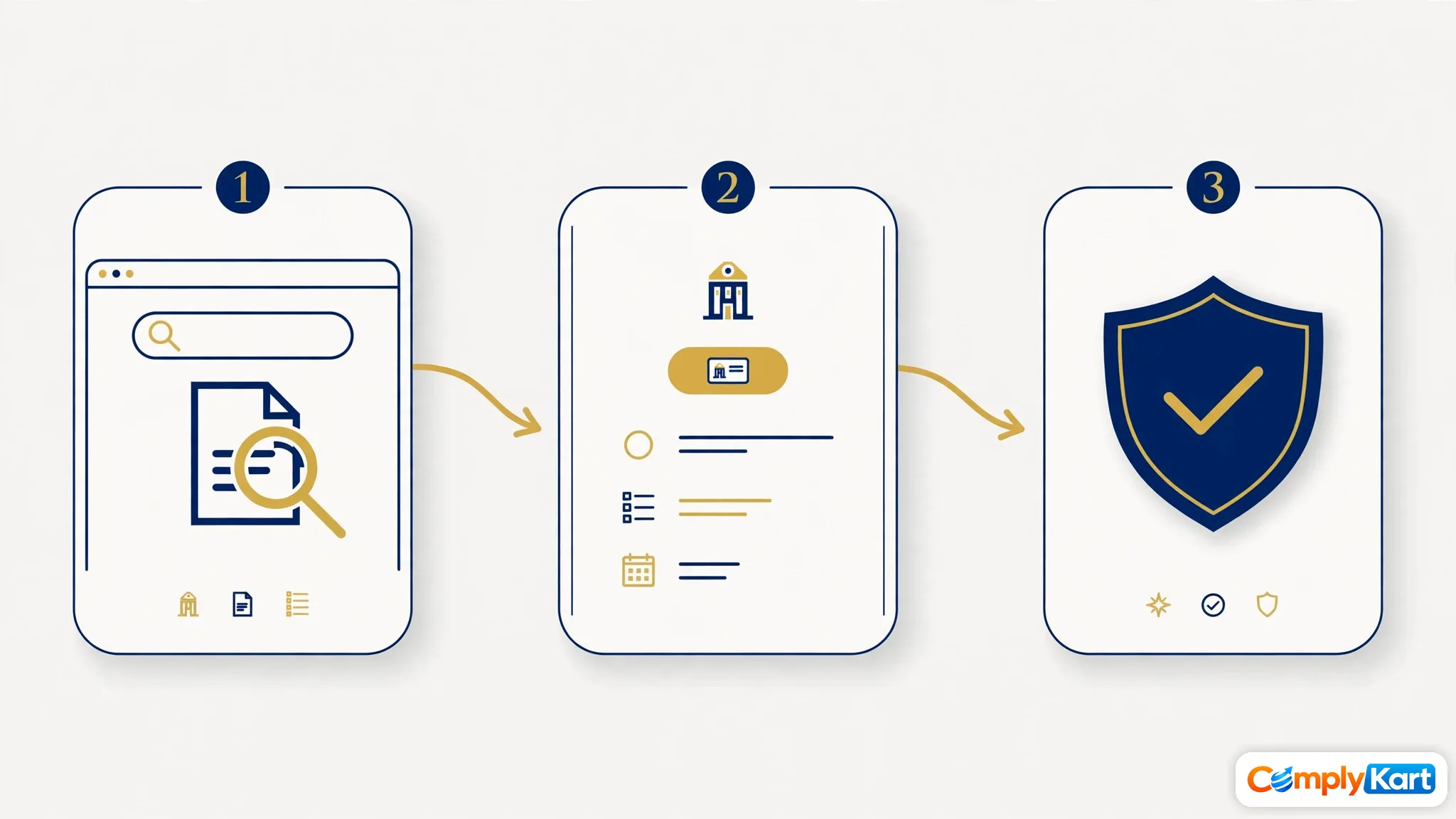
Five steps, no guesswork — you always know exactly what comes next. Tap a step to see what it involves.
12345
You pay securely. Payment is confirmed instantly, and your receipt with the written fee breakup lands in your inbox.
Overview
Every month, Indian founders ask me the same question in different words: "Should I just set up in Dubai?" The honest answer is that the UAE is genuinely one of the simplest places in the world to incorporate — and genuinely one of the easiest places to pick the wrong structure. Mainland, freezone, offshore: three doors, three different tax treatments, three different visa outcomes. Walk through the wrong one and you pay for it twice — once in setup costs, once in the restructuring.
This guide covers the whole decision. What each structure actually lets you do. What it costs in 2026, with the line items agents like to hide. How visas, banking and corporate tax really work. And the part most setup agents never mention: the India side — FEMA, overseas investment reporting, and what happens to your Indian tax position when you go. Read it end to end before you pay anyone a dirham.
One correction to make early, because it shapes everything: there is no "Dubai company" as a legal category. There are mainland companies licensed by Dubai's Department of Economy and Tourism, freezone companies licensed by 40+ zone authorities across the emirates, and offshore companies registered with JAFZA Offshore or RAK ICC. Your choice of authority decides your tax treatment, your market access, and your visa eligibility. Get that choice right and the rest is paperwork.
Mainland vs freezone vs offshore — the decision that matters most
Think of it like choosing where to live: mainland is buying a house in the city (full access, higher cost, no restrictions), freezone is a serviced apartment in a business district (fast, packaged, some house rules), offshore is a PO box abroad (cheap, private, but you cannot live there). Most founders who get this wrong chose on price alone. Price is the least important of the three variables. Market access and tax treatment matter more, and they are permanent.
Factor
Mainland
Freezone
Offshore
Licensing authority
Dept. of Economy & Tourism
40+ zone authorities
JAFZA Offshore / RAK ICC
Foreign ownership
100% in most activities
100%
100%
UAE market access
Unlimited
Via distributor or mainland branch
Not permitted
Government contracts
Eligible
Not eligible
Not eligible
Office requirement
Physical office + Ejari
Flexi-desk / virtual accepted
None allowed in UAE
Residence visas
Yes (quota linked to office)
Yes (package-based, often 1–6)
No
Setup cost (indicative)
AED 15,000–50,000+
AED 6,000–25,000
AED 10,000–20,000
Setup time
7–15 working days
3–5 working days
3–7 working days
Corporate tax
9% above AED 375,000
0% on qualifying income if QFZP; else 9%
0% UAE tax (no local income)
Customs
Standard duties
Exempt within zone
N/A
Best for
UAE B2B/B2C, retail, government work
International trade, consulting, startups
Holding, IP, global invoicing
Choose mainland if: your customers are in the UAE, you want government contracts, or you need an office your team actually sits in. The Ejari tenancy contract is the backbone of a mainland setup — budget for real rent, not a paper address.
Choose freezone if: your clients are outside the UAE, you are a consultant, trader, SaaS or e-commerce business, or you want the fastest route to a licence plus visas. The package model (licence + flexi-desk + visa quota) is the freezone's real advantage: one invoice, one renewal date.
Choose offshore if: you need a holding vehicle, want to own IP or investments, or invoice internationally without a UAE footprint. Understand the trade: no visas, no UAE trading, no office. It is a legal address, not a business presence.
Freezone deep-dive — picking the right authority
"Freezone" is not one product. DMCC (commodities and trade, JLT Dubai), IFZA (low-cost, Fujairah-based with Dubai offices), Meydan (popular with consultants), RAKEZ (Ras Al Khaimah, aggressive pricing), SHAMS (Sharjah media) — each authority sets its own licence fees, activity lists, visa quotas and renewal terms. Two founders with identical businesses can pay double depending on the authority they pick.
What to compare, authority by authority:
The activity list. Your exact business activity must exist on the authority's list. "Consultancy" is not one activity everywhere — some zones split it into a dozen sub-activities, each priced separately.
Visa quota in the package. Entry packages often include 0–2 visas. If you need four, the upgrade cost can exceed the price difference between authorities.
The flexi-desk reality. Most packages include a shared desk you will never sit at. That is fine for the licence — but know that some banks treat flexi-desk addresses sceptically at account opening.
Renewal economics. Year-two renewal is where cheap entry packages recover their margin. Ask for the renewal quote in writing before you sign year one.
Mainland deep-dive — the DET route
A mainland licence runs through the Department of Economy and Tourism: trade-name reservation, initial approval, MOA notarisation (for LLCs), tenancy contract registered on Ejari, then licence issuance. The step founders underestimate is Ejari — without a registered tenancy contract, there is no licence. Budget real office rent in your first-year maths, not just the licence fee.
The ownership reform is the mainland's biggest selling point and its most misunderstood one. Yes, most activities now allow 100% foreign ownership — the old 51% Emirati sponsor requirement is gone for the activities that matter to most founders. But "most" is doing work in that sentence. Strategic sectors (and a handful of regulated activities) still carry local-participation or approval requirements. Confirm your specific activity's ownership position with the DET activity list before you commit — not after.
Offshore — what it is and is not
An offshore company (RAK ICC is the most used; JAFZA Offshore the oldest) is fast and cheap to form, needs no office, and pays no UAE tax because it earns no UAE income. It works well as a holding company, an IP owner, or a vehicle for international contracts.
What it cannot do: trade inside the UAE, rent UAE premises, open a UAE mainland branch, or sponsor your residence visa. And one warning from experience: banks and counterparties increasingly ask what an offshore company *does*. "Holding" with no substance anywhere is a harder conversation in 2026 than it was in 2016. If you need visas or UAE clients, offshore is the wrong door.
The process — step by step
Step 1 — Fix the structure and the authority
Decide mainland / freezone / offshore against your actual customers, not your budget. Then shortlist 2–3 authorities (or the DET) and compare activity lists, visa quotas and written renewal quotes. This one decision drives everything downstream.
Step 2 — Reserve the trade name
Submit 2–3 name options to the authority. Names must avoid religious or political references, must not duplicate existing registrations, and — for mainland — follow DET naming conventions. Approval typically takes 1–3 working days.
Step 3 — Get initial approval
The authority confirms it has no objection to your activity and structure. For regulated activities (finance, healthcare, education, legal), this is where third-party approvals enter — add weeks, not days, for these.
Step 4 — Prepare the MOA and corporate documents
For LLCs and multi-shareholder structures, the Memorandum of Association is drafted and notarised. Shareholder passports, proof of address and (for corporate shareholders) attested parent-company documents are compiled. Attestation chains from India — notary, state authentication, UAE embassy — take the longest; start them early.
Step 5 — Secure the office (mainland) or flexi-desk (freezone)
Mainland: sign the tenancy and register it on Ejari. Freezone: the flexi-desk or office package is allocated with the licence. Offshore: nothing needed.
Step 6 — Pay and receive the licence
Fees are paid to the authority; the trade licence (and, for freezones, the establishment card for immigration) is issued. This is the legal birth of the company.
Step 7 — Establishment card and visas
The establishment card registers the company with immigration. Then: entry permit, medical fitness test, biometrics, Emirates ID, and visa stamping. You must be physically in the UAE for medical and biometrics — no exceptions.
Step 8 — Bank account and tax registration
Open the corporate bank account (see the banking section — start this early, it is the slowest step in practice). Register for corporate tax with the Federal Tax Authority, and for VAT if turnover crosses the threshold.
Documents required
Passport copies of all shareholders and directors (valid 6+ months)
Proof of residential address (utility bill or bank statement, attested if required)
Passport-size photographs (UAE visa specifications)
Trade-name reservation certificate
Business activity selection
MOA / Articles (for LLCs and multi-shareholder structures)
Tenancy contract + Ejari (mainland)
Corporate shareholder documents: certificate of incorporation, board resolution, attested MOA — with full attestation chain
No-objection letter from current UAE sponsor (only if you already hold a UAE visa)
Visas — the part founders plan around
The licence gets you a company. The visa gets you a life. Standard path: 2-year investor/partner visa tied to your company, renewable with the licence. Family sponsorship follows once your visa is issued and you meet the salary/accommodation thresholds. The 10-year Golden Visa is available for qualifying investors, entrepreneurs and specialists — it decouples your residence from any single company, which matters if you ever shut the business down.
Budget honestly: entry permit, medical (blood test + chest X-ray), Emirates ID, visa stamping and mandatory health insurance run roughly AED 5,000–7,000 per person all-in through most channels. And the non-negotiable: biometrics and medical happen in the UAE, in person. Plan one trip of 7–10 days to complete everything.
Banking — the slowest step nobody warns you about
Here is the truth setup agents soft-pedal: getting the licence takes days; getting the bank account can take weeks. UAE banks run real compliance on foreign-owned SMEs — source of funds, business model, expected transaction corridors, and your physical presence. Digital-first options (Wio, Mashreq Neo) move faster than traditional branch onboarding for straightforward profiles.
What improves your odds: a real office address (not just a flexi-desk), a clean source-of-funds story, consistent documentation across the licence and the application, and applying to 2–3 banks in parallel instead of one. Budget 3–6 weeks and do not promise clients payment timelines that depend on the account opening date.
One more practical point: keep a UAE personal account separate from the company account from day one. Mixing personal and company funds in the first year is the fastest way to turn a clean audit into an argument — and auditors, like banks, notice. If you take a salary from the company, document it as salary; if you move profits, document the dividend resolution. Paper trails are cheap. Reconstructing them later is not.
Fees and costs — the honest 2026 table
Component
Freezone
Mainland
Offshore
Licence + registration
AED 6,000–25,000
AED 15,000–50,000+
AED 10,000–20,000
Office / flexi-desk (annual)
Included–AED 5,000
AED 8,000–30,000+ (Ejari)
—
Establishment card
AED 1,500–4,000
AED 2,000–5,000
—
Visa per person (all-in)
AED 5,000–7,000
AED 5,000–7,000
—
Medical + Emirates ID
Included above
Included above
—
Bank account assistance
AED 2,000–5,000 (optional)
AED 2,000–5,000 (optional)
AED 2,000–5,000 (optional)
Realistic first-year total (1 visa)
AED 18,000–35,000
AED 30,000–60,000+
AED 12,000–25,000
Two costs founders miss: renewal (annual, roughly the licence component again — get it in writing upfront) and amendments (adding an activity, a shareholder or a visa later each carries its own fee).
Corporate tax — the 9% you must plan for
The UAE has had federal corporate tax since June 2023 (Federal Decree-Law No. 47 of 2022): 0% on taxable income up to AED 375,000, 9% above. Three things Indian founders get wrong:
"Freezone means zero tax." No. Freezone companies are inside the regime. Zero applies only to Qualifying Free Zone Persons on qualifying income — and the conditions (substance, qualifying income, arm's-length pricing, audited financials, de minimis cap) are audited, not assumed. Breach them and you lose the status for five years.
"Small, so exempt." Small Business Relief (revenue up to AED 3 million, through end-2029) reduces the bill but does not remove registration and filing obligations. You still register with the FTA and still file.
"Nobody enforces it." Corporate tax registration is mandatory and returns are due within nine months of the financial year-end. Penalties for non-registration and late filing are real and published.
If your group is large enough to fall under the global minimum tax (Pillar Two), the UAE's domestic top-up tax can lift your effective rate toward 15% — get advice before structuring, not after.
The India side — FEMA, ODI and tax residence
This is the half of the job most setup agents skip, and it is the half that can hurt you. An Indian resident investing in a UAE company is making an Overseas Investment under RBI's Overseas Investment framework (the August 2022 ODI regime). That means filings, reporting, and annual obligations — not just wiring money and forgetting about it.
The checklist:
ODI compliance: the investment must fit within the permitted routes and reporting (Form ODI filings through your AD bank). Equity, guarantees and loans to the foreign entity each have their own treatment.
Liberalised Remittance Scheme limits: individual remittances for the investment count against the USD 250,000 per financial year LRS cap per person.
Tax residence: moving the company does not move *you*. If you remain Indian tax resident, your global income — including from the UAE company — stays taxable in India, with DTAA relief where available. The company's place of effective management (POEM) can also pull its residence back to India if key decisions are really taken from Mumbai, not Dubai.
Reporting: foreign assets and interests go on your Indian tax return schedules. Miss them and the Black Money Act penalties dwarf any tax saved.
TCS on remittances: money sent abroad under LRS can attract tax collected at source at rates that have moved several times in recent years — factor it into the funding plan rather than discovering it on the bank statement.
Get Indian counsel on the structure before you incorporate, not when the notice arrives. A UAE company that is clean in Dubai and non-compliant in Delhi is not a tax plan — it is a liability.
How ComplyKart helps
Structure selection: mainland / freezone / offshore mapped to your actual customers and hiring plans, with 2–3 authority quotes compared line by line.
End-to-end setup: name reservation, approvals, MOA, licence, establishment card, visa processing and Emirates ID coordination.
Banking introductions and documentation packs built for compliance-first onboarding.
Corporate tax registration and first-year filing calendar with the FTA.
The India side: ODI filings through your AD bank, FEMA documentation, and coordination with your Indian tax adviser on residence, POEM and reporting.
What we do not do: we do not sell "zero tax" promises, we do not advise evading Indian reporting, and we do not recommend structures whose only purpose is hiding ownership. If your plan needs secrecy to work, it is not a plan we will build.
One more thing we insist on: a written first-year and second-year cost sheet before you pay anything. If an authority or agent cannot give you the renewal figure today, that is information — about them, not about the market. We would rather lose a client to a cheaper quote than win one who feels misled in month thirteen.
Recurring compliance — the calendar after setup
Licence renewal: annually, before expiry. Late renewal attracts fines and can freeze visa processing.
Corporate tax: registration with the FTA, annual return within nine months of year-end, audited financials where required.
VAT: registration if taxable turnover crosses the threshold; quarterly filing thereafter.
Visas and Emirates ID: renew with the licence cycle; keep health insurance continuous.
Amendments: adding a business activity, a shareholder, or a manager is a formal amendment with its own fee and approval — not a phone call. Price the amendment before you need it; founders who add activities mid-year are often surprised twice, once by the fee and once by the timeline.
A word on the UBO register, since it surprises people: the UAE requires companies to maintain and file ultimate beneficial ownership information. It is not public in the way some expect, but it is filed, and it must stay current when shareholding changes. Treat it like a statutory register, not a formality — because that is what it is.
Popular freezone authorities compared
A shortlist founders actually choose between, with what each is known for. Treat prices as 2026 indicative package starts — authorities revise them, and the visa-inclusive figure is what matters, not the licence-only teaser.
Authority
Known for
Indicative package start
Visa quota typical
DMCC (Dubai)
Trade, commodities, crypto
Higher — premium positioning
1–6 by package
IFZA (Dubai/Fujairah)
Low-cost general trading & consultancy
Among the lowest
0–6
Meydan (Dubai)
Consultants, freelancers
Mid-range
1–6
RAKEZ (Ras Al Khaimah)
Budget industrial & services
Low
1–6
SHAMS (Sharjah)
Media, creative
Low–mid
1–4
JAFZA (Dubai)
Logistics, industrial, trade
Mid–high
Quota-based
The pattern: Dubai-address authorities charge a premium for the address; northern-emirate authorities compete on price. If your clients never visit, the address premium buys you nothing. If they do, it buys you credibility. Match the authority to the business, not the brochure.
Choosing the business activity — where applications stall
Every UAE licence is issued for specific activities, and the activity list is the fine print most founders skip. Three rules:
Match the activity to the revenue. If you will earn from activity X, the licence must list activity X. Operating outside your licensed activities is a violation, and it is the first thing checked in any dispute or bank review.
Regulated activities need third-party approvals. Finance, healthcare, education, legal consultancy, food handling — each needs its sector regulator's nod before (or alongside) the licence. These approvals add weeks and have their own document chains. If your business touches a regulated sector, start the approval in parallel with the licence, not after.
One licence, related activities. Authorities let you bundle related activities on one licence (usually for a fee per additional activity). Unrelated activities may need a second licence. Plan the activity set for the next two years, not just launch day — amendments cost money and time.
The realistic timeline — week by week
Week
Milestone
1
Structure decision, authority shortlist, name reservation, document attestation starts
Entry permit, travel to UAE, medical, biometrics, Emirates ID, visa stamping
4–8
Bank account opening (parallel), corporate tax registration, VAT if applicable
The critical path is not the licence — it is attestation (if corporate shareholders are involved) and banking. Start both on day one.
Mistakes that cost founders real money
Buying on the cheapest licence quote. The licence is one line item. Visas, establishment card, office, renewals and amendments are the other 60%. Compare first-year totals, in writing.
Ignoring the renewal quote. Year-two pricing is where margin is recovered. If the agent will not put it in writing, walk away.
Wrong authority for the customer base. A freezone licence with UAE clients means distributor margins or a second mainland setup. Decide on customers first.
Skipping the India side. ODI reporting, LRS limits, POEM, tax residence — the Dubai setup is half the job. The other half is in Delhi/Mumbai, and it has penalties.
Banking as an afterthought. Open the account conversation in week one. Founders who "get to banking later" discover their first client payment has nowhere to land.
Believing "zero tax" marketing. Corporate tax is real, registration is mandatory, and QFZP status has conditions. A tax plan built on a brochure is not a tax plan.
A worked example — two founders, two structures
Founder A: Priya, SaaS, clients in the US and Europe. She picks a Meydan freezone package: licence plus one visa for roughly AED 14,000 all-in. No UAE clients, so no distributor needed. She qualifies for Small Business Relief while revenue stays under AED 3 million, registers for corporate tax anyway, and files annually. Her India position: she remains Indian tax resident, reports the UAE company's interest on her Indian return, and her initial capital goes through the ODI route via her AD bank. Total first-year outlay, including her visa trip: under AED 25,000.
Founder B: Rahul, building materials, buyers across the Emirates. Freezone would strangle him — every UAE sale would need a distributor. He goes mainland: DET licence around AED 20,000 with approvals, Ejari office in Al Quoz at AED 30,000 a year, two visas. First-year total near AED 65,000 — nearly triple Priya's. But he sells directly to every buyer in the country and bids on contractor tenders she cannot touch. Same country, same year, completely different maths. The structure follows the customer. Always.
FAQ
Frequently asked questions
16 answers from our consultants.
You pay for our expert's time — document checking, filing, follow-ups — not the government. The government fee goes to the government; our fee is for the work we do so you don't have to figure it out yourself.
It depends on your customers. Mainland if you sell inside the UAE or want government contracts; freezone if your clients are international and you want speed plus packaged visas; offshore if you need a holding vehicle with no UAE footprint. Choosing on price alone is the most common expensive mistake.
For the licence, often not — many freezones accept power of attorney. For the visa, yes: medical test, biometrics and Emirates ID all require physical presence. Plan one 7–10 day trip to finish everything.
Only Qualifying Free Zone Persons on qualifying income — and only if every condition holds: UAE substance, qualifying income, arm's-length pricing, audited financials, and non-qualifying revenue within the de minimis cap. Otherwise the standard 9% applies, and breaching conditions costs the status for five years.
0% on taxable income up to AED 375,000 and 9% above, under Federal Decree-Law No. 47 of 2022. Registration with the FTA is mandatory and returns are due within nine months of the financial year-end, even where no tax is payable.
"Eventually" is the honest answer. Expect 3–6 weeks, real compliance checks on source of funds and business model, and your physical presence. Digital-first banks move faster for simple profiles. Apply to 2–3 banks in parallel and never promise client payment dates against the account opening.
The company's registration with UAE immigration — it is what lets the company sponsor residence visas. Issued with or just after the licence; without it, no visas.
Ejari is the registered tenancy contract system. A mainland licence requires a real, Ejari-registered office — it is the address on your licence and the basis of your visa quota. Budget genuine rent, not a paper address.
No. Offshore companies (RAK ICC, JAFZA Offshore) cannot sponsor visas, lease UAE premises, or trade inside the UAE. If you need to live in the UAE or serve UAE clients, choose freezone or mainland.
Licence renewal (roughly the licence component again), establishment card renewal, visa/ID renewals, health insurance, corporate tax filing, and audited financials where required. Get every renewal figure in writing at setup — year-two pricing is where cheap entry packages recover margin.
If you remain Indian tax resident, your global income stays taxable in India with DTAA relief where available. The UAE company itself can be pulled into Indian residence if its place of effective management is really in India. Structure first, incorporate second.
It can engage Indian contractors, but hiring Indian *employees* typically needs an Indian presence or an employer-of-record — otherwise you create permanent-establishment and payroll-compliance exposure in India. Do not run an Indian team off a Dubai licence and assume no Indian obligations exist.
Fines accrue, visa processing freezes, the establishment card lapses, and prolonged non-renewal leads to licence cancellation — which strands any visas tied to the company. Diarise the renewal 60 days out; the penalty for forgetting exceeds the cost of remembering.
The India–UAE DTAA allocates taxing rights and provides relief from double taxation on qualifying income — dividends, interest, royalties and business profits each have their own articles. It does not make income tax-free; it decides *which* country taxes it and gives credit mechanisms. Read the specific article, not the headline.
Yes, but treat it as a fresh decision, not a tweak: it involves new licensing with the DET, Ejari, and fresh approvals. Some founders instead open a mainland branch of the freezone company. Compare both routes' costs before choosing — the branch is not always cheaper.
Incorporating first and asking about FEMA, POEM and tax residence second. The UAE half of the setup is the easy half. Get Indian counsel on the overseas-investment and residence position before you sign anything in Dubai — unwinding a non-compliant structure costs multiples of planning it right.
What clients say about working with us
Real stories from businesses we've worked with.
Trademark Registration“
Our Trademark was applied in all the classes with a short span of time by Complykart Trademark Experts and I can say the level of expertise and commitment they carry is remarkable. It's an A+ from my side. We are now sticking to ComplyKart only.
Company Registration“
I found the professionalism of the staff at complykart.com, a pleasure to work with. As a foreigner to India, they took the time to explain the documentation and assisted in every question I raised. I was pleased that complykart.com made it easy for my Business.
Merger & Acquisition“
Trust, Commitment, Dedication and responsiveness are the best things with ComplyKart. Thanks for handling our Merger assignment with so much care. After my business disputes, complykart handles all things with own sense of understanding.
Company Law Specialist · Company Law & ROC Compliance · 10+ years experience
Naman Agarwal specialises in company law and ROC compliance. He manages incorporations, annual filings (AOC-4, MGT-7, ADT-1), board processes and statutory registers for private limited companies, LLPs and Section 8 companies.
Last reviewed: 16 November 2026
Get a free consultation
Talk to a ComplyKart professional about UAE Company Registration. The first consultation is free.