
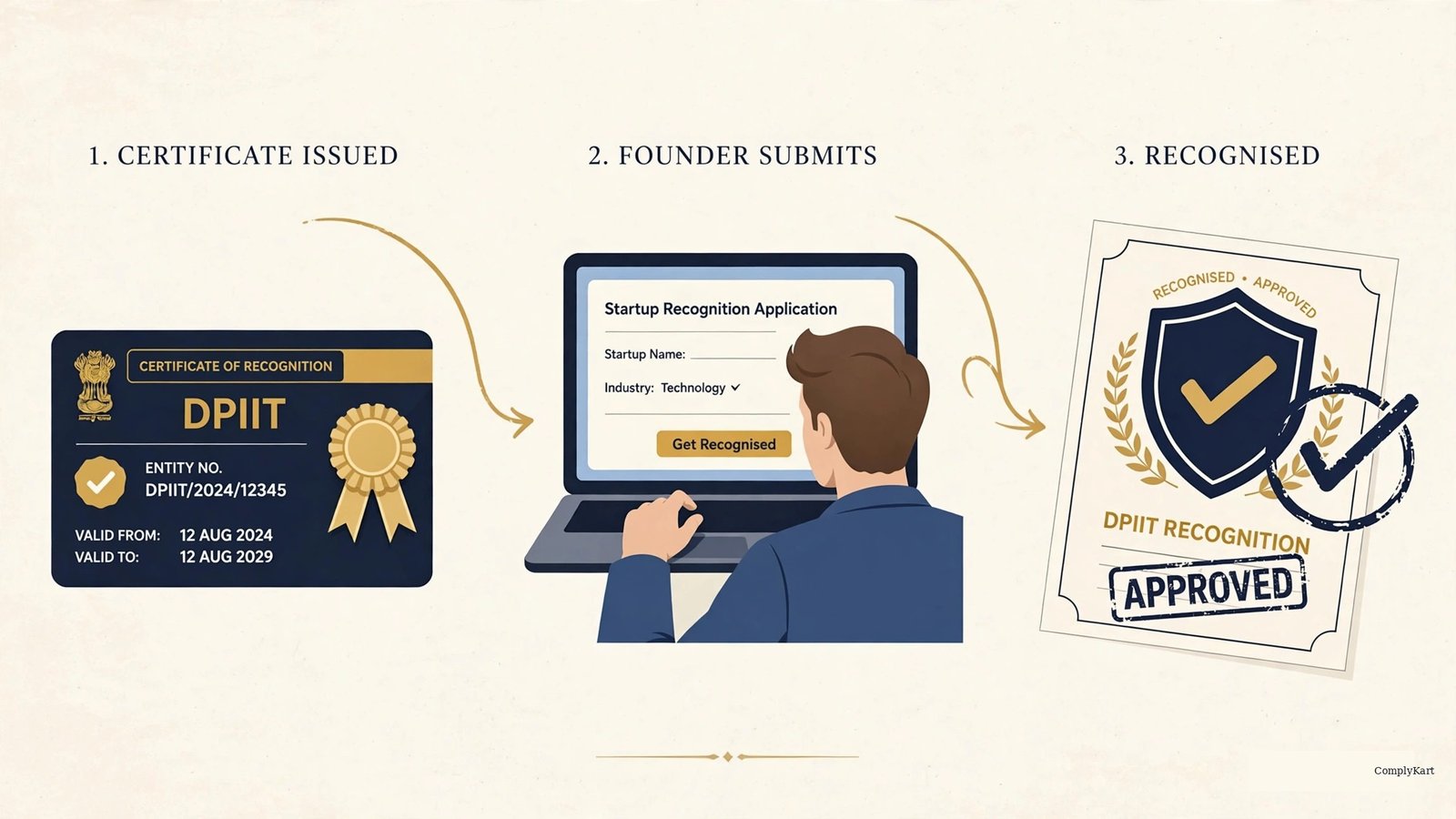
Short answer: DPIIT recognition is a free certificate from the Department for Promotion of Industry and Internal Trade that officially marks your company as a startup. As of 2026, you qualify if you are under 10 years old with turnover up to ₹200 crore in any year (deep-tech gets 20 years / ₹300 cr). You apply on startupindia.gov.in on self-certification, usually within days to weeks — and nearly every grant scheme in India asks for this certificate first.
Before any grant, one certificate.
DPIIT recognition is the government's way of saying: we agree you are a startup. Almost every grant scheme in India — central and state — asks for this certificate first. It costs nothing. It usually takes days, not months. And founders still get it wrong, because they rely on old blog posts instead of the current rules.
Let me walk you through the 2026 position, exactly as it stands on the Startup India portal today.
Key takeaways
- DPIIT recognition is free, self-certified, and downloadable — apply on startupindia.gov.in.
- 2026 limits: under 10 years old, turnover up to ₹200 cr in any year (deep-tech track: 20 years / ₹300 cr).
- Only private limited companies, LLPs, and registered partnership firms qualify — not sole proprietorships.
- The certificate unlocks grants, credit guarantees, tax benefits, IP fee rebates, and easier public procurement.
- The 80-IAC tax holiday is a separate approval — recognition alone does not give it to you.
What this certificate actually is
Think of DPIIT recognition the way you think of a driving licence. It does not get you the car. But nobody rents you one without it.
Recognition is issued by the Department for Promotion of Industry and Internal Trade, under the Ministry of Commerce and Industry. It is not money. It is a certificate — downloadable, and available on DigiLocker — that makes you eligible for seed funds, credit guarantees, tax benefits, easier public procurement, and most state startup schemes. You apply once. It stays with the company.
Who qualifies in 2026
The thresholds changed this year, and this is where most founders trip. The old "10 years / ₹100 cr" figure still floats around the internet. It is outdated. The portal was updated in September 2026, and the current position is:
Entity type: you must be incorporated or registered in India as a private limited company, a registered partnership firm, or an LLP. Individuals, sole proprietorships, and unregistered outfits do not qualify.
Age: not more than 10 years from the date of incorporation or registration. A separate Deep Tech track allows up to 20 years.
Turnover: not more than ₹200 cr in any financial year since incorporation (normal track), or ₹300 cr (Deep Tech track).
Not a reconstruction: the entity must not have been formed by splitting up or reconstructing an existing business. You cannot rebirth an old company as a "startup".
Innovation or scalability: you must be working towards innovation — development or improvement of a product, process, or service — or run a scalable business model with high potential for employment generation or wealth creation.
That last point is the real test. A plain trading business with no technology angle and no scalability story will not clear it. More on that below.
The documents you need
The list is short. Keep these ready before you start: Certificate of Incorporation or registration (MCA-issued); PAN of the entity; details of directors or partners; a brief write-up of the business — what is innovative or scalable about it; and a pitch deck or video that shows the innovation, the product, or the model. No fees. No middleman required.
The application, step by step
1. Go to startupindia.gov.in and click "Get Recognised".
2. Create your profile and enter the entity details — incorporation certificate, PAN, director or partner information.
3. Upload the write-up and pitch deck or video. This is the part that matters most. A generic deck about "disrupting the market" will not help; show the product, the technology, or the scale logic.
4. Self-certify the application and submit.
Recognition is generally granted on self-certification. Expect days to a few weeks. Download the certificate when it arrives and keep it with your company records — you will attach it to nearly every grant application you ever file.
One separate step, often missed: if you want the Section 80-IAC tax holiday, you apply separately to the Inter-Ministerial Board through Form-1 on the same portal. Recognition and the tax holiday are two different approvals. Do not assume one gives you the other.
What the certificate opens for you
This is why the half-hour application is worth it.
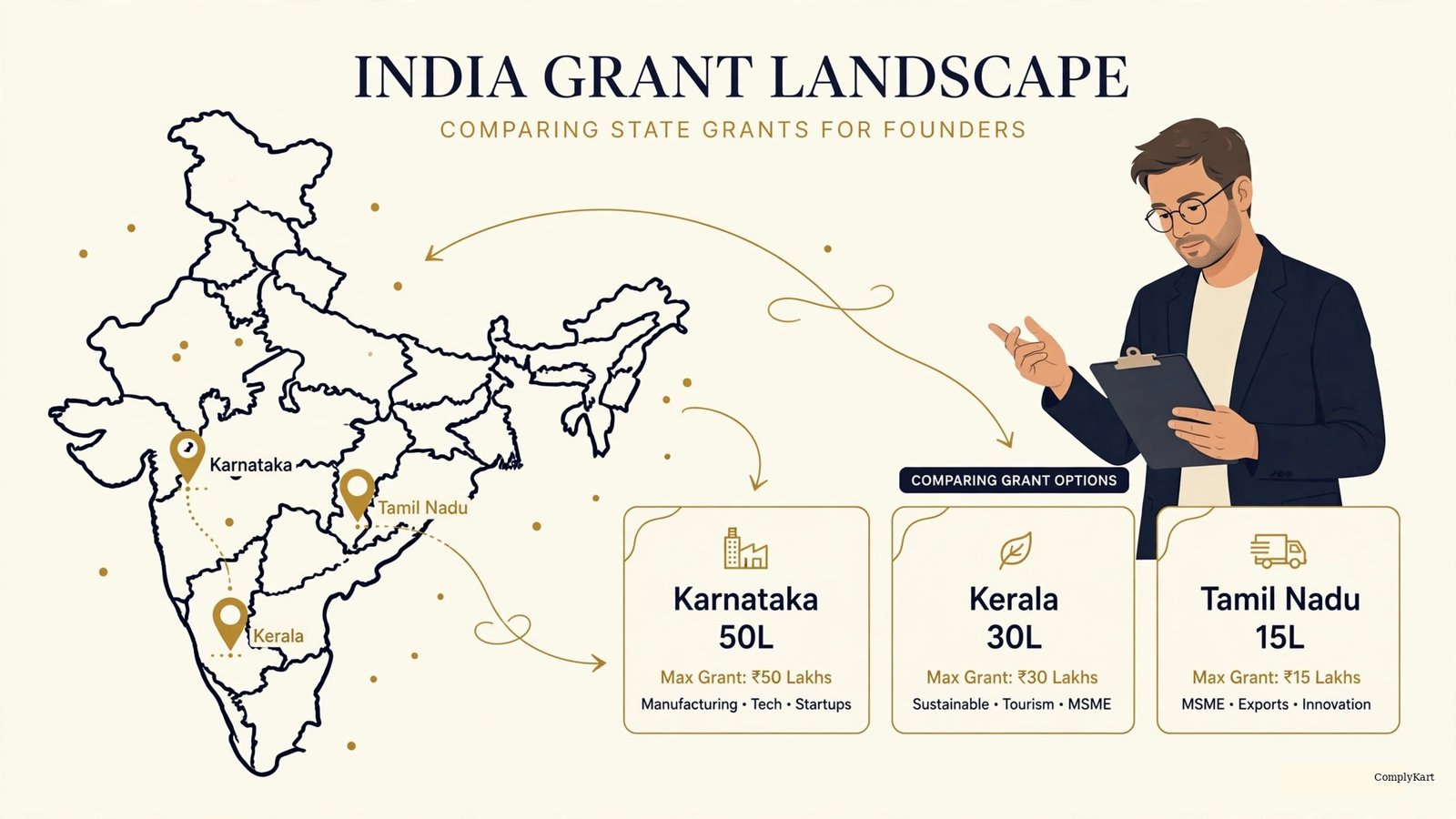
Grants and seed money: eligibility for the Startup India Seed Fund Scheme, NIDHI programmes, RKVY-RAFTAAR agri grants, iDEX defence grants, BIRAC schemes, and most state startup grants.
Credit support: the Credit Guarantee Scheme for Startups (CGSS) — collateral-free loans with government guarantee cover up to ₹20 cr — and access to Fund-of-Funds-backed venture funds, which must invest in DPIIT-recognised startups.
Tax benefits: the 80-IAC deduction — 100% of profits exempt for any 3 consecutive years within your first 10 — is available to startups incorporated before 1 April 2030, per the 2025-26 Budget announcements. Check the Finance Act text with your CA before relying on the date; do not take any blog's word for a tax deadline, including mine. Separately, with a Form-2 declaration, share premium above fair market value is exempt from angel tax under Section 56(2)(viib).
IP fee rebates: 80% rebate on patent filing fees, 50% on trademark fees.
Regulatory ease: self-certification under labour and environment laws, and easier public procurement through the GeM Startup Runway.
That is a long list for a free certificate. It is free.
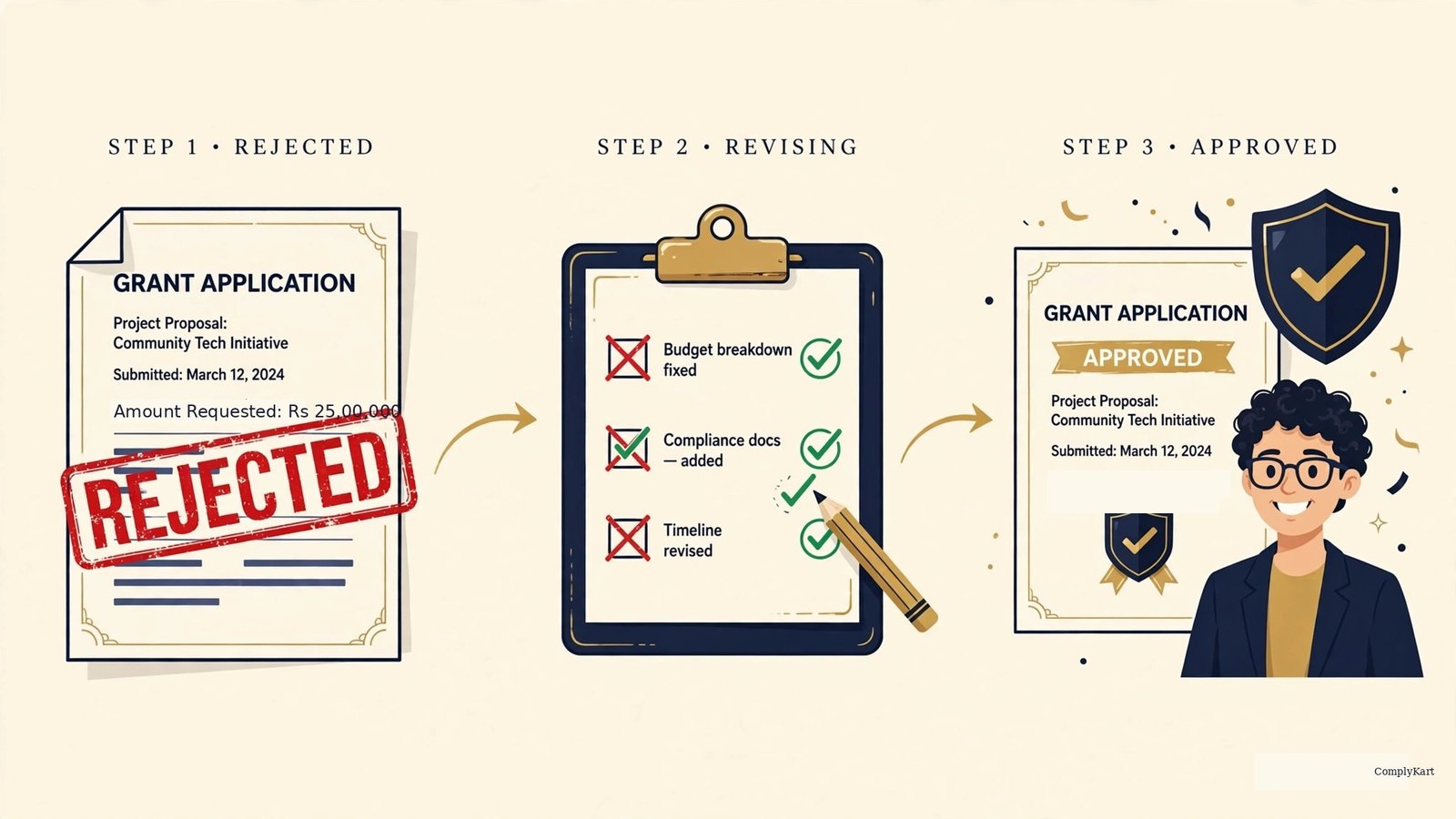
Why applications get rejected
Rejections happen, and the reasons repeat.
Failing the innovation test. The most common one. If your business is plain trading or services dressed up in startup language, the committee will see through it.
Nothing to show. No prototype, no proof of concept, no traction — just an idea and a deck.
A silent MoA. If your Memorandum of Association reads like a trading company's and never mentions innovation, research, or technology, your innovation argument gets harder. Write your MoA like someone will read it. Someone will.
Mismatched or incomplete documents. Names, dates, and figures that argue with each other across filings.
Buzzword-stuffing. "AI-powered blockchain platform" with nothing behind it gets spotted fast. Claims do not count. Evidence does.
The innovation test works like a scholarship that reads your marksheet, not your essay. What you have built matters more than what you say you will build.
The practical takeaway
Apply early — ideally soon after incorporation, while the innovation story is fresh and the paperwork is clean. Do not wait until you need a grant urgently; committees can smell a rushed application.
And ignore the old ₹100 cr figure wherever you see it. The 2026 position is 10 years and ₹200 cr, with a 20-year / ₹300 cr track for deep tech. Rules change. Check the portal, not a three-year-old blog.
If you'd rather have the recognition application done right the first time — entity check, innovation write-up, a deck that shows rather than claims — our team at ComplyKart handles DPIIT recognition for founders regularly.
Frequently asked questions
Is DPIIT recognition the same as the 80-IAC tax holiday?
No — they are two separate approvals on the same portal. Recognition certifies you as a startup. The 80-IAC tax holiday (100% profit exemption for 3 of your first 10 years) needs a separate application to the Inter-Ministerial Board through Form-1. Do not assume recognition gives you the tax benefit automatically.
My turnover crossed ₹100 crore in one year. Am I disqualified?
No. The turnover test is "not more than ₹200 crore in any financial year since incorporation" under the current 2026 rules — so a single year at ₹120 cr keeps you eligible. The ₹100 cr figure you see in old blogs is outdated; check the live portal, not a cached article.
Can a sole proprietorship get DPIIT recognition?
No. Only three entity types qualify: private limited company, limited liability partnership (LLP), and registered partnership firm. If you are operating as a sole proprietor, you will need to incorporate or register one of these first.
How long does recognition take?
Usually days to a few weeks. The application is self-certified — there is no long committee process for recognition itself (that comes later, at the grant stage). Keep your write-up and deck ready and it is a half-hour job.
Does DPIIT recognition guarantee me a grant?
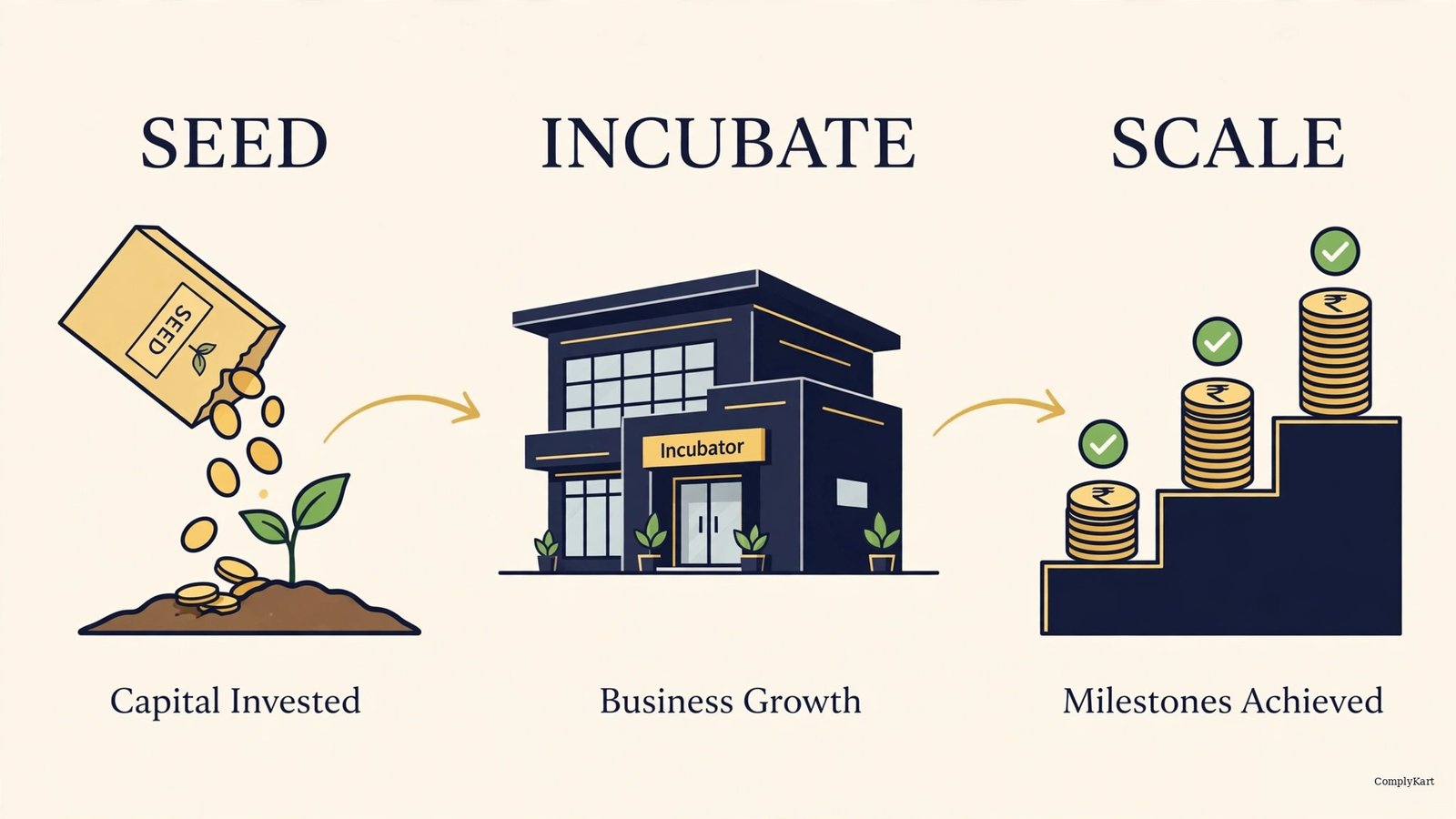
No. Recognition is the entry ticket, not the prize. Grants are competitive and decided by incubator committees and expert panels on innovation, traction, and milestones. What recognition does is make you eligible to compete — and unlocks the tax, IP, and procurement benefits alongside.


Comments
No comments yet — ask the first question below.
Join the discussion
Questions go straight to our expert desk. Comments appear after a quick review — no spam, no noise.