
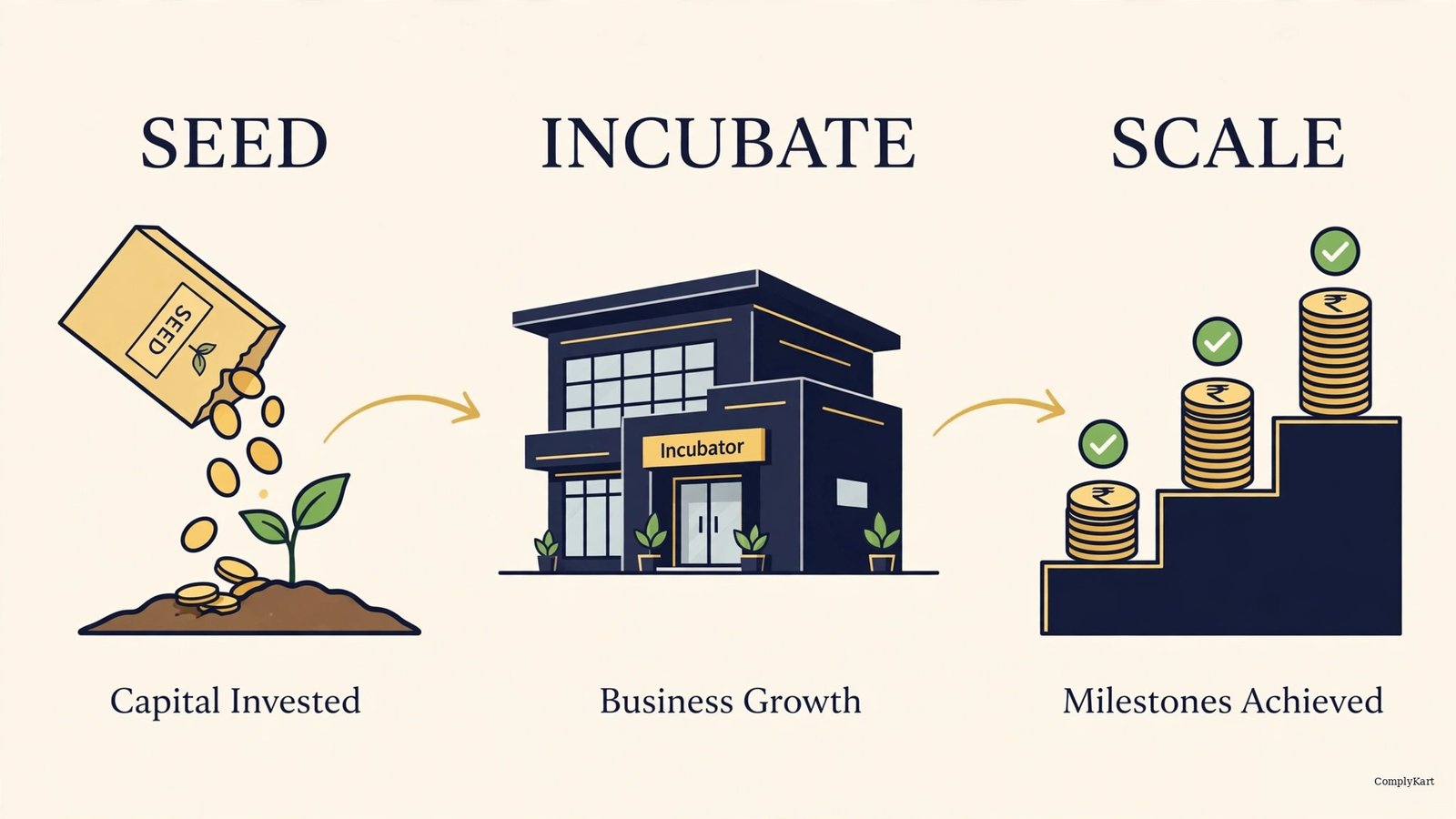
Short answer: the Startup India Seed Fund Scheme (SISFS) offers DPIIT-recognised startups up to ₹20L as a non-repayable grant for prototypes and trials, plus up to ₹50L as debt for market entry — applied for through approved incubators, not directly to the government. One fact before you plan: the startup application window is currently closed (last date was 31 May 2026). Read on to be ready when it reopens.
The Startup India Seed Fund Scheme — SISFS — is the grant every founder has heard of. It is also the scheme most founders misunderstand. Let me tell you exactly how it works, who it is for, and the one fact you must know before planning around it: the startup application window is currently closed.
Read that again. Closed. The portal's final notice set 31 May 2026 as the last date for startups to apply. If a consultant tells you they can get you in right now, walk away.
That said, windows reopen, and preparation is everything. Here is the complete guide, so you are ready when the next call comes.
Key takeaways
- SISFS offers up to ₹20L as a grant (prototype, trials) plus up to ₹50L as debt/convertible debentures (market entry) — each once per startup.
- You apply through up to 3 approved incubators; the incubator's committee evaluates and DPIIT disburses via the incubator.
- Eligibility is strict: DPIIT-recognised, not more than 2 years old, ≤₹10L prior government support, 51% Indian promoters.
- Money arrives in milestone-linked tranches against a signed tripartite agreement and utilisation certificates.
- The window is closed as of 13 October 2026 — prepare now (recognition, prototype, incubator relationship) for the reopening.
What SISFS actually is
SISFS is a ₹945 cr corpus run by DPIIT. The money flows in a chain: DPIIT → approved incubator → startup. You do not apply to the government directly. You apply through incubators, and an incubator's committee is your first jury.
The scheme offers two kinds of money, and they serve two different stages:
Up to ₹20L as a grant — non-repayable — for proof of concept, prototype development, and product trials. This is the part founders dream about.
Up to ₹50L as debt or convertible debentures — for market entry, commercialisation, and scaling. This part you repay or convert.
Each component is available once per startup. Both are released in milestone-linked tranches, not as a lump sum. And one figure to keep straight: incubators themselves receive up to ₹5 cr each under the scheme. That is the incubator's money, not yours. Do not confuse the two.
Think of SISFS disbursement the way a bank handles a construction loan for your house. The bank does not hand you the full amount on day one. It releases money floor by floor — and only after each floor is standing. SISFS works the same way: prototype milestone met, next tranche released. Paperwork verified, money moves.
Who is eligible
The eligibility list is precise. Check yourself against every line:
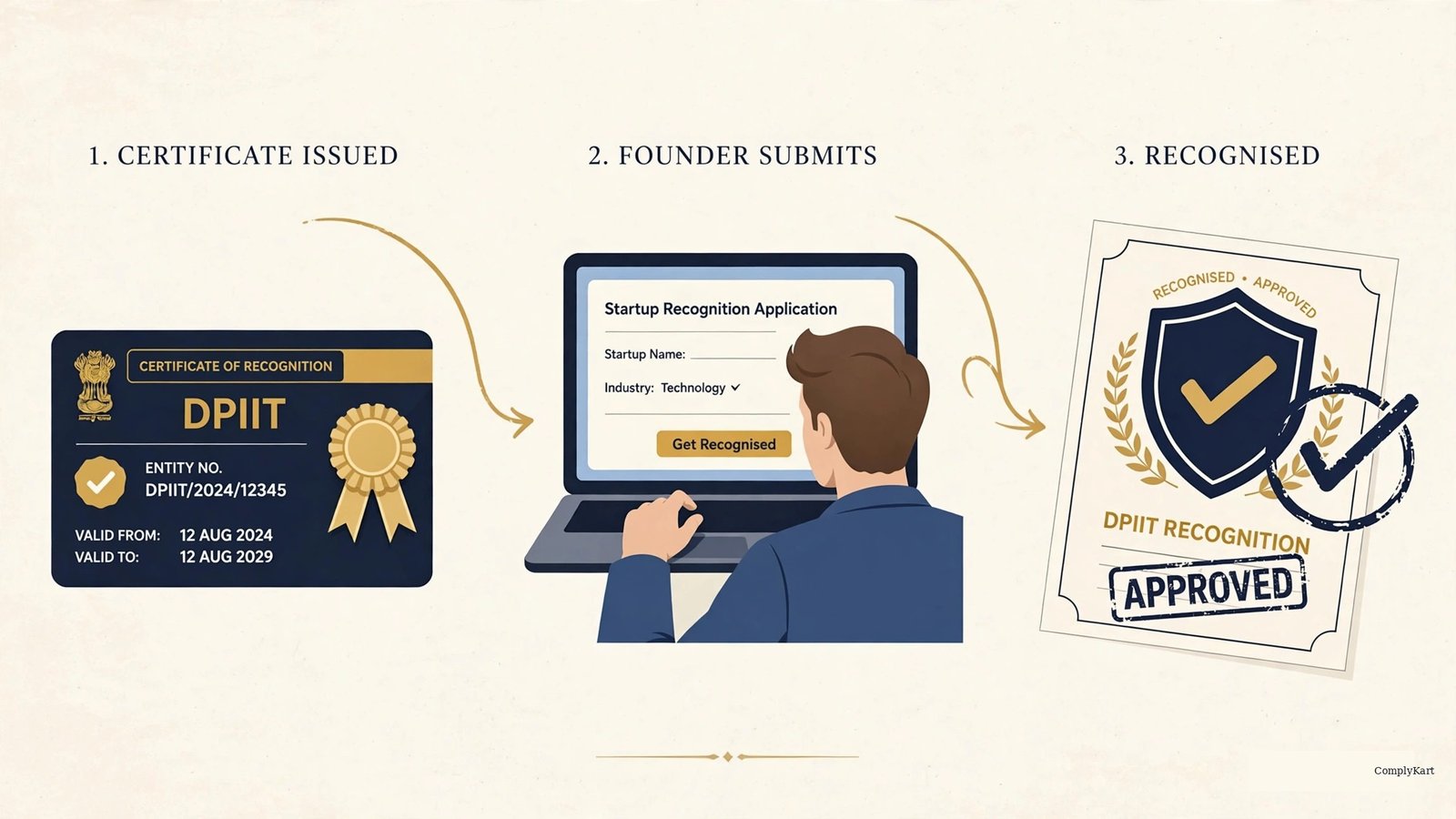
DPIIT-recognised. No certificate, no application. Get recognised first.
Not more than 2 years old at the time of application. This is strict — older startups are out, however good the idea.
Technology at the core of the product, service, business model, or distribution method. A tech-enabled business is not the same as a technology business. Committees know the difference.
Preference sectors get priority: social impact, waste and water management, financial inclusion, education, agriculture, food processing, biotechnology, healthcare, energy, mobility, defence, space, railways, oil and gas, and textiles.
Not already well-funded by the government. You must not have received more than ₹10L of monetary support under any other central or state government scheme. Prize money, subsidised workspace, founder monthly allowances, and lab or prototyping access do not count toward this cap — but cash grants do.
At least 51% shareholding with Indian promoters. Your cap table matters here.
The right entity. Private limited company, LLP, or registered partnership firm. Individual entrepreneurs cannot apply.
The application process, step by step
1. Get DPIIT recognition if you do not have it. It is free and takes days to weeks.
2. Create an account on seedfund.startupindia.gov.in and complete your Business Profile and Seed Proposal. Write this carefully — it is your first impression on the committee.
3. Select up to 3 participating incubators, in your order of preference. Choose incubators whose domain matches your startup; a biotech founder applying to a fintech incubator wastes everyone's time.
4. Face the evaluation. Each incubator's Incubator Seed Management Committee evaluates applications — the target is selection within about 45 days — and will usually ask you to pitch. Treat it like an investor pitch. It is one.
5. Sign the agreement. On selection, you sign a tripartite agreement. Read the milestone definitions before you sign; they govern your money.
6. Receive milestone-linked instalments. The first disbursal typically arrives within about 60 days of selection.
7. Report and certify. You submit progress reports and utilisation certificates for every milestone. Miss a milestone, and the next tranche waits.
The track record so far
The numbers, from the Minister's reply in the Lok Sabha in January 2025: 217 incubators empanelled, ₹917 cr approved, and about ₹351 cr disbursed to 2,647 startups. The leading states tell their own story — Maharashtra (470 startups), Karnataka (344), Tamil Nadu (262), Uttar Pradesh (190), Gujarat (187). Real money has moved. Real founders received it.
How to prepare for the next window
Nobody knows the reopening date. WhatsApp forwards do not count as sources — watch the portal. While you wait, do the work that makes selection likely:
Get DPIIT recognition now, not when the call opens. Rushed applications show.
Build the prototype. SISFS funds proof of concept, but committees select founders who have already started. A working prototype beats a beautiful deck.
Build a relationship with an incubator before the call opens. Attend their events, understand their domain, know their committee's expectations.
Draft a fund-utilisation plan with clear milestones. If you cannot describe what ₹20L buys in three stages, you are not ready.
Keep total prior government monetary support at or under ₹10L. That cap is a hard gate.
Keep your shareholding paperwork clean. The 51% Indian promoter requirement is verified, not assumed.
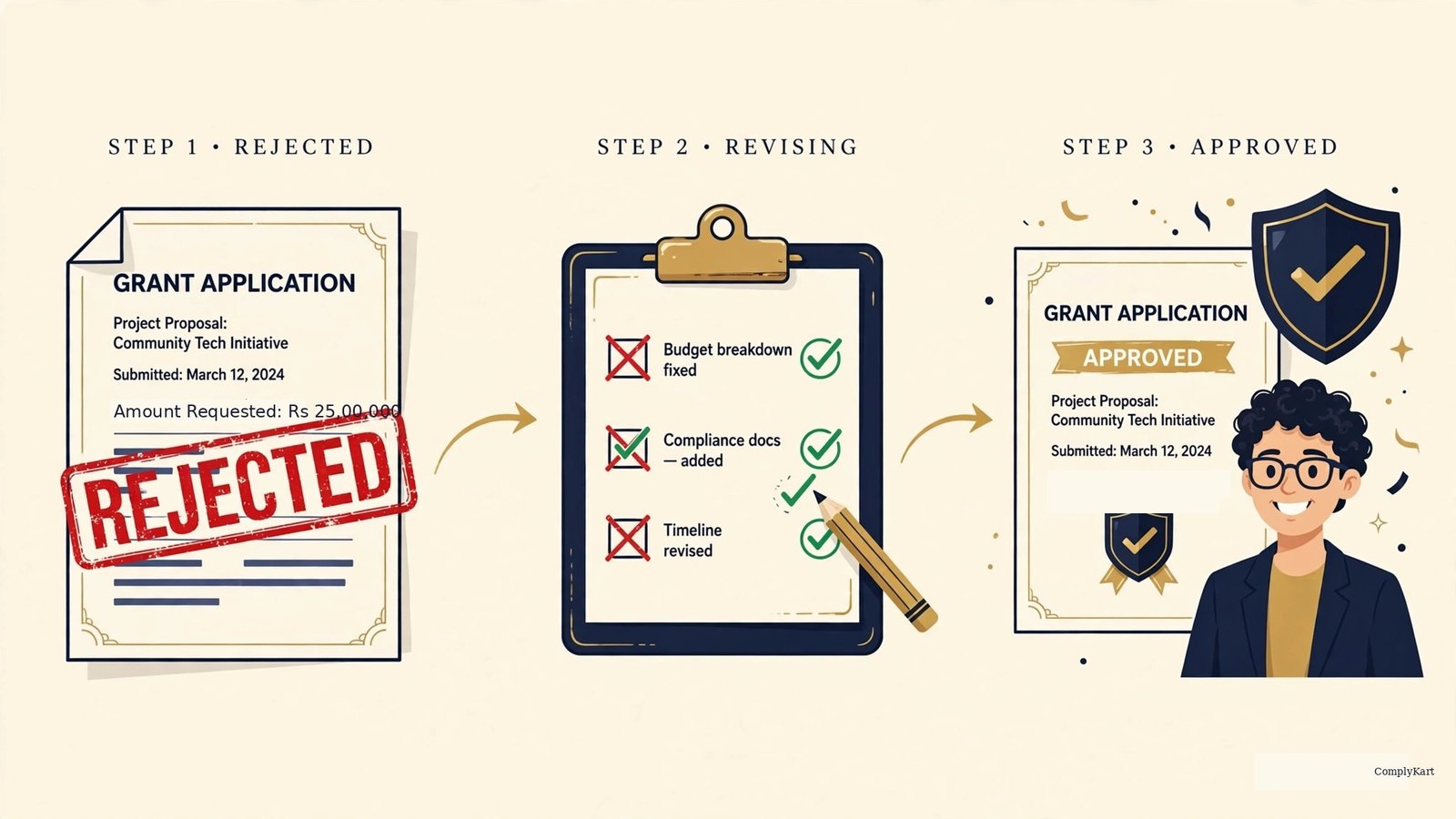
Rejected before? The scheme allows re-application after about 3 months when calls reopen. Fix what was weak and go again.
The honest bottom line
SISFS is the best-known early grant in India, and it is genuinely non-dilutive at the grant stage. But it is closed today, it is competitive when open, and it rewards founders who arrive prepared — young company, real technology, clean paperwork, and an incubator that already knows their name.
Do the preparation now. The window will not wait for you to start.
If you want to be ready the day the next SISFS window opens — recognition done, incubator shortlisted, utilisation plan drafted — talk to our team at ComplyKart before the rush.
Frequently asked questions
Is the Startup India Seed Fund open for applications right now?
No. The portal's final notice set 31 May 2026 as the last date for startups to apply, and no new window had been announced as of 13 October 2026. Anyone claiming they can get you in today is not being honest with you. Watch seedfund.startupindia.gov.in for the reopening — not WhatsApp forwards.
How much money can one startup actually get from SISFS?
Up to ₹20L as a non-repayable grant (proof of concept, prototype, product trials) plus up to ₹50L as debt or convertible debentures (market entry, commercialisation). Each component is available once per startup, and both are released in milestone-linked tranches — not as a lump sum on day one.
Do I apply to DPIIT directly?
No. You apply on seedfund.startupindia.gov.in and select up to 3 participating incubators in order of preference. Each incubator's Seed Management Committee evaluates you (target: within 45 days) and usually asks you to pitch. On selection, DPIIT routes the money through the incubator under a tripartite agreement.
I already took a ₹15L state grant. Can I still apply for SISFS?
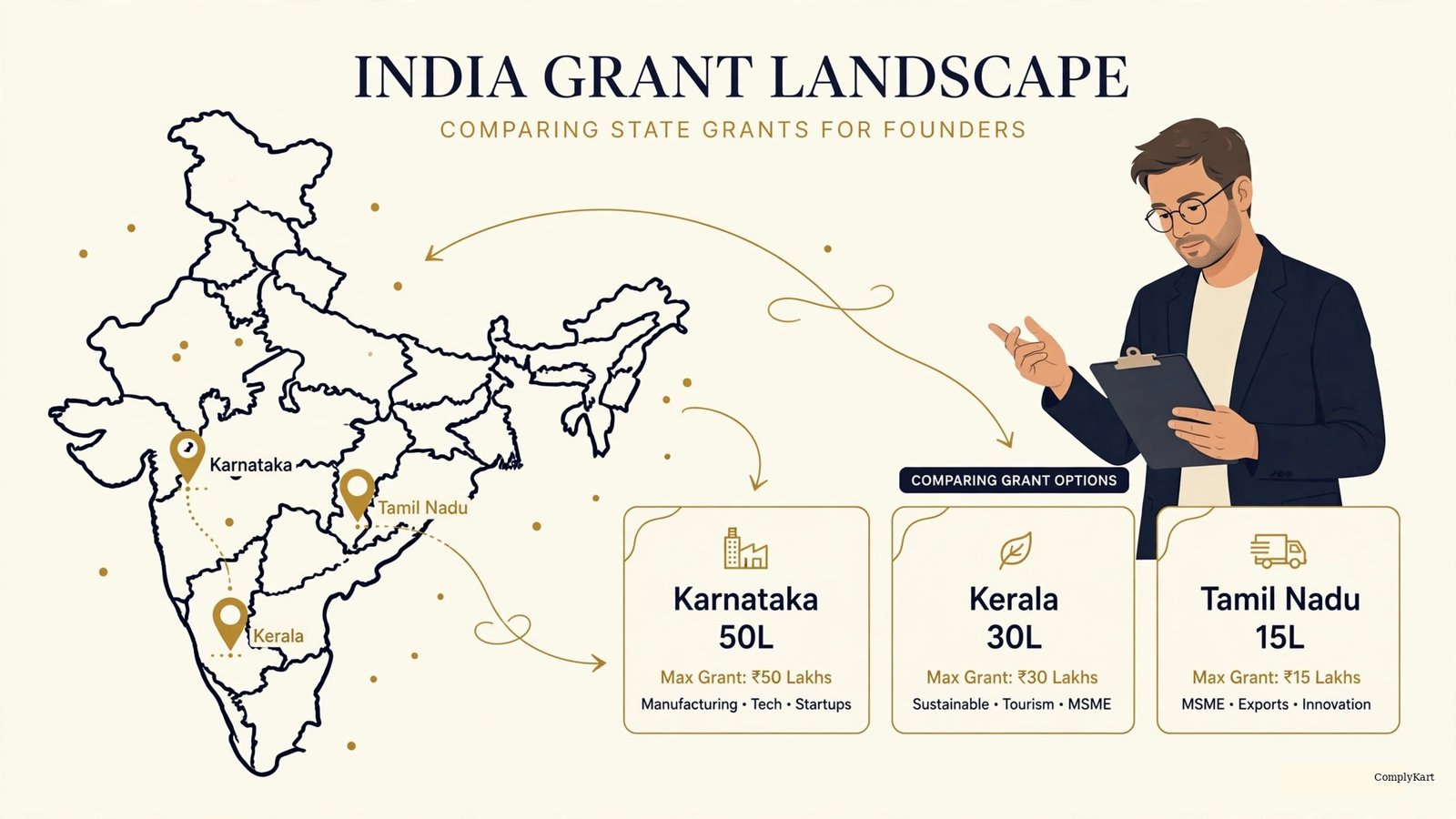
No — not while that stands. SISFS bars startups that have received more than ₹10L of monetary support under any other central or state government scheme. Prize money, subsidised workspace, and lab access do not count toward the cap, but cash grants do. This is why grant sequencing matters: plan which schemes you take, and in what order.
My company is 3 years old. Am I eligible?
No. SISFS requires the startup to be incorporated not more than 2 years before the application date — this is a hard gate, however strong the idea. If you have aged out, look at NIDHI Seed Support, BIRAC schemes, or your state's startup policy instead; several have no 2-year ceiling.

Comments
No comments yet — ask the first question below.
Join the discussion
Questions go straight to our expert desk. Comments appear after a quick review — no spam, no noise.