
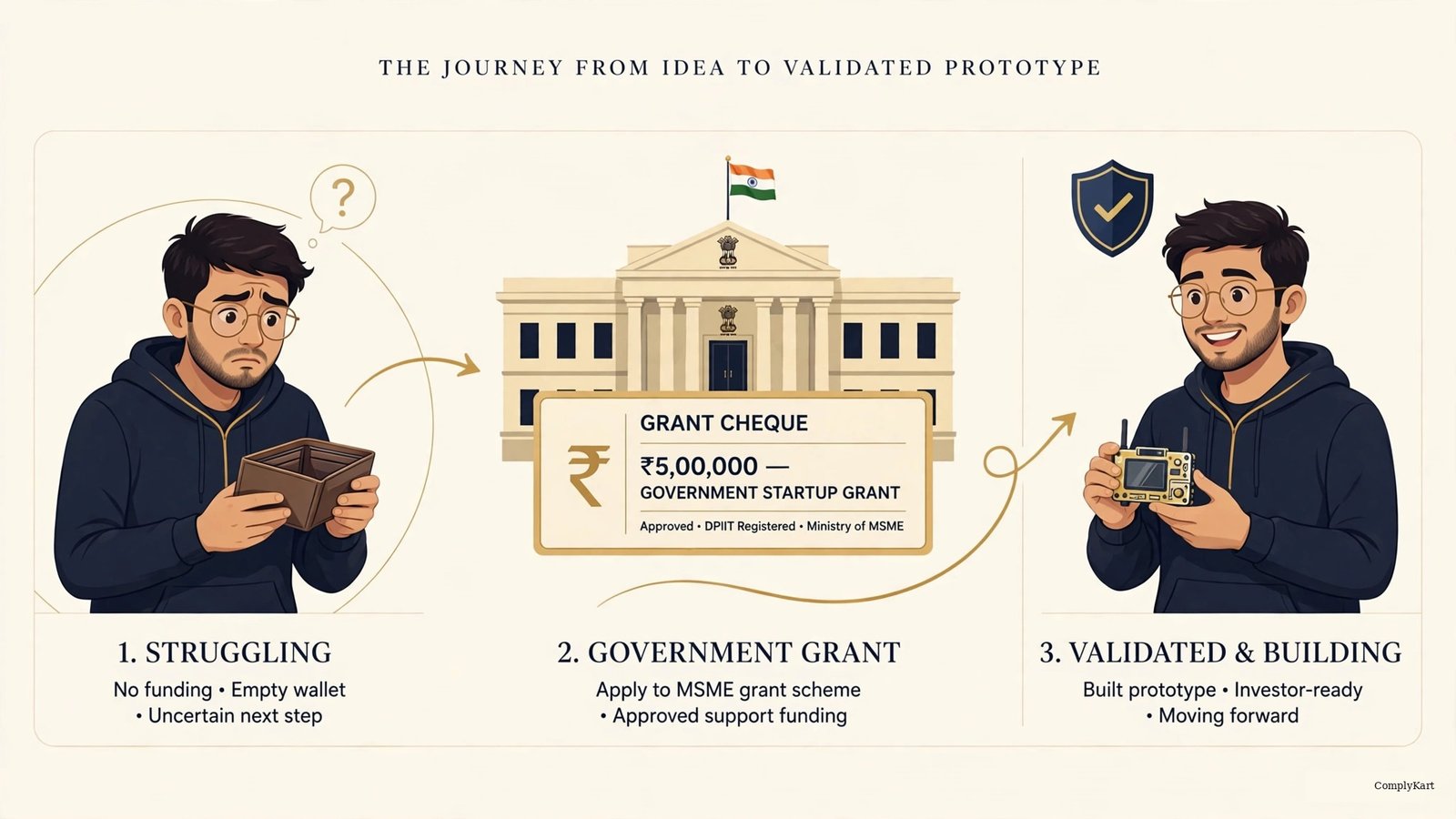
Short answer: yes, the Indian government gives real, non-repayable grants to startups — but you need DPIIT recognition first, you apply through approved incubators (not a government counter), and the money arrives in milestone-linked tranches, not a lump sum. The best-known scheme, the Startup India Seed Fund, is currently closed — but several other grants are open right now.
Free money exists. It just comes with homework.
Every founder has heard the line: the government gives grants to startups. It does. The part people skip: a grant is not a lottery ticket. It is closer to a contract you earn — and the government checks your work at every step before releasing the next rupee.
Let me give you the full picture, the way I explain it to clients across the table.
Key takeaways
- A grant is non-repayable; a loan, a guarantee, and equity are four different animals — apply for the right one.
- DPIIT recognition is step one for nearly every scheme; it is free and usually takes days to weeks.
- Grant money flows through approved incubators and arrives in milestone-linked tranches against utilisation certificates.
- You can stack multiple grants for different stages, but you must declare all government support — the same project cannot be funded twice.
- No legitimate scheme charges an application fee or guarantees selection — anyone who promises either is selling you air.
First, four different animals
Founders use "grant", "loan", "funding" interchangeably. Stop. These are four different animals, and mixing them up is how people apply for the wrong thing.
A grant is a scholarship. Nobody asks you to return a scholarship. The Startup India Seed Fund Scheme offers up to ₹20L as a non-repayable grant for proof of concept, prototypes, and product trials. NIDHI-PRAYAS gives up to ₹10L to build a prototype. Karnataka's ELEVATE gives up to ₹50L. You spend it on the approved purpose, you file utilisation certificates, and you never repay it.
A loan is an education loan. The bank always wants its money back. MUDRA loans (up to ₹20L under the new TarunPlus category), Stand-Up India loans (₹10L–₹1 cr for SC/ST and women first-time entrepreneurs), CGTMSE-backed bank loans — all useful, all repayable. If someone calls these "grants", correct them gently and move on.
A guarantee is neither. The government gives you nothing directly. It tells the bank: lend to this startup, and if they default, we cover most of it. The Credit Guarantee Scheme for Startups (CGSS) now covers loans up to ₹20 cr this way, with about 85% cover up to ₹10 cr. You still repay the loan. The bank just stops demanding collateral. Pre-revenue startups usually fail the bank's own appraisal here — CGSS suits founders with revenue and repayment capacity.
Equity is ownership sold. The ₹10,000 cr Fund of Funds for Startups — with a second ₹10,000 cr round announced in the 2025-26 Budget — does not write cheques to founders. It invests in SEBI-registered venture funds, which invest in DPIIT-recognised startups. Real money, but not free money. BIRAC's SEED (up to ₹30L) and LEAP (up to ₹1 cr) funds are also equity, routed through bio-incubators.
Why does this taxonomy matter? Because your plan changes with each. A grant shapes your milestones. A loan shapes your cash flow. Equity shapes your cap table. Know which animal you are hunting before you set the trap.
The order of operations
Grants reward the prepared. Here is the realistic sequence, in order:
1. Incorporate properly — private limited company, LLP, or registered partnership firm. Individuals cannot apply to most schemes.
2. Get DPIIT recognition — free, on startupindia.gov.in, usually granted on self-certification within days to weeks. Nearly every grant below asks for this certificate first.
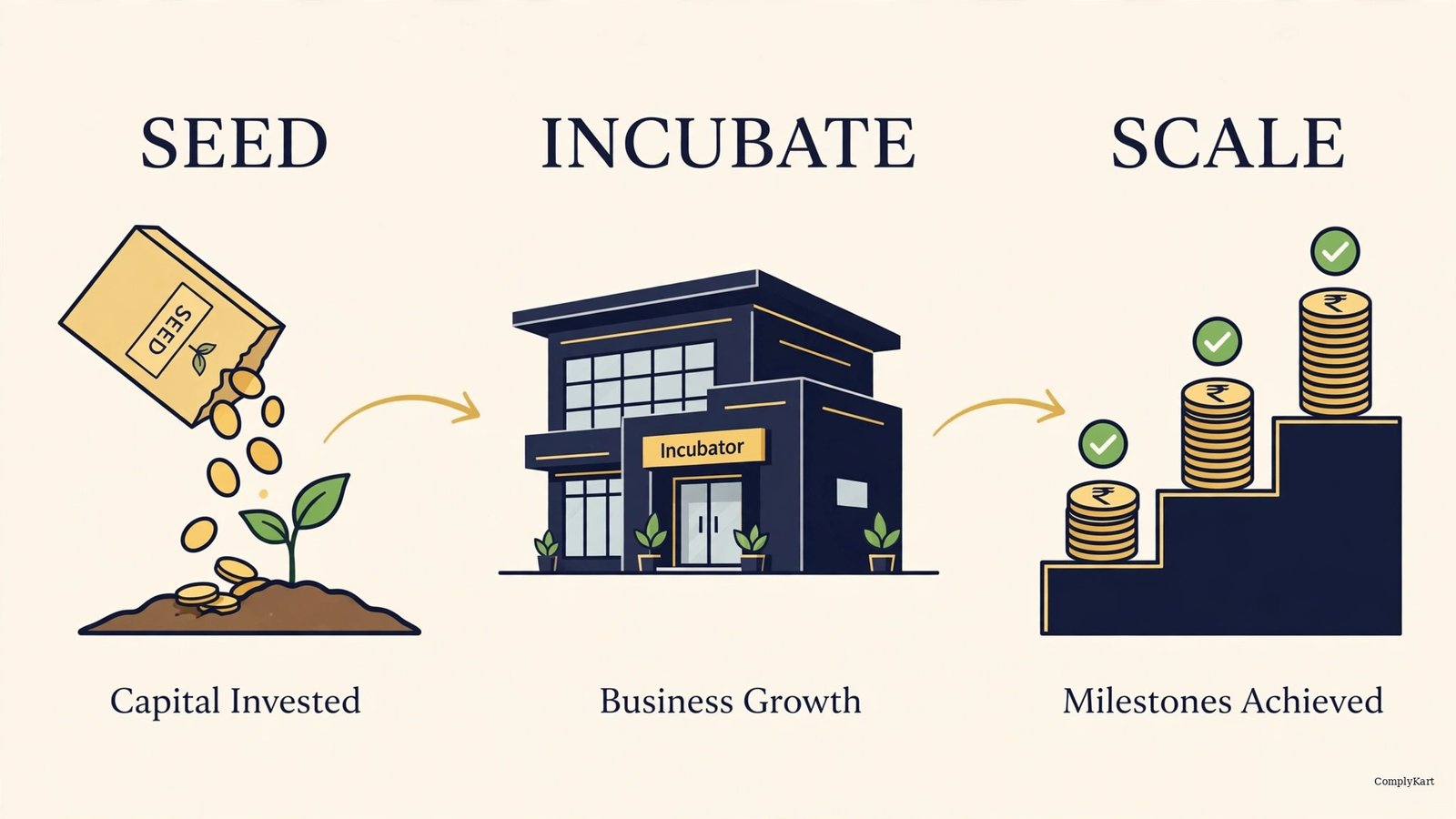
3. Get into an approved incubator early — SISFS, NIDHI, and BIRAC money flows through incubators, not a government counter. The incubator's committee is your first jury.
4. Build something real — a prototype, a proof of concept, early traction. Committees fund work, not ideas. (NIDHI-PRAYAS is the rare exception: it exists to fund the prototype itself.)
5. Line up your paperwork — pitch deck, 3–5 year projections, a fund-utilisation plan, IP status, team bios, and a self-declaration of any government money already received. Lying here can mean revocation and refund.
Money follows proof. Remember that line.
What is actually open right now
Schemes open and close like train doors. As of 13 October 2026:
Open now: MeitY's GENESIS Pilot — up to ₹40L per startup, needs a pilot work order from an eligible company, with one window open till 30 October 2026. The UNDP–Generali insurance innovation challenge — up to $40k (~₹38.7L) for insurance solutions for Indian MSMEs, till 20 November 2026. The UNDP Ocean Innovation Challenge — up to $100k, till 15 November 2026.
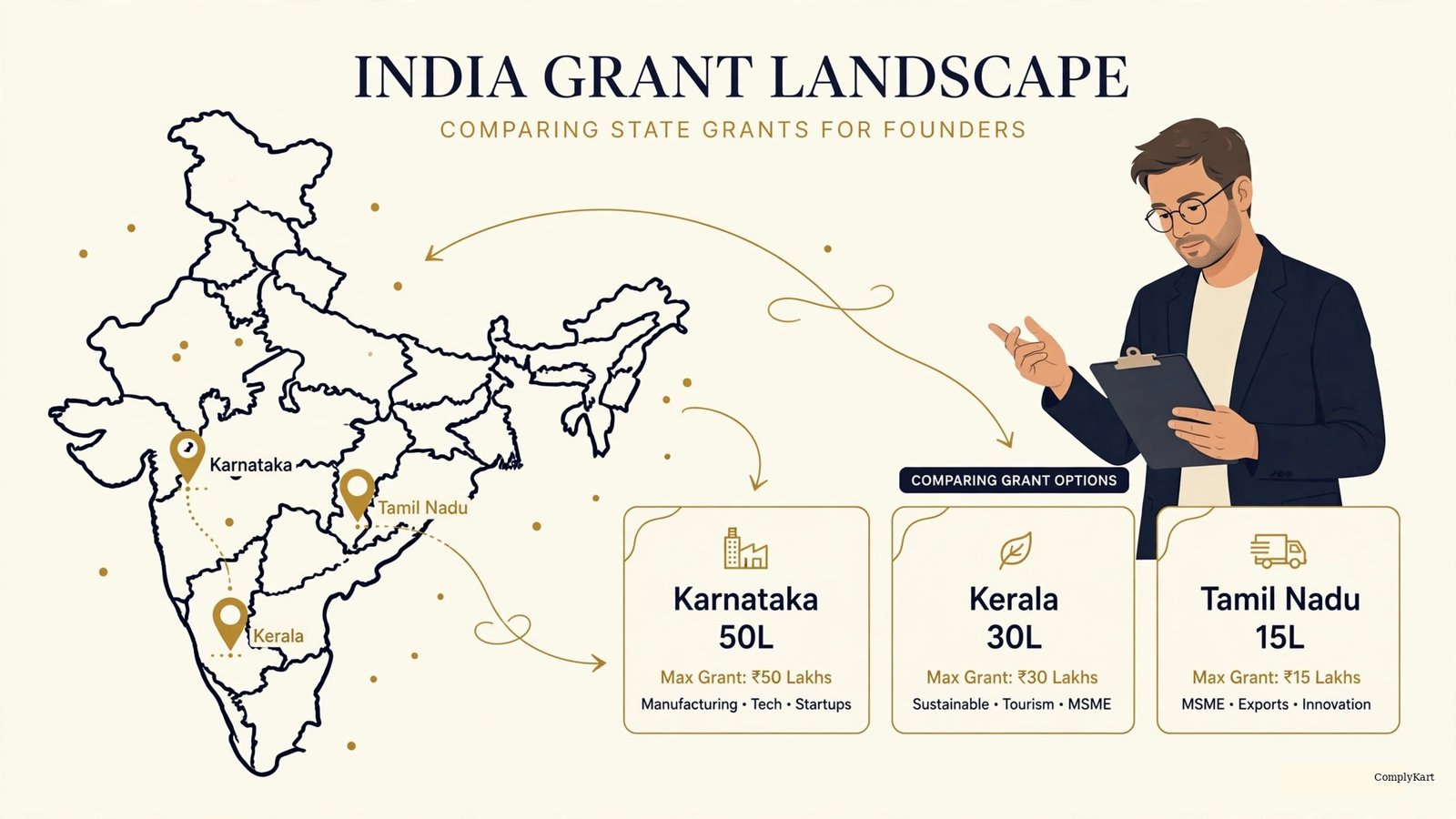
Rolling or periodic calls: NIDHI-PRAYAS (₹10L prototype grant via DST incubators), BIRAC's BIG grant (₹50L, biotech only, via 8 partner bio-incubators), the MSME Innovative Scheme (up to ₹15L per idea via host institutes), Karnataka ELEVATE (₹50L), Kerala Startup Mission grants (₹3L–₹30L), RKVY-RAFTAAR (₹5L pre-seed and ₹25L seed, agriculture only).
Closed or unconfirmed — do not plan around these today: the Startup India Seed Fund's startup window shut on 31 May 2026. SAMRIDH concluded on 31 January 2026. TIDE 2.0 is closed for new applications. The iDEX defence scheme's budget ran through FY 2025-26, and fresh challenges are unconfirmed.
The sequencing rule nobody tells you
You can take more than one grant. Founders do it all the time — PRAYAS for the prototype, a state grant for market entry, a sector grant for scale-up. Two rules govern stacking.
First, declare everything. SISFS, RKVY-RAFTAAR, and the space fund's Technology Adoption Fund all require a self-declaration of government support received. The same project cannot be funded twice by two ministries. Two scholarships cannot cover the same semester's fee.
Second, mind the caps. SISFS bars you if you have already received more than ₹10L in monetary support from any central or state scheme. So if SISFS is your target when its next window opens, take the small grants first and stay under the cap. Fellowships like NIDHI-EIR (₹30k/month) stop the month you raise other funding.
How selection really works
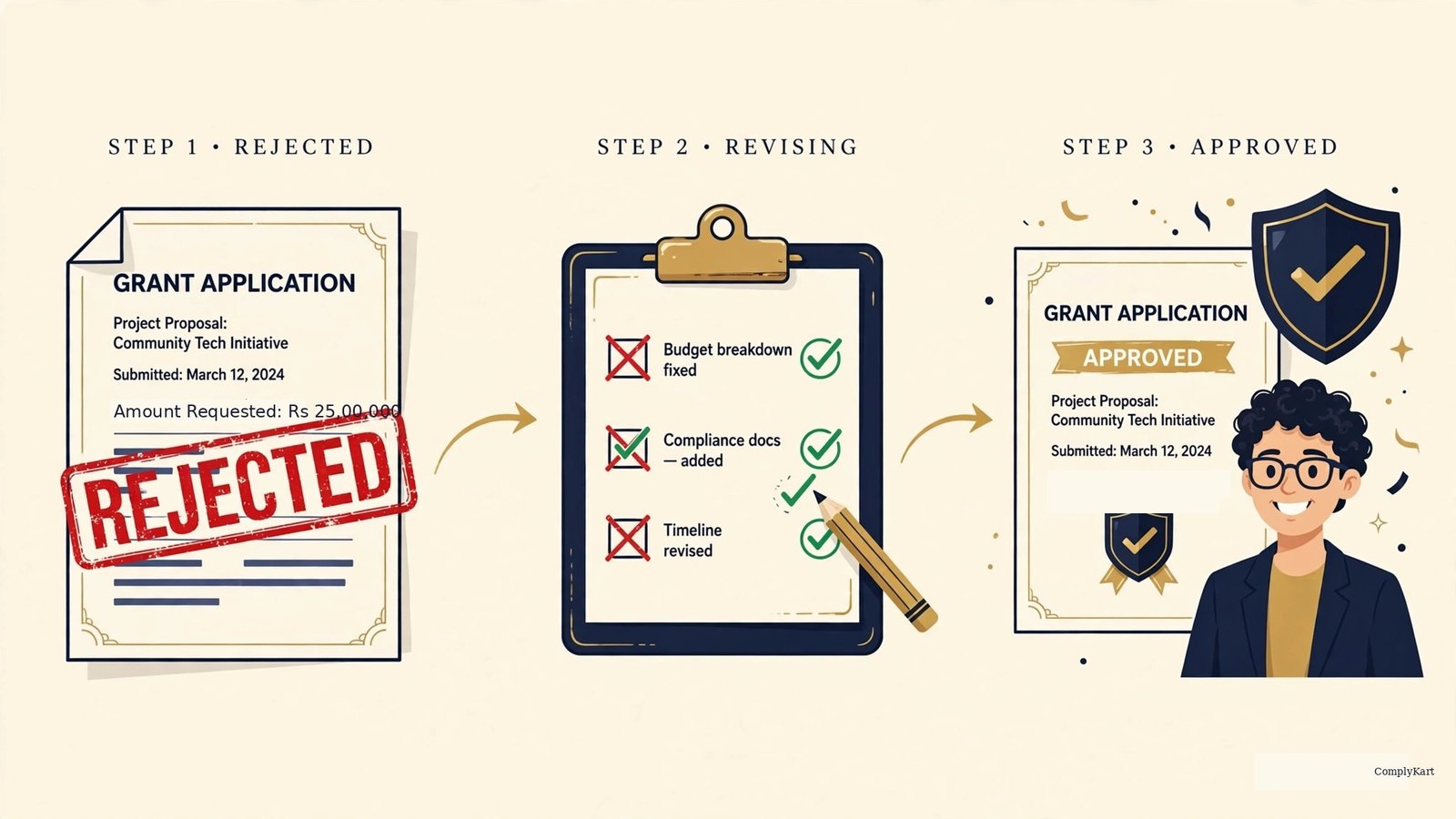
There is no government officer handing out cheques. Your application goes to a committee — an incubator's seed management committee, an expert panel, a state nodal agency. They shortlist, they ask you to pitch, they release money in milestone-linked tranches against a signed agreement. Miss a milestone and the next tranche waits. File utilisation certificates on time, every time.
Realistic timelines: DPIIT recognition in days to weeks. State grants in 3–9 months. SISFS took 3–6 months from application to first disbursal. BIRAC and iDEX run 6–12 months. If anyone promises faster, check their motives.
The scam warning
No legitimate scheme charges an application fee. DPIIT recognition is free. SISFS applications were free. Anyone promising a guaranteed grant for an upfront "facilitation fee" is selling you air. Watch for pressure tactics ("last date, pay now"), Gmail-only contacts, institutional logos with no matching announcement on that institution's own website, and requests for bank passwords or OTPs. Verify every scheme on its official portal before you apply or pay anything.
Start this week: get DPIIT recognition, shortlist two incubators, and build the thing. Grants follow founders who are already moving.
If you want help mapping the grant route for your startup — which schemes fit your stage, in what order, and what the committees actually look for — our team at ComplyKart works with founders on exactly this.
Frequently asked questions
Do I have to repay a startup grant?
No. A genuine grant is non-repayable — that is what separates it from a loan. But it is not unconditional: you must spend it on the approved purpose, hit the agreed milestones, and file utilisation certificates for every tranche. Misuse or misreporting can trigger revocation, and the scheme can ask for the money back.
Can I apply for a grant as an individual, before incorporating?
Almost never. Nearly every scheme needs an incorporated entity — private limited company, LLP, or registered partnership firm — plus DPIIT recognition. The one honest exception is NIDHI-PRAYAS, which funds individual innovators building a physical prototype. For everything else, incorporate first.
How long does it take from application to money in the bank?
Plan in months, not weeks. DPIIT recognition takes days to a few weeks. State grants typically run 3–9 months end to end. SISFS, when open, took 3–6 months from application to first disbursal. BIRAC and defence grants run 6–12 months. If a consultant promises money in 30 days, walk away.
Can I take two grants at the same time?
Yes — for different stages or purposes, and only if you declare all government support received. What you cannot do is take two grants for the same project, or cross a scheme's prior-support cap: SISFS, for example, bars you once you have received more than ₹10L from any central or state scheme.
Is the Startup India Seed Fund open right now?
No. The portal's final notice set 31 May 2026 as the last date for startups to apply, and no new window has been announced as of 13 October 2026. Use the waiting time to get DPIIT recognition, build your prototype, and build a relationship with an incubator — that is what selection rewards when the window reopens.

Comments
No comments yet — ask the first question below.
Join the discussion
Questions go straight to our expert desk. Comments appear after a quick review — no spam, no noise.