
IN BRIEF
Surrender, cancellation and deactivation are three different states of an Importer Exporter Code (IEC), the 10-digit PAN-based code the Directorate General of Foreign Trade (DGFT) issues under the Foreign Trade Policy 2023. Surrender is the holder voluntarily giving the IEC up, cancellation is DGFT ending it under Section 8 of the Foreign Trade (Development and Regulation) Act, 1992, and deactivation is the system switching it off when the April–June update is missed.
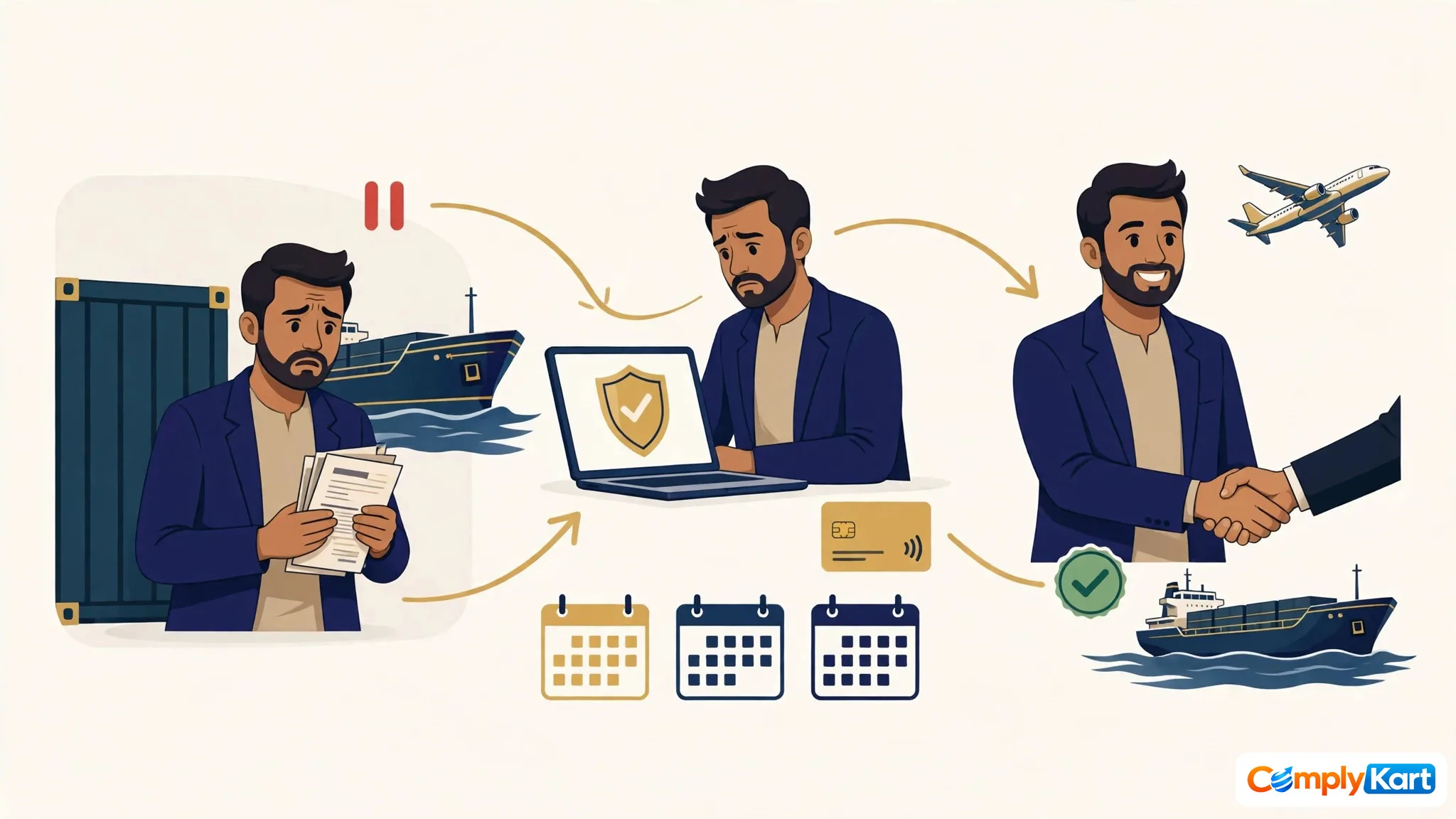
Your IEC shows a status you did not expect. Maybe the bank has held an inward payment. Maybe a shipment is sitting at the port and the customs broker is asking questions you cannot answer. Or maybe you are winding a business down and someone told you to "surrender the IEC" before you close the company — and you are not sure what that actually does.
Three words get thrown around for this — surrender, cancellation, deactivation — and people use them as if they mean the same thing. They do not. One is your own decision. One is the department acting against you. One is a computer switching your code off because a yearly confirmation was missed. The way back is different for each, and picking the wrong route wastes weeks.
The short answer: surrender means giving your IEC up yourself — free to file once all authorisations and export obligations are closed. Cancellation means DGFT ending your IEC under Section 8 of the 1992 Act; only the Regional Authority and DGFT Headquarters can restore it. Deactivation is the commonest: miss the 1 April–30 June update and the IEC switches off until you file it.
What an IEC is, in one paragraph
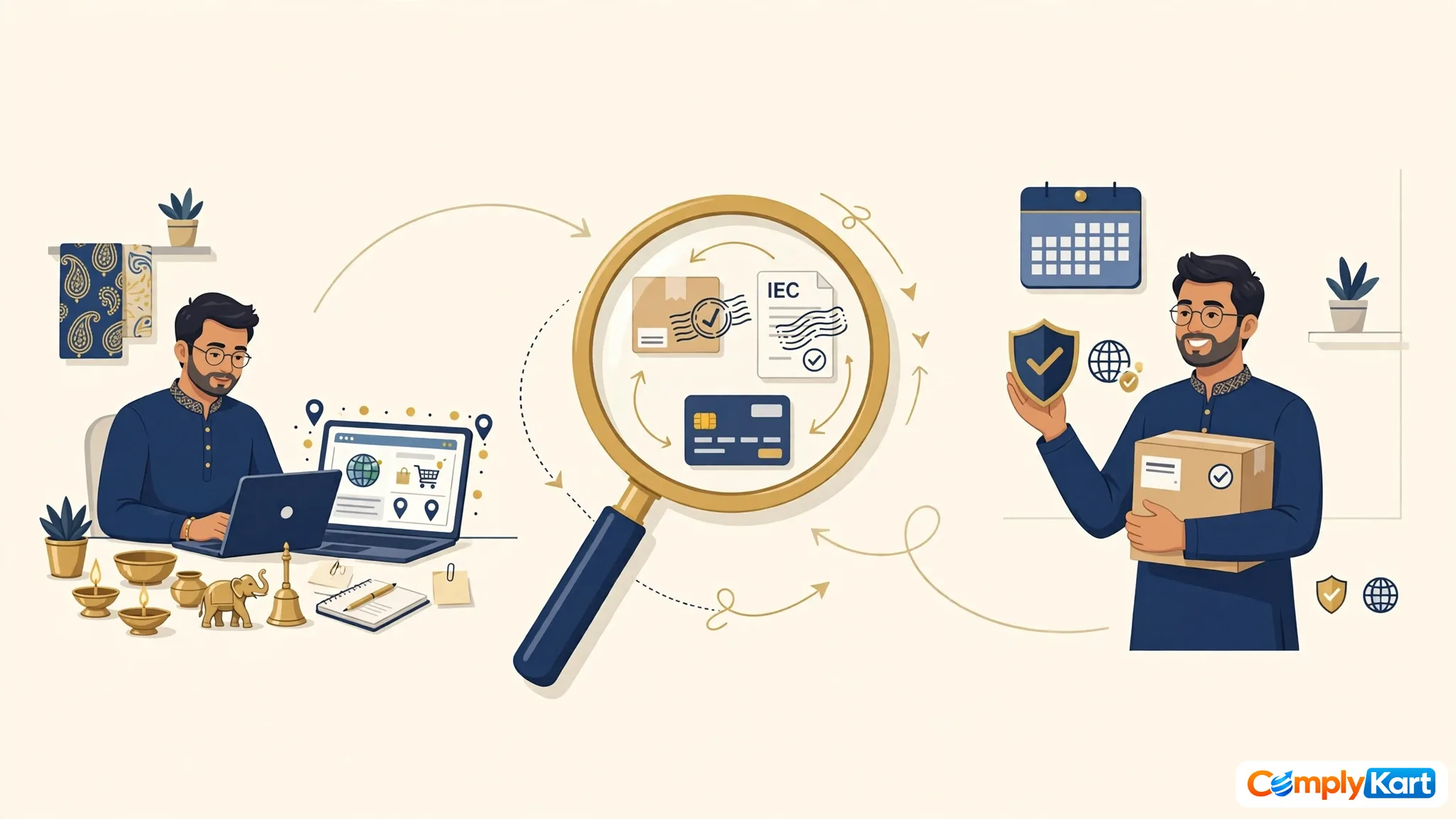
An Importer Exporter Code is a 10-digit number the Directorate General of Foreign Trade (DGFT) issues against your PAN. One PAN, one IEC — a proprietorship, partnership, LLP, company, trust, HUF or society can hold one, so long as it has a PAN, a bank account in its own name and a valid address. Section 7 of the Foreign Trade (Development and Regulation) Act, 1992 says nobody may import or export without one, and breaking that rule can draw a penalty under Section 11. The one exception most people meet: services exports do not need an IEC unless you are claiming benefits under the Foreign Trade Policy. If you have never had one, the route is an import export code registration on the DGFT portal — ₹500, fully online, and the code itself never expires.
Never expires, but never leave alone either. That is where the trouble starts.
Surrender, cancellation, deactivation and suspension — the four statuses
Think of the IEC like a passport. Surrender is handing it back yourself because you no longer travel. Cancellation is the authority taking it away. Deactivation is the system locking it because you skipped the yearly address confirmation. Suspension is it being frozen while a dispute is decided. Same document, four very different situations — and four different ways back.
| Status | Who starts it | Why it happens | Can you trade? | How it comes back |
|---|---|---|---|---|
| Surrender | You, the holder | You no longer import or export — business closed, merged, or out of cross-border trade | No | "Request Revoke Suspension" on the DGFT portal |
| Cancellation | DGFT | Action under Section 8 of the 1992 Act — violations, or a voluntary request in some cases | No | "Request Revoke Cancellation" — Regional Authority initiates, DGFT Headquarters approves |
| Deactivation | The system | Annual update not done between 1 April and 30 June; or a risk flag not answered | No | Complete the update online — reactivation is automatic |
| Suspension | You (via surrender) or DGFT | A surrendered IEC is suspended for transactions; DGFT can also suspend as a penal step | No | "Request Revoke Suspension", once the issue is resolved |
First, find out which status you are actually in
Do not guess from the word someone used on a phone call. Open the DGFT portal and check the IEC status — the portal's "View Any IEC" service shows it with the IEC number and the first three letters of the firm name. The message on your dashboard tells you the route: a missed-update message that offers "Update IEC" means deactivation, and that is the easy one. Anything that mentions suspension, cancellation or the Denied Entity List means a formal process, and you should not file anything until you know which.
One more check costs nothing and saves arguments later: ask your customs broker or your bank what status they see. DGFT sends the IEC status to Customs, so the port and the bank work off the same record you see — if they see "inactive", the shipment and the payment both stop, whatever you believe the position to be.
Surrender: your decision, but only after everything is closed
Surrender makes sense in exactly three situations: the business has stopped all import and export work, it has been merged or acquired and its obligations have moved to another IEC, or it is being wound up and the trading record needs closing. A pause is not a reason. If exports are slow this year and might resume next year, leave the IEC alone — surrender is the one status you create yourself, and undoing it takes a formal request.
Before you file, close everything the IEC carries. That is not a suggestion; the Handbook of Procedures, paragraph 2.13, allows surrender only when all authorisations and obligations are closed, or have moved to the new entity after a merger or amalgamation. In practice the list is: pending EPCG or Advance Authorisation obligations, open shipments, unpaid refunds, the AD code with your bank, your ICEGATE registration, any RCMC memberships, and — if you export under GST — your LUT position. Our LUT filing note is worth a look before you close that loop, because an open LUT and a surrendered IEC will argue with each other later.
The filing itself is quick. Log in to dgft.gov.in, open My IEC on the dashboard or go to Services, then IEC Profile Management, and choose Surrender IEC. Enter the reason, attach one supporting document as a PDF up to 5 MB — a board resolution for a company, a dissolution deed where the entity is closing — and sign with a digital signature certificate, or Aadhaar e-Sign if you are the proprietor or a member of the firm. DGFT charges no fee for filing the surrender itself. Once it is approved, the IEC is suspended for all transactions and the status goes to Customs, so no shipping bill or bill of entry will clear on it.
If the business restarts and you need the same IEC back, the route is "Request Revoke Suspension" in IEC Profile Management. You cannot simply apply for a fresh IEC — one PAN holds one IEC, and DGFT will not issue a second code on a PAN that already has one, surrendered or not. Link the existing IEC to your login and ask for the suspension to be revoked.
Cancellation: DGFT's action, and the longest way back
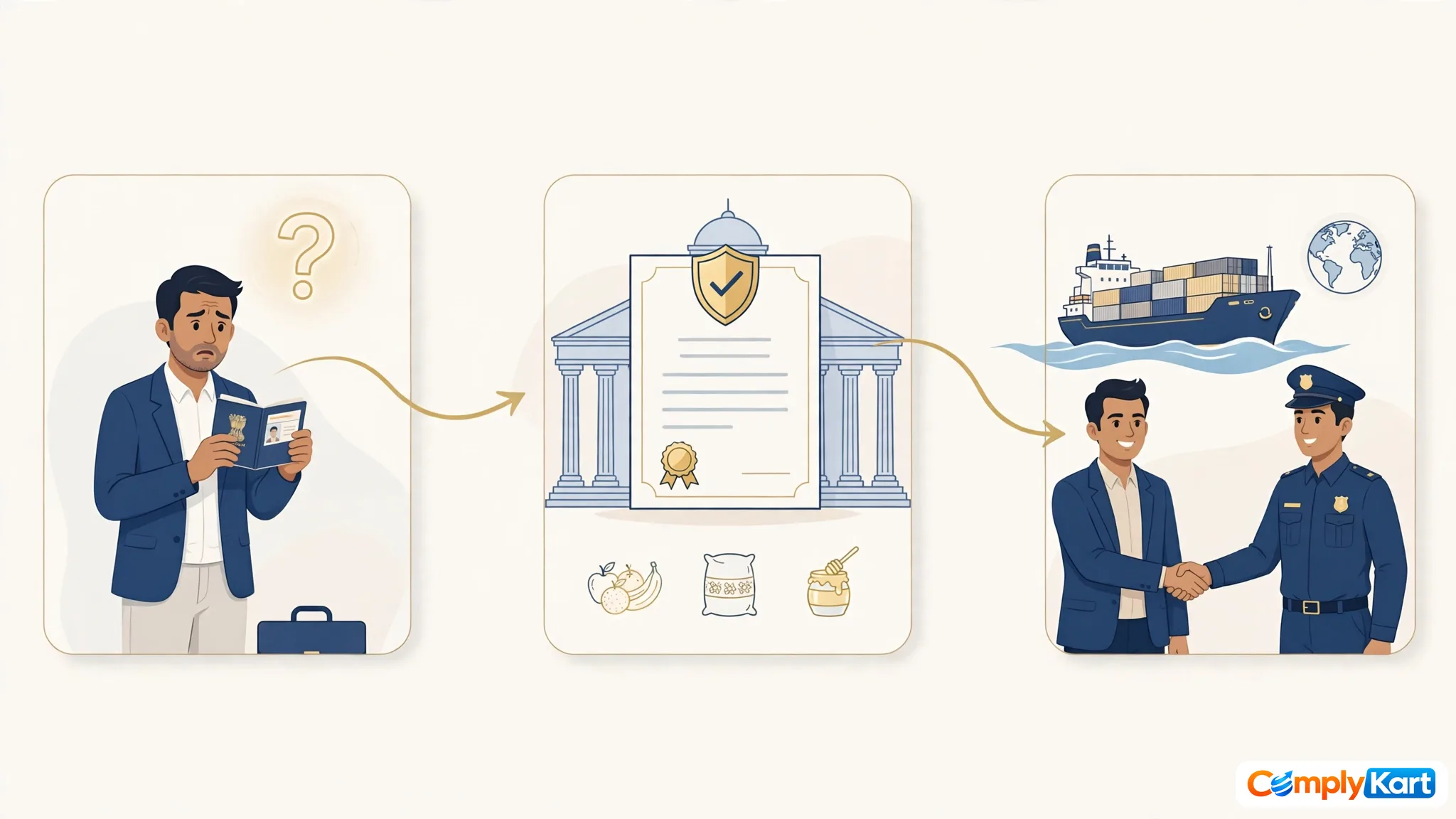
Cancellation is the severe one. Under Section 8 of the Foreign Trade (Development and Regulation) Act, 1992, the Director General can suspend or cancel an IEC where the holder has broken customs, central excise or foreign exchange law, committed a notified economic offence, or traded in a way that gravely harms India's trade relations, other traders, or the reputation of Indian goods. It can also follow a voluntary request — a business that has shut down may ask for its IEC to be cancelled — or a merger where the old code is no longer needed.
Where it is a penal action, there is due process: a show-cause notice, a chance to reply with documents, and in some cases a personal hearing before the Regional Authority. Answer the notice properly, because the reply is the record the revocation will be judged on. A cancelled IEC is not a dead IEC, but it is the hardest to revive. The route is "Request Revoke Cancellation": you contact the concerned Regional Authority, the RA initiates the request in the system, and it goes to DGFT Headquarters for approval. Keep the evidence ready — why the IEC was cancelled, the entity's current status, PAN details, and proof that the authorisations are closed. DGFT sets no fixed time for this, so do not promise a buyer a shipping date until the status actually changes on the portal.
There is one more list to know about. A Regional Authority can place a firm on the Denied Entity List under Rule 7 of the Foreign Trade (Regulation) Rules, 1993, and in fraud cases the IEC is suspended alongside the DEL entry. Removal needs a separate "Request Removal from DEL" — it is not the same request as revoking a suspension or a cancellation, and filing the wrong one is a common way to lose a month.
Deactivation: the commonest status, and the easiest fix
Most IECs that stop working were never surrendered or cancelled. They were deactivated, and the cause is almost always the same: the annual update was missed.
Paragraph 2.05(d) of the Foreign Trade Policy 2023 requires every IEC holder to update the IEC details online every year between 1 April and 30 June — even when nothing has changed. A "no change" confirmation inside that window costs nothing. Paragraph 2.05(e) then says an IEC that is not updated within the prescribed period "shall be de-activated", and that it "may be activated, on its successful updation". The code has permanent validity under paragraph 2.10 of the Handbook of Procedures unless it is suspended or cancelled — deactivation pauses it, it does not end it. Paragraph 2.05(f) adds a second trigger: DGFT's system can flag an IEC for scrutiny, and if the flagged risk is not answered in time, the IEC can be deactivated for that reason too.
Getting it back is the only restore in this guide you can do entirely yourself. Log in at dgft.gov.in — link the IEC to your login first if it is not linked — open Update/Modify IEC, go through every section (firm details, address, partners or directors, branches, bank accounts), correct what has changed and confirm the rest, then sign with your DSC or Aadhaar e-Sign. There is no separate reactivation form and no visit to a Regional Authority; Trade Notice 18/2021-22 says reactivation follows on a successful update, and the status is sent to Customs. A routine update is usually auto-approved. Changes to PAN, the nature of the concern, or the partners wait for the Regional Authority, so those take longer.
The fee is where guides disagree, so here is the honest position. The DGFT fee schedule, Appendix 2K, puts the annual update inside the April–June window at nil (row 7(A)) and the same update filed after the window at ₹200 (row 7(B)) — even with no changes. A few guides describe the late update as having "no late fee", because there is no separate penalty on top. Both are describing the same ₹200: it is the filing fee for an update made after the window, not a fine. Pay it through Bharatkosh at the payment step, and check the amount the portal shows before you submit. Once the update goes through, give it a day or two before the next shipment — the status reaches Customs the same day in most cases, but ICEGATE and bank systems can lag, and a shipment booked on hope is how demurrage happens.
One 2026 change to keep in mind while you are in the bank section: since February 2026, DGFT checks bank accounts in real time through NPCI on new IECs and modifications (Trade Notice 23/2025-26). The account holder name must match the firm name, and the update asks you to list all bank accounts linked to the PAN, marking one as primary. Get this section exactly right — a mismatch here is now caught at filing instead of months later.
The same-PAN trap
This is the mistake that turns a small problem into a big one. After an IEC is surrendered or cancelled, you cannot apply for a new IEC on the same PAN. DGFT's position is that the existing IEC must be linked and then modified or revoked, as applicable. I have seen exporters file a fresh application, pay the ₹500, and wait — only to find the application cannot proceed because the PAN already carries a code. If your IEC is surrendered, file the revoke-suspension request. If it is cancelled, file the revoke-cancellation request. If it is deactivated, file the update. There is no fourth door.
A worked example: the payment that would not come in
A Jaipur jewellery exporter — two partners, steady orders from a buyer in Dubai — finished the financial year and forgot the IEC update entirely. Nothing had changed: same address, same bank, same partners. In August the buyer's payment arrived at the bank and sat there. The bank's authorised dealer desk would not credit it, because the IEC showed deactivated on their system.
The fix took one afternoon. The partners logged in to the DGFT portal, linked the IEC, opened Update/Modify IEC, confirmed every section unchanged, signed with the firm's DSC, and paid the ₹200 late-update fee on Bharatkosh. The IEC reactivated on the successful update. The payment was credited the next working day, after the bank's system picked up the new status. Total cost: ₹200 and an afternoon. Total cost of missing the window in the first place: a week of chasing the bank and a buyer who started asking whether the firm was still trading.
The lesson is the boring one. The annual update is a confirmation, not a renewal, and "nothing changed" is still a filing. Put it in the calendar for April, not June — the window is three months long and the people who miss it are the ones who leave it to the last week.
Six mistakes that hurt exporters
- Surrendering for a pause. A quiet year is not a closed business. Surrender is for the end of trading, not a gap in it.
- Believing "no change" means "no filing". The April–June confirmation is mandatory even when every detail is identical.
- Filing a fresh IEC on the same PAN. It will not proceed. Revoke or update the existing code.
- Surrendering with obligations open. EPCG and Advance Authorisation obligations must be closed or transferred first, or the surrender itself stalls.
- Shipping the day the portal flips to active. Customs and bank systems can lag a day or two. Book the shipment after the status shows everywhere it matters.
- Letting the DSC or registered mobile lapse. The update needs a working DSC or Aadhaar e-Sign and the registered contact details — check both before the window opens.
What it costs, at a glance
| What you are doing | DGFT fee | When |
|---|---|---|
| New IEC application | ₹500 | Once, when you first apply |
| Annual update or "no change" confirmation | Nil | 1 April–30 June each year |
| Annual update after the window (the reactivation update) | ₹200 | Any time after 30 June, until you file it |
| Modification of IEC details | ₹200 | Any time a detail changes |
| Surrender request | Nil | When you stop trading for good |
| Request to revoke a suspension or a cancellation | Nil (no fee row in the schedule) | When you need the code back |
Fees are from the DGFT fee schedule, Appendix 2K. Check the amount the portal shows before you pay — the schedule is the authority, and it is the portal's figure that you will actually be charged.
Do it yourself, or get help?
Deactivation is a do-it-yourself job: one login, one update, one signature, and the IEC comes back on its own. Surrender is also straightforward if the obligations list is genuinely empty — the portal walks you through it. Cancellation is the one to take seriously: a revocation that runs through the Regional Authority to DGFT Headquarters, with a show-cause reply behind it, is worth a professional's eye before you file. The test is simple. If the portal offers you an "Update IEC" button, do it yourself today. If it asks you to contact the Regional Authority, get advice before you write to them.
FAQs
Is IEC surrender the same as IEC cancellation?
No. Surrender is your own request to stop using the IEC, after which it is suspended for transactions. Cancellation is a separate status — usually DGFT's action under Section 8 — and getting it back needs a revocation request that runs through the Regional Authority to DGFT Headquarters.
Can a deactivated IEC be reactivated after years?
Yes. There is no time limit in the policy. File the pending annual update at any time — the ₹200 fee applies because the window has passed — and the IEC reactivates on a successful update. The only catch is if other proceedings, such as a scrutiny flag or a suspension, are also open against the code.
Do I need an IEC for services exports?
Generally no, unless you are claiming benefits under the Foreign Trade Policy. If you export services and want FTP benefits, get the IEC first — our GST registration note is a separate question, and exporters often need both the IEC and the right GST setup before the first invoice.
What happens to my IEC if my company is struck off?
The IEC does not vanish on its own when the company is struck off, but it cannot be used by a company that no longer exists, and any surrender should happen once the obligations are closed. If you are closing the entity, deal with the IEC in the same wind-down — our IEC guide for Amazon and Etsy exporters covers the same status checks for marketplace sellers who hit this while still trading.
Can a company be penalised for importing or exporting without an IEC?
Yes. Section 7 of the Foreign Trade (Development and Regulation) Act, 1992 bars import and export without an IEC, and contravention can attract a penalty under Section 11. If your IEC was rejected over a PAN name mismatch at the application stage, fix the mismatch first — trading without a valid code is the one shortcut that is never worth it.
If your IEC is showing a status you do not recognise, check it on the DGFT portal today — View Any IEC takes two minutes and tells you which of these four situations you are in. And if the April–June window is open, file the update now, even if nothing has changed. It costs nothing inside the window, and it is the cheapest insurance an exporter files all year. For a quick sense of what the year's filings add up to, the compliance fee calculator puts the numbers in one place.


Comments
No comments yet — ask the first question below.
Join the discussion
Questions go straight to our expert desk. Comments appear after a quick review — no spam, no noise.