

On 7 October 2026, the NCLT's Ahmedabad bench admitted an insolvency petition against Polycab India, the wires-and-cables maker. The petitioner was a vendor: Asier Metals Private Limited. The amount in dispute: ₹2.79 crore. The legal weapon: Section 9 of the Insolvency and Bankruptcy Code.
Pause on the arithmetic for a second. Polycab's standalone revenue for FY 2025-26 was ₹2,81,851.77 million. Its working capital limits stand at ₹12,000 crore from a consortium of ten banks. Against that scale, ₹2.79 crore is a rounding error. And yet, for two days, that rounding error had the company inside the insolvency process — where the board's powers pass to an insolvency professional and a moratorium freezes operations.
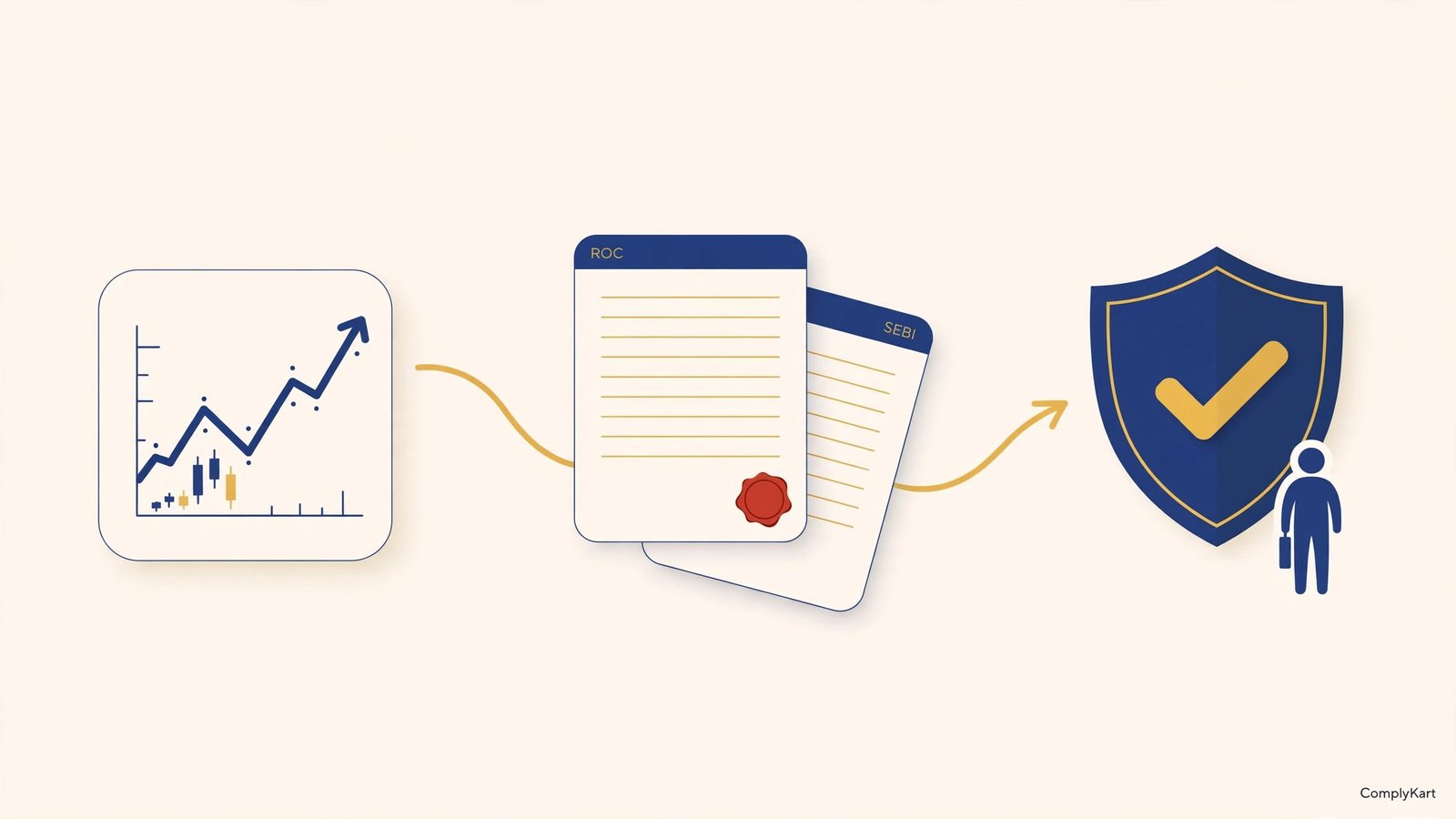
Then, on 9 October 2026, the NCLAT's Principal Bench in New Delhi stayed the admission order and kept it in abeyance. Polycab's board stays in charge. The company informed the stock exchanges — as listed companies must under Regulation 30 of the SEBI Listing Regulations — and the appeal is now listed for 26 October 2026. The matter is sub judice. I will not pretend to know how it ends.
Why did the NCLT admit the petition in the first place?
Because Section 9 was built to be fast, and it is. When a vendor's invoice goes unpaid, the pipeline runs like this: a demand notice under Section 8 gives the debtor ten days to pay, and then the creditor files a Section 9 petition. The NCLT asks only three questions: is a debt due, is it unpaid, and is there any pre-existing dispute or pending suit or arbitration clouding it? The debt must cross ₹1 crore — a threshold the government raised from ₹1 lakh in March 2020. ₹2.79 crore crosses it comfortably.
Notice what the tribunal does not ask: whether the company can afford to pay. Solvency is irrelevant. The trigger is default, not distress. Courts have said this repeatedly: the IBC is a resolution mechanism, and Section 9 hands every operational creditor — every supplier, vendor, and service provider — a key to it.
That is the sentence I want every finance head to sit with. One overlooked vendor bill can become a CIRP petition.
The shield that (partly) worked: a dispute that predated the notice
Polycab's defence was the classic one, and it was built on timing. The company submitted that the ₹2.79 crore was already disputed — correspondence between the parties recorded disagreements over payments made and credit notes Asier Metals was yet to issue. Crucially, that correspondence predated the Section 8 demand notice (served on 6 August 2026) and the Section 9 petition itself (filed on 24 August 2026).
Think of a pre-existing dispute the way an insurer thinks of a pre-existing condition. An insurer pays for a fresh illness; it does not pay for a condition you walked in with. Section 9 works the same way. It is designed for fresh, undisputed defaults — not for old fights dressed up in a demand notice. The Supreme Court's ruling in the Mobilox case made timing the whole game: a dispute evidenced on record before the demand notice arrives can kill the petition at the threshold. A dispute raised only after the notice lands is, for these purposes, too late.
Evidence beats assertion. Polycab pointed to dated correspondence, not just an objection. That distinction — documented disagreement from before the notice versus one invented after it — is where Section 9 fights are won or lost.
Why the NCLAT still asked for a deposit
The NCLAT did not dismiss the petition. It stayed the admission order — and directed Polycab to deposit the disputed ₹2.79 crore in a fixed deposit in the name of the NCLAT Registrar within one week, "without prejudice" to the rights and contentions of either side.
Read that as judicial bookkeeping. The tribunal balanced two risks: letting a contested CIRP displace a functioning board, versus letting a genuine creditor's claim dissolve while lawyers argue. A deposit freezes the money without deciding who owns it. Three words do all the work: without prejudice. The deposit admits nothing and decides nothing. And note the emerging pattern — companies that want a stay should arrive prepared to park the disputed sum. It is the price of breathing room.
If you are a vendor waiting to be paid
Section 9 rewards the creditor who keeps clean records — and punishes the one who improvises. Checklist, not legal advice:
- Build the paper trail before you escalate: invoices, delivery challans, acceptance records, and every follow-up for payment.
- Settle credit notes and adjustments before you serve the Section 8 notice. In this very case, unissued credit notes formed the backbone of the debtor's defence.
- Serve the demand notice properly and wait the full ten days. Shortcuts here get petitions thrown out.
- The ₹1 crore threshold is the only size filter — it applies the same against a startup or a giant.
- Be honest about disputes. Filing over a genuinely contested claim — one the debtor can show was disputed before your notice — risks costs, damages, and a reputation that outlasts the case.
One honest caveat: insolvency is a blunt instrument that burns the commercial relationship to collect the debt. Sometimes a negotiated settlement gets you paid faster with the relationship intact.
If a Section 8 notice has landed on your desk
The clock starts the moment the notice arrives. Ten days. Here is what separates companies that survive these from companies that become cautionary tales:
- Never let a payment dispute live only in phone calls. Put every disagreement in writing — email counts — while the dispute is alive, not after the demand notice arrives.
- Settle credit notes, price adjustments, and quality claims promptly. Every unissued credit note is a future defence exhibit.
- Respond to the notice within the ten days, enclosing your dispute record. Silence reads as agreement.
- Track vendor payables the way you track tax deadlines. One missed bill should never be the thing that puts your company in the NCLT.
- If the petition is admitted anyway, move fast. Polycab was before the NCLAT within 48 hours. And carry a chequebook — courts increasingly condition a stay on depositing the disputed sum.
What happens on 26 October
The NCLAT hears the appeal on 26 October 2026. The stay could harden into a dismissal, the matter could go back to the NCLT for a fresh look, or the admission could revive. I will not guess. But the playbook this episode has already written is clear: in a Section 9 fight, the winner is usually whoever has the older paper trail.
So here is the habit I will leave you with, whichever side of the table you sit on. Document your disputes when they are born, not when they are needed. The credit note you issue, the quality complaint you put in writing, the payment follow-up you send — that is the evidence a tribunal reads a year later. Companies that do this are boring. In disputes, boring wins.
If a Section 8 demand notice has arrived at your company, or you are a vendor staring at unpaid invoices, the first ten days decide everything. Get advice before the clock runs out.



Comments
No comments yet — ask the first question below.
Join the discussion
Questions go straight to our expert desk. Comments appear after a quick review — no spam, no noise.