

You found the flat. The price is right, the title is clean, and then your lawyer mentions the seller is an NRI living in Singapore. Nothing stops the deal. But from 1 October 2026, the TDS paperwork around it changed — and the change sits on the buyer's desk, not the seller's.
On 22 September 2026, the CBDT issued Notification No. 121/2026 — the Income-tax (Fifth Amendment) Rules, 2026 (G.S.R. 830(E)), effective 1 October. The charging provision is section 393(2) of the Income-tax Act, 2025: tax to be deducted on consideration for the transfer of immovable property, where the buyer is a resident individual or HUF and the seller is a non-resident.
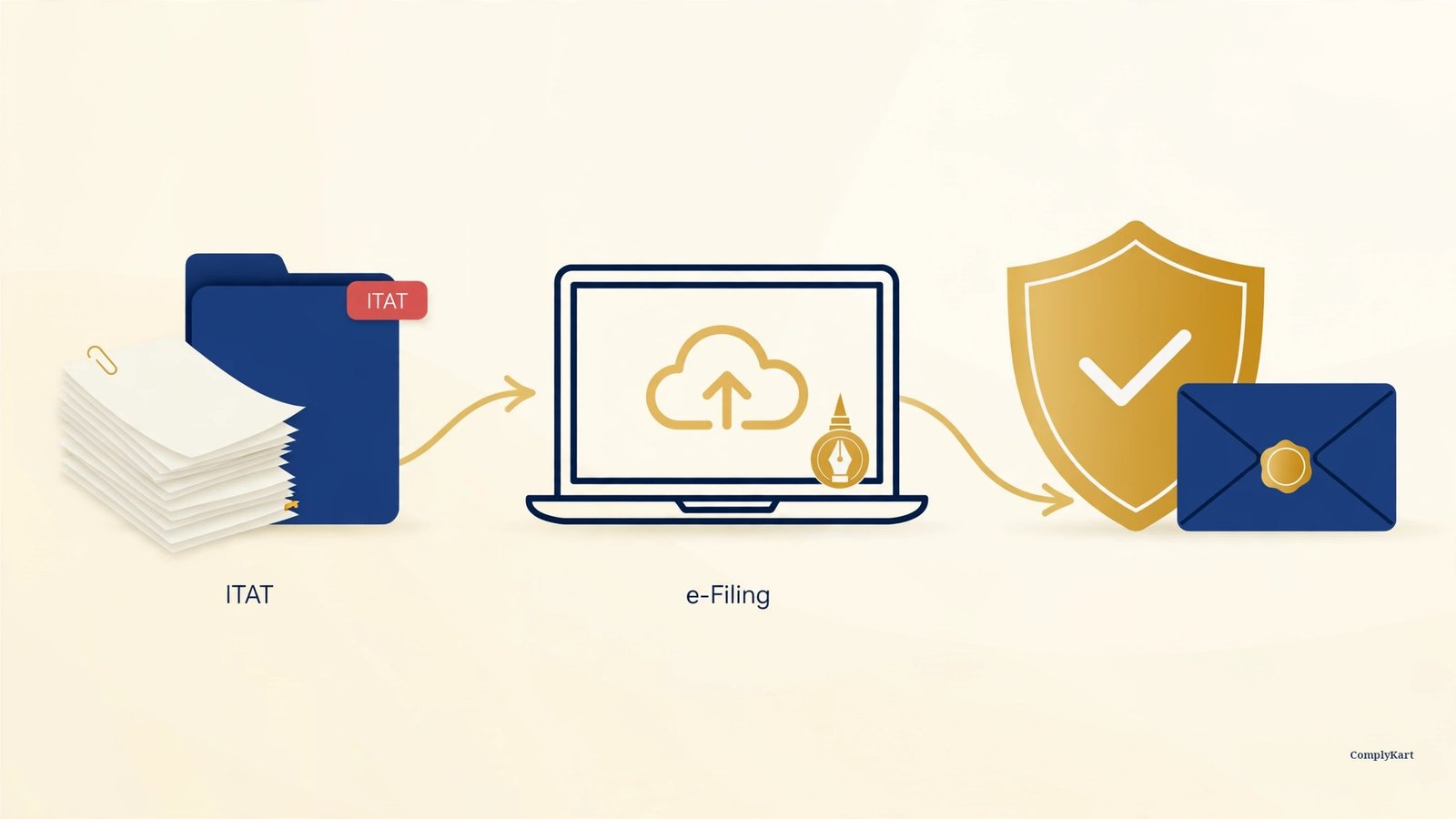
Let's be clear about what is new and what is not. The obligation to deduct tax when you buy property from an NRI is not new. What is new is the machinery. Rules 215, 218 and 219 of the Income-tax Rules, 2026 now expressly cover these deductions, Form 132 has been updated, and Form 141 carries a brand-new Schedule E — a dedicated reporting schedule for this exact transaction. In plain terms: the department now wants the full story of the deal, in a prescribed format, from you.
Schedule E wants the whole transaction, not just the tax
Schedule E reads less like a tax form and more like a deal summary. It asks for the property's address and type — land (other than agricultural land), building or part of a building, or both. Every buyer's PAN, name, and share of the consideration, summing to one hundred per cent. The agreement date, the registration date if available, the total stamp duty value, and the total sale consideration — all in rupees.
Then the sellers. For each non-resident deductee: PAN if available, name, status code, contact number, email id, and the overseas address of the country they are resident in. Plus the money detail per seller — what was paid in earlier instalments, what is paid in this one, the date of payment or credit, the amount on which tax is deducted, the rate applied, the tax deducted (surcharge and cess included), and any certificate obtained for lower or nil deduction under section 395.
That is a lot of fields. But one line in the notification's notes deserves underlining: the contact number, email id and overseas address are mandatory whether or not the seller has a PAN.
The part that trips buyers up: a seller with no PAN
Many NRI sellers have no Indian PAN. Under the new rules, that is no reason to leave the seller's details blank. Where PAN is unavailable, you must furnish the seller's Tax Residency Certificate number and Tax Identification Number — or, if their country issues no such number, the unique number by which that country's government identifies them — in the manner Rule 217 prescribes. Do it right, and the applicable rate applies. Skip it, and tax is deducted at the higher rate the rules provide for unidentified deductees.
Think of it like a courier's delivery manifest for a cross-border parcel. A domestic parcel just needs a phone number. A cross-border one needs the sender's foreign address, passport details and a unique parcel ID — because the system at this end has no domestic ID to look the sender up by. Schedule E treats your NRI seller the same way. With no PAN to key on, the form leans on the seller's home-country identifiers. TRC number, foreign TIN, overseas address — these are the parcel's tracking details.
The practical lesson is about timing. Buyers usually discover the missing-TRC problem at the payment counter, when the money is ready to move and everyone is staring at the form. Collect it at the negotiation table instead. Ask for the TRC, the foreign TIN, the overseas address, the email and the phone before you agree the price. Five minutes early; a stalled deal later.
Paying in instalments? Each tranche has its own paperwork trail
Schedule E has a lumpsum-or-instalments question built in. For instalments, you declare whether the payment is the first, a subsequent, or the last. After the first, you quote the previous instalment's acknowledgement number. On the last, you report the total consideration paid across the whole deal.
In practice, each tranche generates its own form and its own acknowledgement number, chained to the last. Keep that chain intact — in a folder, with the agreement. If the assessing officer ever asks how the TDS on the deal was computed, the chain is your answer.
One more rule worth knowing: where there is more than one deductor — joint buyers, for instance — each files a separate form. Not one combined form. Separate.
Two details the form also cares about
The form asks whether the seller is opting out of the default tax regime under section 202(1), where that applies. And it asks for the nature of the capital gains in the seller's hands — long-term as referred to in section 197(1), or short-term excluding those in section 196. You are reporting the seller's tax position on their behalf, in effect. Get this wrong and the rate applied is wrong too.
If the seller has a certificate for lower or nil deduction under section 395 — a treaty position, say — the form has dedicated fields for the certificate number, and an assessing-officer certificate under section 395(6) is also recognised. A treaty claim lives or dies on this paper. No certificate, no benefit.
Your four-step checklist
So what should you do, as the buyer? Four steps, in this order:
First, collect before you commit. Ask the seller for their PAN — and if they have none, their TRC number, foreign TIN, overseas address, email and phone. Get it in writing, during negotiation, not as an afterthought.
Second, split it in the agreement. Record each buyer's share of the consideration in the agreement itself. The form wants percentages that total one hundred; the agreement is where they come from.
Third, chain the instalments. For tranches, file for each one and keep the acknowledgement numbers in sequence — the form will ask for the previous number every time.
Fourth, certificate first, payment after. If the seller claims a lower rate or treaty relief, the section 395 certificate must exist before the payment — the form asks for the number, and the department will expect it to be real.
Two small comforts: some fields will be pre-filled where the portal already has the data, and every amount goes in rupees.
The honest summary
This is a paperwork reform, not a tax increase. Nobody's liability went up on 1 October. But the margin for sloppy filing shrank considerably. The department is telling buyers, in so many words, that a property deal with a non-resident seller is a cross-border transaction and will be reported like one — with home-country identifiers, chained instalment acknowledgements, and a full capital-gains profile for each seller.
If your seller is an NRI, treat Schedule E as part of the deal checklist — next to the title search and the stamp duty calculation. The tax part of a property deal was never optional. Now the paperwork has caught up with the reality of it.



Comments
No comments yet — ask the first question below.
Join the discussion
Questions go straight to our expert desk. Comments appear after a quick review — no spam, no noise.