
E-Invoicing Under GST: Who Must Comply and How It Works
Somewhere in your accounting software sits an invoice you raised last week. It has the right format, the right GSTIN, the right HSN code. And yet, in the eyes of the GST system, it may not be an invoice at all. If your turnover crossed ₹5 crore and that invoice was never reported to the government's Invoice Registration Portal, Rule 48(5) says it "shall not be treated as an invoice." Your buyer can't claim credit on it. Let that sink in for a moment.
This is e-invoicing — and despite the name, the government doesn't generate your invoice for you. Let's unpack what it actually is, who it catches, and what changes in your billing room.
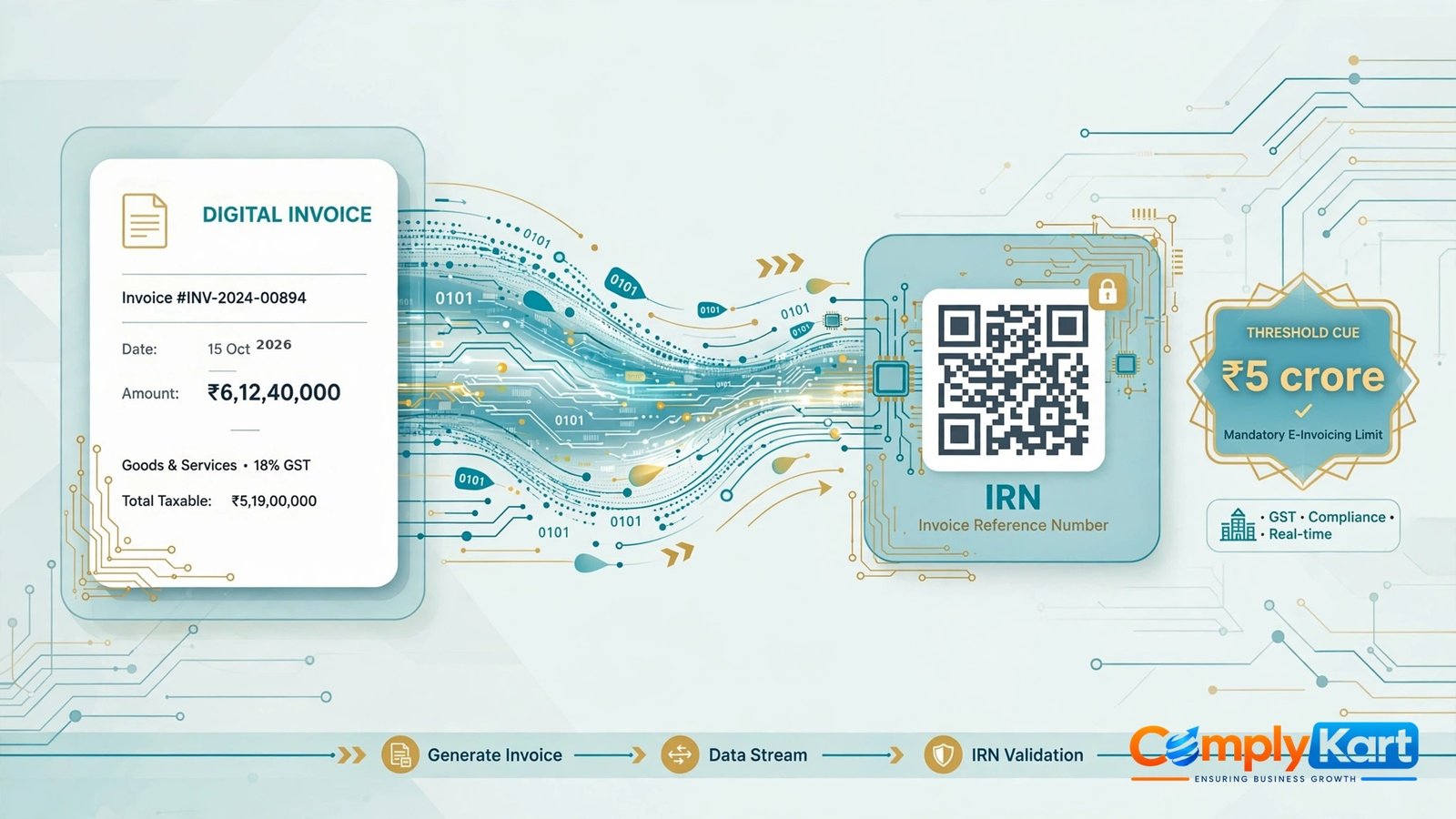
The short answer: E-invoicing is mandatory if your aggregate turnover exceeded ₹5 crore in any financial year since 2017–18 — counted at PAN level across all your GST registrations, covering B2B, export, deemed export and SEZ supplies. You report each invoice to the Invoice Registration Portal, which returns an IRN and signed QR code; without them, the invoice isn't treated as an invoice and your buyer can't claim input tax credit.
Who must comply with e-invoicing under GST?
E-invoicing is mandatory for registered businesses whose aggregate annual turnover exceeds ₹5 crore in any financial year from 2017–18 onwards. The threshold was brought down to ₹5 crore with effect from 1 August 2023 (Notification No. 10/2023–Central Tax), after a phased rollout that started at ₹500 crore in October 2020 and stepped down through ₹100, ₹50, ₹20 and ₹10 crore.
Three things about this test trip people up. First, it's PAN-level — turnover across all your GST registrations under one PAN counts together. Second, it's "any preceding financial year" — cross ₹5 crore once, in any year since 2017–18, and you're in the net even if this year's turnover is lower. Third, it covers B2B supplies, exports, deemed exports and SEZ supplies. Your B2C invoices to end consumers are not in scope.
Some categories are exempt even above the threshold: SEZ units, banks and NBFCs, insurance companies, goods transport agencies, passenger transport services and cinema exhibitors, among others. If you're a regular trading, manufacturing or services business above ₹5 crore, assume it applies to you. (Not registered yet? GST registration comes first — and our cost guide shows what it involves.)
How does e-invoicing actually work? IRN and QR in plain words
Here's the mechanics, stripped of jargon. You create the invoice in your own accounting software, exactly as today. Before you send it to the buyer, your software transmits the invoice data to the Invoice Registration Portal (IRP) in a standard digital format. The portal validates it and sends back two things: an Invoice Reference Number (IRN) — a unique hash for that invoice — and a signed QR code containing key invoice particulars.
You then print or share the invoice with the IRN and QR code on it. That's the e-invoice. The government never creates a PDF for you; it authenticates what you created and hands back proof of authentication. Think of it less as "government invoicing" and more as "government stamping." It works like the immigration stamp on your passport. You wrote the passport — your details, your pages. The immigration officer doesn't write you a new one; she reads yours, decides it's genuine, and stamps it. The IRP is that immigration desk: it never generates your invoice, it authenticates what you generated and hands back proof.
Two operational details matter. You can cancel an e-invoice on the IRP within 24 hours of generation. After that window, corrections happen through credit notes and your GSTR-1 — the IRP won't let you quietly delete it. And if your aggregate turnover is ₹10 crore or more, you must report the invoice to the IRP within 30 days of the invoice date (in force from 1 April 2025). Older invoices simply get rejected by the portal.
What changes in your billing process
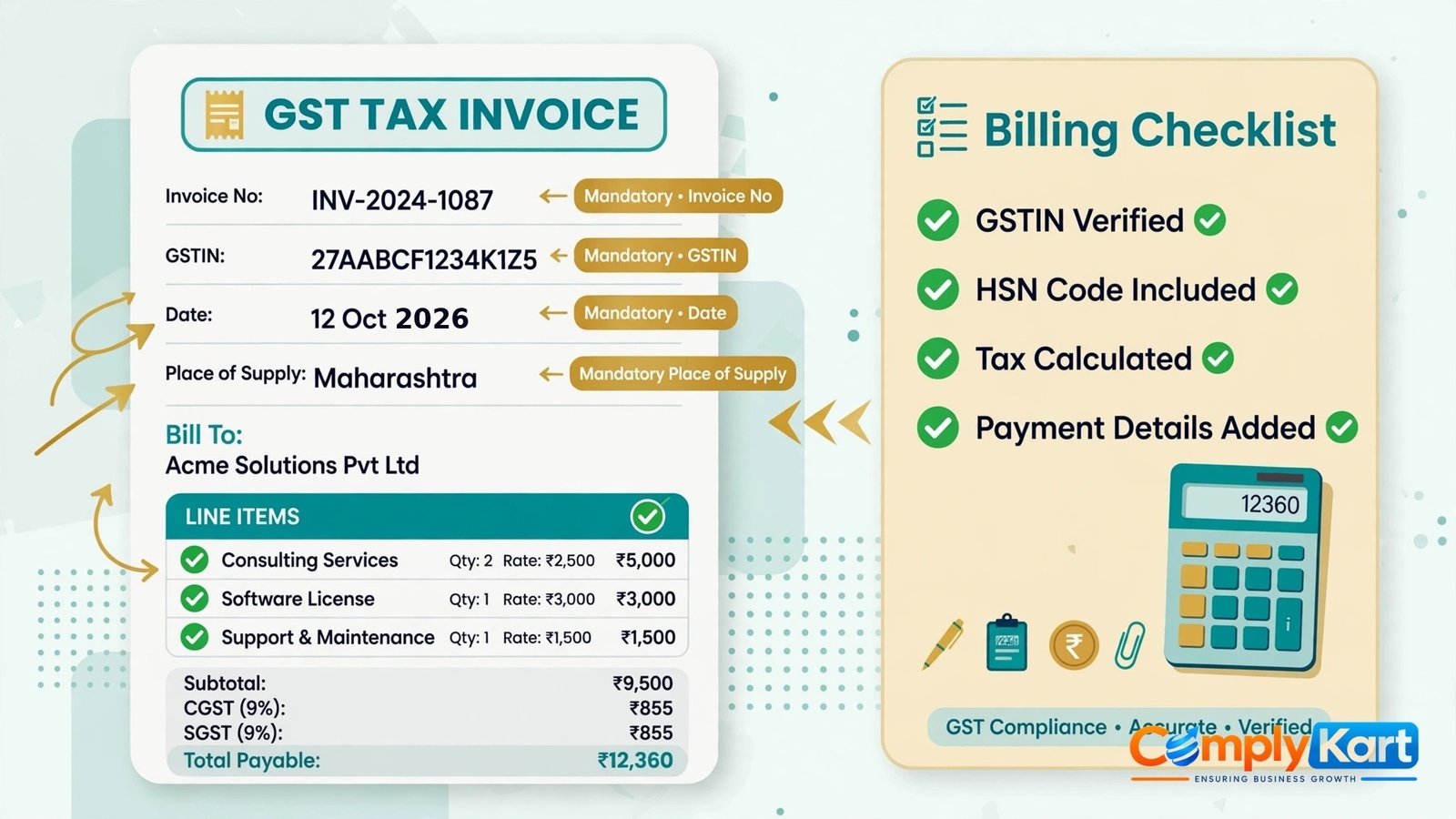
Honestly? Less than the panic suggests, more than the complacent assume. Your invoice format barely changes — the same 16 fields under Rule 46 (see our GST invoice format guide), plus the IRN and QR. What changes is the sequence: generation, then IRP reporting, then dispatch to the buyer. The invoice isn't final until the portal has blessed it.
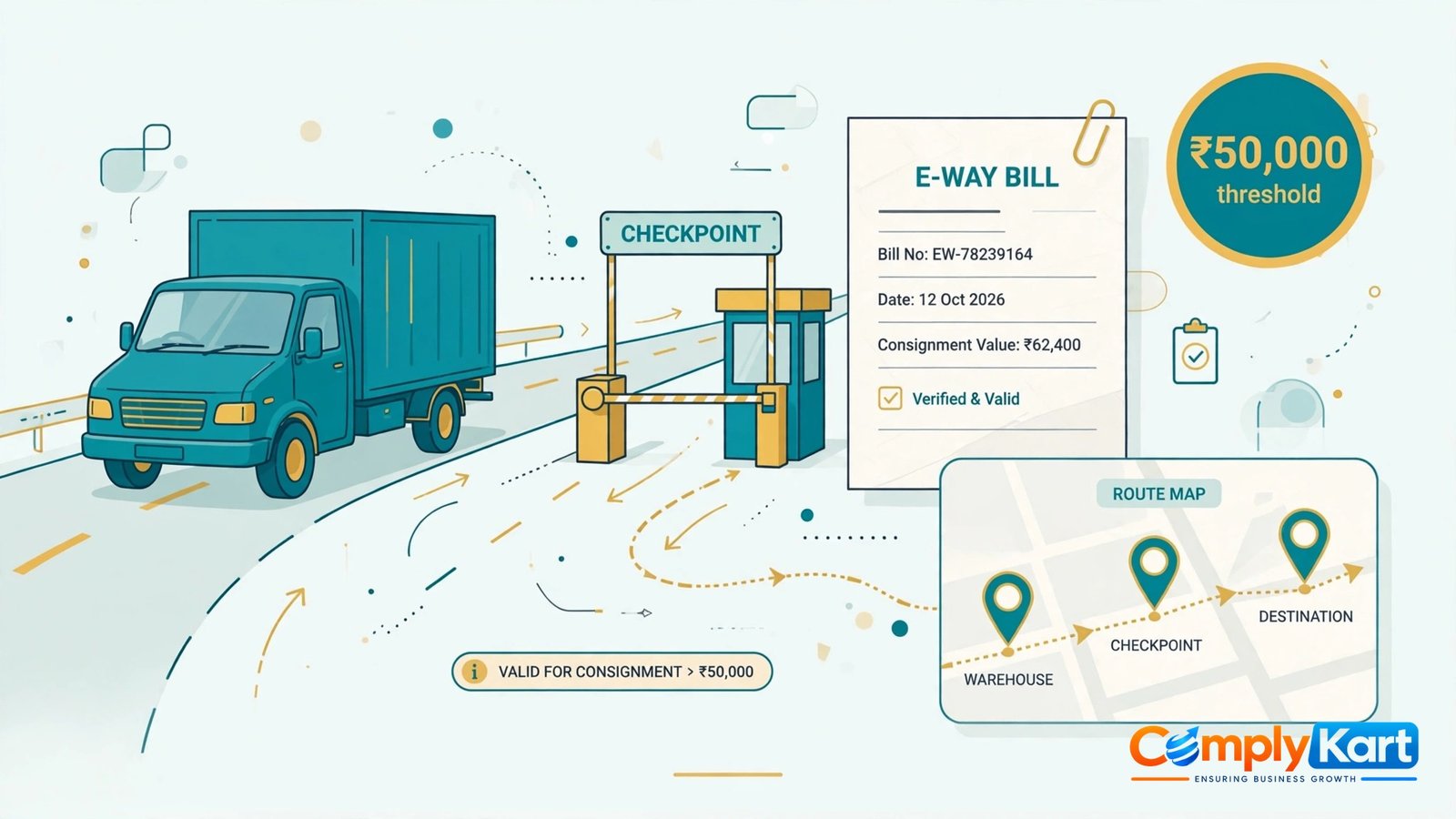
This has three practical consequences. First, your billing software must talk to the IRP — through an API integration or a GST Suvidha Provider. Manual portal uploads work for a handful of invoices a month; at volume, you need system-to-system reporting. Second, same-day dispatch discipline becomes non-negotiable, because the 30-day reporting clock (for the ₹10 crore-plus segment) starts ticking from the invoice date. Third, your e-way bills can be auto-generated from e-invoice data, which removes a whole category of invoice-vs-eway-bill mismatches.
The most common implementation failure I see: businesses treat e-invoicing as an accounts-department project. It isn't. Dispatch, sales and logistics all touch the invoice lifecycle, and the process breaks wherever the handoffs are informal.
What is the penalty for ignoring e-invoicing?
Non-compliance has two edges. The monetary penalty is ₹10,000 per invoice or 100% of the tax due, whichever is higher. On a high-value B2B invoice, the second limb is the one that hurts.
But the sharper edge is commercial, not penal. An invoice issued outside the prescribed e-invoicing manner is not treated as an invoice — which means your buyer cannot claim input tax credit on it. The first time a large customer's accounts team rejects your invoice for want of an IRN, the "we'll get to it next quarter" plan collapses. In B2B relationships, e-invoicing compliance is rapidly becoming a condition of getting paid on time.
Exports need it too
Worth stating explicitly because services exporters ask constantly: yes, export invoices need IRNs — both with payment of tax and without (under LUT). Zero-rated doesn't mean outside the system. The shipping bill fields and the "supply meant for export" endorsement still apply; e-invoicing sits on top of those requirements, not instead of them.
Check where you stand
Pull your aggregate turnover for every financial year since 2017–18, at PAN level. If any year crossed ₹5 crore, you're in — regardless of this year's numbers. If you're approaching the line, build the IRP integration before you cross it, not after the first rejected invoice.
E-invoicing: quick answers
What is the turnover limit for e-invoicing under GST?
₹5 crore of aggregate turnover in any financial year from 2017–18 onwards — counted at PAN level, across all your GST registrations together. Cross it once, in any year, and you're in the net even if this year's turnover is lower.
Is e-invoicing applicable to B2C invoices?
No. E-invoicing covers B2B supplies, exports, deemed exports and SEZ supplies. Invoices to end consumers stay outside the system — though the government has been tightening e-invoice-adjacent reporting for large B2C businesses separately.
Do export invoices need e-invoicing?
Yes — both with payment of tax and without (under LUT). Zero-rated doesn't mean outside the system. The shipping bill fields and the "supply meant for export" endorsement still apply; e-invoicing sits on top of those requirements.
Within how many days must I report an e-invoice to the IRP?
If your aggregate turnover is ₹10 crore or more, within 30 days of the invoice date (in force from 1 April 2025) — older invoices get rejected by the portal outright. Below ₹10 crore there's no 30-day rule yet, but same-day reporting discipline is still the sane practice.
Can I cancel an e-invoice after generating it?
On the IRP, within 24 hours of generation. After that window, corrections go through credit notes and your GSTR-1 — the portal won't let you quietly delete it. If you're scaling toward the threshold, our 90-day post-incorporation checklist keeps the launch filings on track.
E-invoicing feels like a burden until the first month it runs smoothly — then it becomes the most reliable part of your billing, because a portal-validated invoice is very hard to dispute. Getting the applicability assessment and the process design right at the start saves the painful retrofit later, and that assessment is exactly what our e-invoicing team does for growing businesses every week.


Comments
No comments yet — ask the first question below.
Join the discussion
Questions go straight to our expert desk. Comments appear after a quick review — no spam, no noise.