
IN BRIEF
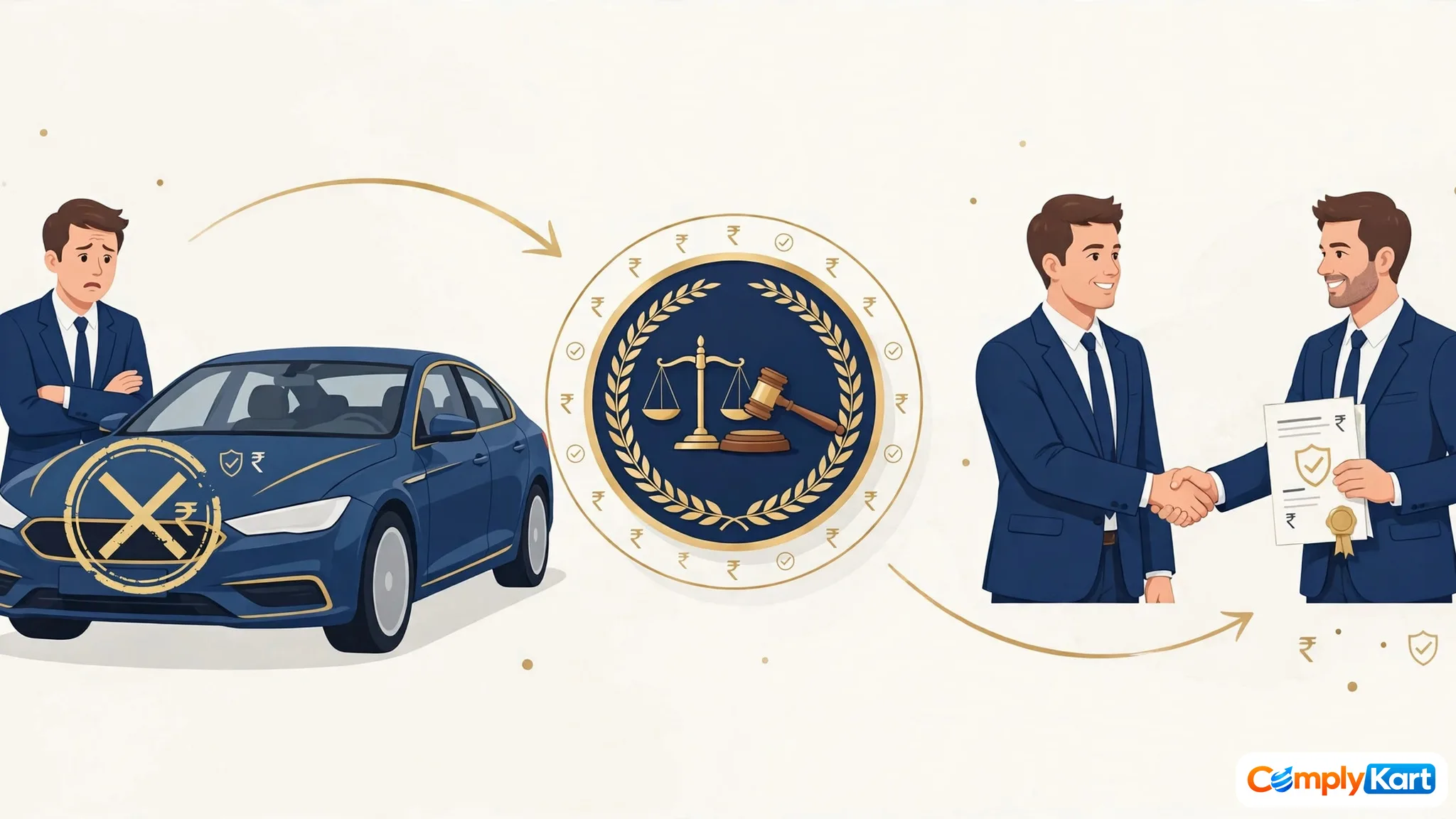
Circular 262/08/2026-GST is the CBIC clarification of 26 October 2026 withdrawing paragraph 4.6 of Circular 231/25/2024-GST. It confirms that input tax credit on demonstration vehicles is not blocked under Section 17(5)(a) of the CGST Act for dealer-agency dealers, because a test-drive vehicle furthers the supply of similar motor vehicles.
If you run an authorised dealership under the agency model, you have lived with a strange split since September 2024. Your neighbour, a traditional dealer, could claim input tax credit on the cars kept for test drives. You could not — even though your demo cars did exactly the same job. On 26 October 2026, the Central Board of Indirect Taxes and Customs (CBIC) closed that split. Circular No. 262/08/2026-GST withdraws the paragraph that denied you the credit, and says the credit on demo vehicles is not blocked under Section 17(5)(a) of the CGST Act merely because you operate as an agent.
The short answer: from Circular 262 onwards, an authorised dealer under the dealer-agency model can claim input tax credit on a demo vehicle on the same footing as a traditional dealer, because a test-drive car helps sell similar cars even when the manufacturer, not the dealer, raises the final invoice. The ordinary Section 16 conditions still apply, and credit denied in earlier periods is not automatically refunded.
What are the two dealership models?
Under the traditional model, you buy cars from the manufacturer and sell them to customers yourself. A few cars from your stock stay back as demonstration vehicles. Customers drive them, like them, and buy a similar car from you.
Under the dealer-agency model, the manufacturer sells the new car directly to the customer. You act as the manufacturer's authorised agent: you run the showroom, you market the cars, and you keep demo vehicles so customers can take test drives. You do not yourself make the outward supply of the new car to the customer. Your income comes from the agency or service arrangement with the manufacturer, not from a sale margin on that car.
The cars are the same. The test drives are the same. The showroom is the same. Only the paperwork of the final sale differs — and that difference was the whole dispute.
Why was the credit blocked for agency dealers?
Section 17(5)(a) of the CGST Act blocks input tax credit on motor vehicles designed to carry up to 13 people, including the driver. But the block has exceptions, and the first one matters here: credit is allowed on such vehicles when they are used for the further supply of such motor vehicles. A traditional dealer fits that exception neatly. The demo car promotes the sale of similar cars, and the dealer sells those cars.
Circular No. 231/25/2024-GST, dated 10 September 2024, dealt with demo vehicles in detail. For traditional dealers it allowed the credit. But paragraph 4.6 of that circular drew a line at the agency model. Its reasoning was narrow: an agent does not supply the car to the customer, so the demo car is not used for the agent's further supply of motor vehicles. The agent only provides marketing or facilitation services to the manufacturer. On that reading, the exception did not apply, and Section 17(5)(a) blocked the credit.
Think of it like a tailor's display piece. A display sherwani is never sold to the customer who tries it on — it is there so the next ten customers can see the cut, feel the cloth, and order one like it. Paragraph 4.6 effectively said the display piece only counts if the tailor also stitches the final order himself. If someone else stitches it, the display piece stops counting. That was the logic Circular 262 has now rejected.
What does Circular 262 actually change?
Circular 262, issued under Section 168(1) of the CGST Act on 26 October 2026, does one clean thing: it withdraws paragraph 4.6 of Circular 231. It does not rewrite Section 17(5)(a). It re-reads it.
The Board's reasoning, as reported across the professional press, runs in three steps. First, the words "such motor vehicles" in Section 17(5)(a)(A) cover not only the particular vehicle being sold but also vehicles used to further the supply of similar motor vehicles. A demo car used for test drives does exactly that. Second, a demo vehicle performs the same commercial function under both models: it lets a prospective customer experience the car before buying one like it. Third, denying the credit under one model while allowing it under the other, for the same use, would be unequal treatment of the same commercial activity.
The circular also records how demo vehicles actually sit in a dealer's books, which is why the two models were always closer than paragraph 4.6 suggested. The dealer buys the demo vehicle from the manufacturer against a tax invoice, generally records it as a capital asset, keeps it for demonstration for the prescribed period, and later sells it at its written-down value, paying GST on that sale. None of that changes with the model. The only thing that changes is who invoices the new car to the customer.
One practical consequence follows from the route the Board chose. A circular under Section 168(1) binds the department's own officers. An officer handling your file can no longer cite paragraph 4.6 to deny the credit on the ground that you are an agent. That is a real shield in scrutiny and audit — it is not, by itself, a court judgment, and it does not rewrite the Act.
How much money are we talking about?
Take a small illustration, not a real dealer's books. Suppose your showroom runs four demo cars, and each one carries ₹1,80,000 of input tax credit on its purchase invoice. Under paragraph 4.6, all four credits were blocked: 4 × ₹1,80,000 = ₹7,20,000 of credit sitting unclaimed on your balance sheet, while the traditional dealer across the road claimed the same amount on identical cars.
After Circular 262, that ₹7,20,000 is no longer blocked by Section 17(5)(a). Whether you can actually take it in a given return still depends on the Section 16 conditions in the next section — the circular removes one specific block, it does not waive every other condition. And if you sell a demo car later, GST applies on that sale, which is part of the same maths and should be priced into the deal.
What still has to be true before you claim the credit?
Circular 262 removes the agency-model block. It does not remove the rest of the law, and the professional coverage of the circular stresses this point. Check each of these before you take the credit:
A valid tax invoice in your name. You must hold the manufacturer's tax invoice for the demo vehicle, and the vehicle must genuinely be used for demonstration — test drives for prospective buyers of similar cars, not as a staff car or a director's runabout. The moment the car's use drifts away from demonstration, the reasoning behind the credit drifts with it.
Section 16 conditions. The usual eligibility conditions continue to apply: you must be registered, the goods must be used in the course of your business, and the credit must be taken within the ordinary time limits the Act sets. A circular cannot extend a statutory time limit, so do not sit on a claim.
The depreciation trap in Section 16(3). If you claim depreciation on the GST component of the demo vehicle's cost under the Income-tax Act, 1961, Section 16(3) of the CGST Act bars the input tax credit on that component. You get one benefit or the other on the tax part, not both. This matters because demo cars sit in your books as capital assets, and the depreciation question comes up naturally at year-end. Decide the treatment consciously, with your accountant, before the return is filed.
GST on the later sale. When the demo car is sold after its demonstration life, GST is payable on the sale at its written-down value. Keep the purchase invoice, the capital-asset entry, the demonstration log, and the sale invoice together — that file is what answers an officer's questions in one sitting.
What about credit denied in earlier periods?
This is the question every agency dealer asks first, and it deserves a straight answer: Circular 262 withdraws paragraph 4.6, but the coverage I have read does not spell out a refund route for credit already denied in past periods. Do not assume an automatic refund.
What the circular clearly does is change the position going forward, and it strengthens your hand in anything still open — a reply to a notice, a pending scrutiny, an appeal where the only ground was paragraph 4.6. For periods that are already closed, or where credit was reversed and the return window has passed, the route depends on the facts of your case: what was reversed, when, and whether any proceeding is still pending. Take advice on those periods specifically instead of treating the circular as a blanket reopening.
If you have a notice that cites paragraph 4.6, or a scrutiny query on demo-vehicle credit, the reply now writes itself in outline: identify the demo vehicles, show the tax invoices and capital-asset entries, show the test-drive use, and cite Circular 262's withdrawal of paragraph 4.6 together with the Section 17(5)(a)(A) reading. Our guide to replying to a GST scrutiny notice in ASMT-11 sets out the discipline for that kind of reply — answer each point, attach the document, and do not concede a ground the circular has withdrawn.
5 mistakes agency dealers still make with demo-vehicle credit
1. Claiming credit on a car that stopped being a demo car. A vehicle moved to staff use or kept as a pool car is no longer furthering the supply of similar cars. The credit's foundation goes with the use.
2. Taking both the credit and depreciation on the tax component. Section 16(3) forbids the double benefit. Pick the treatment deliberately and document the choice.
3. Missing the time limit. The circular fixes the eligibility question, not the clock. Credit taken late fails on Section 16 even when Section 17(5)(a) no longer blocks it.
4. Assuming past denied credit refunds itself. Circular 262 says nothing, in the coverage available, about a refund mechanism for closed periods. Open proceedings and future returns are the clear ground; closed periods need case-specific advice.
5. Keeping no demonstration record. A test-drive register, the manufacturer's agency agreement, and the capital-asset entry are what turn "demo vehicle" from a label into a fact an officer can verify.
Frequently asked questions
Does Circular 262 allow ITC on demo vehicles for all dealers? It aligns the two models. Traditional dealers already had the credit under Circular 231; agency-model dealers now have it too, because the credit is not blocked under Section 17(5)(a) merely on account of the agency model. The Section 16 conditions still apply to everyone.
Which circular denied the credit earlier? Paragraph 4.6 of Circular No. 231/25/2024-GST, dated 10 September 2024. It said an authorised agent who only provides marketing or facilitation services does not make the outward supply of the vehicle, so the further-supply exception did not cover the demo car. Circular 262 withdraws that paragraph.
Does the demo car have to be a capital asset? The circular notes that dealers generally record demo vehicles as capital assets and sell them later at written-down value with GST. That is the normal commercial pattern it describes, and your books should reflect the actual treatment. What matters for the credit is genuine demonstration use for similar cars, supported by invoices and records.
Is GST payable when the demo car is sold? Yes. The later sale of a demo vehicle attracts GST, as the circular's own description of the lifecycle confirms. Price the sale with that in mind rather than treating the whole credit as free money.
Should a dealer with a pending notice on this point write to the department now? If a proceeding is open and rests on paragraph 4.6, a short representation citing Circular 262 is worth filing promptly, with the invoices and demonstration records attached. For closed periods, get advice on your specific facts before assuming any refund route.
If demo-vehicle credit is one of several GST positions you are tidying up before year-end, start with the basics: a clean GST registration record for each place of business, and, where a refund is genuinely due, a properly documented GST refund application rather than an adjustment buried in a return. The compliance fee calculator can help you scope the cost of getting the filings done properly. The demo car in your showroom finally counts the same as your competitor's — make sure the paperwork proves it.




Comments
No comments yet — ask the first question below.
Join the discussion
Questions go straight to our expert desk. Comments appear after a quick review — no spam, no noise.