
IN BRIEF
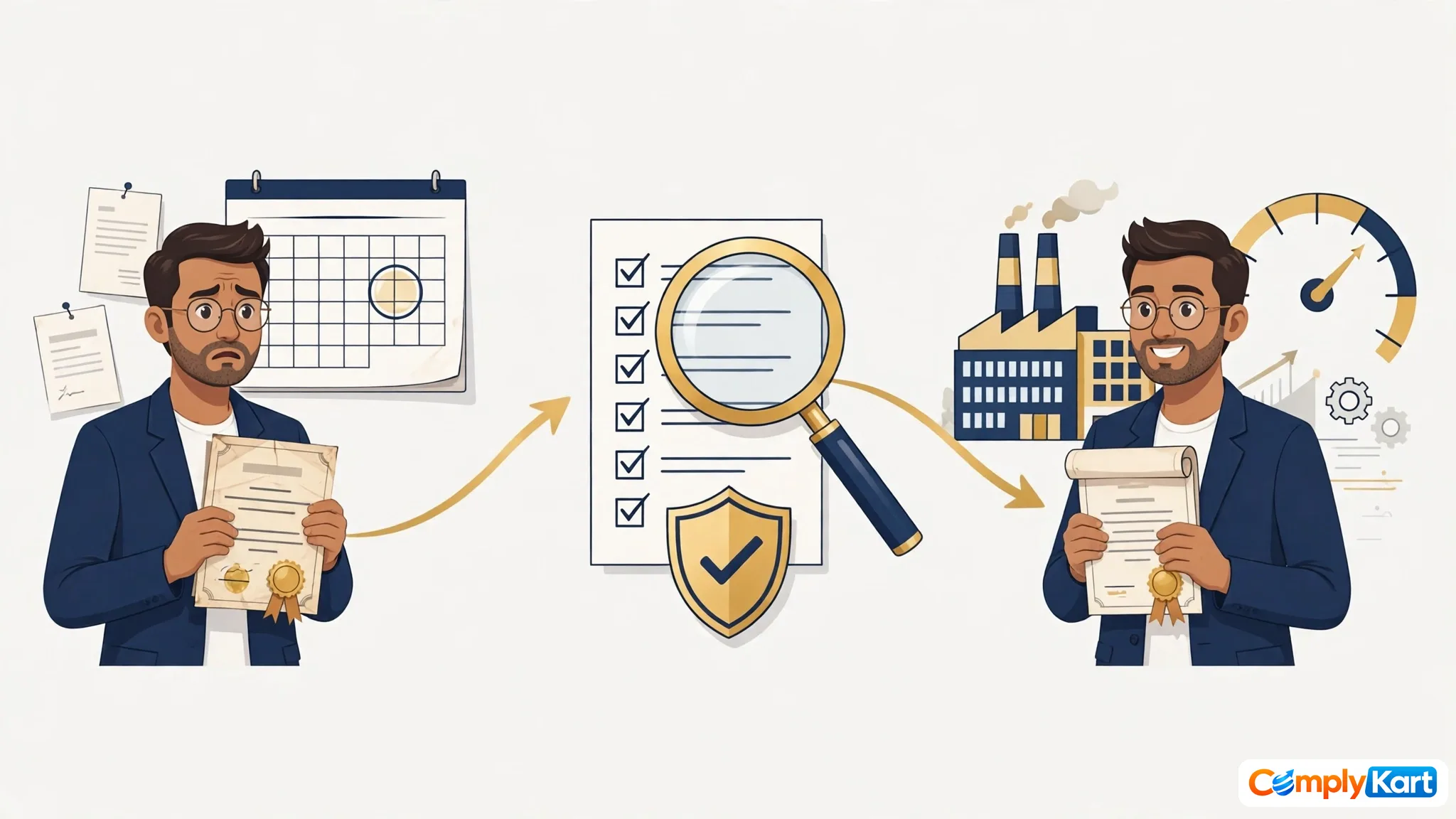
ISO 9001:2026 transition is the move from the 2015 edition of the ISO 9001 quality management standard to the sixth edition, published on 16 September 2026. It applies to every organisation holding an accredited ISO 9001:2015 certificate. Global ACI's mandatory transition document gives certified organisations until 30 September 2029 to complete the move, and no new 2015 certificates may be issued after 31 March 2028.
The ISO 9001:2026 transition ends on 30 September 2029. Every accredited ISO 9001:2015 certificate must have moved to the 2026 edition by then, under Global ACI’s mandatory transition document. No new 2015 certificates can be issued after 31 March 2028, and certificates issued to 2015 before that date carry a shortened validity ending 30 September 2029.
Most guides you will read about this transition get one thing wrong in the first paragraph. They say the transition period will be confirmed by the International Accreditation Forum — the IAF — once it issues its mandatory document. That sentence was already out of date when the standard was published. The IAF ceased operations on 1 January 2026. It merged with the International Laboratory Accreditation Cooperation into a single body, Global Accreditation Cooperation Incorporated — Global ACI. And Global ACI had already set the dates: its mandatory transition document, Global ACI-TECH-3-TR 2029-09-30 (M), was issued on 4 September 2026, twelve days before ISO 9001:2026 itself was published on 16 September 2026.
So nothing is waiting to be confirmed. The dates are fixed, the document exists, and the clock has been running since September. What follows is the whole picture — the dates, what actually changed, what it costs in India, and the plan that gets you across without a last-minute scramble.
The dates that bind you
Five dates matter. Everything else in this guide hangs off them.
| Date | Who acts | What happens |
|---|---|---|
| 16 September 2026 | ISO | ISO 9001:2026, the sixth edition, is published and replaces the 2015 edition |
| 31 March 2027 | Accreditation bodies | They must be ready to assess certification bodies against the 2026 edition |
| 30 September 2027 | Accreditation bodies | Transition decisions on the certification bodies they accredit must be complete |
| 31 March 2028 | Certification bodies | Last day a new certificate can be issued to the 2015 edition |
| 30 September 2029 | Everyone | Transition ends — every accredited 2015 certificate must have moved to 2026 |
Two of these dates do most of the work. 31 March 2028 is the point after which a first-time applicant can only be certified to 2026 — there is no buying a 2015 certificate late and transitioning later. And 30 September 2029 is the hard end: it is three years from the end of the publication month, which is why the date is the 30th of September and not the 16th.
Notice what is missing from the table. There is no date by which you must start. That is the trap. A three-year window feels generous in year one and brutal in year three, when every certification body in the country is booked solid with companies that all waited.
Is your ISO 9001:2015 certificate still valid?
Yes. Publication changed nothing on the day. Your 2015 certificate stays valid until 30 September 2029 at the latest — and only until its own expiry date if that comes sooner. Your next audit is planned around the transition, not sprung on you.
The detail that catches people out is the shortened validity. If a certification body issues a 2015 certificate any time up to 31 March 2028, that certificate does not get a full three-year life. Its validity is cut short to end on 30 September 2029. So a company certified to 2015 in early 2028 pays for a certificate that lives barely eighteen months. If you are anywhere near starting certification, that maths settles the question: go straight to 2026 once your certification body can offer it.
When can a certification body offer 2026? Only after its own accreditation has transitioned — those decisions are due by 30 September 2027, and accreditation bodies have until 31 March 2027 to be ready to assess to the new edition. In practice, that means some certification bodies will offer accredited 2026 certificates through 2027, and some will take longer. Ask yours directly, in writing, before you plan around a date. And while you are checking, confirm your own certificate is genuine — the guide to checking whether an ISO certificate is genuine shows the two-minute check that catches the fakes.
What actually changed in ISO 9001:2026?
The honest answer first: this is an evolution, not a rebuild. The ten-clause structure stays. The process approach stays. Plan-Do-Check-Act stays, and so does risk-based thinking. Most requirements carried over word for word. If your system is healthy, the transition is a set of focused changes, not a new system.
But several clauses now ask for more, and the biggest change sits at the top.
| Clause | What 2015 asked | What 2026 asks |
|---|---|---|
| 5.1.1 — Leadership | Ten leadership commitments, including promoting the process approach and risk-based thinking | A new commitment: top management must promote a quality culture and ethical behaviour — shared values, attitudes, practices and actions. Leaders also promote opportunity-based thinking alongside risk-based thinking |
| 5.2 — Quality policy | Policy appropriate to the purpose and context of the organisation | A clearer link between the policy, the organisation’s context and its strategic direction |
| 6.1 — Risks and opportunities | One clause covering risks and opportunities together | Split apart: risks in 6.1.2, opportunities in 6.1.3, each with its own actions — including checking whether the actions worked |
| 6.3 — Planning of changes | Changes planned against four considerations: purpose, integrity, resources, responsibilities | Seven considerations now — the three new ones are communicating the change, monitoring whether it worked, and reviewing the result |
| 7.1.6 — Organisational knowledge | Determine the knowledge needed to run the processes | Broader, and tied to the intended results of the quality management system |
| 7.3 — Awareness | People aware of the policy, objectives and their own contribution | People must also be aware of the quality culture and ethical behaviour |
| 8.2.1 — Customer communication | Communicate about products, enquiries, feedback and complaints | Must now include relevant information about contingency actions, including disruptions to supply |
| 9.2.2 / 9.3.2 — Audits and review | Internal audit programme with criteria and scope; management review taking inputs into consideration | Every internal audit needs a defined objective; management review inputs are now mandatory — the review shall include them |
Two more points complete the picture. Clause 4.1 now requires you to determine whether climate change is a relevant issue for your context, with a note at 4.2 that interested parties may have climate-related requirements — but that is not new. It arrived as a 2024 amendment to the 2015 edition and was carried into 2026, so if you addressed it then, nothing more is needed. And Annex A, the guidance annex, has been substantially expanded while Annex B has been removed; Annex A adds no requirements, but it is the document your auditor will have read.
Here is the analogy that makes the biggest change click. Think of your quality system as a car you keep on the road while you change its tyres. The car never stops — customers keep ordering, production keeps running, audits keep coming. The transition is the tyre change: same car, same road, better grip. Clause 5.1.1 is the part most companies will feel, because it moves the audit from your documents into your behaviour. An auditor can now ask, in plain terms, how your managers show quality culture in daily decisions — and "we have a policy" is not an answer to that question.
What the 2026 edition does NOT add
The run-up to publication was full of speculation about artificial intelligence, digitalisation, sustainability and supply chains. The published standard contains no new specific requirements on any of these. Beyond the climate wording in clauses 4.1 and 4.2, there are no ESG requirements. No clause asks you to run an AI policy, a digital transformation plan or a sustainability report.
This matters because the market is already full of sellers offering "ISO 9001:2026 AI readiness packages" and similar. If a consultant tells you the new edition requires something about AI, ask them for the clause number. There is not one.
Your transition plan, in six steps
The cheapest way to transition is to fold it into an audit you are already paying for. Certification bodies normally run the transition audit at your next scheduled surveillance or recertification audit, so the plan below is built around your normal cycle.
Step 1 — This month: read the gap, not the whole standard. Compare your current system against the table above, clause by clause. Most companies find three to five real gaps, and nearly all of them sit in 5.1.1, 6.1 and 6.3. Write each gap down as one sentence: what the clause asks, what you do today, what is missing.
Step 2 — Before your next management review: fix the leadership evidence. Clause 5.1.1 is where auditors will press hardest, and it cannot be fixed the week before the audit. Get two or three real examples into your records: a decision where quality overruled a shortcut, a moment a manager acted on a quality concern, a message from the top that names ethical behaviour plainly. Minutes and emails count. A poster does not.
Step 3 — Split your risk register. Take the single "risks and opportunities" section and separate it. Risks get 6.1.2 treatment — determined, analysed, evaluated. Opportunities get their own 6.1.3 treatment, from identification through to checking whether the action worked. The most common failure here is a register full of risks and one line that says "opportunities: none". An auditor will read that as a system that never looked.
Step 4 — Run one internal audit to the 2026 edition. Give it a defined objective — clause 9.2.2 now requires one — and audit the changed clauses specifically. This is also the moment to test your planning-of-changes process against the seven considerations in 6.3: pick a recent change and check whether you communicated it, monitored it and reviewed the result.
Step 5 — Book the transition audit early. Tell your certification body now which audit you want the transition attached to — surveillance or recertification — and get the date in writing. Do not leave this to 2029. Every certified company in India shares the same deadline, and the last six months will be the most crowded audit window the industry has ever run.
Step 6 — Hold the parallel standard in view. If you also hold ISO 14001, note that its 2026 edition runs on its own timetable: the ISO 14001 transition ends on 30 April 2029, five months earlier than the quality one. Plan the two together or the environmental deadline will catch you first. Our ISO 14001 certification page carries the environmental side of that plan.
What does transition cost in India?
There is no single transition fee, and anyone quoting you one fixed number for every company is guessing. The cost has three parts: the gap work, the certification body’s transition audit, and your own people’s time. The certification-body part is charged at actuals — it varies by the size of your operation, the number of sites and how much of the transition rides on an audit you were already having.
Take a concrete case. A 40-person manufacturing company in Pune, certified to 2015 since 2023, with its recertification due in mid-2028. It chooses the Growth package of our ISO 9001 certification consultancy at ₹19,999 — that covers the gap assessment, the rewritten procedures for the changed clauses and the internal audit to the 2026 edition. The certification body then runs the transition as part of the recertification audit it was already going to charge for, at its actual rates. The company’s extra cash cost, beyond audits it would have paid for anyway, is the ₹19,999 consultancy plus its own team’s time — roughly two working days spread across a month.
Contrast that with the same company waiting until 2029 and booking a standalone transition audit in the rush: the certification body charges a separate visit, the consultancy is the same, and the team does the work under deadline pressure. The lesson is the same as with every compliance deadline — the price of the work barely changes, but the price of the timing does. A smaller company, up to 25 employees, takes our Standard package at ₹9,999 instead of ₹19,999; the structure is identical. And if you are still weighing whether certification is worth it at all, our ISO 9001 cost guide lays out what a ₹7,999 certificate really is — read it before you buy on price.
What happens if you miss 30 September 2029?
Your accredited 2015 certificate stops being valid. There is no grace period in the transition document and no extension mechanism to apply for. After that date, getting certified again means a fresh certification audit to the 2026 edition — a full initial audit, not a transition audit — which costs more and takes longer than a transition would have.
The commercial damage usually lands before the certificate itself expires. Government tenders and large buyers ask for a current ISO 9001 certificate, and a certificate that lapses in September is a bid you cannot submit in October. Our ISO 9001 for government tenders guide explains how buyers actually check — they do not take your word for it, they check the certificate. A company that transitions in 2027 or 2028 never has this conversation. A company that waits until 2029 has it under pressure.
Five mistakes that cost companies their transition
1. Waiting for an IAF announcement. The IAF is gone. The dates were set by Global ACI on 4 September 2026. Any plan that starts "once the IAF confirms…" is a plan that never starts.
2. Treating 5.1.1 as a policy rewrite. Quality culture and ethical behaviour are about what managers do, not what the policy says. A rewritten policy with no evidence behind it fails the audit and wastes the effort.
3. Leaving opportunities blank. A risk register with no opportunities is the single most common gap in the 2026 edition. Give opportunities their own sub-clause, their own owner and their own effectiveness check.
4. Changing the system without following through. Clause 6.3 now asks whether you communicated the change, monitored it and reviewed the result. A change that was decided but never followed up is a nonconformity waiting to be found.
5. Booking the transition audit last. The last six months before 30 September 2029 will be the busiest audit window in the standard’s history. Book your transition against a surveillance or recertification audit in 2027 or 2028, while auditors still have diary space.
Frequently asked questions
Do I have to transition if my ISO 9001:2015 certificate expires before 2029?
No — but only in the sense that the question answers itself. If your certificate expires in, say, 2027, your recertification audit will be to the 2026 edition, because no new 2015 certificates can be issued after 31 March 2028 and your certification body will have moved by then. Your expiry date is your transition date.
Can I get certified to ISO 9001:2026 right now?
It depends on your certification body. A body can only issue accredited 2026 certificates after its own accreditation has transitioned, and those decisions run through 30 September 2027. Ask your body directly when it will be ready — and if you are starting fresh, there is little sense in buying a 2015 certificate with a shortened life.
How long does a transition audit take?
It is normally folded into a scheduled surveillance or recertification audit, so it adds time to a visit you were already having rather than requiring a separate one. The added time depends on the size of your gap — a company with three small gaps transitions faster than one that never addressed the 2024 climate amendment.
Does ISO 9001:2026 require anything about AI?
No. The published standard contains no new specific requirements on artificial intelligence, digitalisation or ESG. Beyond the climate wording in clauses 4.1 and 4.2, there are no sustainability requirements either.
What if I also hold ISO 14001?
Plan both transitions together. ISO 14001:2026 has its own transition timetable ending 30 April 2029 — five months before the quality deadline. If you run the two on separate tracks, the environmental one will catch you first.
The 2026 edition is not a new mountain. It is the same system with sharper expectations of the people who run it — leaders who show quality in their decisions, opportunities treated as seriously as risks, and changes followed through to their results. Do the gap work now, attach the transition to an audit you are already paying for, and 30 September 2029 becomes a date on a certificate, not a deadline in a panic. If you want the gap assessment done for you, start with the ISO 9001 certification page — and before you commit to any of it, run the numbers through the compliance fee calculator.




Comments
No comments yet — ask the first question below.
Join the discussion
Questions go straight to our expert desk. Comments appear after a quick review — no spam, no noise.