

IN BRIEF
ISO 9001 for government tenders is the use of an ISO 9001 quality management certificate as an eligibility condition in a government or PSU bid, where the tender requires the bidder or the original equipment manufacturer to hold it. The certificate must be valid on the bid date, its scope must cover the tendered work, and an accredited certificate is needed wherever the tender asks for IAF certification.
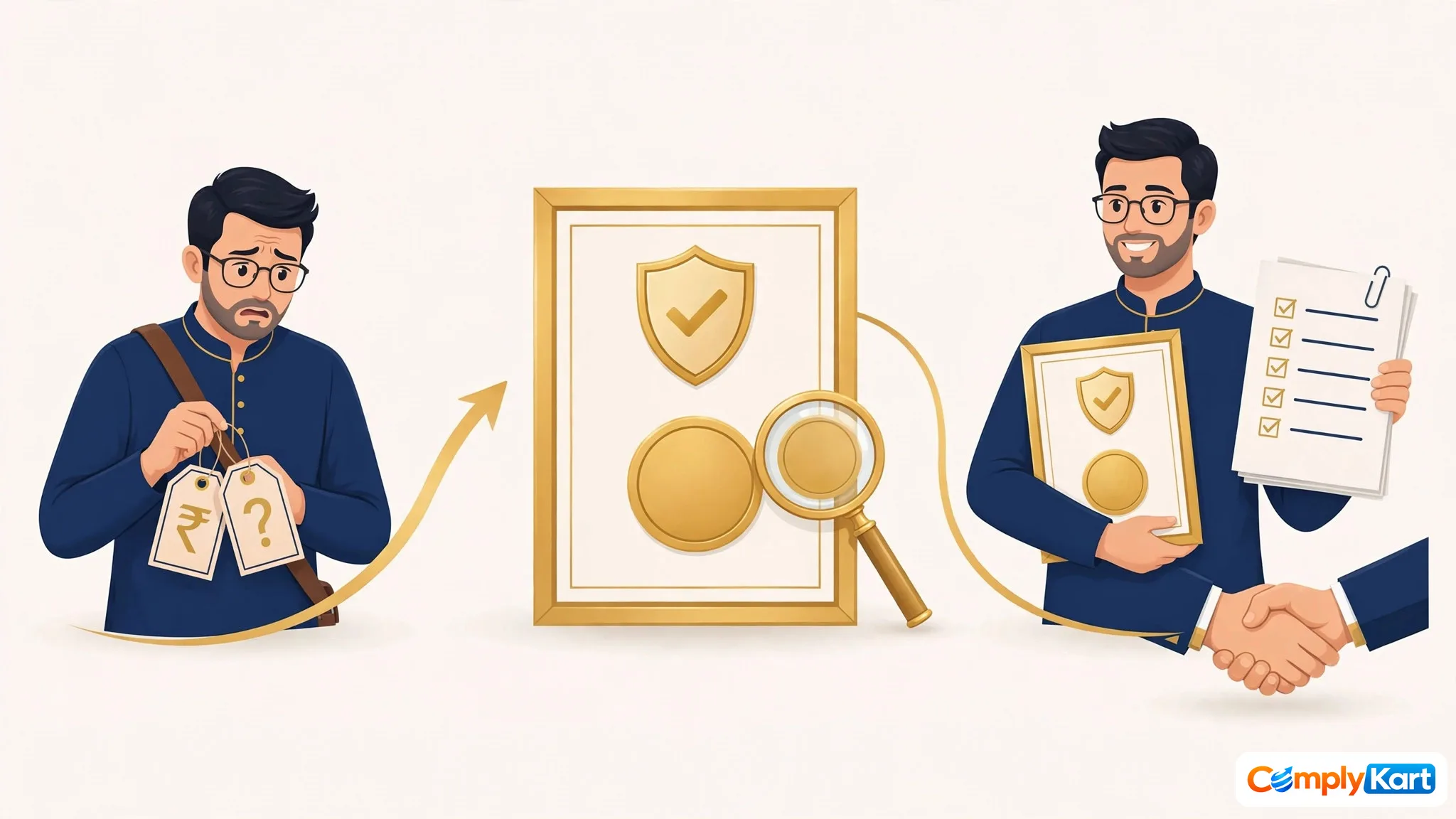
You found a government tender your business can genuinely fulfil. Price fits. Past work fits. Then you reach the eligibility page and there it is: "Bidder or OEM must have ISO 9001 certification." No certificate, no bid. Your price never gets opened.
The short answer: ISO 9001 is not a government licence, and no law forces every business to hold it. But many government and PSU tenders make it an eligibility condition, and when they do, it is a pass-or-fail gate, not a nice-to-have. The certificate must be valid on the bid date, its scope must cover the work you are bidding for, and if the tender asks for an accredited certificate, a cheap non-accredited one will not pass. Start at least six weeks before the submission date — a certificate bought in three days is almost certainly not the accredited kind a tender evaluator accepts.
Is ISO 9001 actually required, or just nice to have?
Both, depending on the tender. That distinction decides whether you should spend money now or wait.
In some tenders ISO 9001 is a mandatory eligibility condition. Miss it and your bid is rejected at the technical stage, before anyone looks at your price. GeM bid documents carry this clause so often that it reads like boilerplate: "ISO 9001: The bidder or the OEM of the offered products must have ISO 9001 certification." I have seen the same line in bids from IIT Kanpur and AIIMS New Delhi, and in buyer-added conditions that demand a "valid ISO 9001:2015 IAF certified" certificate with the latest renewal copy enclosed.
In other tenders it is a scoring item or a vendor-empanelment requirement rather than a hard gate. You can bid without it, but you lose marks or you cannot get empanelled for future work. And in some tenders it does not appear at all. There is no universal rule, which is why the first step is always the same: read the eligibility and buyer-added conditions of the specific tender, not a blog post about tenders in general.
Think of the certificate like the entry pass at a government building. The guard at the gate does not judge the quality of your work. He checks three things: is the pass genuine, is it current, and is it in your name. A tender evaluator does much the same with your certificate.
What exactly will the evaluator check?
Four checks, in roughly this order. Fail any one and the rest of your bid may never be read.
1. Is it valid and in date? An ISO 9001 certificate runs for three years, with a surveillance audit by the certification body in each of the second and third years. An expired certificate, or one whose surveillance audit is overdue, is a rejection waiting to happen. Some tenders ask for the latest renewal copy alongside the certificate itself — upload both, not just the original.
2. Does the scope cover this work? Every certificate carries a scope line: the products, services and sites it covers. A certificate scoped for "trading of electrical goods" does not prove a quality system for "manufacture of electrical panels". A certificate scoped for one factory does not cover a second factory you just opened. Read your scope line against the tender's item description before you bid. If they do not match, you need a scope extension audit, not a new certificate — ask your certification body, not a fresh seller.
3. Is it accredited, if the tender asks for that? Many tenders write "IAF certified" or name an accredited body. That means the certification body itself must be accredited — in India, by NABCB, the National Accreditation Board for Certification Bodies — under the IAF multilateral arrangement, which is what makes the certificate recognised across member countries. A certificate from a body with no accreditation may look identical on paper. The evaluator checks the body's name, not the border design.
4. Was it issued before the bid was published? Some buyer conditions say so in plain words: the ISO certificate's issue date must be before the bid publication date. A certificate dated after the tender opens can be treated as an afterthought, even if it is genuine. This is the clause that kills last-minute purchases. If your tender closes in ten days and you hold no certificate today, check this clause first — it may already have closed the door, and no seller can honestly backdate a certificate for you.
The bidder-or-OEM trap for resellers
Read the exact words. "Bidder or OEM must have ISO 9001" is good news for a reseller: the manufacturer's certificate satisfies the condition, provided you upload it with your OEM authorisation. But some tenders require the bidder's own certificate, or the OEM's certificate for the specific product category. A reseller who uploads a random group-company certificate, or the OEM's certificate for a different product line, is still short. If you bid as a reseller, get the OEM's current certificate and its scope line in writing before you quote, and check whether the tender wants the bidder, the OEM, or both.
Does your MSME or startup exemption save you?
No — not on this condition. On GeM, micro and small enterprises and DPIIT-recognised startups can get relaxations on turnover, past experience and earnest money deposit, but only where that specific bid enables them. The standard exemption wording covers turnover and experience criteria. It does not mention ISO certification, and nothing in it waives a certificate condition the buyer has written in. Do not assume your Udyam registration covers the ISO clause. It covers the turnover clause. Those are different gates, and the evaluator applies each one separately.
When buyers ask for more than ISO 9001
Some tenders, especially for manufacturing, construction and IT services, bundle standards together: ISO 9001 for quality, ISO 14001 certification for environment, ISO 45001 for worker safety, sometimes ISO 27001 for information security. A CCTV tender I came across asked for all of them plus CMMI Level 3. Do not buy the bundle blindly. Check which standards the tender actually names, and in what words — "must have" versus "preferable" changes the answer completely. One tender I read marked NABCB accreditation as "preferable" rather than mandatory. That single word is the difference between a certificate that passes and one that merely helps.
How to qualify in time: work backwards from the bid date
Certification is a system audit, not a document purchase. A certification body audits in two stages: Stage 1 reviews your documentation and readiness, and Stage 2 audits implementation on site. Before Stage 2, you need at least one internal audit and a management review completed — evaluators and auditors both treat those as evidence the system actually runs, not just exists on paper.
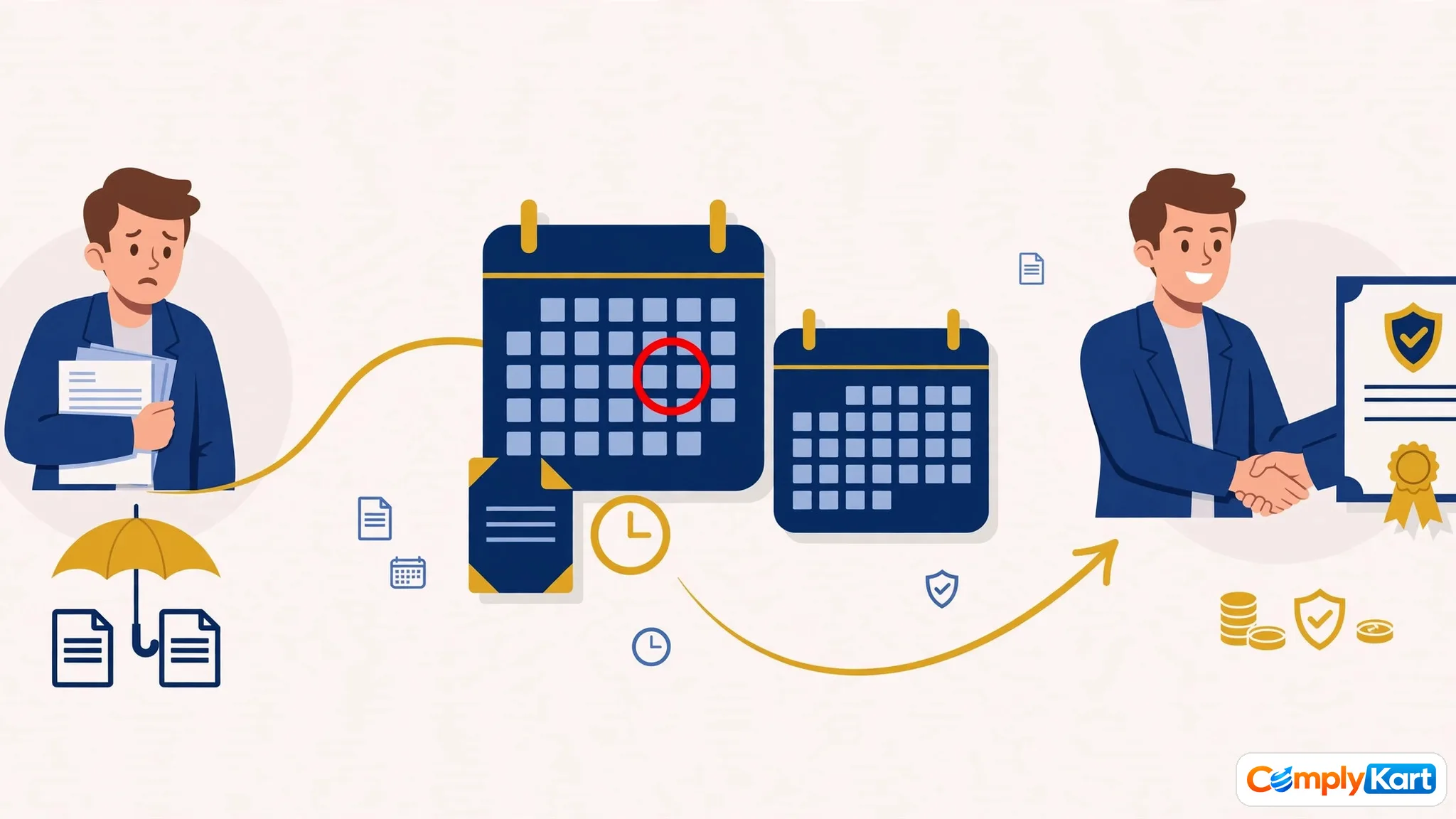
Work backwards like this. If the bid closes in six weeks, you have a realistic window for a small, single-site business that already keeps decent records: one week for gap assessment and scope, two weeks to write and roll out the documentation, one week for internal audit and management review, then Stage 1 and Stage 2 scheduling and certificate issue. If the bid closes in three weeks, a genuine accredited certificate is unlikely to land in time, and any seller promising it in three days is selling you paper, not an audit. Sellers advertising 3–5 day or 7–15 day turnarounds exist, and their certificates are routinely the non-accredited kind that fail the "IAF certified" wording. Timelines from serious guides run 30–60 days for a small business and 3–6 months where documentation has to be built from scratch. The spread is honest: it depends on your readiness, headcount, sites and scope.
One practical rule: never let a tender deadline be the first time you think about certification. If government work is part of your plan for the year, get certified in a quiet month, when auditors can be scheduled without panic and findings can be closed properly. A certificate earned calmly is the same certificate that sails through a technical evaluation later.
What it costs, and what to budget
There are two bills, and tenders make the split matter. You pay a consultant to build the system and a certification body to audit it. Our ISO 9001 certification consultancy costs ₹9,999 for a business with up to 25 employees and ₹19,999 for 26 to 100 employees, with the certification body's audit fees charged extra at actuals. The full cost picture — including the three-year surveillance cycle and why a ₹7,999 all-in certificate fails tenders — is in our companion guide on ISO 9001 certification cost in India. Budget for the audit fee and the two surveillance audits, not just year one, because a certificate that lapses at the first surveillance audit is useless for the next tender.
Documents to keep ready for the bid file
Keep a single tender folder, updated every time anything changes, so a bid never waits on a scan. It should hold: the current certificate and the latest surveillance or renewal copy; the certification body's accreditation details; your scope statement; company incorporation or registration documents; GST and PAN; site address proof for every certified site; and your OEM authorisation plus the OEM's certificate if you bid as a reseller. A clear scan matters more than people admit — poor scans and unsigned pages are a common, avoidable reason for technical rejection.
Five mistakes that cost businesses tenders
1. Bidding with an expired certificate. Check the expiry date and the surveillance audit date, not just the issue date. Both must be current.
2. Ignoring the scope line. The certificate is only as wide as its scope. A mismatch between scope and tender item is a technical rejection, not a clarification.
3. Buying a non-accredited certificate for an "IAF certified" tender. Verify the certification body on the NABCB list before you pay, not after the bid is rejected.
4. Assuming MSME exemption covers ISO. It covers turnover, experience and EMD where the bid allows. It does not waive a certificate condition.
5. Starting the week the tender opens. If the tender requires a certificate issued before publication, you were already late. Certify in a quiet month instead.
Frequently asked questions
Is ISO 9001 mandatory for government tenders in India? No law makes it mandatory for every business. But individual tenders frequently make it a mandatory eligibility condition, and then it is pass-or-fail for that bid. Always read the specific tender's eligibility clause.
Can I bid as a reseller using my OEM's ISO certificate? Yes, when the tender says "bidder or OEM". Upload the OEM's current certificate with your authorisation, and check its scope covers the tendered product. If the tender requires the bidder's own certificate, the OEM's will not do.
How long does ISO 9001 certification take before I can bid? Plan on 30–60 days for a small, single-site business with reasonable records, and 3–6 months if documentation must be built from scratch. A 3-day offer is not an accredited audit, whatever the seller calls it.
Does a 2015 certificate still work now that ISO 9001:2026 is out? Tenders still commonly write "ISO 9001:2015", and 2015 certificates remain valid until 30 September 2029, with new accredited certificates issued only against the 2026 edition from 31 March 2028. If a tender's wording is unclear about which edition it accepts, raise a query with the buyer before bidding rather than guessing.
What should I check on a certificate before uploading it? Four things: it is in date including surveillance audits, the scope covers the tendered work, the certification body is accredited if the tender asks for that, and the issue date is before the bid publication date if the tender requires that.
Government tenders reward businesses that are ready before the notice appears. A valid, accredited, correctly scoped certificate does not win you the tender — your price and past work still have to do that. But it gets you past the gate, into the room where price is actually read. If government work is on your plan for this year, that gate is worth clearing now, in a quiet month, rather than in the last week before a submission closes. If you want help getting certified, our ISO 9001 certification service covers the full process, and the compliance fee calculator can help you plan the cost alongside your other filings.



Comments
No comments yet — ask the first question below.
Join the discussion
Questions go straight to our expert desk. Comments appear after a quick review — no spam, no noise.