
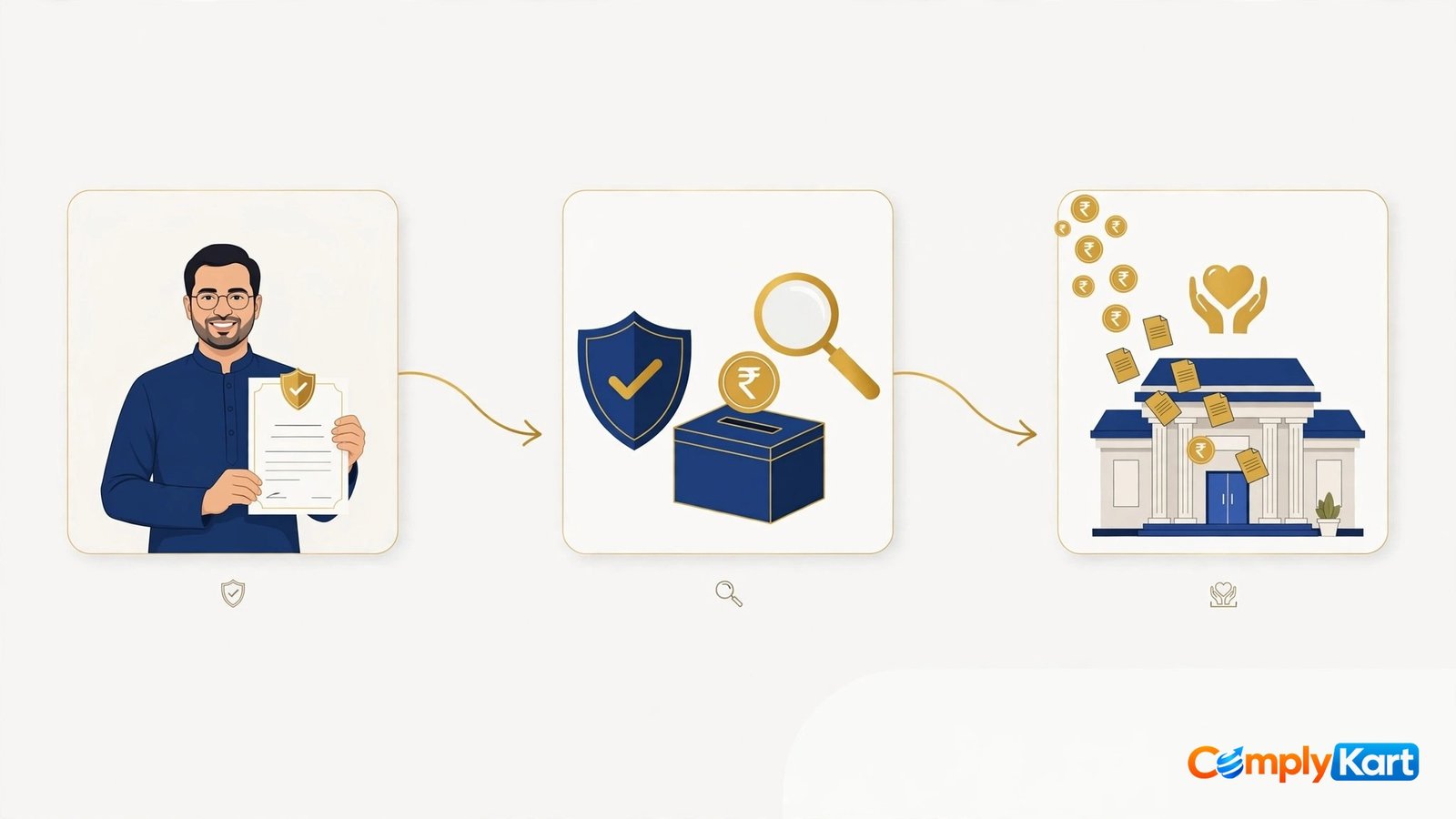
Section 8 Company for NGOs: 80G/12A Registration, Costs and CSR Funding
Quick answer: A Section 8 company is not automatically tax-exempt. The MCA licence (Form INC-12, ₹2,000 fee) creates the entity; 12A registration exempts the NGO's surplus and 80G makes donations tax-deductible for donors. CSR grants additionally need a CSR-1 filing plus, for most companies, 12A, 80G and a 3-year track record.
You want to start an NGO, and Section 8 company sounds the most serious — so you pick it. Not a bad call: CSR officers take Section 8 companies seriously on sight. But the licence is the cheapest part of the journey; what comes after is what matters.
What a Section 8 company actually is
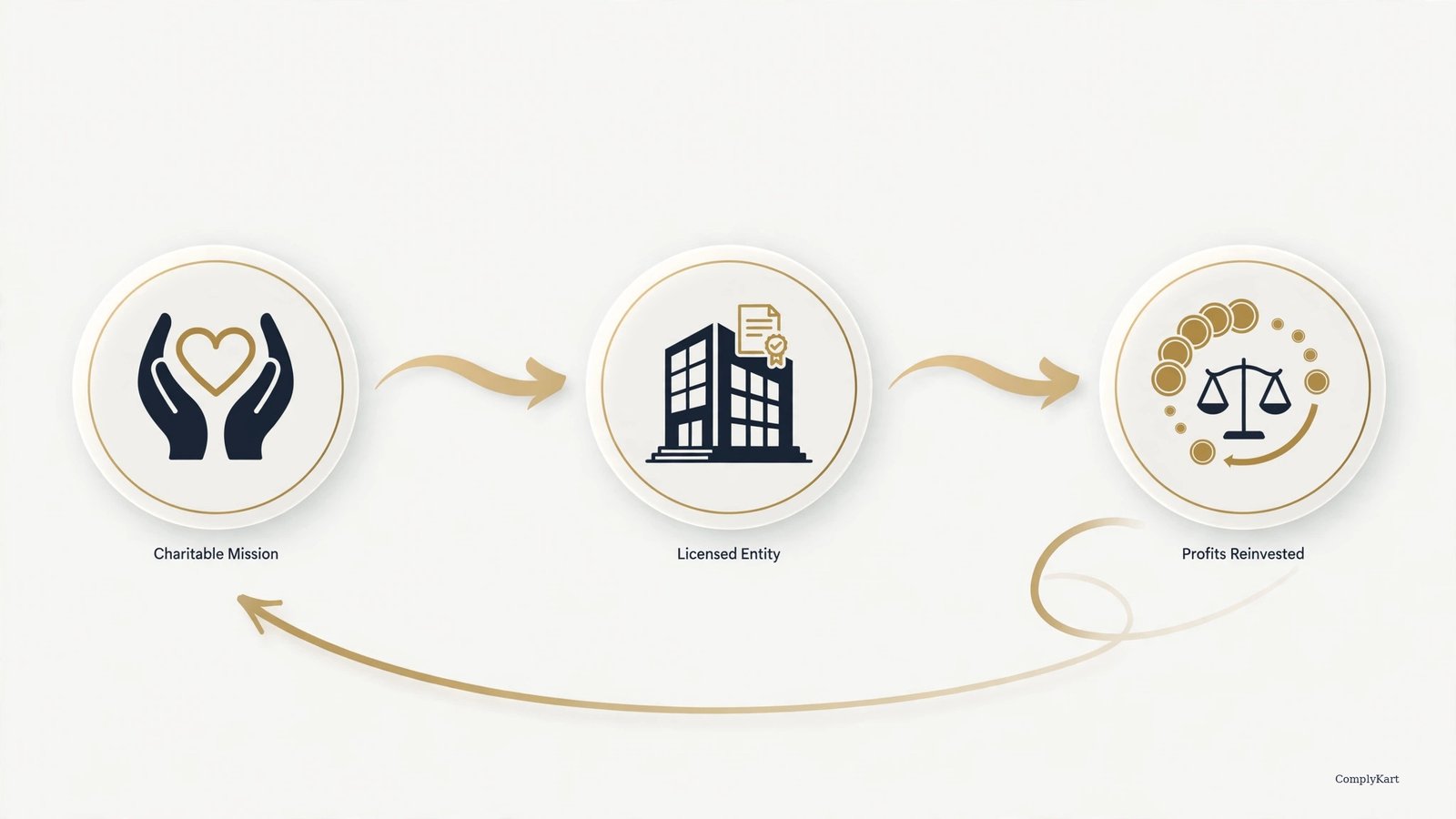
Section 8 of the Companies Act, 2013 lets you form a company for charitable objectives — education, social welfare, environment, sports, research. Two conditions: apply all profits toward your stated objectives, and never pay a dividend to members. A company with the profit motive removed.
You need at least two directors, and your name must end with a non-profit word — Foundation, Association, Forum, Council, Chambers, Federation — per Rule 8 of the Companies (Incorporation) Rules, 2014. No "Private Limited", no minimum capital.
Our Section 8 company registration page carries the document checklist; the step-by-step registration guide covers the mechanics.
The three keys — why one licence is not enough
The misunderstanding I correct most often: founders register the Section 8 company and assume the tax department leaves them alone. It does not. The MCA licence and the Income-tax registrations are separate doors with separate keys.
A key for one door opens nothing else. Without 12A, your Section 8 company's surplus is taxed like any other company's income — the licence gives you the form, 12A gives you the exemption. File for both early, not after donations start coming in.
What it costs to register
Government fees are small: Form INC-12 (the licence application) costs ₹2,000, name reservation ₹1,000, plus digital signatures, state stamp duty and the SPICe+ filing. With professional drafting — Forms INC-13, INC-14, INC-15 and the Form INC-26 newspaper advertisement — most founders land between ₹15,000 and ₹30,000 all-in.
12A and 80G are separate Income-tax applications, usually handled alongside for an extra professional fee. Skipping them to save money, while your donors get no deduction, is arithmetic in reverse.
How long it takes
Plan 25–30 working days: DSC and DIN 1–3 days, name approval 1–3 days, INC-12 licence 7–15 days (the step that stretches when objects are loosely drafted), then SPICe+ incorporation 3–7 days.
The tax side runs on its own clock: Form 10A brings provisional 12A/80G approval in about a month (three years' validity); Form 10AB converts it to regular, with the department allowed up to six months. Run both tracks in parallel — sequential filing loses you a quarter.
12A and 80G, step by step
The old 12AB procedure merged into Section 12A from 1 October 2024 (Finance (No. 2) Act, 2024). You will still hear "12AB" in conversation — the form says 12A.
New NGOs file Form 10A for provisional registration — three years, granted quickly — then Form 10AB converts it to regular. Regular registration was five years; the Finance Act, 2025 extended it to ten for institutions with total income of ₹5 crore or less in each of the two preceding financial years, from 1 April 2025. The catch: the extension is not automatic — file the renewal on time or the exemption lapses.
80G is the donor's door: donations to an 80G-approved NGO give donors a 50% (sometimes 100%) deduction, capped at 10% of their adjusted gross total income. Every year you file Form 10BD by 31 May and issue Form 10BE certificates to donors — no 10BE, no deduction for them.
Section 11 requires at least 85% of your income to go to charitable purposes; 15% may be accumulated. Sit on money and the exemption logic collapses.
Our 12A and 80G registration page covers the document list and the Form 10A/10AB sequencing.
CSR funding: the 3-year rule nobody mentions
Since 1 April 2021, receiving CSR money as an implementing agency needs Form CSR-1 filed with the ROC. No CSR-1, no corporate money.
The harder bar is Rule 4(1) of the Companies (CSR Policy) Rules: the agency must hold 12A and 80G and have an established track record of at least three years in similar activities. A brand-new NGO does not clear it for ongoing projects, however good the cause.
Sequence, not despair. Years one and two: individual donors, 80G receipts, audited books, visible fieldwork. Year three: CSR conversations with a track record, not a pitch deck. The money follows the record, not the pitch.
Five mistakes I watch NGO founders make
- Assuming the licence equals tax exemption. Without 12A your surplus is taxed like a company's — file Form 10A before collecting serious money.
- Promising donors 80G receipts before approval. Receipts you cannot back with Form 10BE mislead your first supporters.
- Objects too narrow — or too loose. Too narrow and your next program needs a memorandum amendment; too vague and the Regional Director rejects the licence. Cover your five-year ambition.
- Ignoring Form 10BD and 10BE. The 31 May statement and donor certificates are annual, mandatory and forgettable. Diary them on day one.
- Chasing CSR funds at incorporation. The 3-year track record rule means corporate grants come later. Build the record first.
Protect the name you build goodwill around — trademark registration for the NGO's name and logo stops the lookalike problem while it is still cheap to defend. For the yearly calendar — audit, AOC-4, MGT-7 — read our Section 8 annual filing guide, and price the year with the compliance fee calculator.
FAQs
Is a Section 8 company automatically exempt from income tax?
No. The licence comes from the MCA; exemption comes from 12A registration with the Income-tax Department. Without 12A, surplus is taxed at normal company rates. Separate applications, separate authorities.
Can a new Section 8 company receive CSR funds?
Not for ongoing projects — you need CSR-1, 12A and 80G, plus a 3-year track record. New NGOs usually start with individual donations and enter CSR conversations in year three.
Trust, society or Section 8 — which should I choose?
All three can hold 12A and 80G. Section 8 carries the strongest credibility with corporate donors and the strictest compliance; trusts and societies are cheaper and simpler. Choose Section 8 when CSR and institutional funding are the target.
Can directors of a Section 8 company take a salary?
Reasonable remuneration for actual professional services is allowed, subject to board approval and your articles — real work, not disguised profit. Dividends and profit-sharing are forbidden.
Do I need FCRA registration for foreign donations?
Yes — a separate one, from the Ministry of Home Affairs, with segregated accounts for foreign money. Never accept foreign donations on the strength of 12A alone.
What changed for NGO tax registration in 2025?
The Finance Act, 2025 extended regular 12A/80G validity from 5 to 10 years (from 1 April 2025) for institutions with total income of ₹5 crore or less in each of the two preceding financial years. The renewal application is still mandatory.




Comments
No comments yet — ask the first question below.
Join the discussion
Questions go straight to our expert desk. Comments appear after a quick review — no spam, no noise.