

A clothing brand lives or dies on its name — the fabric, the fit, the Instagram feed, all funnelling into a few words on a neck label. A trademark is what makes those words yours, legally, for ten years at a time.
The short answer: A clothing brand in India files Form TM-A in Class 25 (garments) and, if it runs its own store or website, Class 35 (retail services). Fee: ₹4,500 per class for startups and small enterprises, ₹9,000 for others. File the word mark first — broadest protection. TM number the same day; registration in 12–18 months if uncontested.
Why clothing brands get copied fastest
Class 25 — clothing, footwear, headgear — is one of the most crowded trademark classes in India. Thousands of marks compete for short, catchy names, which means two things: your favourite brand name is probably close to someone else's, and copycats will ride your goodwill the moment you look successful. File early, because the registry protects the first filer, not the first inventor.
Class 25 or Class 35 — which one do you actually need?
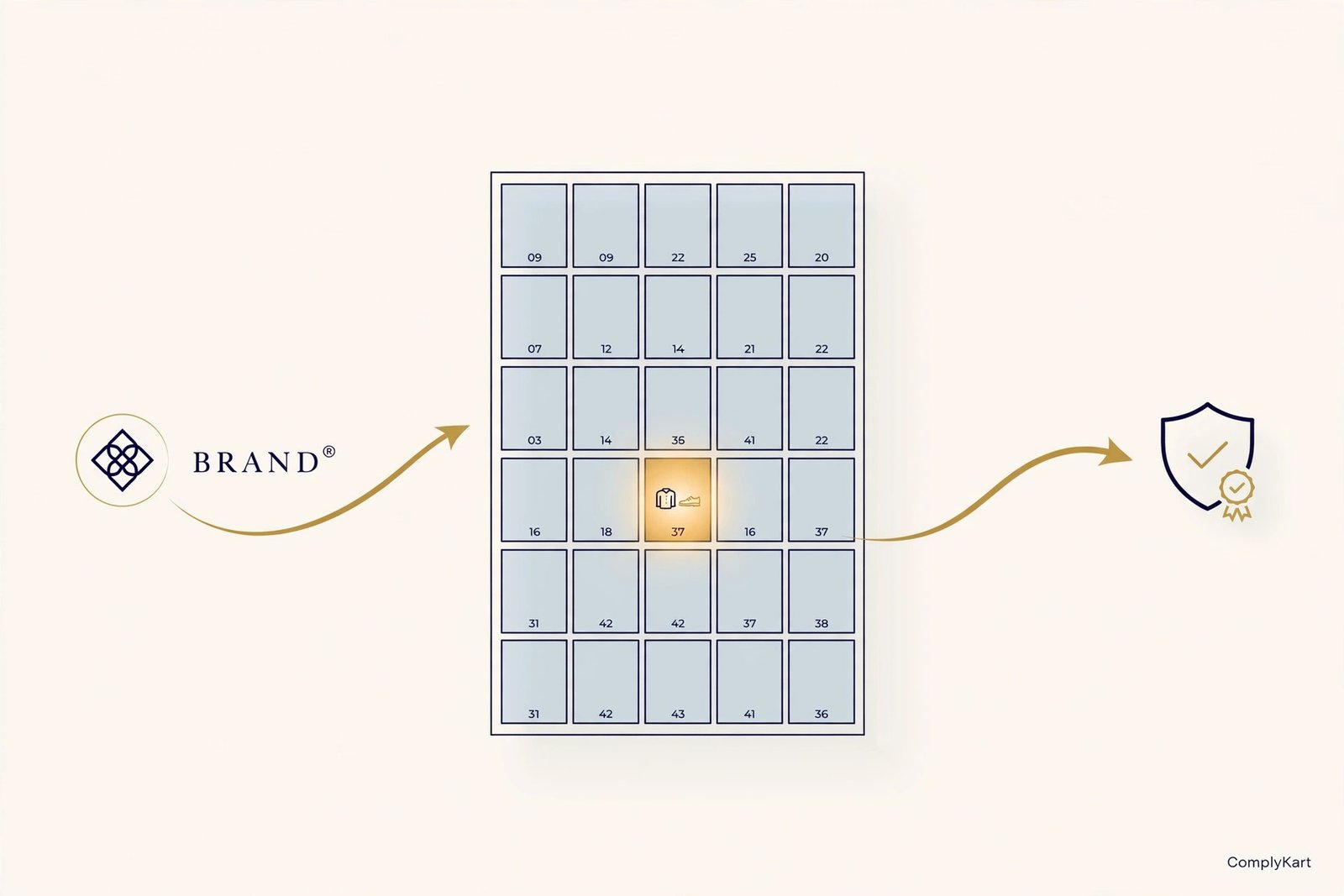
Class 25 covers the goods: shirts, trousers, dresses, kurtas, sarees, denims, t-shirts, kidswear — the actual garments you make or sell. If you only ever wholesale your label to multi-brand stores, Class 25 alone is your filing.
Class 35 covers the services: retail and wholesale services, online retail store services. If you run your own website, store, or Instagram shop under the brand, you are providing a retail service — and that needs its own Class 35 filing. Each class is a separate application with its own fee. (Jewellery is Class 14, bags are Class 18 — file for what you sell now, not the empire you might build.)
Word mark vs logo mark — the one decision that lasts a decade
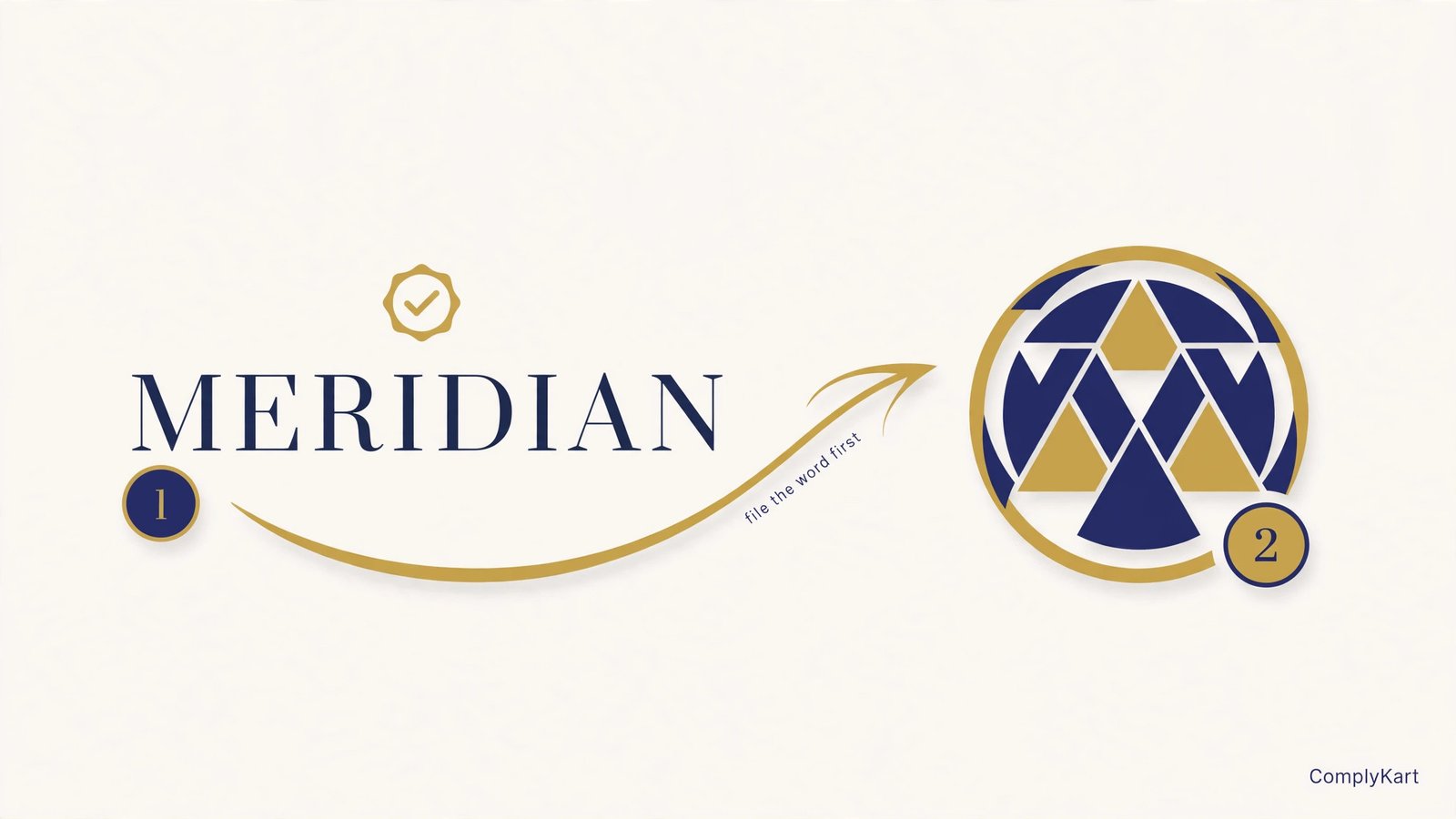
A word mark is your brand's legal name; a logo mark is its passport photo. The name travels with you through every redesign. For most clothing labels starting out, I recommend filing the word mark first — it gives the broadest protection, anyone using your name in any style infringes. If your logo is genuinely distinctive and will sit on every hangtag, file both. (More on this in word mark vs logo mark: which to register first.)
What does it cost?
The government fee for Form TM-A, e-filed on the IP India portal:
- ₹4,500 per class — individuals, DPIIT-recognised startups and small enterprises (with a valid Udyam certificate)
- ₹9,000 per class — companies, LLPs and all other applicants
So a startup filing a word mark in Classes 25 + 35 pays ₹9,000; a private limited company pays ₹18,000 for the same two. Professional charges are separate. Renewal (Form TM-R) is ₹9,000 per class every ten years. One warning: government fees are non-refundable — a rejected application does not get its fee back, which is why the search step below is not optional.
The filing process, step by step
Step 1 — search first. Run your name through the IP India's public trademark search before spending a rupee. Class 25 is crowded; phonetic similarities ("Zara" vs "Zarra") count as conflicts. Check Instagram, Myntra, Ajio and Amazon too.
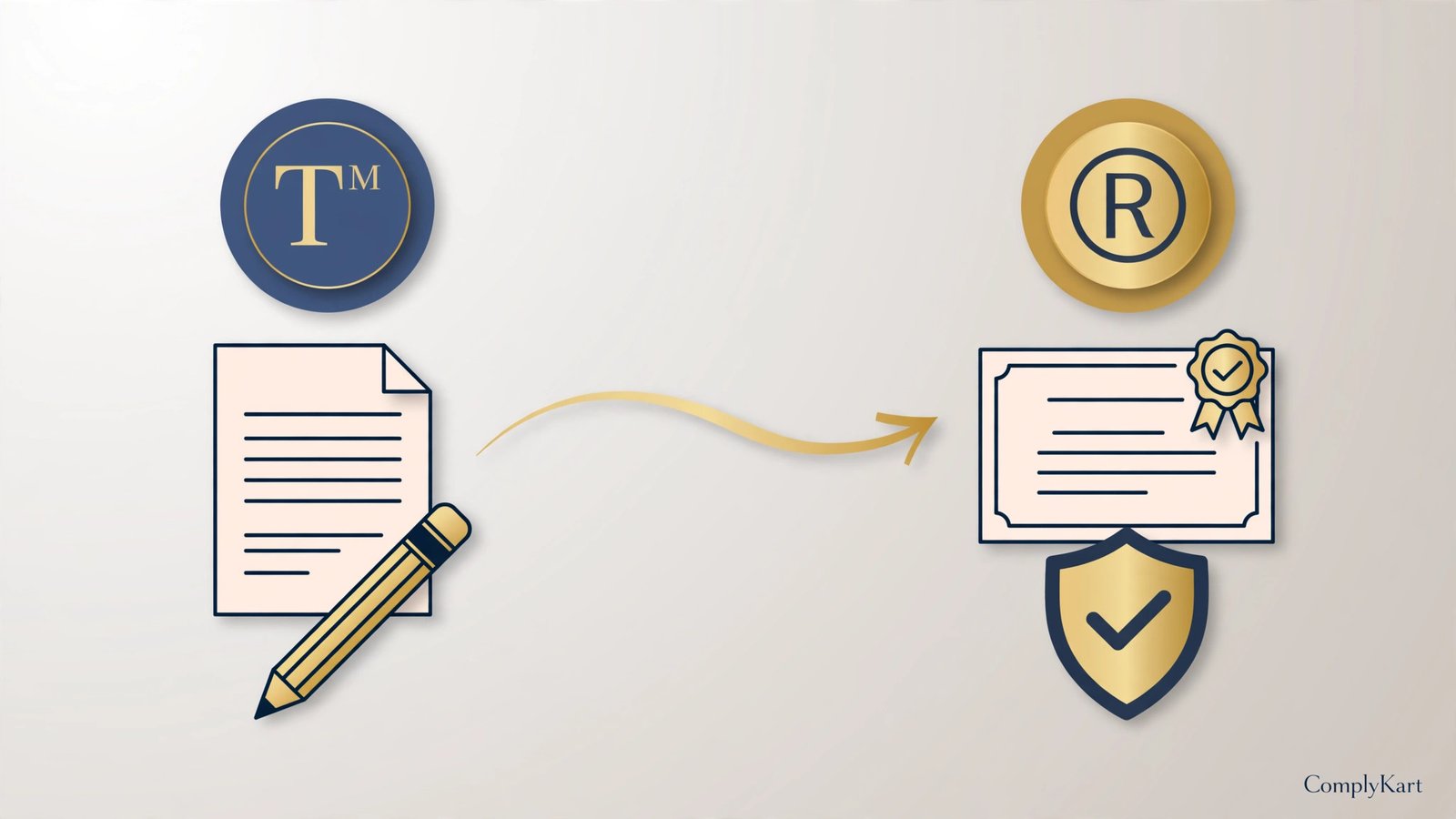
Step 2 — file Form TM-A. E-filing on the IP India portal: applicant details, the mark (word or logo image), the Nice class, the goods description (be specific — "shirts, trousers, kurtas, denims" beats a vague "clothing"), and whether the mark is already in use or "proposed to be used". Same-day TM number; you may use the ™ symbol from that day. The ® symbol is reserved for registered marks — using it before registration is an offence under Section 107 of the Trade Marks Act.
Step 3 — examination. The registrar checks distinctiveness and conflicts. Clothing brands most often get objected for descriptiveness ("Cotton Comfort" for cotton clothes will be refused under Section 9(1)(b)) or phonetic similarity with an existing mark. You get 30 days to reply, and a video hearing if the written reply does not satisfy the examiner. Miss the window and the application dies.
Step 4 — journal and opposition. Once accepted, the mark is published in the weekly Trade Marks Journal for a 4-month opposition window. Anyone can file Form TM-O opposing it; you counter within 2 months. Uncontested: registration in roughly 12–18 months. An opposition can stretch that past two years.
Step 5 — registration. The certificate issues, the mark is valid for 10 years from the application date, and you can now use ®. If you are filing a fresh trademark registration, a professional search plus a properly drafted TM-A is the cheapest insurance you will ever buy.
The marketplaces angle most founders miss
Amazon's Brand Registry — the tool that lets you take down counterfeit listings and control your brand page — requires a pending or registered trademark application. When a copycat pops up (and in fashion, one will), a registered mark turns a takedown request from "please believe me" into "here is my registration certificate".
Five mistakes clothing founders keep making
- Filing only the logo. You will redesign it in two years. The name is the asset; protect the name first.
- Skipping Class 35. Your garments are protected but your D2C store's brand identity is not.
- Picking a descriptive name. "Ethnic Elegance" for ethnic wear sounds lovely and registers almost never.
- Waiting until launch day. File before the Instagram page goes live and the packaging is printed — every public use before filing is a day someone else could file first.
- Ignoring the 30-day objection deadline. A missed reply kills the application and the fee.
One related housekeeping note: GST registration kicks in at the ₹40 lakh turnover threshold (₹20 lakh for services), and the compliance fee calculator gives you the full annual cost picture for a clothing venture — filings, registrations and all.
FAQs
Can I file a trademark before my clothing brand launches?
Yes — file on a "proposed to be used" basis. You get your TM number immediately and ™ rights from day one.
Do I need Class 35 if I only sell on Myntra and Amazon?
Not strictly — you are selling goods through someone else's retail service. But if you also run your own website or store, Class 35 protects that retail identity. Most D2C labels file both.
My LLP has a Udyam certificate. Do I get the ₹4,500 fee?
Yes. An LLP with a valid Udyam certificate as a small enterprise qualifies for the reduced ₹4,500 per class e-filing fee. Without it, companies and LLPs pay ₹9,000.
Someone is already selling under a similar name on Instagram but has no trademark. Can I still file?
You can file, but their prior use gives them grounds to oppose your application. Search marketplaces and social media before filing.
How long before I can use the ® symbol?
Only after the registration certificate issues — typically 12–18 months for an uncontested application. Use ™ from the filing date; using ® on an unregistered mark is an offence under Section 107.
Should I file the logo in colour or black and white?
Black and white gives broader protection — it covers the mark in any colour. File monochrome unless the colour itself is the brand.


Comments
No comments yet — ask the first question below.
Join the discussion
Questions go straight to our expert desk. Comments appear after a quick review — no spam, no noise.