
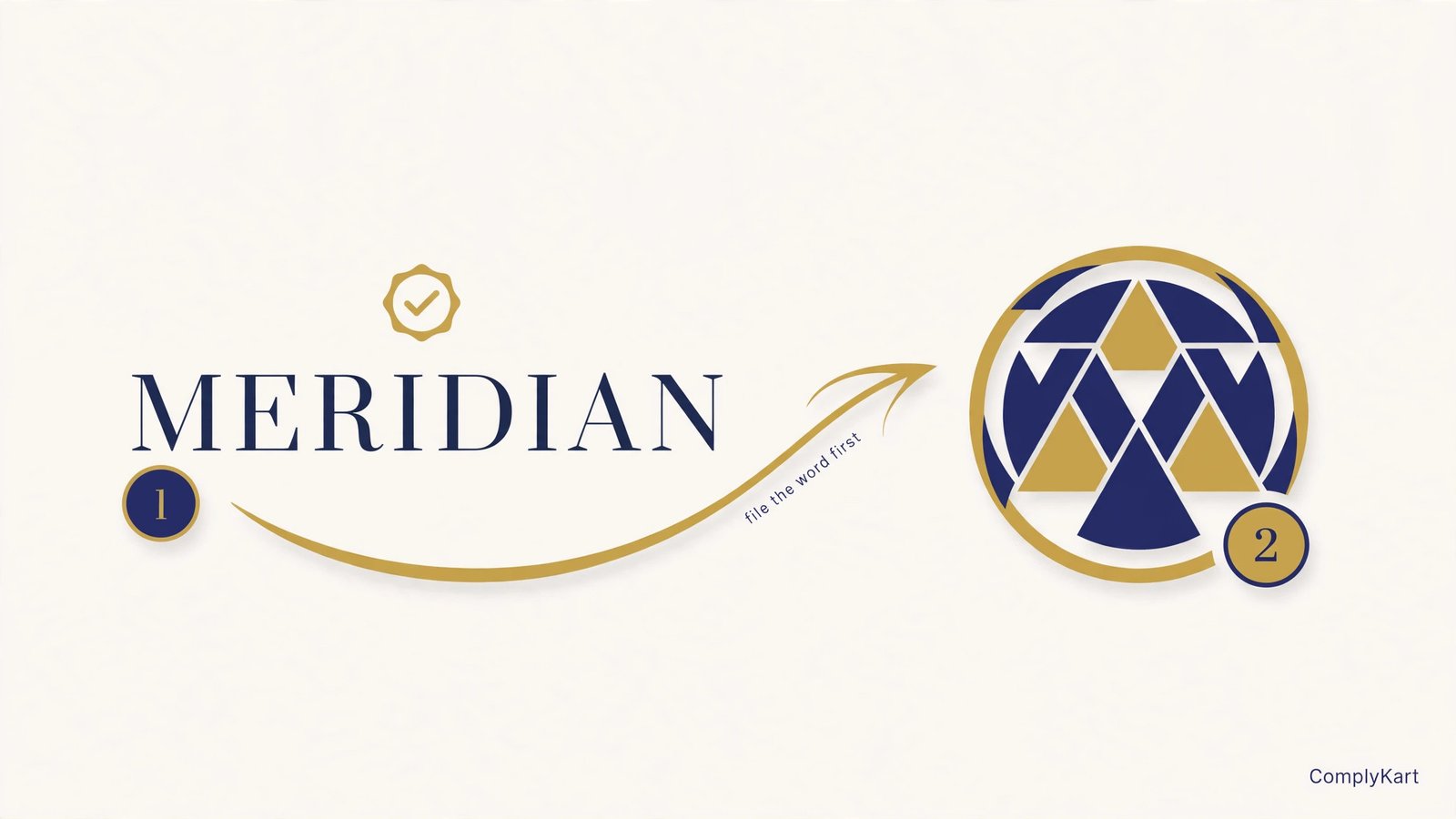
Two founders build businesses with the same kind of brand name. The first files a trademark for the name itself — the word, plain and simple. The second files a trademark for the logo — the word drawn in a particular style, with a particular icon, in particular colours.
Five years later, both rebrand their logos. The first founder’s protection carries on undisturbed. The second discovers, at the worst possible moment, that the registration protected the old drawing — not the name, and not the new drawing either.
This is the difference between a word mark and a logo mark. It is the single most misunderstood choice in trademark filing, and it is worth understanding before you pay the fee.
What a word mark protects
A word mark protects the word itself. Not the font. Not the colour. Not the styling. The word.
Register the word “Meridian” as a word mark for consulting services, and your protection covers “Meridian” written in any typeface, any size, any colour, with or without a design around it. A competitor using a confusingly similar word for similar services is infringing your mark whether their logo looks like yours or nothing like yours.
This is the broadest protection a name can get. It survives rebrands, redesigns, and new packaging. Change your logo five times; the word mark does not care. It protects the name as a name.
What a logo mark protects
A logo mark — lawyers often say “device mark” — protects the specific visual: the exact drawing, the stylisation, the icon, the arrangement as filed. It protects that picture.
That specificity is both its strength and its limit. If someone copies your exact logo, a logo registration is a sharp weapon. But if you redesign the logo next year — new icon, new typeface, new layout — the registration still points at the old picture. The new design is, legally speaking, unprotected until you file again.
Here is the analogy I give every client: a word mark is your name; a logo mark is your photograph. Your name identifies you whether you grow a beard, shave your head, or age twenty years. Your photograph only matches the face that sat for it. Both identify you. Only one survives a new haircut.
Which should you file first?
For most businesses, the word mark comes first. The name is the asset that outlives every redesign. It is what customers remember, what they search for, and what competitors are most tempted to imitate. A word mark guards that asset in every visual form it might ever take.
File the logo mark second — and do file it, if the logo matters to your identity. Packaging, app icons, storefront signage: these are visual, and a logo registration protects the visual equity directly. Many established brands hold both: the word for the name, the device for the look.
Budget for only one filing right now? File the word. A logo without a word registration is a photograph without a name attached — useful, but fragile. A word without a logo registration still stops the competitor who copies your name in their own ugly typeface.
There is one more scenario worth naming: the defensive filing. If your brand name is short, catchy, or built from common words, competitors will drift toward it — not always maliciously, sometimes just unimaginatively. A word mark is your fence; a logo mark is your alarm. Fences come first.
One related trap: registering your company name does not register your logo, and registering your logo does not register your tagline. Each mark is its own application, its own fee, its own certificate. The Trade Marks Registry protects marks, not businesses.
The class system still applies
Whichever you file, remember that trademarks register by class — 45 of them — and protection in one class does not cover the others. A word mark’s breadth runs across styles and designs, not across classes. “Meridian” registered for software does not stop someone from using “Meridian” for clothing, unless the mark is well-known enough to cross that boundary.
So the filing decision is really two decisions: which mark (word, logo, or both), and in which class or classes. Get both right and the registration does its quiet work for ten years, renewable indefinitely.
A final word on the symbols
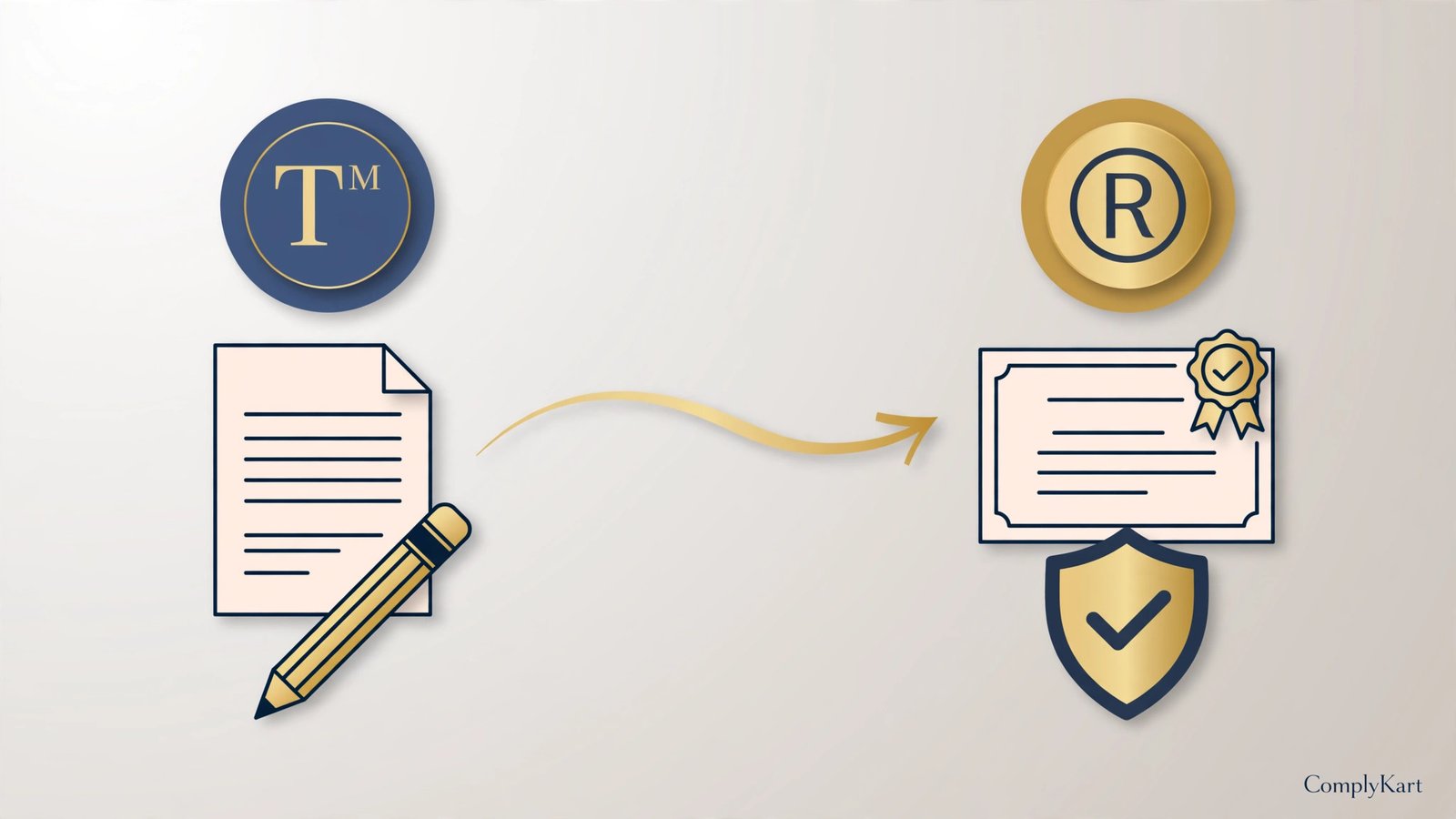
While your application is pending — word or logo — use ™ freely. It costs nothing and signals your claim from day one. The ® symbol is different: it belongs only after the Registry has actually registered the mark and issued the certificate. Using ® on an applied-for mark is an offence under the Trade Marks Act, 1999, punishable with imprisonment up to three years, or a fine, or both. I have written about the two symbols in detail here; the short version is: ™ is your companion through the wait, ® is the prize at the end.
File the word first. File the logo next. And when the designer sends the exciting new rebrand in year five, check which certificate you actually hold before you celebrate.


Comments
No comments yet — ask the first question below.
Join the discussion
Questions go straight to our expert desk. Comments appear after a quick review — no spam, no noise.