
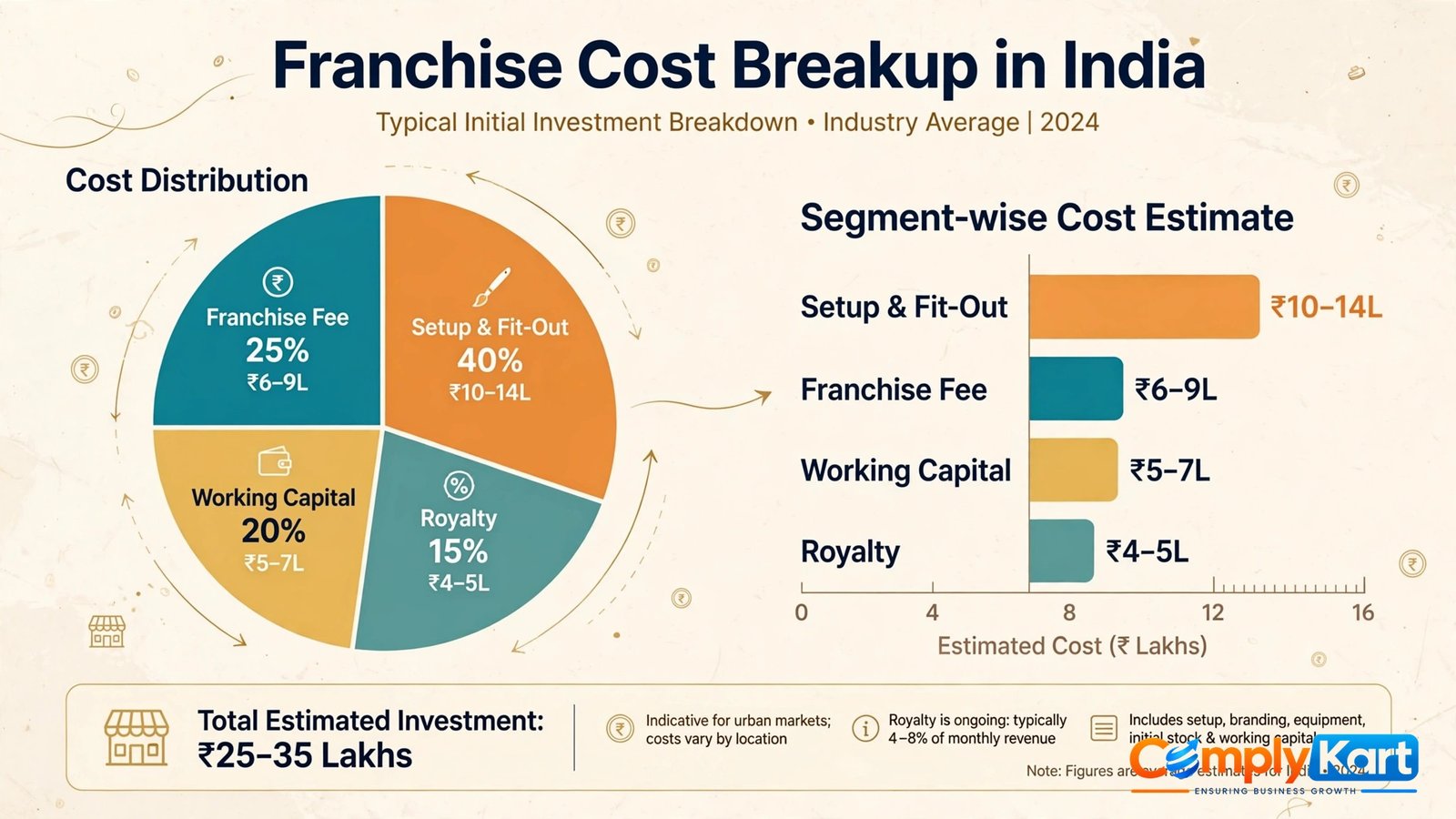
The brochure says ₹25 lakh. The real number is closer to ₹45. That gap — between the figure that gets you excited and the figure that actually leaves your bank account — is where most franchise dreams quietly die. I've watched it happen more times than I care to count.
So let's talk honestly about what a franchise in India really costs. Not the brochure number. The real one.
The short answer: beyond the one-time franchise fee (typically ₹2 lakh to ₹50 lakh), expect royalties of 4–10% of monthly revenue, setup and fit-out of ₹20–60 lakh for a mid-format outlet, 3–6 months of working capital kept aside, and another ₹2–3 lakh in smaller charges — licences, technology, insurance. The brochure figure is usually only about a third of the real investment.
How much is the franchise fee — and what does it actually buy?
Every franchise starts with a one-time franchise fee — the price of buying into the brand. In India, this typically runs anywhere from ₹2 lakh for a small kiosk-format brand to ₹30–50 lakh for established food and retail names. This fee buys you the right to use the brand name, the operating playbook, and initial training.
Here's what people get wrong: they treat this as "the cost of the franchise." It isn't. It's roughly a third of what you'll spend before opening day. Sometimes less.
How does franchise royalty work in India?
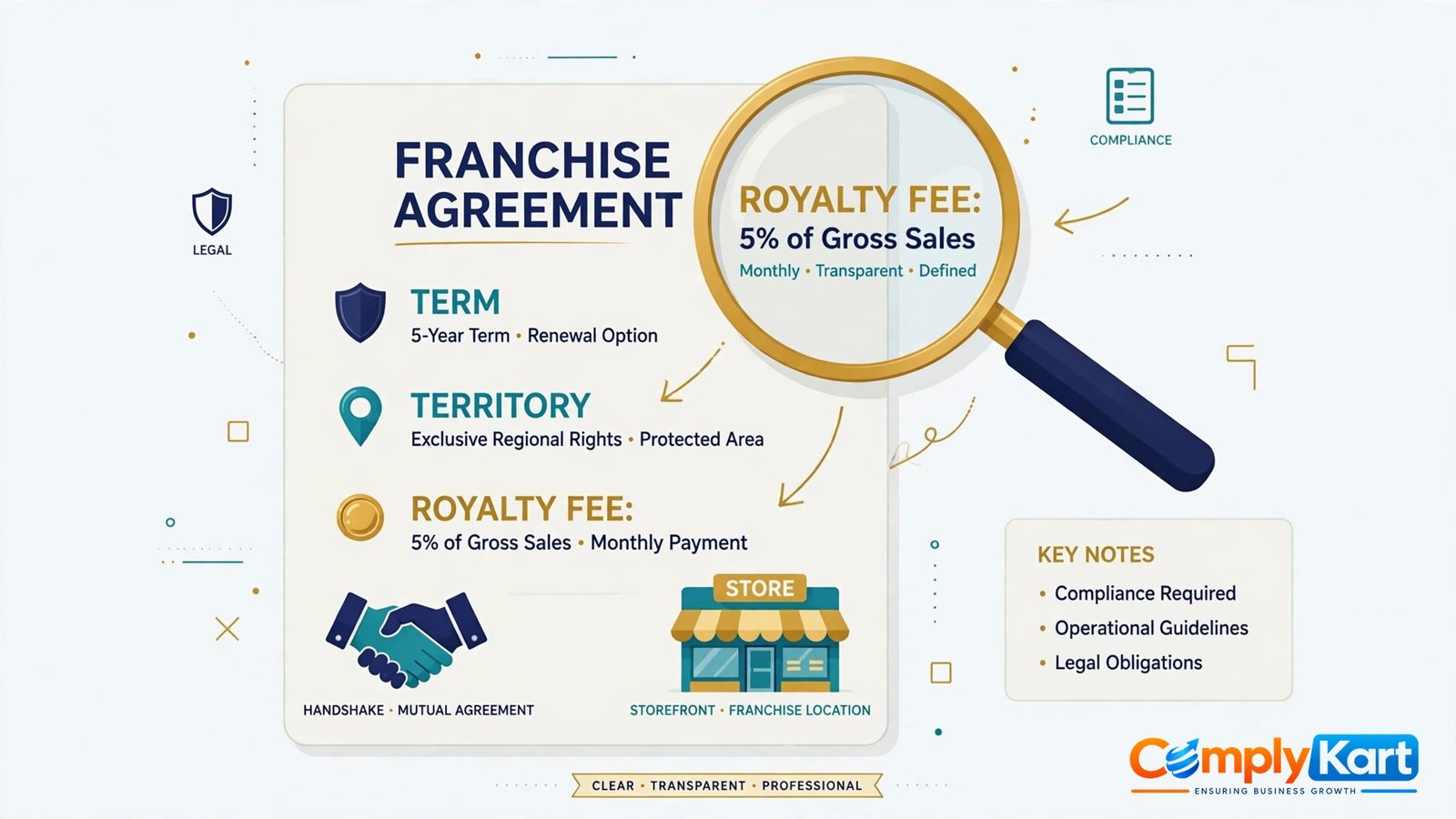
After the franchise fee comes the royalty — your ongoing payment to the franchisor, usually a percentage of monthly revenue. The common range in India is 4–10% of gross sales, though some brands charge a fixed monthly amount instead.
Do the math before you sign. If your outlet does ₹12 lakh a month in revenue and the royalty is 8%, that's ₹96,000 a month — ₹11.5 lakh a year — flowing out before you've paid rent, salaries, or yourself. A royalty that looks small on paper gets very real at scale. And it applies whether you're profitable or not.
Some brands also take a marketing fund contribution — another 1–3% of revenue for national advertising. Ask whether this is included in the royalty or charged on top. The answer changes your margins.
Setup and fit-out: the biggest cheque you'll write
This is where the real money goes. Interiors, equipment, signage, furniture, kitchen or retail fit-out — for a mid-format food or retail outlet in a metro, setup typically costs ₹20–60 lakh depending on size and brand standards. The franchisor will hand you a specification sheet, and you don't get to shop around much; approved vendors, approved materials.
Two things to watch. First, renovation cycles: many agreements require a full refresh every 4–5 years, at your cost. That's another ₹15–30 lakh down the line that nobody mentions at the signing table. Second, the security deposit for the premises — usually 6–10 months of rent in Indian metros — which can itself run into lakhs.
Working capital: the cost everyone forgets
You need cash to run the place before it starts paying for itself. Inventory, staff salaries for the first few months, utilities, initial marketing in your locality — budget at least 3–6 months of operating expenses as working capital. For a typical outlet, that's another ₹5–15 lakh sitting in the business, not earning you anything yet.
This is the number that sinks people. They spend everything on setup, open the doors, and discover they have nothing left to actually run the shop. Keep the working capital separate in your head — and in your bank account — from day one.
The hidden costs nobody puts in the brochure
Beyond the big heads, there's a tail of smaller charges that add up: initial training fees (sometimes charged per person), POS and technology setup, mandatory software subscriptions, audit and compliance costs, insurance, and local licences — FSSAI registration if it's food, Shops and Establishment registration, fire NOC, depending on the format. Each is small. Together, they can cross ₹2–3 lakh easily.
Territory fees deserve a special mention. Some franchisors charge extra for exclusivity in a pin code or zone — or worse, they don't offer exclusivity at all, and a second outlet opens two streets away. Get the territory terms in writing before you spend a rupee.
How do you calculate franchise break-even honestly?
Add it all up: franchise fee + setup + deposits + working capital + the small stuff. That's your real investment. Now divide it by your realistic monthly profit — not the franchisor's projection, yours, built from conservative revenue estimates minus rent, royalty, salaries, and every cost above.
If that number says 24 months, plan for 36. New outlets almost always take longer than projected to stabilise. If you can't survive the business earning nothing for a year, the franchise math doesn't work for you — no matter how good the brand looks.
One cost head people forget entirely: the company itself. Most franchisees operate through a private limited company, and setting one up — plus keeping it compliant every year — belongs inside the real number, not outside it.
Questions to ask the franchisor before signing
- What is the total investment range for outlets opened in the last two years — not the brochure figure, the actuals?
- Is the royalty on gross revenue or net? Is the marketing fund separate?
- What does the renovation cycle cost, and when does the first one hit?
- Is my territory exclusive, and is that exclusivity written into the agreement?
- Can I speak to five existing franchisees — including two who closed or exited?
- What happens to my investment if I want out in year two? Walk me through the exit clause.
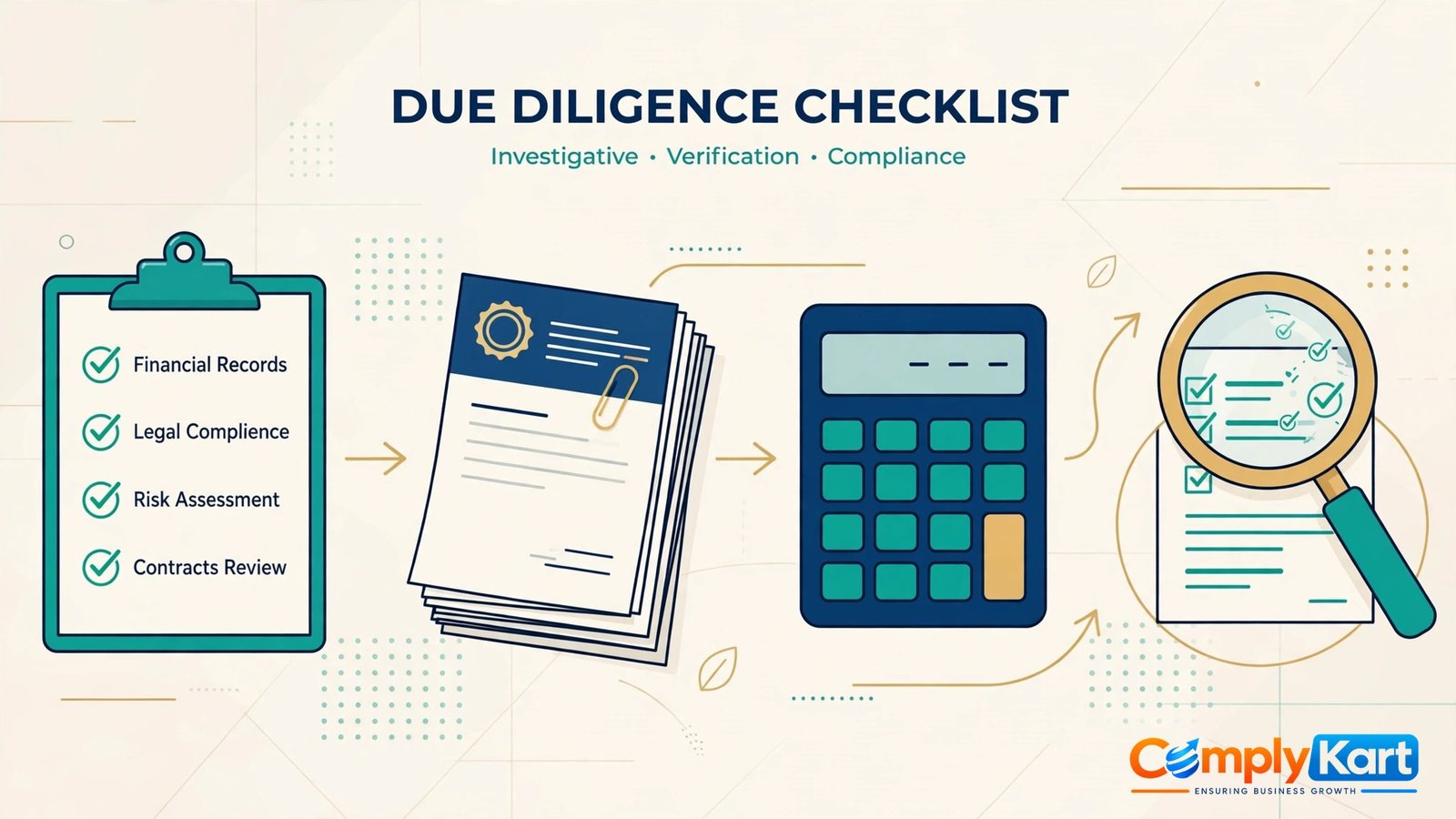
The last question matters most. Anyone can sell you the dream. Only the exit terms tell you what happens if the dream doesn't work out — our legal guide walks through the exit clause and the other terms that decide this. And when you start checking references, do it like a professional: twelve checks, in order.
Frequently asked questions
Is the franchise fee refundable if I back out?
Usually not. The fee buys the licence grant, and India has no franchise statute with a cooling-off period — so refunds depend entirely on what the agreement says. Never pay the full fee before the agreement is signed and independently reviewed.
Is royalty charged on gross revenue or net profit?
Most Indian brands charge royalty on gross monthly revenue, typically 4–10%; a few use a fixed monthly fee instead. Gross-based royalty stings in thin months, because it applies whether you're profitable or not — get the base defined in writing before you sign.
What is the marketing fund, and is it separate from royalty?
It's a 1–3% contribution toward national or regional advertising, and it's usually charged on top of the royalty, not included in it. Ask for audited statements of how the fund is actually spent — you're entitled to know where your money goes.
How much working capital should I keep aside?
Budget 3–6 months of operating expenses — roughly ₹5–15 lakh for a typical outlet — and keep it in a separate mental (and actual) account from setup money. This reserve is what keeps the doors open while the outlet stabilises, and running dry here is the most common reason new franchises stall.
Does a franchise outlet need GST registration?
Once your turnover crosses the prescribed threshold — and from day one if you sell inter-state or online — yes. GST registration brings its own invoicing and filing discipline, so factor the compliance rhythm into your operating plan early.
A franchise can be a genuinely good business — a proven playbook beats figuring everything out alone. Just go in with the real numbers, not the brochure ones. And if you'd like someone to review the agreement and the cost sheet before you commit, that's exactly the kind of thing our team does every week.



Comments
No comments yet — ask the first question below.
Join the discussion
Questions go straight to our expert desk. Comments appear after a quick review — no spam, no noise.