
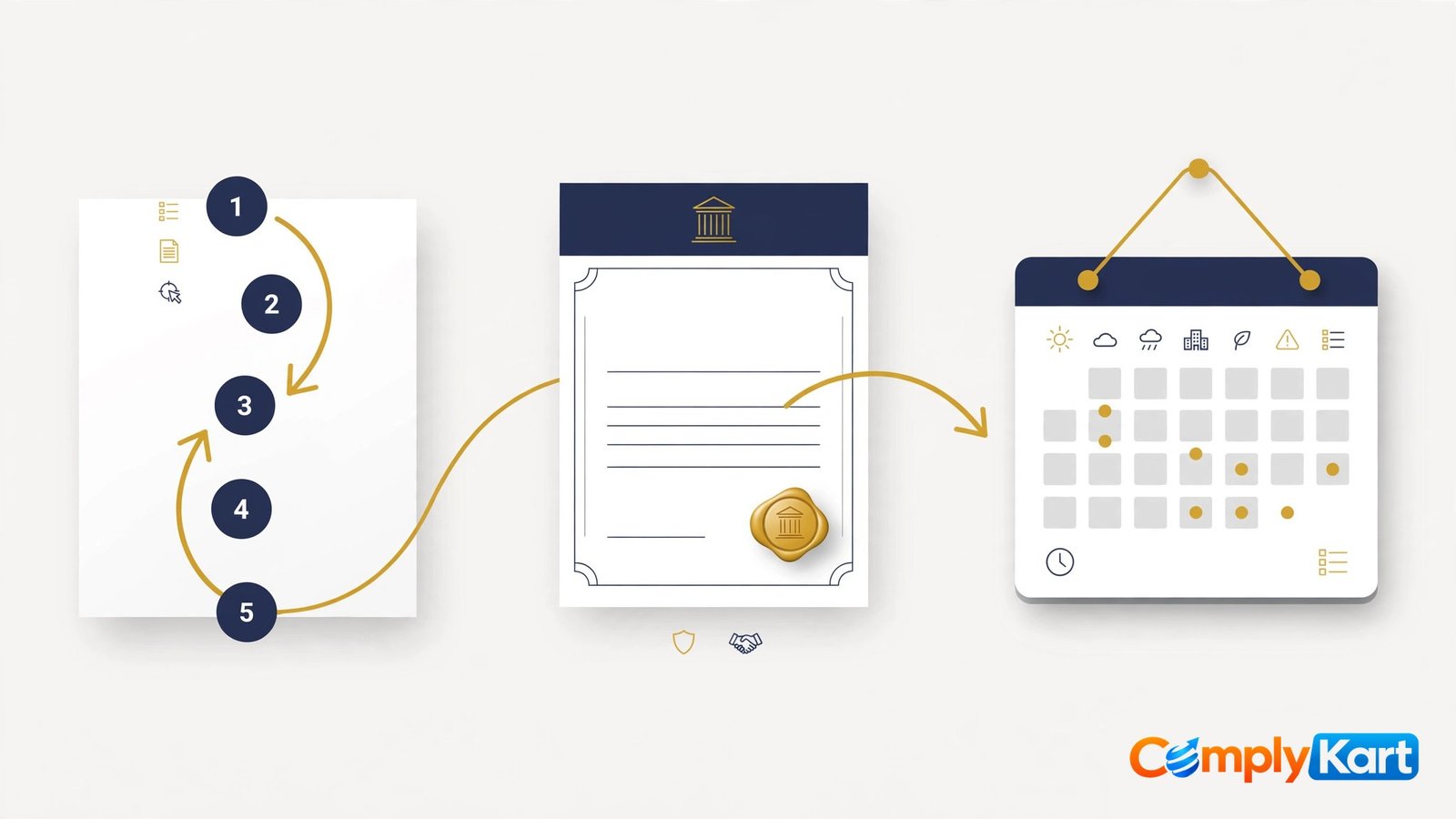
Registering an LLP in India takes 15–20 working days and runs through five steps: Class 3 DSCs, name reservation (RUN-LLP, ₹200), the FiLLiP incorporation form, the LLPIN certificate, and the LLP agreement filed in Form 3 within 30 days. Government fees run ₹500–₹5,000 based on capital contribution. Miss the annual Form 11 or Form 8 and a ₹100-per-day-per-form late fee starts with no cap.
- An LLP pays a flat 30% tax on profits (plus surcharge and 4% cess); partners are not taxed again on their share.
- Five steps in order: Class 3 DSC → RUN-LLP name reservation (₹200) → FiLLiP → LLPIN → LLP agreement in Form 3 within 30 days.
- MCA fees follow contribution slabs: FiLLiP ₹500–₹5,000; Form 3 ₹50–₹200 (LLP Rules, 2009, Annexure A).
- Late Form 11 or Form 8 filing costs ₹100 per day per form with no upper cap; DIR-3 KYC is triennial, next due 30 June 2028.
An LLP gives you limited liability without the board meetings, AGMs, and statutory audits that come with a private limited company. I've filed hundreds of FiLLiPs, and I can tell you the registration itself is the easy part. What sinks LLPs is what happens after — this guide covers both halves.
Should I choose an LLP or a private limited company?
Choose an LLP when: you're professionals practising together (CAs, consultants, lawyers, architects), a family business that wants limited liability without corporate formalities, a joint venture between two firms, or a services business with no plans to raise venture capital.
Don't choose an LLP when: you plan to raise VC or angel money (investors want equity shares and preference shares — LLPs can't issue either), you want ESOPs for employees, or you have listing ambitions. Converting an LLP to a company later is possible but painful. Pick the right vehicle now.
Tax-wise: an LLP pays a flat 30% on profits (plus surcharge and 4% cess), and partners aren't taxed again on their share. For high-margin businesses, run the numbers against a company's slab before you commit.
How do I register an LLP in India?
There are five steps, and they must happen in this order:
1. Digital signatures. Every designated partner needs a Class 3 DSC. Not Class 2 — Class 3. The MCA portal rejects everything else at the signature stage, and this is the single most common first-day failure I see. Get these before you touch any form.
2. Name reservation (RUN-LLP). File RUN-LLP on the MCA portal — ₹200 per application, one name each. An approved name stays reserved for three months. The Registrar rejects names identical or too similar to existing ones, and restricted words (Bank, Stock Exchange) need prior approvals. Confident about the name? You can propose it inside FiLLiP — but a rejected name rejects the whole form. When the name matters, RUN-LLP first.
3. FiLLiP — the incorporation form. This is the big one. FiLLiP does three jobs at once: it reserves the name (Part A), incorporates the LLP, and allots DPINs to up to five designated partners who don't already hold a DIN. You also get PAN and TAN issued along with the Certificate of Incorporation — no separate applications needed since the 2022 rule changes.
What goes into FiLLiP, in plain words: the proposed name, the registered office address (it must match your address proof exactly — "Flat 4B" versus "Flat No. 4B" has caused resubmissions), partner and designated partner details, the total contribution, and the business activity. Attachments: office address proof (utility bill under two months old, in the owner's name, plus NOC and rent agreement if leased), subscriber's sheet, and Form 9 — each designated partner's written consent. An advocate, CA, CS, or CMA in practice must certify the form.
4. LLPIN and Certificate of Incorporation. Once the Registrar approves FiLLiP, the LLP gets its LLPIN — its permanent identity number, like a CIN for companies. The certificate arrives with PAN and TAN.
5. The LLP Agreement (Form 3) — within 30 days. This is where most new LLPs stumble. Section 23 of the LLP Act makes the agreement mandatory, and Rule 21 gives you exactly 30 days from incorporation to file it in Form 3. It sets out profit sharing, capital contribution, management rights, and partner exits. Stamp duty varies by state — check the current schedule for yours before filing.
What are the government fees for LLP registration?
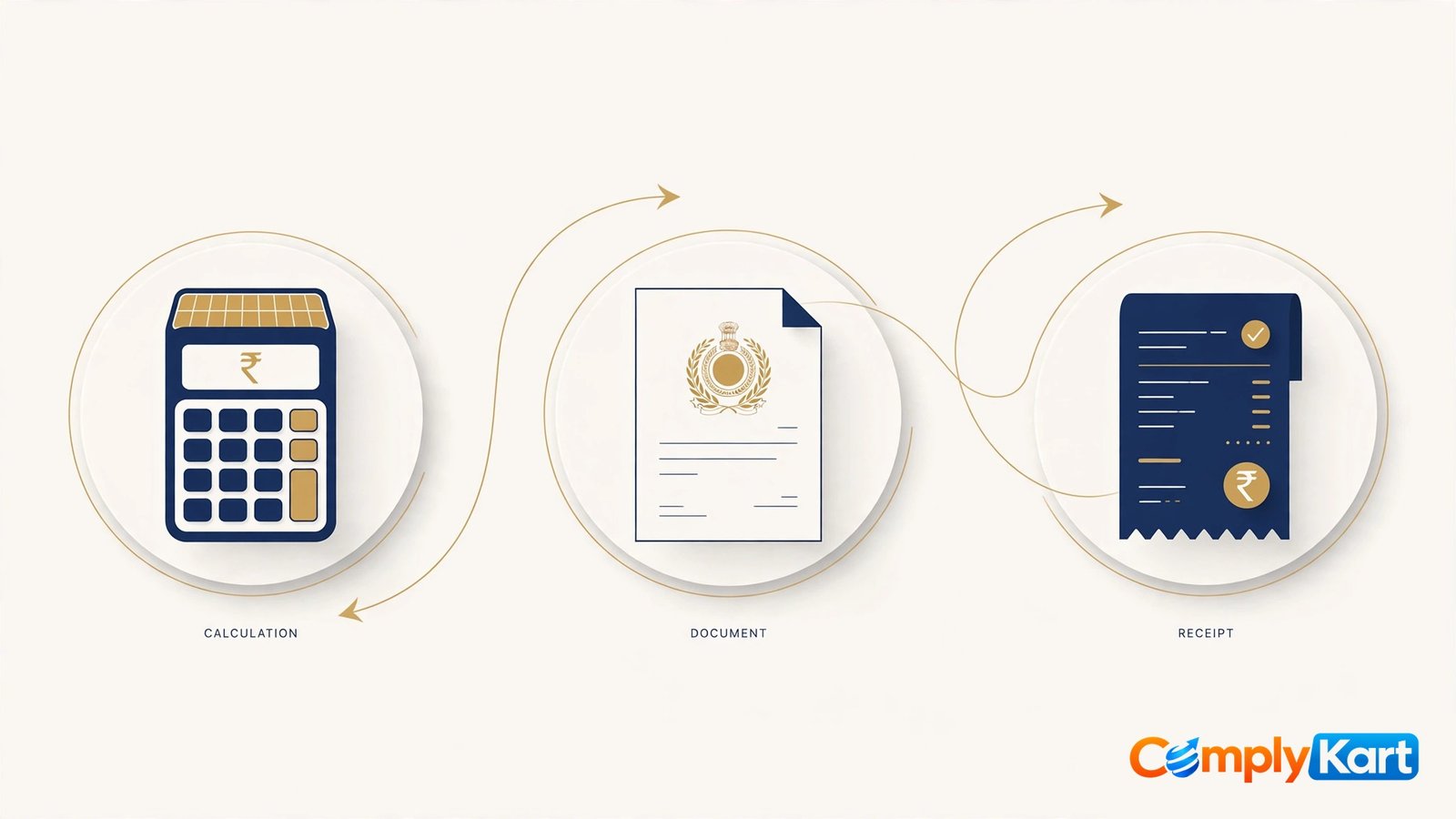
MCA fees come from the LLP Rules, 2009 (Annexure A), and they're driven by the contribution amount:
- Name reservation (RUN-LLP): ₹200 per application
- DPIN application: ₹100
- FiLLiP — contribution up to ₹1 lakh: ₹500
- FiLLiP — ₹1 lakh to ₹5 lakh: ₹2,000
- FiLLiP — ₹5 lakh to ₹10 lakh: ₹4,000
- FiLLiP — above ₹10 lakh: ₹5,000
- Form 3 (LLP Agreement): ₹50 to ₹200 by the same slabs
On top of this: DSC charges per partner, stamp duty on the agreement, and professional fees. One honest warning — don't inflate the contribution to "look serious." A bigger contribution raises both the MCA fee and the stamp duty, and it commits the partners to actually bringing that money in.
Realistic timeline: 15 to 20 working days end to end, assuming clean documents. Name resubmissions or office-proof mismatches are what push it past that.
Which annual filings does an LLP have to make?
This is the part that actually matters. An LLP has three annual filings, and the penalties for missing them are brutal:
Form 11 — Annual Return, due 30 May. Details of partners and contributions. Every LLP files this, even with zero business.
Form 8 — Statement of Account and Solvency, due 30 October. The financials, signed by two designated partners and certified by a practising CA, CS, or CMA. Audit is required only if turnover exceeds ₹40 lakh or contribution exceeds ₹25 lakh — below that, no statutory audit.
ITR-5 — income tax return. Due 31 July if no audit is required, 31 October if it is.
DIR-3 KYC for designated partners. This is now triennial — once every three years, not annually. The next due date is 30 June 2028. Mark it.
Now the number that should scare you into a calendar reminder: late filing of Form 11 or Form 8 attracts an additional fee of ₹100 per day, per form, with no upper cap. Miss both forms for a year and you're paying ₹200 a day — ₹6,000 a month — until they're filed. The MCA portal computes this automatically and you cannot negotiate it down. Dormant LLPs are the worst victims: partners who stopped operating assume the meter stopped too. It didn't. And an LLP with two years of unfiled returns can be struck off by the Registrar.
Why do LLP registration forms get rejected?
After hundreds of filings, the rejection patterns are depressingly consistent: address on FiLLiP not matching the utility bill, NOC from someone whose name isn't on the bill, a co-working address without the operator's agreement, a Class 2 DSC instead of Class 3, a near-miss name, a signature mismatch on the subscriber's sheet. Every one is a resubmission cycle — days lost, fees sometimes paid again.
Every LLP needs at least two designated partners, with at least one resident in India. Foreign partners are allowed, but their documents need notarisation and apostille — plan for that lead time.
Frequently asked questions
Can an LLP raise venture capital?
No — and this is the decision that matters most. An LLP cannot issue equity or preference shares, so venture investors structurally cannot invest in one. If there is any realistic chance of raising institutional money or giving ESOPs, register a private limited company now. Converting later is possible but painful.
How long does LLP registration actually take?
Fifteen to twenty working days end to end with clean documents: a day or two for DSCs, a few days for RUN-LLP, the rest for FiLLiP processing. What blows the timeline is never the Registrar's speed — it is resubmissions. An address mismatch or a wrong DSC class costs a full cycle each time.
Is there a minimum capital contribution for an LLP?
No minimum — you can start with a contribution as low as ₹1,000. But do not inflate the figure to look serious: a bigger contribution raises both the MCA fee and the stamp duty on the agreement, and it commits the partners to actually bringing that money in. Declare what the business genuinely needs and no more.
What happens if I miss the 30-day window for the LLP agreement?
Section 23 of the LLP Act makes the agreement mandatory, and Rule 21 gives you 30 days from incorporation to file it in Form 3. File late and additional fees apply — but the bigger problem is structural. Without a filed agreement, profit sharing, management rights, and exit terms are undefined. Disputes without one are the messiest files I see.
If you'd rather have someone who's done this hundreds of times handle the DSCs, the name, the FiLLiP, the agreement, and the first-year filings — that's exactly what our team does every week. One conversation, and you'll know whether an LLP is even the right vehicle for you before you spend a rupee.



Comments
No comments yet — ask the first question below.
Join the discussion
Questions go straight to our expert desk. Comments appear after a quick review — no spam, no noise.