
IN BRIEF
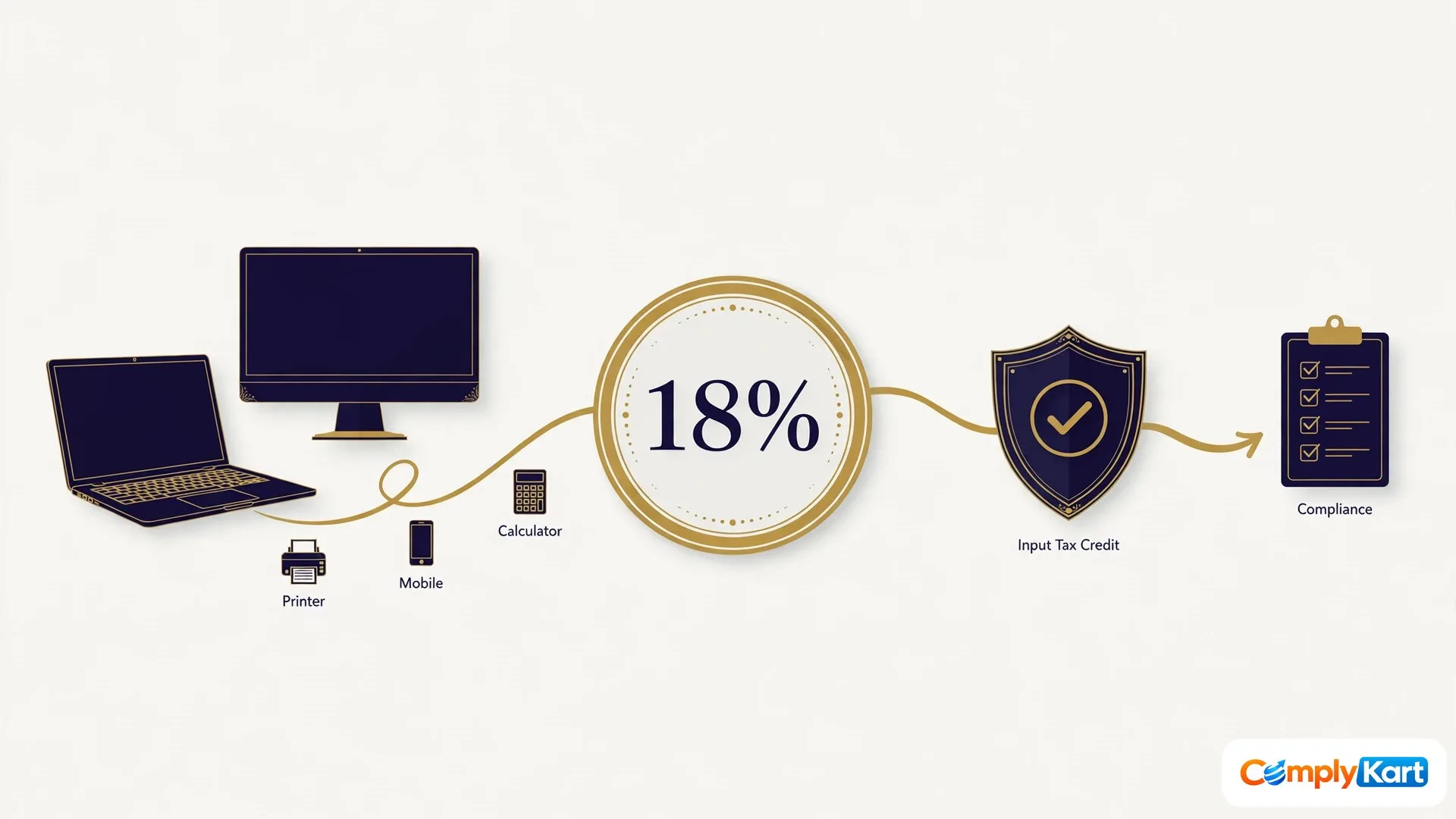
GST on computers and electronics is the 18% goods and services tax charged on laptops, desktops, monitors, printers, phones and their parts in India, under the CGST Act, 2017 and Notification 9/2025-Central Tax (Rate) from 22 September 2025. It applies to sellers and buyers of computer hardware, and a registered business can claim the tax paid as input tax credit under section 16 where the goods are used for business.
GST on computers and electronics is 18% on nearly everything — laptops, desktops, monitors, printers, mobile phones and their parts. The September 2025 reform left computers untouched but cut large monitors and televisions from 28% to 18%. And no computer or electronic item sits in the 40% slab, whatever some guides claim.
If you sell computers, or you are buying laptops for your team, that covers most of what you need. The trouble starts in the details: which HSN code goes on the invoice, whether you can claim the tax back, and what changed on 1 November 2026 for anyone dealing in old hardware.
What GST rate applies to computers and electronics?
Nearly every computer and electronic item you will handle attracts 18% GST. The rate follows the item's HSN code, and the table covers the ones that come up daily in a computer shop or an IT purchase order.
| Item | HSN code | GST rate |
|---|---|---|
| Laptops, desktops, tablets, servers | 8471 | 18% |
| Computer monitors, any size | 8528 | 18% |
| Printers and scanners | 8443 | 18% |
| Computer parts — motherboards, RAM, CPUs, hard drives | 8473 | 18% |
| Storage media — pen drives, memory cards, SSDs | 8523 | 18% |
| Mobile phones | 8517 | 18% |
| Networking equipment — routers, modems, switches | 8517 / 8471 | 18% |
| Cables and connectors | 8544 | 18% |
| Keyboards, mice and other peripherals | 8471 / 8473 | 18% |
Within your state the 18% splits into 9% CGST and 9% SGST. Sell to another state and it becomes a single 18% IGST. The total is the same either way, and there is no compensation cess on any of these items.
One caution: accessories do not all follow the device they plug into. A charger or a pair of earphones carries its own HSN heading and its own rate, so check the heading for the accessory itself.
What changed on 22 September 2025?
The GST 2.0 reform, recommended by the 56th GST Council on 3 September 2025 and notified through Notification 9/2025-Central Tax (Rate) on 17 September 2025, collapsed the old 5%, 12%, 18% and 28% structure into two main rates — 5% and 18% — plus a 40% rate for a short list of luxury and sin goods. It took effect on 22 September 2025.
For computers, the reform changed almost nothing. Laptops, desktops, printers and mobile phones were already at 18% and stayed there. What moved was the larger-screen end of the shop: televisions of every size, computer monitors above 32 inches, air conditioners and dishwashers all fell from 28% to 18%.
A television priced at ₹30,000 carried ₹8,400 of GST at 28% on 20 September 2025. The same television at the same price carried ₹5,400 on 23 September — ₹2,700 CGST and ₹2,700 SGST. Nothing about the television changed. Only the schedule did.
Mobile phones have their own history, because guides still get it wrong: phones moved from 12% to 18% on 1 April 2020, when the 39th GST Council corrected an inverted duty structure. They have been at 18% ever since — the September 2025 reform did not touch them.
Does the 40% slab apply to any computer or electronic item?
No. This is the most useful correction in this guide, because at least one widely read guide claims a narrow 40% slab applies to "high-end entertainment systems and certain imported luxury smart devices". It does not. The 40% schedule — Schedule III of Notification 9/2025 — contains no computer or electronic item at all.
Here is the whole list: pan masala and tobacco products (which move to 40% only from 1 February 2026), aerated waters and sugary drinks, motor cars outside the small-car limits, motorcycles above 350cc, yachts and other pleasure vessels, aircraft for personal use, and a handful of arms and actionable claims. That is it. A television is 18% whether it is 32 inches or 85 inches. A laptop is 18% whether it costs ₹30,000 or ₹3,00,000. Price does not push an electronic item into the 40% slab — the schedule is written by HSN heading, not by price tag.
If a supplier bills you 40% GST on a television, a laptop or a monitor, the invoice is wrong. Ask for a corrected invoice before you pay, because input tax credit claimed on a wrongly charged rate is exactly the kind of mismatch that surfaces in a scrutiny notice.
Can your business claim ITC on computers and laptops?
Yes — computers are one of the cleanest ITC claims a business can make. They are not on the blocked-credit list in section 17(5) of the CGST Act, which blocks items like motor vehicles, food and personal-use goods. But the claim has conditions, and two of them catch people every year.
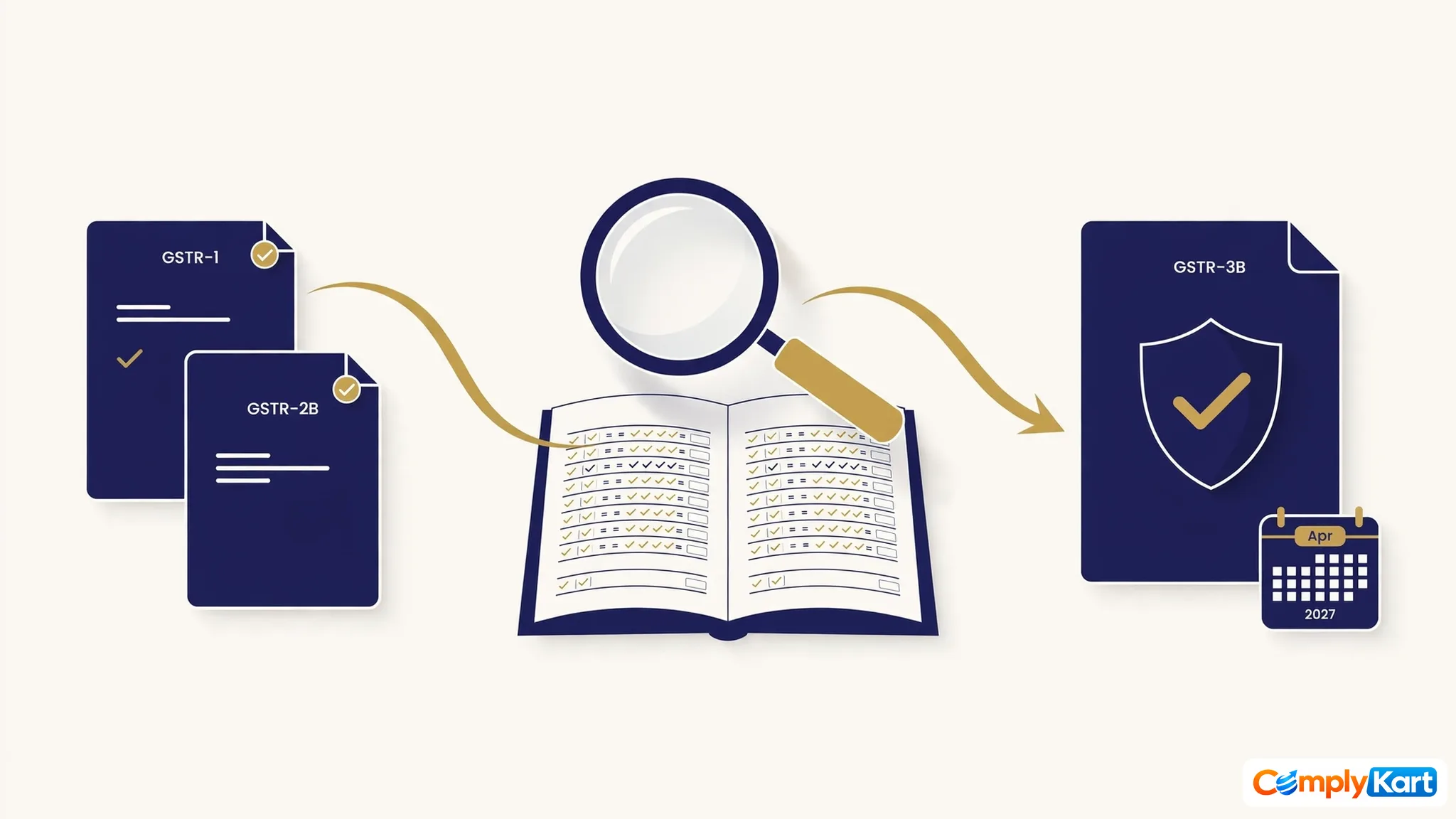
Your business must be GST-registered, the invoice must be in the company's name, the computer must be used for the business, the supplier must have reported the invoice so it appears in your GSTR-2B, and you must have paid the supplier. Miss any one of those and the credit is not available, however genuine the purchase.
Then comes the choice most buyers never hear about. Section 16(3) of the CGST Act says that if you claim depreciation on the GST component of a capital good under the Income-tax Act, you cannot also claim input tax credit on that component. One benefit or the other — never both. Think of it as one discount coupon: redeem it at the till as ITC today, or spread it across the asset's life as depreciation. The same coupon cannot be used twice.
Take a laptop that costs ₹50,000 plus ₹9,000 GST. Claim the ₹9,000 as ITC in your GSTR-3B and depreciate only the ₹50,000. Or capitalise the full ₹59,000 and depreciate that, and take no ITC.
The second trap is the calendar. Section 16(4) gives you until 30 November following the financial year to take credit on an invoice — or the date you file that year's annual return, whichever is earlier. For invoices from FY 2025-26, that means 30 November 2026. A laptop bought in March 2026 and forgotten in a drawer of unclaimed invoices loses its ₹9,000 of credit on 1 December. Check GSTR-2B for the year before the deadline, not after it. If the department ever questions a claim, the ASMT-10 reply guide walks through how that scrutiny works.
What about second-hand and refurbished computers?
Refurbished laptops are a real market now, and GST treats them differently from new stock. Under Rule 32(5) of the CGST Rules — the margin scheme — a dealer in second-hand goods pays GST only on the margin, not on the full resale price. The margin is the selling price minus the purchase price, and if the sale is made at a loss, the negative margin is ignored and no GST is due.
Buy a used laptop for ₹20,000, spend ₹1,000 refurbishing it, and sell it for ₹26,000. The margin is ₹5,000, and GST at 18% on that margin is ₹900. Charge GST on the full ₹26,000 instead and you have collected ₹4,680 — ₹3,780 too much — and handed your customer a reason to buy elsewhere.
Three conditions apply. The goods must be sold as they are or after only minor processing that does not change their nature. No input tax credit can have been claimed on the purchase — usually automatic, since consumers cannot issue GST invoices. And the seller must genuinely deal in second-hand goods. Note the trade-off: if you buy from a registered dealer who charged GST and you take ITC on that invoice, you cannot use the margin scheme for that item.
Selling or buying e-waste? New rules from 1 November 2026
Anyone who trades in old computers should know about the scrap package that took effect on 1 November 2026. Three notifications dated 27 October 2026 — issued after the 57th GST Council meeting on 8 October — changed how electrical and electronics waste and scrap (HSN 8549) is taxed.
First, reverse charge. If you are registered and you buy e-waste from an unregistered seller, you now pay the GST yourself — Notification 04/2026-Central Tax (Rate). Second, TDS. If you buy e-waste from a registered seller and the contract is worth more than ₹2.5 lakh, you must deduct 2% GST TDS from the payment — Notification 07/2026-Central Tax, under section 51 of the CGST Act. On a ₹4,00,000 contract that is ₹8,000 held back. Third, registration. The old exemption that let scrap sellers operate without registration is gone — Notification 06/2026-Central Tax — so a seller of e-waste must register once turnover crosses the normal threshold.
To deduct the TDS you need a separate TDS registration in Form GST REG-07; an ordinary GSTIN is not enough. The deducted tax is deposited and reported in Form GSTR-7 by the 10th of the following month.
What must a computer or electronics seller comply with?
Registration comes first. A business selling goods must register once aggregate turnover crosses ₹40 lakh in a financial year — ₹20 lakh in the special-category states. If you are starting a computer shop, the GST registration service covers the application, and the registration cost guide sets out what it costs. Voluntary registration below the threshold is allowed, and for a shop selling to businesses it is usually worth it — unregistered sellers cannot issue tax invoices, and business customers who need ITC will buy from someone who can.
Once registered, the monthly rhythm is GSTR-1 for outward supplies and GSTR-3B for the tax summary, with GSTR-9 as the annual return — filing support is covered under the GST return filing service. Miss a filing and the late fee runs per day; the compliance fee calculator works out what a delay costs before the notice arrives.
E-invoicing is where another popular guide is out of date. It is mandatory once aggregate turnover exceeds ₹5 crore in any financial year from 2017-18 onwards — Notification 10/2023-Central Tax, in force since 1 August 2023. The ₹10 crore figure some guides still quote was the threshold for less than a year, until 31 July 2023. If your turnover is ₹10 crore or more, each invoice must also reach the Invoice Registration Portal within 30 days of its date, a rule in force from 1 April 2025. And from 1 January 2027, e-invoicing extends to self-invoices for reverse-charge purchases from unregistered suppliers and to import of services — Notification 04/2026-Central Tax — which matters to any dealer buying from unregistered scrap sellers.
Two smaller rules complete the picture. An e-way bill is needed when goods worth more than ₹50,000 move — which covers nearly every bulk laptop shipment. And warranty replacements carry no GST where the replacement is genuinely free: Circular 195/07/2023-GST set the position for parts, and Circular 216/10/2024-GST extended it to whole products. The dealer replaces the unit, charges the manufacturer for it, and no GST is charged to the customer on the replacement itself.
One last warning, for shops tempted by the composition scheme. It charges a low flat rate, but a composition dealer cannot claim ITC and cannot issue a tax invoice. For an electronics shop whose customers are businesses that need ITC, that is not a saving — it is a reason for those customers to walk to the next shop.
Mistakes that cost electronics businesses money
- Charging 40% on a premium television or laptop. No electronic item is in the 40% schedule. The rate is 18%, at any price.
- Claiming ITC and depreciation on the same GST. Section 16(3) forbids it. Pick one, record it the same way in both sets of books.
- Missing the 30 November ITC deadline. Credit on FY 2025-26 invoices dies on 30 November 2026. Reconcile GSTR-2B before then.
- Using the ₹10 crore e-invoicing threshold. It has been ₹5 crore since 1 August 2023. A dealer above ₹5 crore invoicing without an IRN is non-compliant.
- Charging GST on the full price of a refurbished laptop. The margin scheme taxes only the margin. The difference is your customer's money.
- Buying e-waste without a TDS registration. Since 1 November 2026, contracts above ₹2.5 lakh need a 2% deduction and a REG-07 registration.
- Letting a cancelled registration drift. If a registration is cancelled, revival runs through Form REG-21 within 90 days — the revocation guide covers the window most sellers miss.
Frequently asked questions
What is the GST rate on laptops in India?
18% under HSN 8471. The rate has not changed since GST began, and the September 2025 reform left it untouched. A laptop priced at ₹50,000 carries ₹9,000 GST.
Can a business claim ITC on laptops bought for employees?
Yes, provided the business is GST-registered, the invoice is in the company's name, the laptops are used for business purposes, and the credit appears in GSTR-2B. Laptops given for purely personal use do not qualify, and depreciation cannot be claimed on the same GST component.
Does GST TDS apply when I buy e-waste?
Yes, since 1 November 2026. A registered buyer purchasing e-waste from a registered seller must deduct 2% GST TDS where the contract exceeds ₹2.5 lakh, and needs a TDS registration in Form GST REG-07 to do it.


Comments
No comments yet — ask the first question below.
Join the discussion
Questions go straight to our expert desk. Comments appear after a quick review — no spam, no noise.