
GST for Wedding Planners & Event Management Companies: Rates, ITC & Registration
Run a wedding planning or event management company and GST is one tax you cannot wing. Venue, decor, catering, photography, artists, logistics — every vendor bills you with GST while you bill your client with GST. Claim your credit properly and the tax passes through; get it wrong and you eat the difference.
The short answer: Event management and wedding planning attract 18% GST under SAC 998596. Registration becomes mandatory once turnover crosses ₹20 lakh in a year, and you can generally claim input tax credit on the GST your vendors charge you — venue rentals, equipment hire, decor, advertising — provided you hold valid invoices and your vendors have reported them in their returns.
What GST rate applies to event management services?
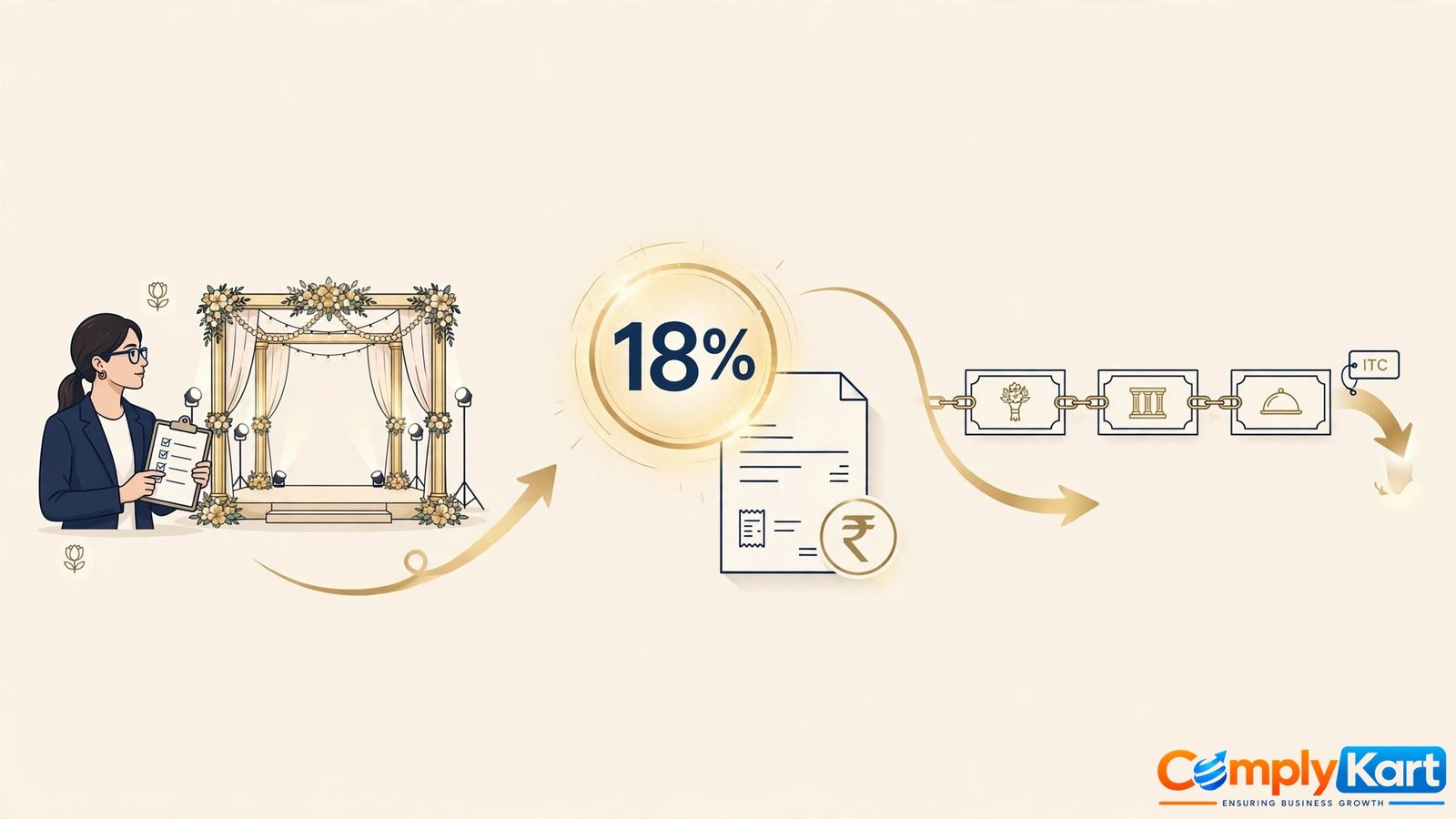
Eighteen per cent — whether it is a ₹2 crore destination wedding in Udaipur or a half-day corporate seminar. The service sits under SAC 998596, and the rate survived the 22 September 2025 slab rationalisation unchanged. The GST Council's 57th meeting (8 October 2026) confirmed the rate structure is settled, so plan around 18% with confidence.
How is GST charged when a wedding is billed as one package?
This is where planners lose real money, and it turns on one legal idea: composite supply.
Think of it like a thali. Sell the thali as one dish at one price, and one GST treatment covers everything on it. Let the customer order dal, rice, and roti separately, and each item is taxed on its own. A wedding package works the same way. One bundled price under a single contract is a composite supply — the principal supply (event management, 18%) drags the entire value to 18%.
Standalone outdoor catering can be billed at 5% without ITC; bundled into your package, it attracts 18%. To preserve component rates, you need genuinely separate contracts and invoices: hall rent (18%), rooms (5% up to ₹7,500 a night, 18% above), restaurant food on its own bill. the department looks through cosmetic splits — separate must mean separate, on paper and in fact.
When do I need GST registration?
The threshold for service providers is ₹20 lakh of aggregate turnover in a financial year (₹10 lakh in special-category states). Cross it and registration is compulsory.
One trap is the casual taxable person rule: if your Delhi company takes a wedding in Jaipur with no fixed place of business in Rajasthan, you may need a separate temporary registration in Rajasthan before the event — valid up to 90 days, usually requiring advance tax on estimated turnover there. Second, many planners register voluntarily below the threshold. It means monthly returns, but it opens up ITC on your vendor bills, and corporate clients prefer vendors with proper GST invoices.
Is the event's location what decides CGST or IGST?
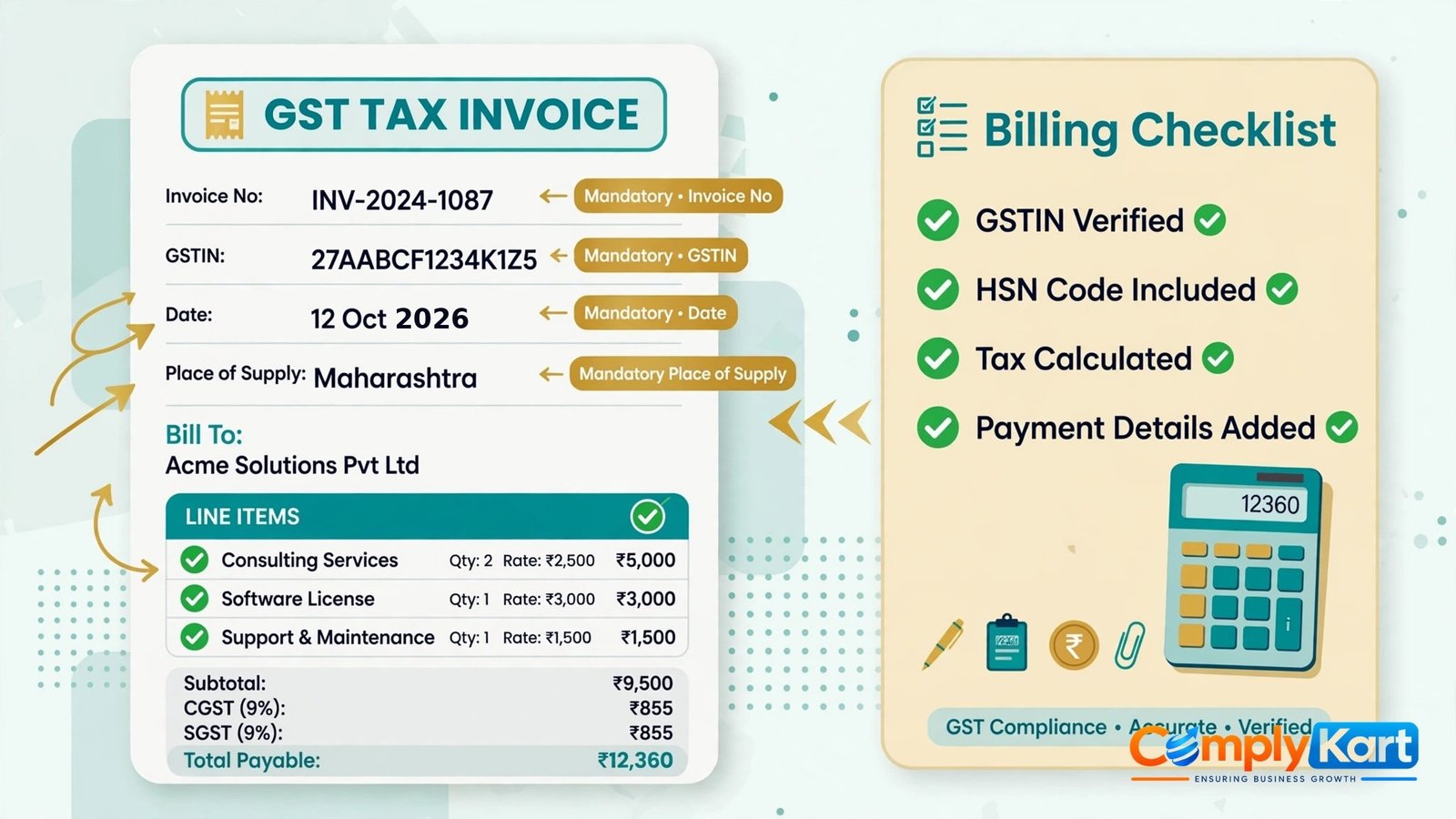
Yes. For events held in India, the place of supply is where the event actually takes place. A Delhi planner billing for a wedding in Jaipur charges IGST, not CGST+SGST — an inter-state supply even if both are from Delhi. Get the state-of-supply logic on your invoice right, or the client cannot claim credit.
Can I claim input tax credit on my vendor bills?
Yes, and ITC is the single biggest lever in GST planning for this business. You pay GST to your vendors and collect GST from your client; the credit offsets what you owe. Without ITC, 18% becomes a real cost.
Three conditions decide whether your credit survives. One, hold a valid tax invoice — the vendor must be registered and the invoice complete; a WhatsApp bill from an unregistered decorator gives no credit. Two, your vendors must report it — credit appears in your GSTR-2B only when the vendor reports the sale in their GSTR-1. Three, watch blocked credits — Section 17(5) of the CGST Act blocks ITC on food and beverages, personal consumption, and most motor vehicle hire. Liquor sits under state excise, not GST, so it generates no ITC.
Who pays GST on sponsorship deals?
Corporate events often have sponsors — and a trap with them. When sponsorship services are supplied to a body corporate or partnership firm, GST is typically payable by the sponsor under reverse charge (Notification No. 13/2017-Central Tax (Rate)). Get it backwards and either you underpay or the sponsor pays twice.
What compliance does an event company do every month?
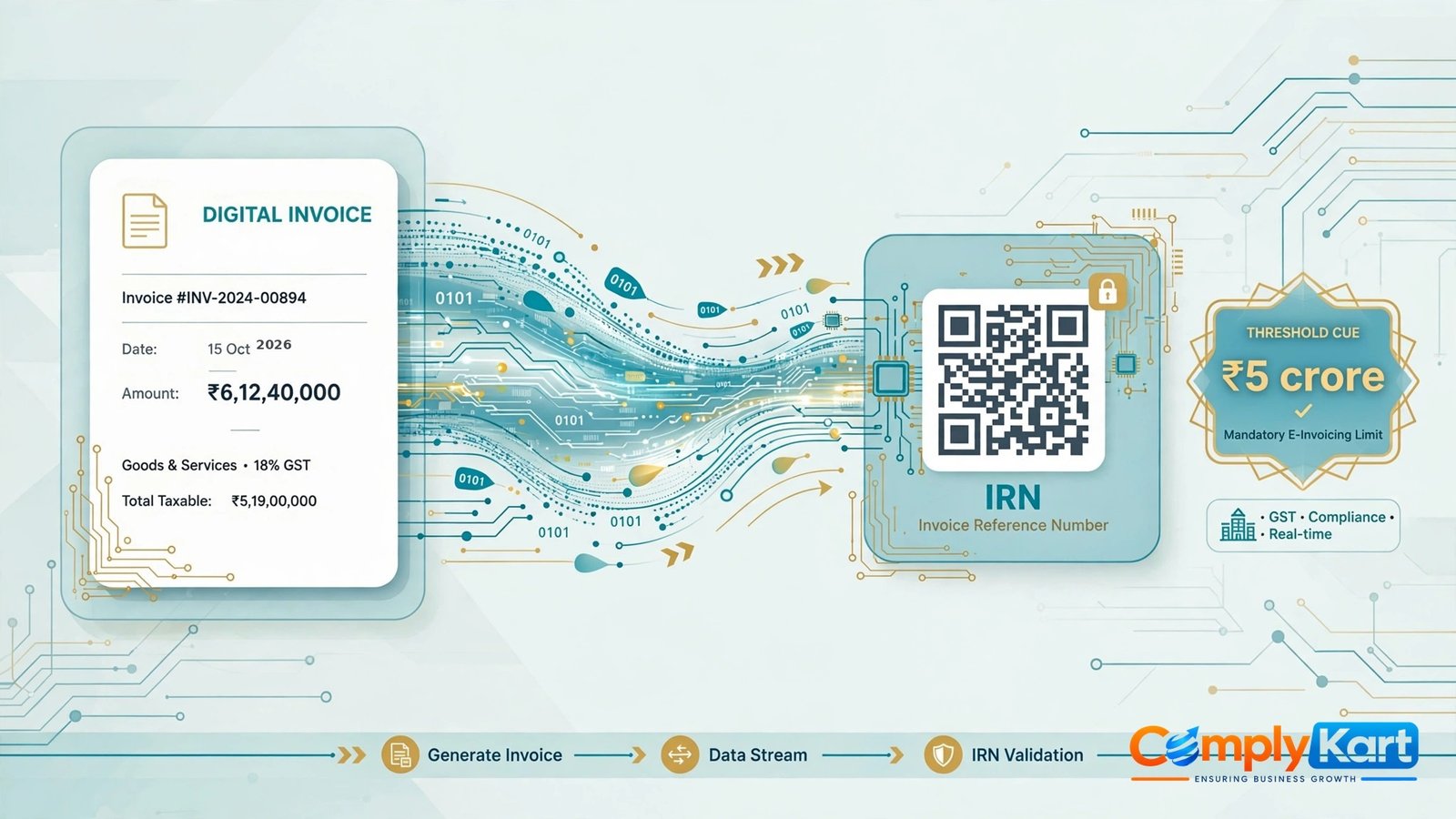
GSTR-1 (outward supplies) by the 11th of the following month, GSTR-3B (summary return with payment) by the 20th, and GSTR-9 annually. Cross ₹5 crore of turnover in a financial year and e-invoicing applies — B2B invoices must carry an IRN. On advances: GST on services is generally due when the service is supplied, not when the advance lands — reconcile booking advances with final invoices when the event is delivered.
Mistakes that cost event companies real money
Charging 18% on the package but forgetting ITC discipline is the big one — planners routinely leave lakhs of credit unclaimed because vendor invoices never reached the accountant or vendors never filed. Next, the bundled-versus-split invoicing error. Then the place-of-supply error on destination events. And finally, working in another state without the casual taxable person registration.
Under ₹20 lakh you can operate unregistered, but you cannot charge GST, cannot claim ITC, and corporate clients will notice. Run the numbers on GST for a typical wedding package before deciding — most planners who move into serious work find registration the cheaper option. A GST registration completes in a few working days, so set it up in the off-season and the wedding season takes care of itself. For a rate-reference comparison, see how restaurants choose between 5% and 18% GST, and how the compliance fee calculator maps your filing costs.
FAQs
What is the GST rate on wedding planning services?
18% under SAC 998596 for every event, big or small — unchanged since the 2025 slab rationalisation and the October 2026 GST Council meeting.
Do wedding planners need GST registration?
Mandatory once aggregate turnover crosses ₹20 lakh in a year (₹10 lakh in special-category states). Many register voluntarily below that to claim input tax credit.
Can event companies claim ITC on decor, venue, and catering?
Available on business inputs — venue rentals, equipment hire, decor, advertising, printing — with valid tax invoices and the vendor reporting the sale in GSTR-1. Blocked credits under Section 17(5), like personal food and most motor vehicle hire, cannot be claimed.
Is GST charged on sponsorship money for events?
When supplied to a body corporate or partnership firm, GST is generally payable by the sponsor under reverse charge — you should not add GST on such invoices.
What is casual taxable person registration for events in another state?
You may need a separate temporary registration in a state where you have no fixed place of business — valid up to 90 days, usually with advance tax deposit.
Should a wedding package be billed as one invoice or split?
A bundled contract is a composite supply taxed at 18% on the full value. Genuinely separate contracts can preserve component rates, but the split must be real.


Comments
No comments yet — ask the first question below.
Join the discussion
Questions go straight to our expert desk. Comments appear after a quick review — no spam, no noise.