
IN BRIEF
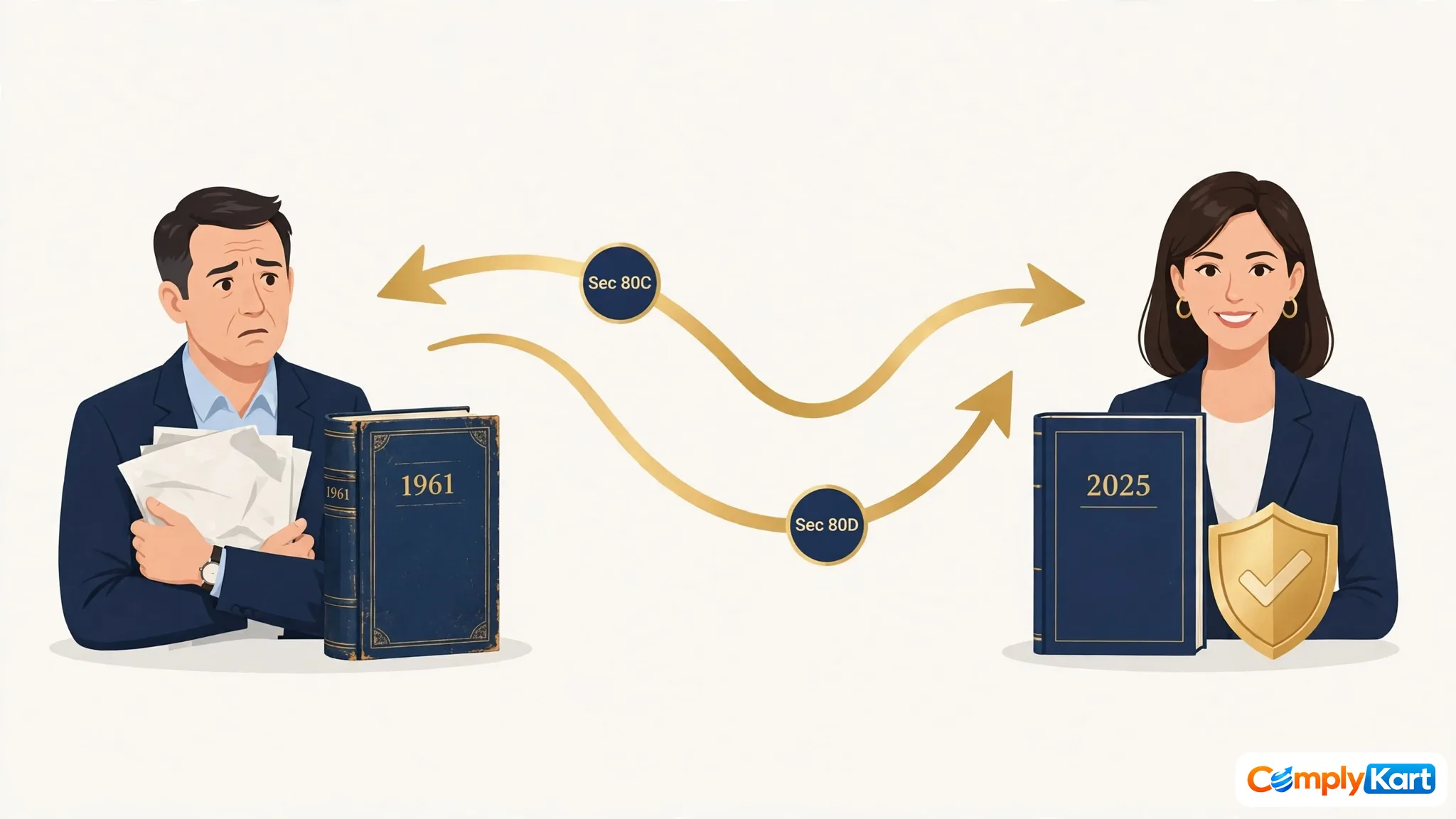
The Income-tax Act, 2025 renumbers the provisions of the 1961 Act for income from 1 April 2026: deductions such as section 80C move to section 123, salary TDS under section 192 moves to section 392, all other TDS consolidates into section 393, returns under section 139 move to section 263, and tax audit under section 44AB moves to section 63.
Short answer: from 1 April 2026, the Income-tax Act, 2025 governs income of Tax Year 2026-27 onwards, and almost every section number you know has moved. Section 80C is now section 123, salary TDS under section 192 is now section 392, the return section 139 is now 263, and tax audit under 44AB is now 63. The money did not change — the limits, rates and conditions you rely on carried over. Only the address in the statute book changed. This page is the map.
Which Act do you quote? The mistake everyone will make once
Both Acts are alive at the same time, and they apply to different years. The return for FY 2025-26 (AY 2026-27) — the one being filed in 2026 — is still governed by the Income-tax Act, 1961, with the old numbers. Income from 1 April 2026 onwards falls under the 2025 Act and the new numbers. Assessments, reassessments and appeals for earlier years continue under the old Act. The 2025 Act also retires the previous-year/assessment-year pair: a single "Tax Year" (section 3) now does both jobs. So a notice about AY 2026-27 that cites section 143 is speaking 1961; a TDS default for Tax Year 2026-27 will speak 2025. Quote the Act that owns the year, or the reply loses credibility before its first argument.
The map: sections business users actually touch
| What it covers | 1961 Act | 2025 Act |
|---|---|---|
| Investments and payments (PPF, ELSS, LIC, tuition fees) | 80C, with 80CCC | 123, read with Schedule XV |
| NPS contributions | 80CCD | 124 |
| Health insurance premium | 80D | 126 |
| Education loan interest | 80E | 129 |
| Donations | 80G | 133 |
| Savings and deposit interest | 80TTA, 80TTB | 153 (the two merged) |
| Rebate for resident individuals | 87A | 156 |
| Standard deduction on salary | 16 | 19 |
| New (default) tax regime | 115BAC | 202 |
| Presumptive taxation for business and professions | 44AD, 44ADA, 44AE | 58 |
| Tax audit | 44AB | 63 |
| Return of income — regular, belated, revised, updated | 139 | 263 |
| Intimation after processing | 143(1) | 270 |
| TDS on salary | 192 | 392 |
| TDS on everything else — interest, rent, contractors, professional fees, property | 193 to 196D (the 194 series) | 393, laid out in tables |
| Tax collected at source | 206C | 394 |
| TDS certificate | 203 | 402 |
| Advance tax — liability and instalments | 208, 211 | 404, 408 |
| Interest for late filing, advance-tax shortfall, instalment deferment | 234A, 234B, 234C | 423, 424, 425 |
| Fee for default in furnishing TDS statements | 234E | 427 |
| Late fee for returns | 234F | 428 |
| Appeal to the Commissioner (Appeals) | 246A | 355 |
| Appeal to the Income Tax Appellate Tribunal | 253 | 360 |
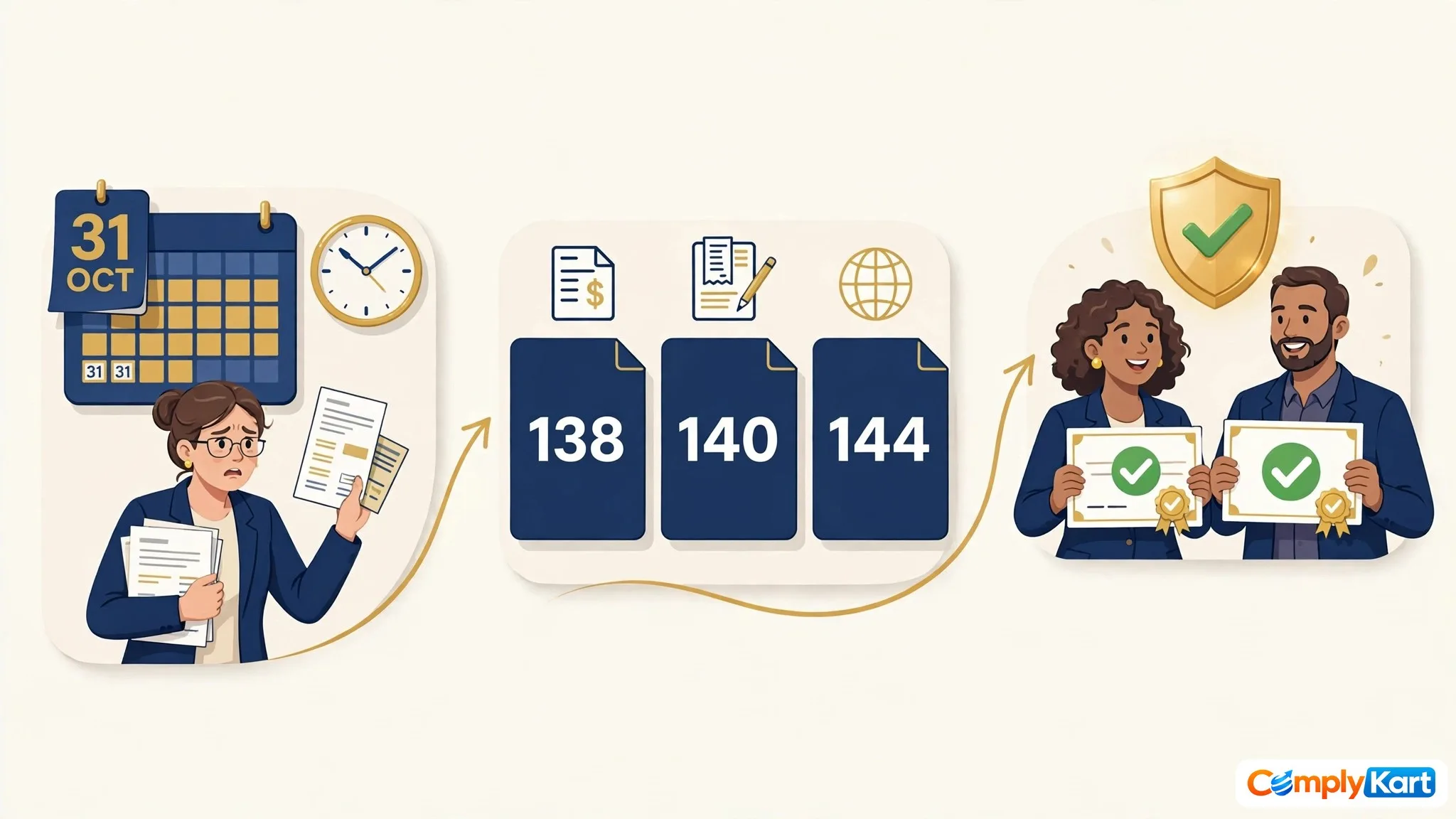
Forms moved too. Form 16, the salary TDS certificate, is now Form 130. The quarterly salary TDS statement, Form 24Q, is now Form 138 — our guide to the new TDS forms 138, 140 and 144 walks through what changed in the filings themselves. The 15G/15H declarations for nil deduction are now Form 121, and the tax audit report form 3CD is renumbered Form 26.
Three traps inside the map
Salary TDS did not join the crowd. Every non-salary TDS section collapsed into the tables of section 393 — but salary kept its own house at section 392. Payroll software configured to point all TDS at 393 will be wrong on the biggest deduction most companies make.
Some new numbers mean something entirely different in the old Act. Section 156 in the 1961 Act is a notice of demand; in the 2025 Act it is the rebate. Section 263 in the 1961 Act is the Commissioner's revision power; in the 2025 Act it is the return of income. A bare number, without the Act named beside it, now says nothing. In every document you draft from this year — board notes, loan applications, replies — write "section 123 of the Income-tax Act, 2025", never just "section 123".
Not everything renumbered one-to-one. Exemptions that lived in section 10 now sit in Schedules II to VII, and several old sections merged — 80TTA and 80TTB became one section 153. Where a provision you rely on is missing from this map, the Income Tax Department's own section-comparison utility on the e-filing portal is the authority to check before you cite anything.
What to update, in practical order
Think of this as a house move: the furniture is the same, but every label on every box must change, or the first month in the new house is chaos. Update your payroll and TDS software references for salary (392) and non-salary (393) payments made on or after 1 April 2026. Refresh the templates your team reuses — employment letters that cite 80C, rent agreements that cite 194-I, professional contracts that cite 194J. Brief whoever prepares your advance-tax workings that instalments now run under sections 404 and 408. And keep both maps pinned during the overlap: through 2026 and 2027 you will file, reply and appeal under both Acts in the same working week. Our income tax return filing service already works dual-Act; if your filings are handled in-house, this map plus the department's utility is the kit to keep beside the keyboard.
Questions we hear on the new Act
Did the 80C limit change when it became section 123? No. The ₹1.5 lakh ceiling carried over. Renumbering changed the citation, not the amount.
Which Act applies to the return I file in 2026? The 1961 Act. That return covers FY 2025-26 (AY 2026-27), the last year under the old statute. The first return under the 2025 Act covers Tax Year 2026-27 and is filed in 2027.
My notice for an old year cites section 148. Is that still valid? Yes. Proceedings for years up to FY 2025-26 continue under the 1961 Act, old numbers and all.
Do I need to re-paper contracts that cite old sections? Existing contracts remain valid — a statutory reference is generally read as its successor provision. But templates you will reuse for new agreements should carry the new numbers, with the Act named.
Is this map the final authority? No map is. It covers the provisions business users touch most, checked against the 2025 Act and the department's published correspondence. For a section outside this table, verify on the e-filing portal's comparison utility before relying on it.




Comments
No comments yet — ask the first question below.
Join the discussion
Questions go straight to our expert desk. Comments appear after a quick review — no spam, no noise.