

This week, your accountant asks for the 24Q data. Ask which form he plans to file it in — for July to September 2026, Form 24Q no longer exists. The quarterly TDS statement has new numbers, a deadline of 31 October 2026, and a late fee from the morning after.
The short answer: Q2 TDS returns for tax year 2026-27 are due on 31 October 2026, filed under Section 397(3)(b) of the Income-tax Act, 2025. Salary TDS goes in Form 138 (old 24Q), non-salary payments to residents in Form 140 (old 26Q), payments to non-residents in Form 144 (old 27Q), and TCS in Form 143 (old 27EQ).
Which form replaced 24Q, 26Q and 27Q?
Every quarterly TDS and TCS statement now sits under Section 397(3)(b) of the Income-tax Act, 2025, forms prescribed in Rule 219 of the Income-tax Rules, 2026. The work is unchanged. Only the numbers are.
| New form | Earlier form | What it reports |
|---|---|---|
| Form 138 | 24Q | Salary TDS; also pension and specified senior-citizen interest deducted by specified banks |
| Form 140 | 26Q | Non-salary payments to residents — rent, fees, contractors, commission, interest |
| Form 144 | 27Q | Non-salary payments to non-residents — royalties, technical fees, interest, dividends |
| Form 143 | 27EQ | TCS — tax collected at source on specified sales |
Periods up to 31 March 2026 stay under the old Act — a correction for last year's Q4 goes on Form 26Q even if filed today. Both series in your history is normal, not an error.
Is the TCS statement also due on 31 October now?
Yes — and this catches people. The TCS statement used to run ahead, so Q2's fell due on 15 October. That gap is gone: Form 143 is due 31 October 2026, with the TDS forms.
Do not confuse these with Form 141 — the challan-cum-statement (old 26QB/26QC/26QD/26QE in one) for one-off deductions like property purchases and rent paid by individuals. It runs monthly, within 30 days of the deduction month-end: September's fall due on 30 October, never inside a quarterly TAN return. Bought property from an NRI seller? See my guide to TDS on buying property from an NRI.
My challans are paid. Is the return still separate?
Yes — depositing and reporting are two obligations on two clocks. Deposits fell due monthly: 7 August, 7 September, 7 October, via Challan ITNS 281 on e-Pay Tax (my guide to paying TDS online covers the challan). The statement ties those deposits to individual PANs.
Think of an office building's electricity bill. The challan pays the total; the statement is the sub-meter sheet, showing how much belongs to which occupant. Skip the sheet and the money sits unallocated, every employee and vendor showing "no credit". The statement moves credit into Form 168 — the new Form 26AS.
What you must hand your accountant
Your accountant files; the raw material is yours — most delays I see are handover delays. Before October's last week, put these in one folder:
- The deductee list, with PANs — each checked operative, not just collected.
- The three challans (July–September) with Challan Identification Numbers, matched to deductions.
- Payroll register; vendor bills split resident / non-resident — different forms.
- Section 395 lower-deduction certificates; tax residency certificate and Form 10F for non-residents on treaty rates.
- Last quarter's filed statement, so corrections are checked, not assumed.
Salary filers get one relief: Annexure II of Form 138 — the detailed salary annexure — is a Q4 job, with the full-year computation.
One quarter, in numbers
A company with fourteen employees. Salary TDS: ₹48,000 (July), ₹48,000 (August), ₹52,000 (September) — ₹1,48,000 into Form 138. Vendor side: rent ₹1,20,000 a month at 10% — ₹36,000; professional fees ₹2,50,000 at 10% — ₹25,000; contractors ₹4,00,000 at 2% — ₹8,000. Form 140 total: ₹69,000. Deposited in all: ₹2,17,000.
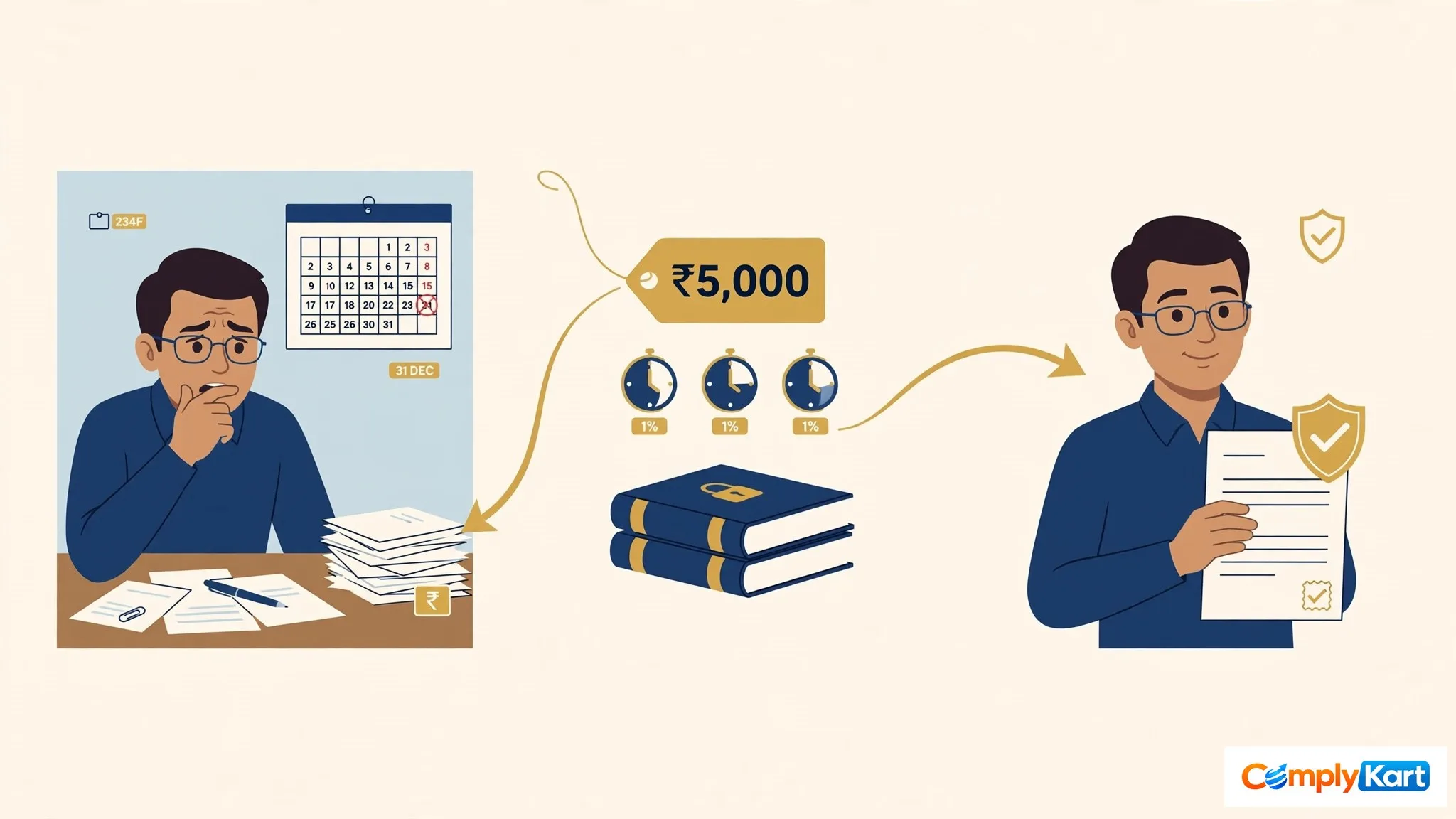
Now the slip. Filed on 20 November, the statements are twenty days late — and the Section 427 fee runs per statement: ₹200 a day is ₹4,000 on Form 138, another ₹4,000 on Form 140. September's salary TDS also went in late (22 October, not 7 October): interest under Section 398(3)(a) at 1.5% for that month is ₹780 — part of a month counts as a full month. One consultant's PAN was inoperative: on his ₹50,000 fee, 20% meant ₹10,000, not ₹5,000. Check your figures in our TDS calculator before paying.
What does a delay actually cost?
The filing fee — Section 427. ₹200 per day late, capped at that statement's tax. A fee, not a penalty: no hearing, no waiver; computed by the system, paid before you file.
The penalty — Section 461. ₹10,000 to ₹1,00,000, for late filing or incorrect information. One mercy: tax, fee and interest paid, and the statement filed within one month of the due date, means no late-filing penalty. November done properly closes that door; December may not.
Interest — Section 398(3)(a). 1% per month if deducted late; 1.5% if deducted but deposited late. This meter runs on the deposit clock: interest paid never excuses a late statement.
The inoperative PAN trap
Section 397(2) — old Section 206AA — taxes a deductee with no PAN furnished at the highest of the normal rate, rates in force, or 20%. A PAN inoperative for want of Aadhaar linking counts as not furnished; the department flags it on processing, and the demand lands on you.
The cure window is short. Under CBDT Circular 9/2025, a PAN inoperative at deduction that turns operative within two months of the deduction month-end does not attract the higher rate. So check PANs in the week of payment, not the week of filing. Vendor's PAN inoperative today? The reminder goes today.
After you file: certificates by 15 November
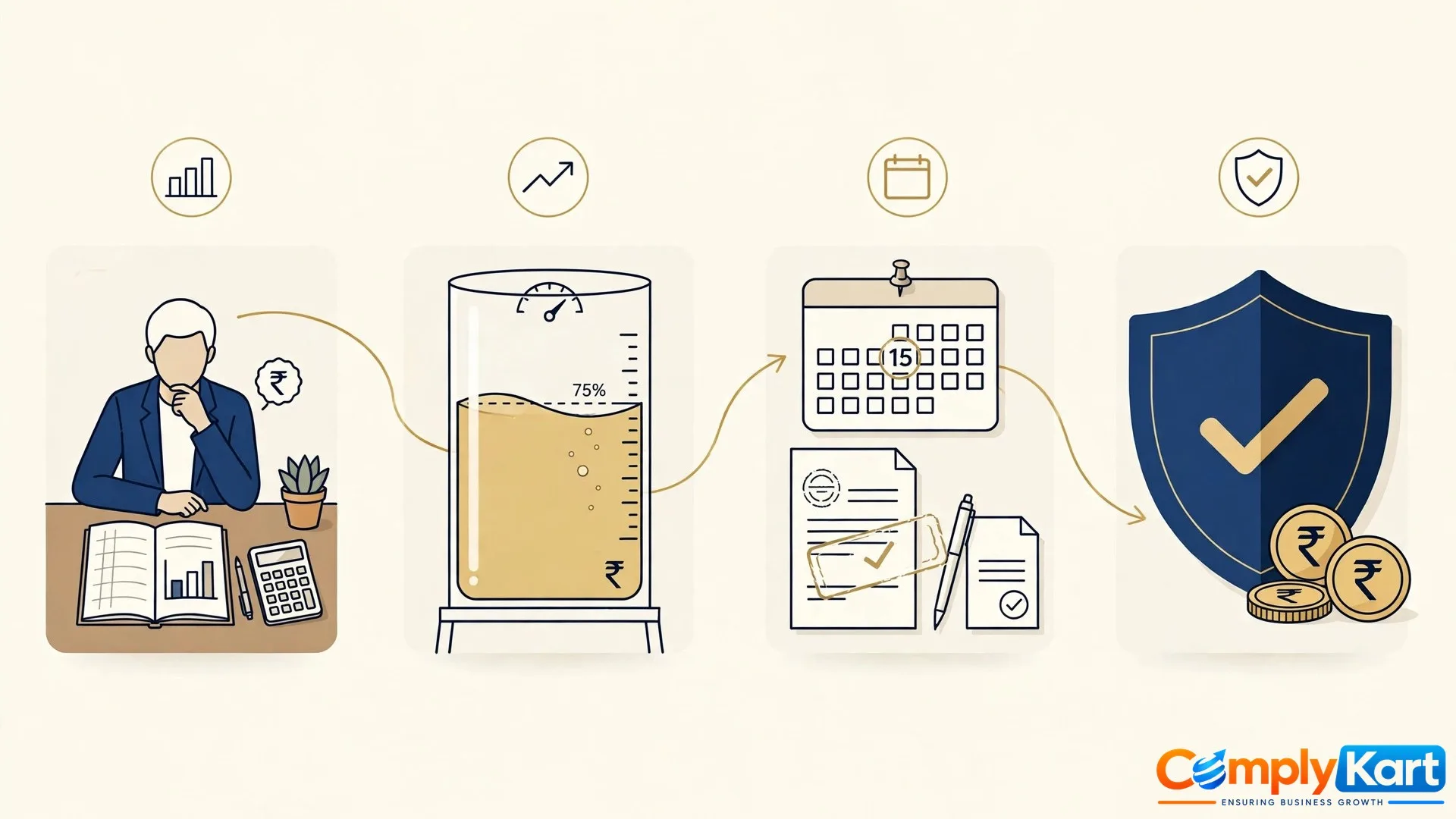
Filing is not the last step. The non-salary certificate — Form 131, old Form 16A — is due within fifteen days of the statement's due date: 15 November 2026. Salary certificates (Form 130, old Form 16) stay annual, due 15 June 2027.
Treat an upload as a submission, not acceptance — statements get rejected for wrong tax year, TAN mismatch, outdated validation versions; only portal acceptance proves filing. More than your team can reconcile? Our TDS return filing desk runs the whole cycle, and the credits your people claim in their income tax return filing stop bouncing back.
Ten days left. New forms, same discipline: deduct right, deposit by the 7th, reconcile before filing, let no PAN go unchecked.
TDS returns for Q2: quick answers
Can I file the Q2 statement in the old Form 24Q or 26Q?
No. Tax year 2026-27 quarters go on Forms 138, 140, 144. Old forms survive only for periods up to 31 March 2026 — corrections for those periods included.
Is there one late fee for all the forms, or one per form?
Per statement. Each form is a separate statement under Section 397(3)(b); Section 427's ₹200 a day applies per late form, capped at that form's tax.
What if a challan was paid with the wrong TAN or tax year?
The statement cannot absorb a mismatched challan. Correct it first — bank or portal challan-correction — then file. It is the commonest reason processed statements still show deductees without credit.
We found an error after filing. Can it be fixed?
Yes — file a correction statement, promptly. Never leave a known error: incorrect information is itself a Section 461 default.



Comments
No comments yet — ask the first question below.
Join the discussion
Questions go straight to our expert desk. Comments appear after a quick review — no spam, no noise.