
Trademark for YouTubers & Content Creators: Class 41 + 25, Costs and the Channel-Name Trap
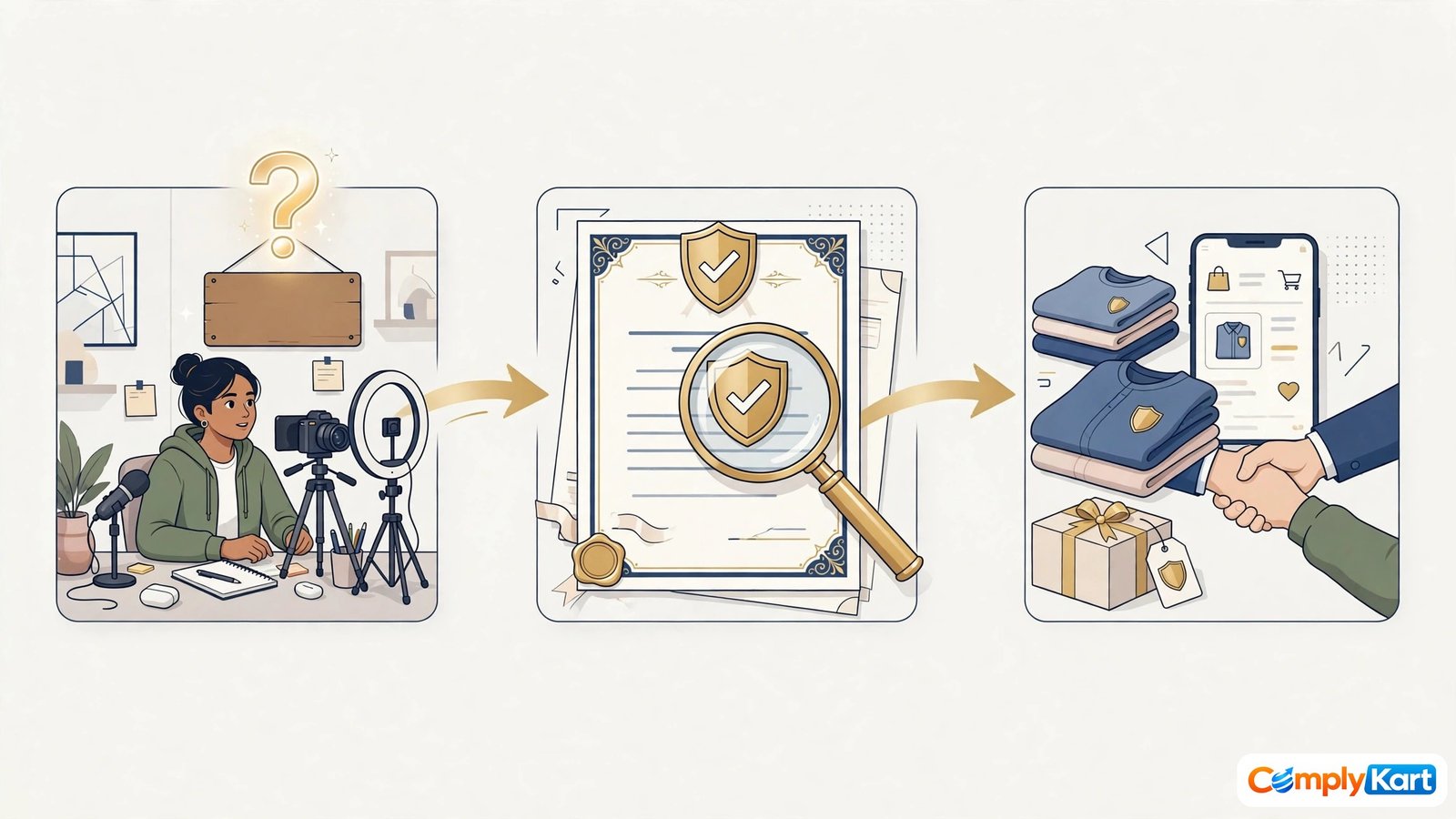
Your YouTube handle is not a trademark. It is a username on someone else's platform — it can be copied, squatted on, or registered by someone else before you act. A trademark is the only instrument that makes your channel name truly yours in India.
India's system is largely first-to-file: the registry grants the mark to whoever files first, though a genuine prior user can oppose. File early — it costs far less than fighting later.
What does trademark registration actually give a creator?
Three things. First, the exclusive right to use your channel name (or show name, or merch label) in the classes you register it in, anywhere in India. Second, the ® symbol — using it without registration is an offence under Section 107 of the Trade Marks Act, 1999. Registration is the only lawful route to that symbol. Third, a weapon: with a registered mark you can force takedowns of copycat channels, counterfeit merch, and fake accounts. Without it, you are relying on platform goodwill. I would rather rely on a certificate.
Real disputes show why. In 2025, news agency ANI sued YouTuber Mohak Mangal in Delhi over alleged copyright and trademark infringement. And a Delhi commercial court granted travel vlogger Karl Rock an ex parte injunction against another YouTuber re-uploading his videos as Shorts. Courts protect creators — but only when the right is documented. A trademark certificate is the clearest document there is.
Which classes does a creator actually need?
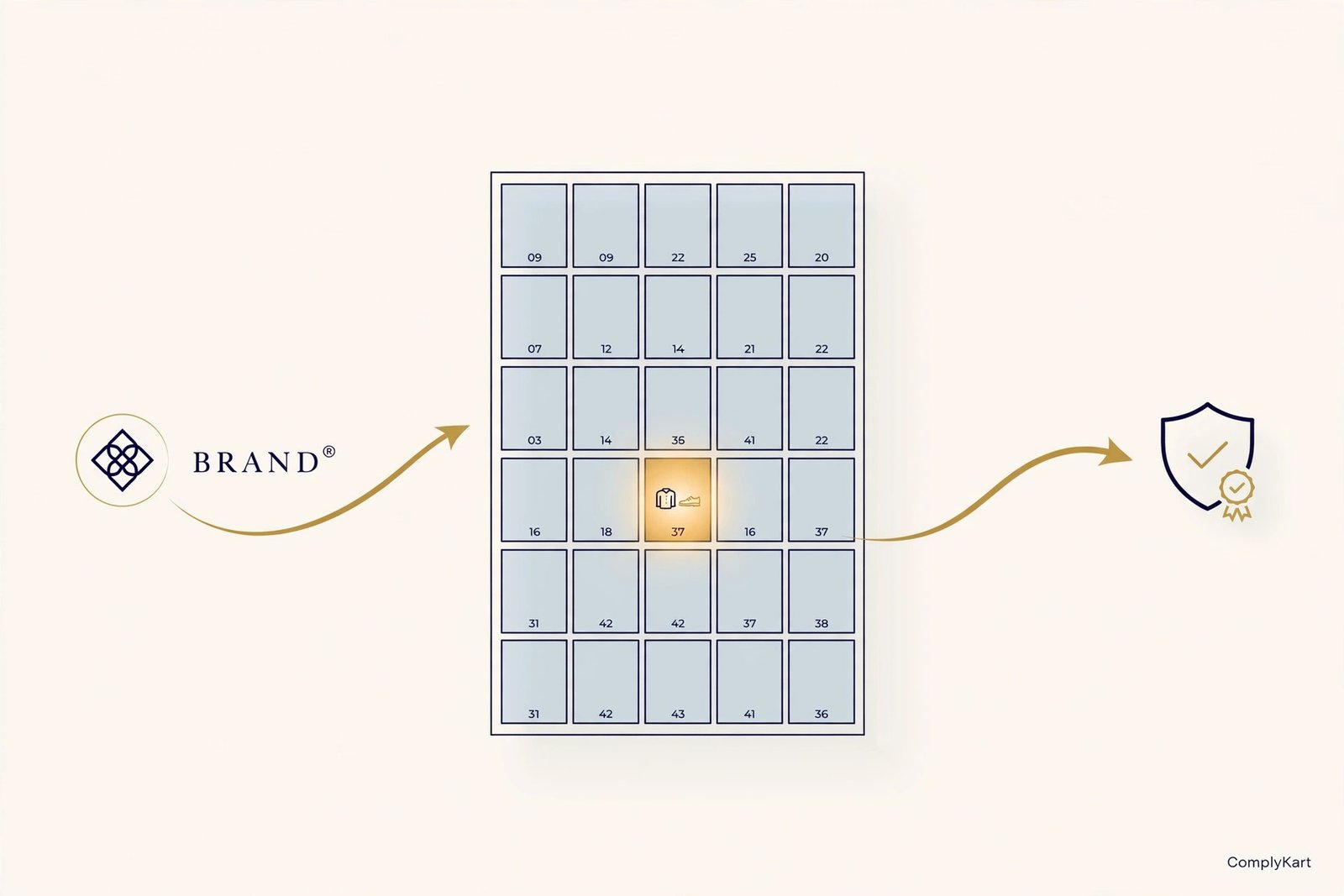
Trademark protection is class-scoped, and this is the part most creators miss. Think of the 45 trademark classes as 45 separate plots in the same colony. Owning the plot at address 41 gives you zero rights over the plot at address 25 — same name, different address. You file (and pay) for each plot separately.
Class 41 is your home plot. It covers education, training, and entertainment services, and squarely includes online content creation — your channel name, show titles, podcast name.
Class 25 covers merch. Selling t-shirts, hoodies, or caps with your logo means you need Class 25 (clothing). File it before the merch drops, not after — the first merch line is when copycats appear.
Class 35 covers selling the merch. If you run your own online store for your merchandise, Class 35 (retail services) is the companion filing. Most creators file 41 + 25 first, and add 35 when the store opens.
Class 9 if you go further. Downloadable content, an app, or digital products shift into Class 9. Not every creator needs it on day one — but if you sell presets, courses-as-downloads, or plan an app, put it on the roadmap.
Word mark first, logo later
File the word mark — the plain text name — before the logo. The word mark protects the name in every font, colour, and design you will ever use. A logo-only filing protects just that artwork, and every creator's logo eventually evolves. The legal name on a passport versus the photograph on it: the name travels, the photo gets updated. If budget forces a choice, the word mark wins.
One more filter before you file: descriptive names are hard to register. Section 9(1)(b) refuses marks that are purely descriptive of the goods or services. "Tech Reviews" for a tech-review channel will struggle; a coined or distinctive name sails through. Distinctiveness is not a branding luxury. It is a registration requirement.
What does it cost and how long does it take?
Government fees for e-filing Form TM-A are ₹4,500 per class for individuals, startups, and small enterprises — ₹9,000 per class for everyone else. Each class is a separate fee — file 41 + 25 and you pay twice. Renewal (Form TM-R) is ₹9,000 per class every 10 years. Fees are non-refundable, so a wrong class is wasted money.
Professional fees sit on top. ComplyKart's trademark registration service covers search, drafting, filing, and examination replies — worth comparing against DIY, because a mishandled 30-day objection reply can stall the application for months.
Timelines, honestly: you get the TM application number the day you file — your proof of filing and your shield against later filers. Examination takes roughly 6–12 months. If the examiner objects, you get about 30 days to reply. Then it is advertised in the Trade Marks Journal for four months for oppositions. An uncontested application typically registers in 12–18 months. Use ™ from the day you file; ® waits for the certificate.
What can go wrong? Five mistakes creators make
1. Waiting until the brand is big. The worst time to file is after a copycat files. File while you are small — small brands register faster because fewer oppositions exist.
2. Filing in the wrong class. A Class 41 registration does not stop someone from selling "your" t-shirts in Class 25. Match the classes to the business you have and the one you plan.
3. Assuming YouTube owns the name. A channel handle, a verified badge, even monetisation — none are trademark rights. YouTube's own trademark complaint process asks whether you own a registered mark. Own one.
4. Selling merch without GST planning. Merch is goods, and once turnover crosses the threshold you need GST registration for the sale side — a separate question from trademark. See our GST registration guide and run the numbers through the compliance fee calculator before the first merch drop.
5. Skipping the search. Filing without a proper availability search is paying a non-refundable fee to learn the name was taken. Search first. Always.
FAQs
Can I trademark my YouTube channel name in India?
Yes. File in Class 41 (education and entertainment services), which covers online content creation including channel names, show titles, and podcasts. A word mark filing protects the name in any font or design. You get the application number on filing day and can use ™ immediately; registration typically takes 12–18 months uncontested.
Do I need Class 41 if I only make videos and never sell merch?
Class 41 alone is enough for a pure content play — it covers the channel name and the content services. Add Class 25 (clothing) when you launch merch, and Class 35 (retail services) when you open your own store. File for the business you plan, not just the one you have.
My channel is small. Should I still file now?
Especially now. India is largely first-to-file, small channels face fewer oppositions and register faster, and the government fee is only ₹4,500 per class (e-filing) for individuals and startups. The cost of a dispute dwarfs the cost of filing.
What if someone has already filed my channel name?
Search first — if their application is pending, you can oppose it during the four-month journal advertisement window, particularly if you used the name first. If it is already registered, your options narrow to negotiation, coexistence, or rebranding. Early filing is how you avoid this entirely.
Does a trademark protect my video content from being copied?
No — that is copyright's job. A trademark protects the brand name and logo; copyright protects the creative content of your videos. Creators need both. Our trademark-for-clothing-brands guide covers the merch side; word mark vs logo mark explains the filing choice.




Comments
No comments yet — ask the first question below.
Join the discussion
Questions go straight to our expert desk. Comments appear after a quick review — no spam, no noise.