
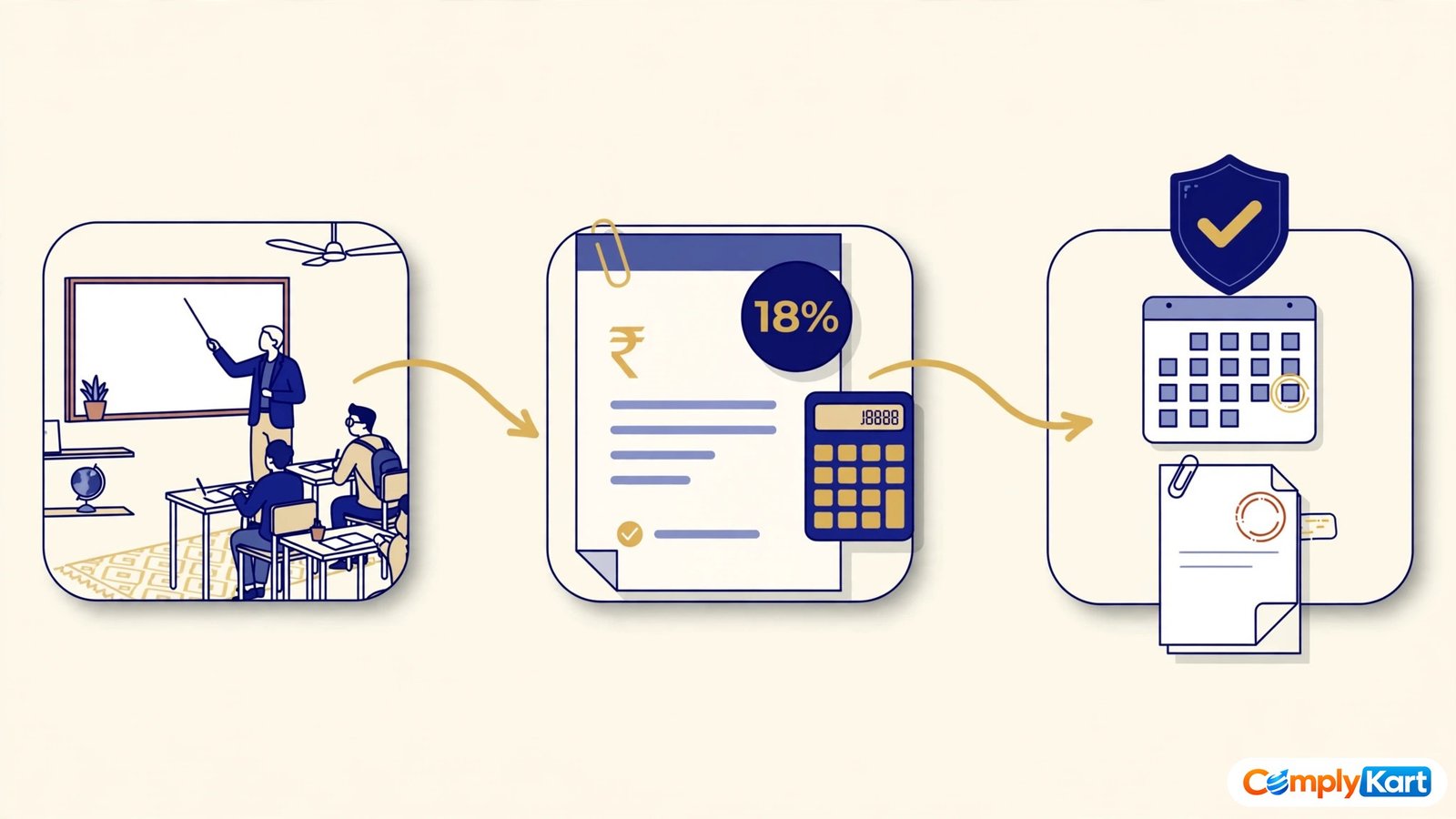
GST for Coaching Centres: 18% Rate, Registration Rules & What the Department Just Flagged
The short answer: Coaching centres charge 18% GST on fees under SAC 999293 (Notification 11/2017). Registration becomes mandatory after ₹20 lakh annual turnover (₹10 lakh in four north-eastern states). And per the October 2026 CBIC communication, bundled books and kits form a composite supply taxed at 18% on the full amount.
Do coaching centres really charge 18% GST?
Yes — and this is where most coaching owners go wrong first.
GST exempts services by an "educational institution" to its students — pre-school to higher secondary, plus approved vocational courses. A coaching institute is not one. The Gujarat AAR said it plainly in the Friends Classes, Surat case: coaching is "supplementary education" under service code 999293, liable to GST at 18% (9% CGST + 9% SGST).
Plenty of owners run for years believing "education is exempt". The exemption belongs to schools and colleges, not to the institute preparing students for them.
What SAC code and rate goes on your invoice?
Use SAC 999293 at 18% — classroom, hybrid and live online batches alike.
One nuance that keeps getting misfiled: discounts. A ₹10,000 early-bird discount on a ₹60,000 course must appear on the GST invoice — under Section 15, the value of supply is the price actually paid. A discount in your head does not count.
Also decide what "inclusive" means. A ₹50,000 fee inclusive of GST carries ₹7,627 of tax inside it — tax you owe, not revenue. Quote inclusive and you absorb it; quote exclusive and the parent pays it. Pick one and print it.
When does your centre need GST registration?
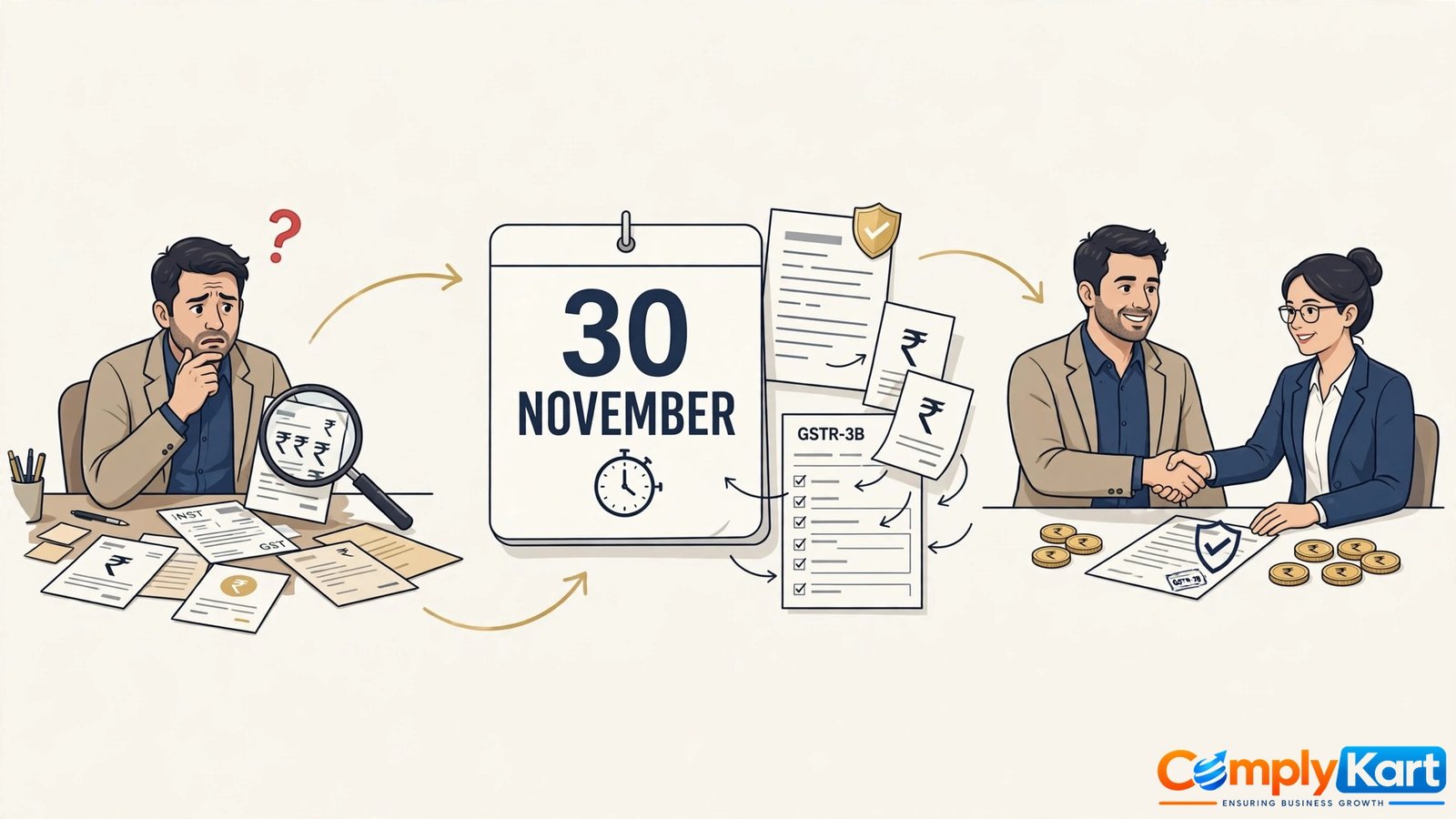
The threshold for services is ₹20 lakh of aggregate turnover in a financial year (₹10 lakh in Mizoram, Tripura, Manipur and Nagaland). Cross it and GST registration becomes mandatory within 30 days.
Pan-India online sales don't force early registration. Notification 10/2019 exempts persons making only inter-state supplies of services from registration until the threshold. Students in twenty states? You register when the money crosses ₹20 lakh.
The composition option rarely fits. Notification 2/2019 offers services suppliers up to ₹50 lakh turnover a flat 6% — but you lose input tax credit and inter-state supplies. For a growing centre, full registration usually wins.
The composite-supply trap: books, bags and t-shirts
This is the trickiest part of coaching-centre GST, and the department just drew a red circle around it.
Think of a thali. Once served as one meal, nobody taxes the dal and roti separately — the meal has one treatment. A coaching package with notes, a bag and a t-shirt works the same way: coaching is the principal supply, and everything bundled with it takes the 18% rate.
In October 2026 the CBIC Chairman flagged exactly this in his weekly communication to officers: an institute cannot deposit GST on individual items at their own rates when students were charged one lump sum. It is a composite supply under Section 2(30), taxed at 18% on the full amount — the Alwar Commissionerate recovered ₹3.6 crore in one such case.
Genuinely separate supplies with separate prices are a different story. But a single "course fee including study material and kit" is one thali — tax it as one.
Online and hybrid coaching — does anything change?
The 18% rate does not change. The classification debate is still worth knowing.
Some online educators argue recorded courses are OIDAR — online information and database access or retrieval services. The Rajasthan AAR rejected that for Allen Career Institute: coaching with live classes and mentoring involves substantial human intervention, so it stays "commercial training and coaching services" under SAC 999293 — 18% even for out-of-state students.
The dividing line is human involvement. Live classes — not OIDAR. A fully automated video library with no teacher in the loop — that is where the OIDAR conversation starts. Most centres sit firmly on the live side.
Foreign students are different: teaching them is an export of services — zero-rated. File a Letter of Undertaking (Form RFD-11) and supply without IGST, or pay IGST and claim a refund (recipient outside India, payment in convertible foreign exchange).
ITC: the money you can claim back
Registration is not just an obligation. It opens input tax credit:
A coaching centre typically pays GST on commercial rent (18%), laptops, furniture, software subscriptions and marketing. All of that ITC can be set off against the GST you collect on fees. Not available: staff salaries (no supply, no GST) and personal-use purchases.
One habit matters most: purchase invoices must carry your GSTIN. No GSTIN on the bill, no credit. That single discipline recovers more money than any planning trick.
Your monthly rhythm and five costly mistakes
Once registered: GSTR-1 by the 11th, GSTR-3B with payment by the 20th, every month. Late fee is ₹50 per day (₹20 for nil returns) plus 18% annual interest on tax paid late. If the routine feels heavy, GST return filing support exists for exactly this — the compliance fee calculator shows the real annual cost.
- Assuming "education = exempt". The exemption is for schools and colleges, not coaching institutes.
- Unbundling the kit on paper to dodge 18%. The Alwar case shows how this ends — one lump-sum package is a composite supply.
- Quoting "inclusive" fees without the math. ₹50,000 inclusive means ₹7,627 is tax you owe, not revenue.
- Getting the tax split wrong online. Within a state: CGST + SGST. Across states: IGST. Your invoice must show the right split.
- Leaving ITC on the table. Every purchase invoice without your GSTIN is money you chose not to recover.
Frequently asked questions
Is GST applicable on coaching fees in India?
Yes — 18% under SAC 999293 (Notification 11/2017). Only services by recognised educational institutions (pre-school to higher secondary, approved vocational courses) are exempt.
Do I need GST registration below ₹20 lakh turnover?
No — mandatory only after ₹20 lakh aggregate turnover (₹10 lakh in the four north-eastern states above). Many centres register voluntarily anyway, to claim ITC on rent and equipment.
What is the GST rate for online coaching classes?
18%, same as classroom coaching. Live classes are "commercial training and coaching services", not OIDAR — the Rajasthan AAR confirmed this for Allen Career Institute.
Can I claim ITC on rent and laptops?
Yes, once registered — GST on commercial rent (18%), laptops, furniture, software and marketing is all available as credit. Salaries and personal-use purchases are not.
What if a coaching centre does not charge GST?
The department can demand the unpaid tax with 18% annual interest, plus Section 122 penalties reaching 100% of the tax due. The October 2026 CBIC communication shows coaching institutes are on the radar right now.
Is GST charged on study material bundled with coaching?
If bundled into one course fee, the package is a composite supply taxed at 18%. Genuinely separate supplies with separate prices are taxed at their own rates.
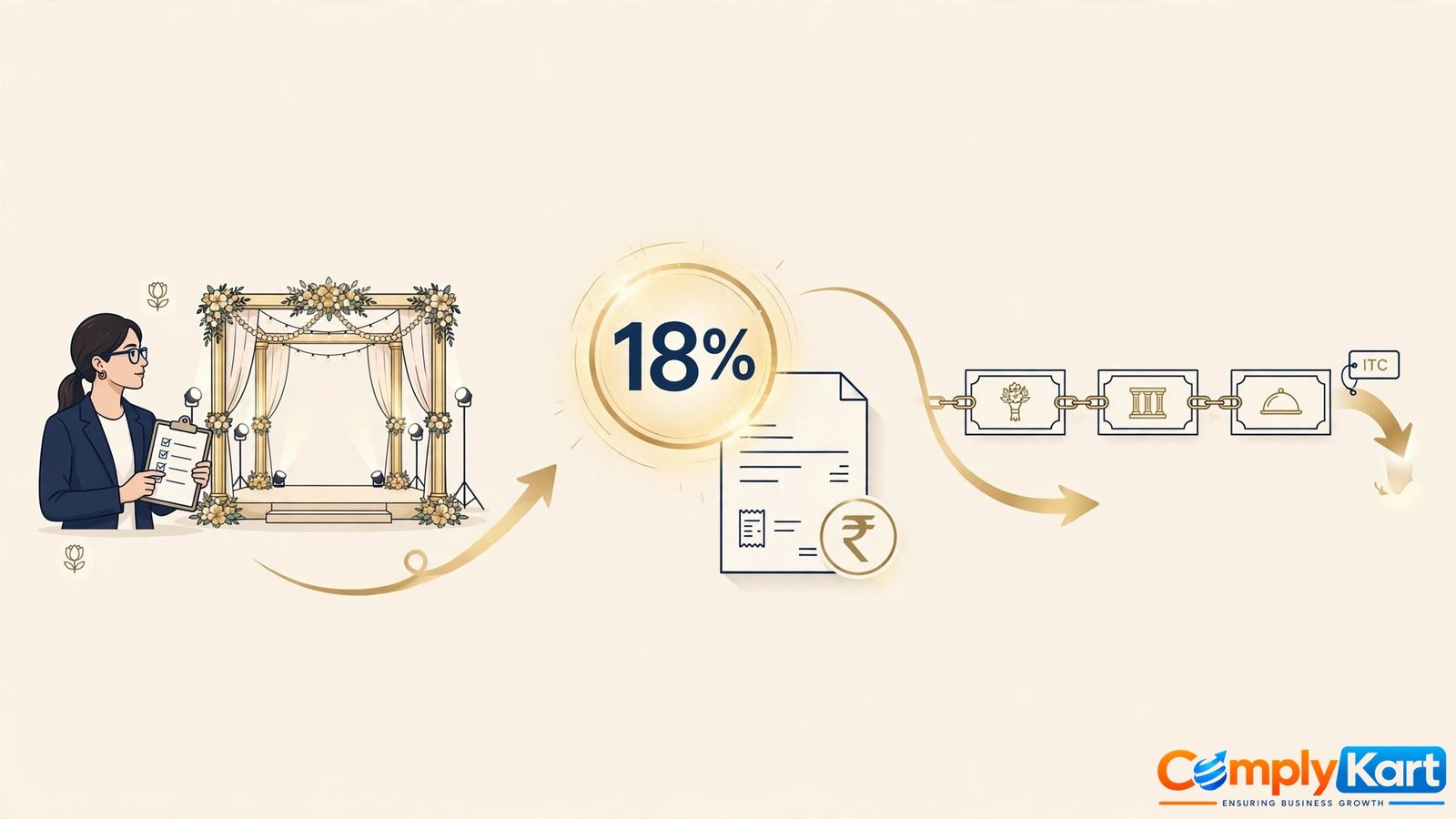
One last thing. The same principal-supply logic applies whenever a service business bundles goods into its price, as I covered in the GST guide for wedding planners. Know your principal supply, and the GST math gets much simpler.


Comments
No comments yet — ask the first question below.
Join the discussion
Questions go straight to our expert desk. Comments appear after a quick review — no spam, no noise.