
IN BRIEF
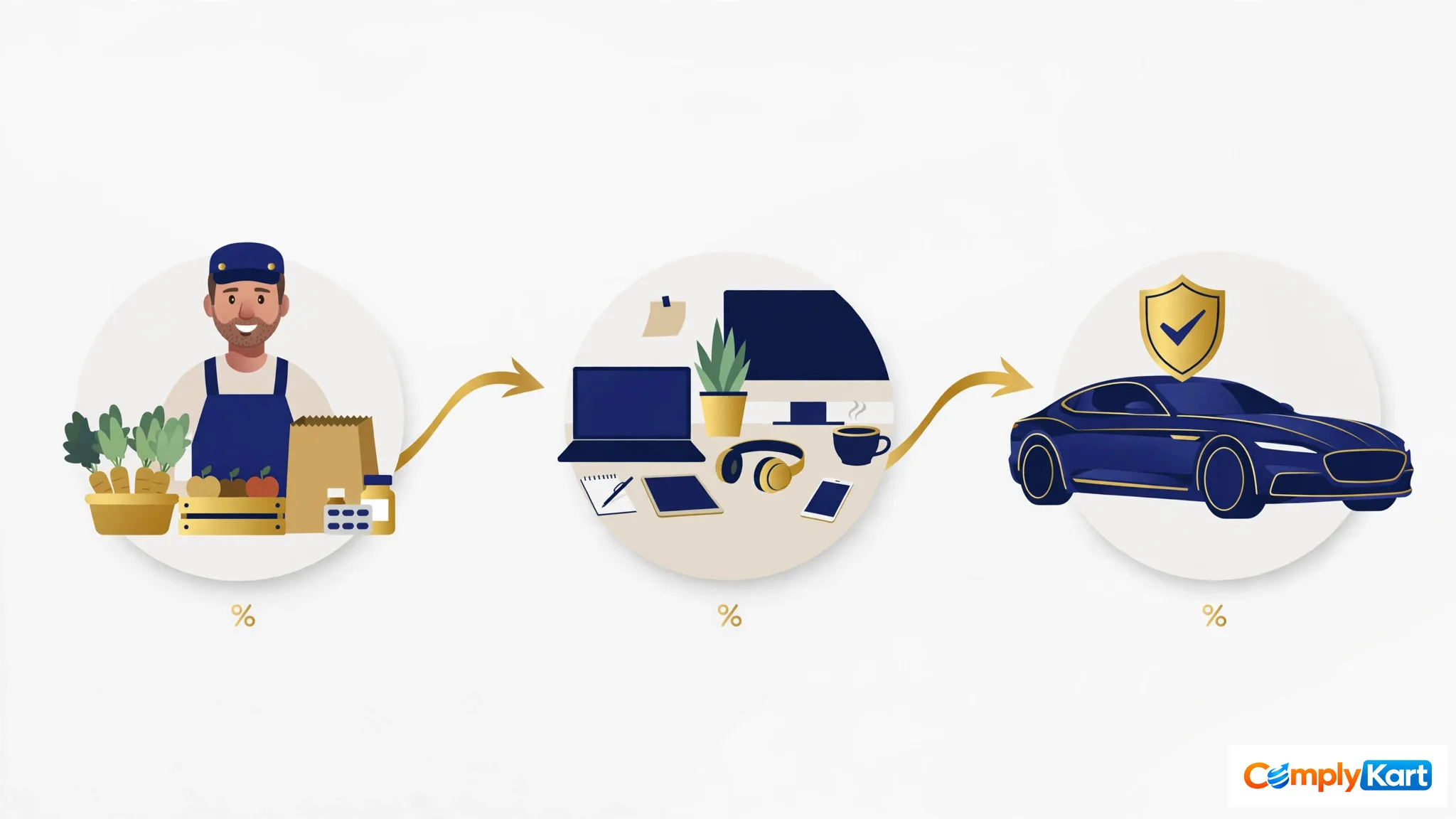
The GST rate list for 2026 has two main rates, 5% on essentials and mass-use items and 18% on most other goods and services, plus a 40% de-merit rate on tobacco, pan masala, sugary drinks and luxury goods, set by Notification 09/2025-Central Tax (Rate) from 22 September 2025, with special rates of 3% on gold and 0.25% on rough diamonds.
Short answer: since 22 September 2025, GST in India runs on two main rates — 5% for essentials and mass-use items, 18% for almost everything else — plus a 40% de-merit rate for tobacco, pan masala, sugary drinks and luxury goods. The 12% and 28% slabs are gone, compensation cess has ended, and a few special rates survive: 3% on gold and jewellery, 0.25% on rough diamonds. If your billing software still shows 12% or 28% on a live item, it is wrong today, not just untidy.
Where the new rates come from
The 56th GST Council's rate rationalisation took effect on 22 September 2025 through Notification No. 09/2025-Central Tax (Rate) dated 17 September 2025, which replaced the old Notification No. 1/2017-Central Tax (Rate) altogether. One set of goods was deliberately held back: pan masala, gutkha, cigarettes, chewing tobacco and unmanufactured tobacco kept the old rate plus cess while the compensation-cess loan was wound up. That second step landed on 1 February 2026, when Notification No. 19/2025-Central Tax (Rate) moved those products to 40% — bidis went the other way, down to 18% — and the compensation cess rates were set to nil. From that date, no goods in India carry compensation cess.
The 2026 rate list, band by band
Nil rate — taxed at zero, or exempt
Individual life insurance and health insurance premiums (18% earlier), UHT milk, pre-packaged paneer, and Indian breads such as chapati, roti and paratha. Thirty-three life-saving drugs also moved to nil. Nil is not the same as exempt in every corner of the law, but at the billing counter both mean no GST on the invoice.
5% — the merit rate
Most daily-use goods now sit here: hair oil, shampoo, toothpaste and toilet soap (down from 18%), butter, ghee, cheese, namkeen, pasta and most packaged foods (down from 12% or 18%), general medicines (down from 12%), tractors and farm machinery, and a long list of household items that earlier sat at 12%. Two service categories sit at 5% without input tax credit — hotel rooms up to ₹7,500 a day, and gyms, salons, barbers and yoga centres. That "without ITC" tag matters more than the rate itself, as the clean-up section below explains.
18% — the standard rate
The default for most goods and nearly all services: IT and professional services, telecom, restaurant services in most settings, cement (down from 28%), air conditioners, televisions and dishwashers (down from 28%), small cars — petrol up to 1200cc and diesel up to 1500cc within four metres — and motorcycles up to 350cc (both down from 28% plus cess). If you cannot find your item anywhere else in the notifications, it is almost certainly here.
40% — the de-merit rate
Pan masala, gutkha, cigarettes, cigars, chewing tobacco and unmanufactured tobacco (all from 1 February 2026), aerated and caffeinated drinks, cars above the small-car limits, motorcycles above 350cc, yachts and aircraft for personal use. One honest warning for tobacco sellers: 40% GST is not the whole burden — additional excise duty on tobacco and a capacity-based health cess on pan masala now run alongside GST under separate Central laws.
Special rates that did not change
Gold, silver and jewellery at 3% (1.5% CGST + 1.5% SGST), rough diamonds and precious stones at 0.25%, and cut and polished diamonds at 1.5%. Our gold jewellery rates guide covers the 3% metal / 5% making-charges split jewellers deal with daily.
A worked example: what actually changed on one invoice
Take a salon that billed ₹1,000 for a service in August 2025: GST at 18% added ₹180, and the salon claimed credit on the GST it paid for products, rent-linked services and equipment. The same service today bills ₹1,000 plus ₹50 at 5% — cheaper for the customer — but the salon can no longer claim input credit on its purchases. The GST it pays on stock and services quietly becomes a cost. The rate fell; the maths did not simply improve. This is the pattern to check in your own business: a lower rate with credit is nearly always good news; a lower rate without credit needs a pencil, not a celebration.
The transition ITC clean-up still pending in many books
Months after the change, we still open books where the September 2025 clean-up was half done. Four items, in the order they bite:
- Billing masters. Every SKU and service code needs its post-September rate. One forgotten 12% line in an ERP keeps producing wrong invoices, wrong GSTR-1 and an ASMT-10 notice six months later — our ASMT-10 reply guide shows where that road ends.
- Price lists and MRPs. Rate cuts must reach the customer. Where your rate fell from 28% to 18%, selling at the old gross price invites an anti-profiteering complaint; revise price lists, and issue supplementary invoices or credit notes for stock priced under the old structure.
- Blocked credit on 5%-without-ITC lines. If part of your turnover moved to the without-ITC category, credit on purchases used for that part must stop. Continuing to claim it is the single most common error we see in post-rationalisation audits.
- Inverted duty refunds. If your inputs sit at 18% and your output moved to 5%, credit accumulates. A refund under section 54(3) for inverted duty structure exists for exactly this case — but the accumulated credit does not convert itself into cash; someone has to file for it.
Think of it the way you would think of a shop renovation: the new signboard (rates) went up in a day, but the wiring inside (masters, prices, credit rules) is what takes a weekend to set right. Most businesses did the signboard. Fewer did the wiring.
How to confirm the exact rate for your product
Rates attach to HSN codes for goods and SAC codes for services, entry by entry, in Notification No. 09/2025-Central Tax (Rate) and its amendments — not to trade names. Search the notification by your HSN chapter first, then read the specific entry, because neighbouring entries often carry different rates. If two entries seem to fit, that ambiguity is worth professional time before it becomes department time. And if GST itself is new territory for your business, start at the beginning: our GST hub puts registration, returns and notices in one place, and the GST registration service is there when you want the number handled for you.
Questions we hear on rates
Is the 12% GST slab fully gone? Yes. No live entry charges 12% after 22 September 2025. An invoice showing 12% today is an error to correct, not a choice.
My supplier still charges me 28% on an item. What do I do? Ask for the HSN and the notification entry they are relying on. If the item moved to 18%, the invoice should follow; excess tax charged does not become valid input credit in your hands merely because you paid it.
Did compensation cess end on cars too? Yes — motor vehicles lost the cess on 22 September 2025 itself; small cars now carry a flat 18% and larger cars 40%.
Are restaurant services at 5% or 18%? Most restaurant services sit at 5% without ITC, with specified premium settings at 18%. The setting (inside a hotel, specified premises) decides, so check your exact case.
Where do I check a rate officially? In the rate notifications on the CBIC website, read with the HSN-wise entries — that notification, as amended, is the law. Guides like this one explain it; they do not replace it.



Comments
No comments yet — ask the first question below.
Join the discussion
Questions go straight to our expert desk. Comments appear after a quick review — no spam, no noise.