
IN BRIEF
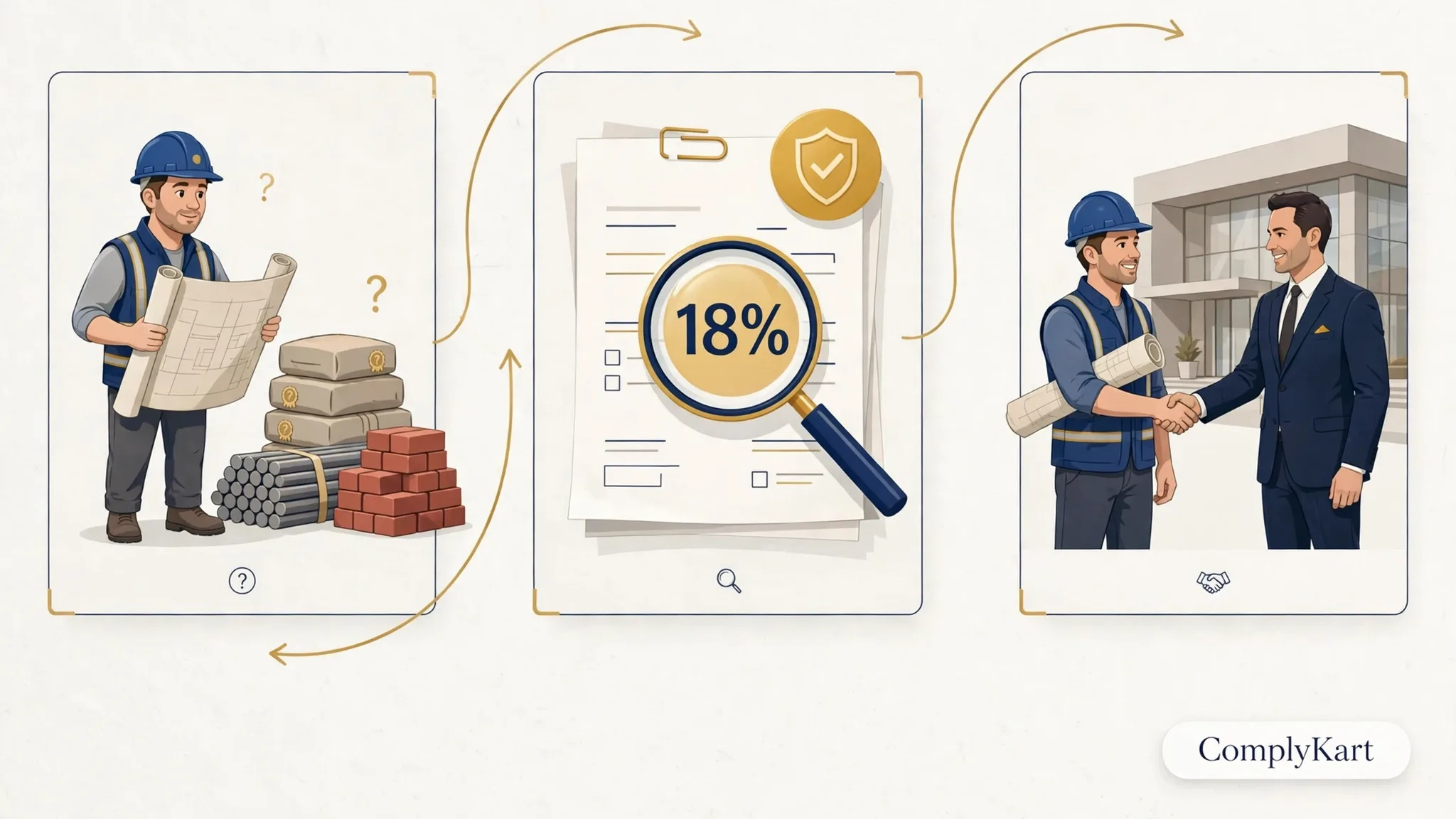
A works contract under GST is a contract to build, construct, repair or install something on immovable property where the contractor supplies both materials and labour, defined in section 2(119) of the CGST Act, 2017 and treated as a supply of services under Schedule II. Since 22 September 2025 every works contract attracts 18% GST, and input tax credit depends on whether the recipient itself supplies works contract services.
A works contract — building, repair or installation on immovable property where the contractor supplies the materials and the labour — is a supply of services under GST, and it attracts 18% GST. That has been true for most contracts since July 2022, and since 22 September 2025 it is true for all of them. The contractor charges the 18% and claims input tax credit on what went into the job. The client usually cannot claim any of it back. And the 1% and 5% rates you will see quoted in half the guides on the internet belong to a promoter selling flats — not to works contracts.
What counts as a works contract?
Section 2(119) of the CGST Act, 2017 defines a works contract as a contract for building, construction, fabrication, completion, erection, installation, fitting out, improvement, modification, repair, maintenance, renovation, alteration or commissioning of any immovable property, where transfer of property in goods is involved in the execution of the contract. Two things matter in that sentence. The property must be immovable — a building, a road, a structure fixed to the ground. And the contract must involve both goods and services: the contractor brings the materials and does the work.
A tailor explains it better than a statute. Give a tailor your own cloth and pay only for stitching, and you have bought a service. Ask the tailor to supply the cloth as well as stitch the suit, and the whole job is one bundled supply — you cannot split the bill into cloth and stitching to get a lower rate on the cloth. A works contract is the second tailor. The cement, the steel, the labour and the supervision are one supply, and Schedule II of the CGST Act treats that whole supply as a service. The rate is the service rate. The SAC code is 9954.
One boundary is worth knowing. A pure labour contract — you supply all the material, the contractor supplies only hands — is not a works contract under section 2(119), because no property in goods passes. It is still an ordinary construction service under the same heading 9954, and it is still taxed at 18%. The label changes; the rate does not. If your turnover crosses ₹20 lakh (₹10 lakh in special-category states), you need GST registration before any of this matters — an unregistered contractor cannot charge GST at all.
What is the GST rate on a works contract?
18%. Nine percent CGST plus nine percent SGST inside one state, or 18% IGST across states. That is the whole answer now — but it has not always been the whole answer, and the history is why so many invoices and guides are still wrong.
| Period | What applied | Why |
|---|---|---|
| Up to 17 July 2022 | Private works contracts 18%; many government works contracts 12% | Concessional entries for government, railways, metro and affordable-housing works in Notification 11/2017 |
| 18 July 2022 – 21 September 2025 | Most government works contracts moved to 18%; 12% survived only for three entries | Notification 3/2022 omitted the concessional entries; 12% remained for predominantly-earthwork government contracts, offshore oil and gas works, and their sub-contracts |
| From 22 September 2025 | Every works contract 18% | Notification 15/2025-Central Tax (Rate) moved the last three 12% entries to 18% under GST 2.0 |
If you are still raising invoices at 12% for government earthwork after 22 September 2025, you are under-charging GST. The shortfall is yours to pay, with interest, when it is caught — fix it with a debit note rather than waiting for a notice. The CBIC's own GST 2.0 FAQ confirms the offshore oil and gas works contracts moved to 18% on the same date, and the same notification swept up the earthwork entries.
Why do so many guides still show 5% or 12%?
Two confusions, and both are understandable. The first is staleness: pages written before September 2025 that nobody updated. The second is a genuine mix-up between two different supplies that happen on the same building.
| Works contract | Buying an under-construction flat | |
|---|---|---|
| Who charges | The contractor, to whoever hired them | The promoter/developer, to the flat buyer |
| Rate | 18%, with ITC for the contractor | 1% (affordable) or 5% (other residential), no ITC |
| The law | Section 2(119) + Schedule II para 6(a) | Schedule II para 5(b) — construction of a complex intended for sale |
| When it ends | When the work is done | When the completion certificate arrives — after that, no GST at all |
Same building, two supplies, two rates. A developer hires a contractor at 18% to build the tower, then sells the flats inside it at 1% or 5%. The 5% is the rate on the sale of the flat. It was never the rate on the contract that built it. Any guide that lists "5% for affordable housing" in a works-contract rate table has copied the wrong column. Our guide to GST rates for real estate developers covers the promoter side in full, including the 12% rate that still applies to commercial apartments in a non-residential project.
Who can claim input tax credit?
This is where the money actually sits, and it splits cleanly by who you are — not by what was built.
| Who you are | Can you claim ITC on the works contract? | Why |
|---|---|---|
| A contractor executing works contracts | Yes — on materials, equipment hire and sub-contractor bills | Section 17(5)(c) expressly does not apply to a person in the business of supplying works contract services |
| A sub-contractor | Yes — on your own inputs, against the GST you charge the main contractor | Same exception; each link in the chain claims its own credit |
| A factory or business owner building for your own use | No | Section 17(5)(c) blocks ITC on works contract services for construction of immovable property; section 17(5)(d) blocks the goods and services used for it |
| A developer selling flats at 1% or 5% | No | The scheme itself denies ITC — the low rate is the trade-off |
| A developer on the old 12% scheme (ongoing projects) | Yes, with conditions | The old scheme kept ITC; it survives only for projects that opted in by 20 May 2019 |
| Anyone building plant and machinery | Yes | The section 17(5)(c) block expressly excludes plant and machinery — a furnace or a process tank is not a building |
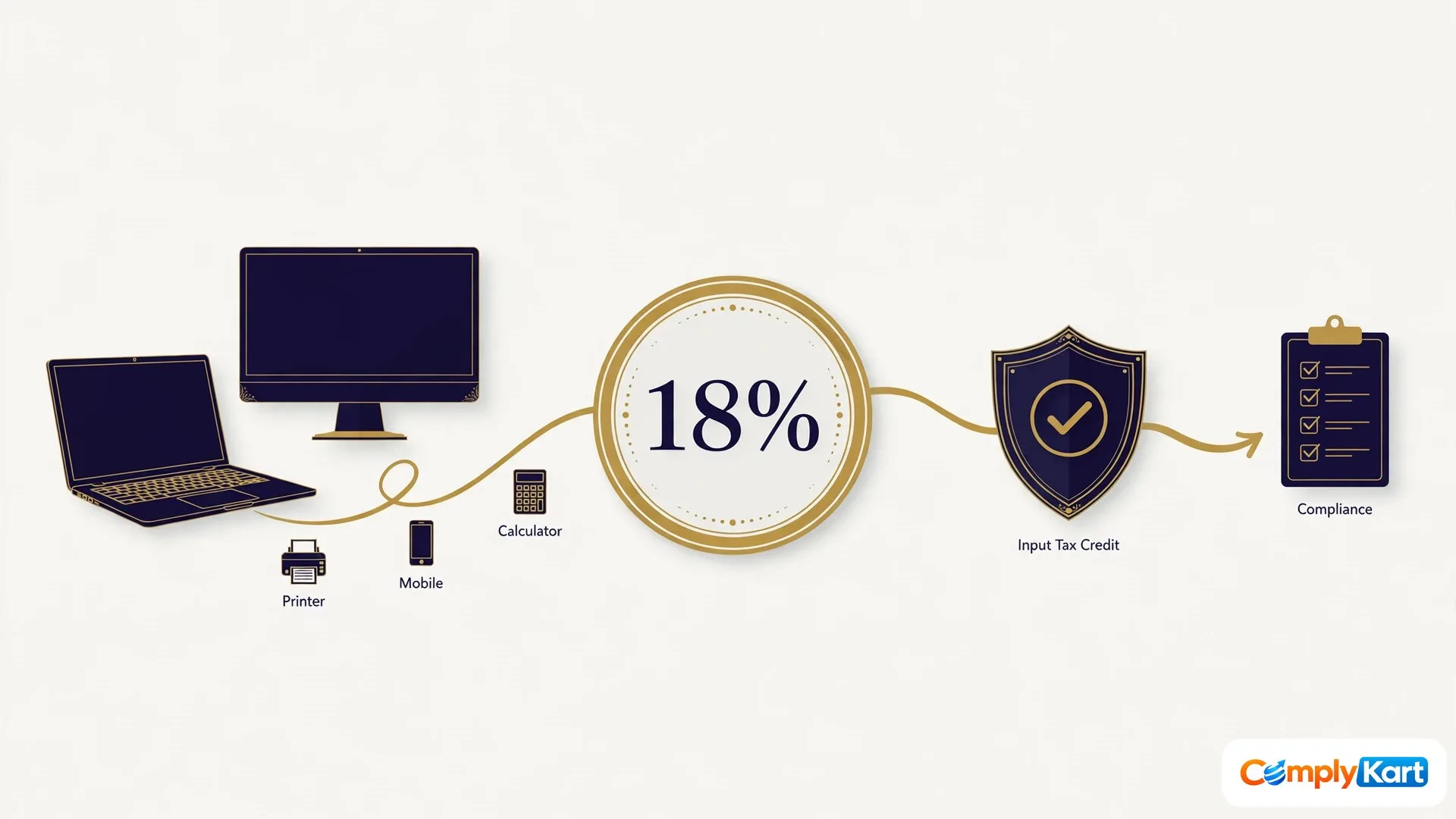
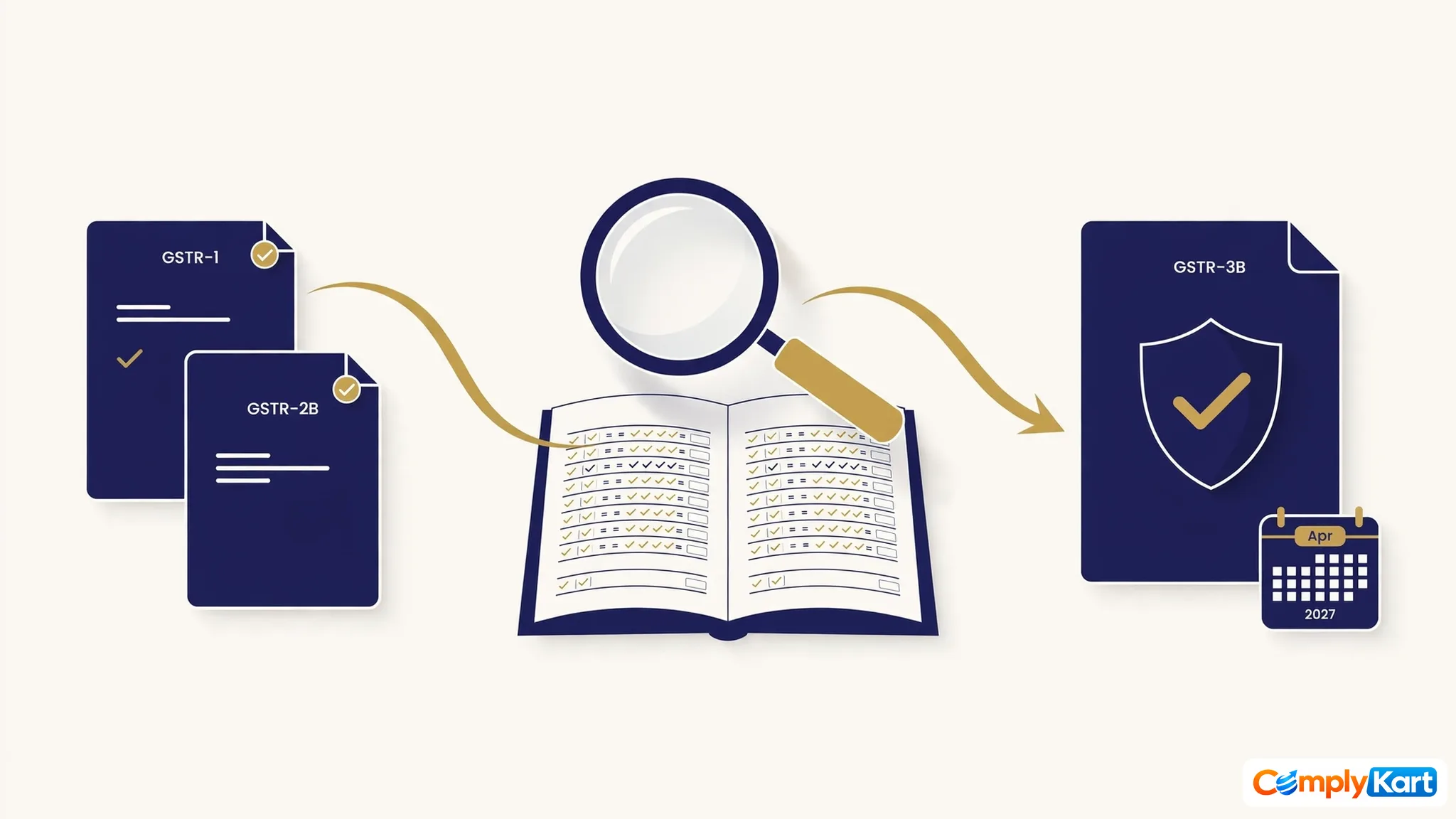
The mistake I see most often is a business owner assuming the block applies to everyone on the project. It does not. It applies to the end user. The contractor's cement, steel and sub-contractor invoices are all creditable — provided they arrive on a valid tax invoice and show up in GSTR-2B. A contractor who never claims that credit is paying 18% on the full contract value out of his own margin, and on a big job that is the difference between profit and loss.
A ₹1 crore contract, worked both ways
Take a civil contract worth ₹1 crore, before tax. The contractor charges 18% — ₹18 lakh — on top, so the client pays ₹1.18 crore. Now the two sides of the same invoice:
The contractor. He bought materials worth ₹40 lakh (GST ₹7.2 lakh) and hired a sub-contractor for ₹20 lakh (GST ₹3.6 lakh). His total input tax credit is ₹10.8 lakh. He pays the government ₹18 lakh minus ₹10.8 lakh — ₹7.2 lakh in cash. The credit is the whole point of being in the chain.
The client — a factory owner building a warehouse for his own use. He pays the same ₹18 lakh. He claims nothing. Section 17(5)(c) blocks it, and the ₹18 lakh becomes part of the cost of his warehouse. If he had been a contractor himself, building the same warehouse for a client, the ₹18 lakh would have been creditable. Same bricks, same invoice, opposite answer — because the law asks what you do with the building, not what it is made of.
When does reverse charge apply?
Mostly, it does not. There is no reverse-charge entry covering works contract services, so the supplier charges GST and the recipient pays the invoice — forward charge, like any other service. A guide that tells you reverse charge applies whenever your contractor is unregistered is wrong. An unregistered sub-contractor simply charges no GST, which means you get no credit on that bill. The tax risk of being unregistered sits with them, not with you — though your costing takes the hit.
There is one real exception, and it bites developers. Under Notification 7/2019, a real-estate promoter is a notified person for section 9(4) reverse charge in three ways. Cement bought from an unregistered supplier attracts reverse charge in the very month it is received, with no threshold. Capital goods bought from an unregistered supplier attract reverse charge in full. And for everything else — sand, steel, paint, architect services — the promoter must buy at least 80% of the year's inputs from registered suppliers. Fall short, and reverse charge at 18% applies on the shortfall, worked out at the end of the financial year and payable by the June following it.
Run the numbers once and the rule sticks. A promoter buys ₹2 crore of inputs in the year, of which ₹1.3 crore — 65% — comes from registered suppliers. The shortfall below 80% is 15% of ₹2 crore, which is ₹30 lakh. Reverse charge at 18% on ₹30 lakh is ₹5.4 lakh, payable with the June return. That is on top of the compulsory reverse charge on any cement bought unregistered during the year. Track procurement project-wise, or the June surprise does the tracking for you.
Which state's GST applies?
For services directly connected with immovable property, section 12(3) of the IGST Act puts the place of supply where the property sits — not where you are registered, and not where your client sits. A contractor registered in Telangana who builds in Maharashtra makes an inter-state supply and charges 18% IGST, not CGST plus SGST. Charge CGST and SGST on that invoice and the mismatch will draw a notice. The same rule means a contractor working across states needs to think about registration in each project state — our guide to multistate GST registration walks through the master-TRN route that now covers it.
How and when do you invoice?
Works contracts are usually continuous supplies — money arrives in tranches tied to milestones. Section 31(5) says the invoice must go out on or before the payment due date in the contract, or when the milestone is completed. Waiting for the bill to be certified before invoicing pushes tax into the wrong month, and interest follows. Each invoice should carry both GSTINs, the contract reference, the taxable value, the 18% split, and the SAC code 9954.
Two more things attach to the same invoice. On government contracts, the department deducts 2% GST TDS under section 51 where the contract value exceeds ₹2.5 lakh — that is tax already paid on your behalf, and it shows up in your electronic cash ledger. And the filings never stop: GSTR-1 and GSTR-3B every month, or quarterly under QRMP for smaller contractors. If you are a small contractor with turnover up to ₹50 lakh in the preceding year, section 10(2A) lets you pay 6% flat with no input tax credit and no inter-state supplies — worth doing only if your customers cannot use the credit anyway, because giving up ITC on materials usually costs more than the flat rate saves. The monthly GST return filing is where all of this lands, and our compliance fee calculator will tell you what the filings cost before you commit to a structure.
Six mistakes that cost real money
- Still invoicing 12% on government earthwork after 22 September 2025 — the entry moved to 18%, and the shortfall carries interest.
- Quoting 5% for a works contract because the flats in the building sell at 5% — two supplies, two rates.
- Claiming input tax credit as an owner building for your own use — section 17(5) blocks it, and a wrongful claim is a demand with interest.
- Treating an unregistered sub-contractor's bill as reverse charge — it is not; there is simply no GST and no credit on it.
- Charging CGST plus SGST on a site in another state — the place of supply is the property, so it is IGST.
- Waiting for bill certification before invoicing — the section 31(5) clock runs on milestones, not on approvals.
Questions people actually ask
Is GST on a works contract 12% or 18%?
18%. The last 12% works-contract entries — predominantly-earthwork government contracts, offshore oil and gas works, and their sub-contracts — moved to 18% on 22 September 2025 under Notification 15/2025. Any guide still showing 12% is out of date.
Can a factory owner claim ITC on construction of his factory?
No. Section 17(5)(c) blocks input tax credit on works contract services used to construct immovable property for your own use, and section 17(5)(d) blocks the goods and services that go into it. The GST on the contractor's bill becomes part of the building's cost. The exception is plant and machinery, which the block expressly leaves out.
My contractor is unregistered — do I pay GST under reverse charge?
Not on a works contract. There is no general reverse-charge entry for works contract services, so an unregistered contractor charges no GST and you claim no credit. The exception is a real-estate promoter under Notification 7/2019: cement and capital goods from unregistered suppliers attract reverse charge, and other inputs attract 18% reverse charge on the shortfall below 80% registered procurement.
I am buying a flat under construction — is that a works contract at 18%?
No. Buying a flat is a different supply: the promoter charges 1% for an affordable flat or 5% for any other residential flat, with no input tax credit. The 18% works contract is what the promoter pays the contractor who builds the tower. The two rates live on the same building and never meet.
Can a small contractor use the composition scheme?
Yes, under section 10(2A): 6% flat with no input tax credit, if your turnover in the preceding year was up to ₹50 lakh and you make no inter-state supplies. The regular composition scheme does not cover works contracts. Do the maths first — for most contractors, the input tax credit given up is worth more than the flat rate saves.
The rate question on works contracts finally has a one-word answer, and that is new. For years the answer was a table with footnotes. Now it is 18% — the work is in knowing who claims the credit, who pays reverse charge, and which state gets the tax. Get those three right and the invoice writes itself. If you are taking on your first contract and need the registration, the returns and the invoicing set up cleanly from day one, our GST registration service handles it end to end.


Comments
No comments yet — ask the first question below.
Join the discussion
Questions go straight to our expert desk. Comments appear after a quick review — no spam, no noise.