
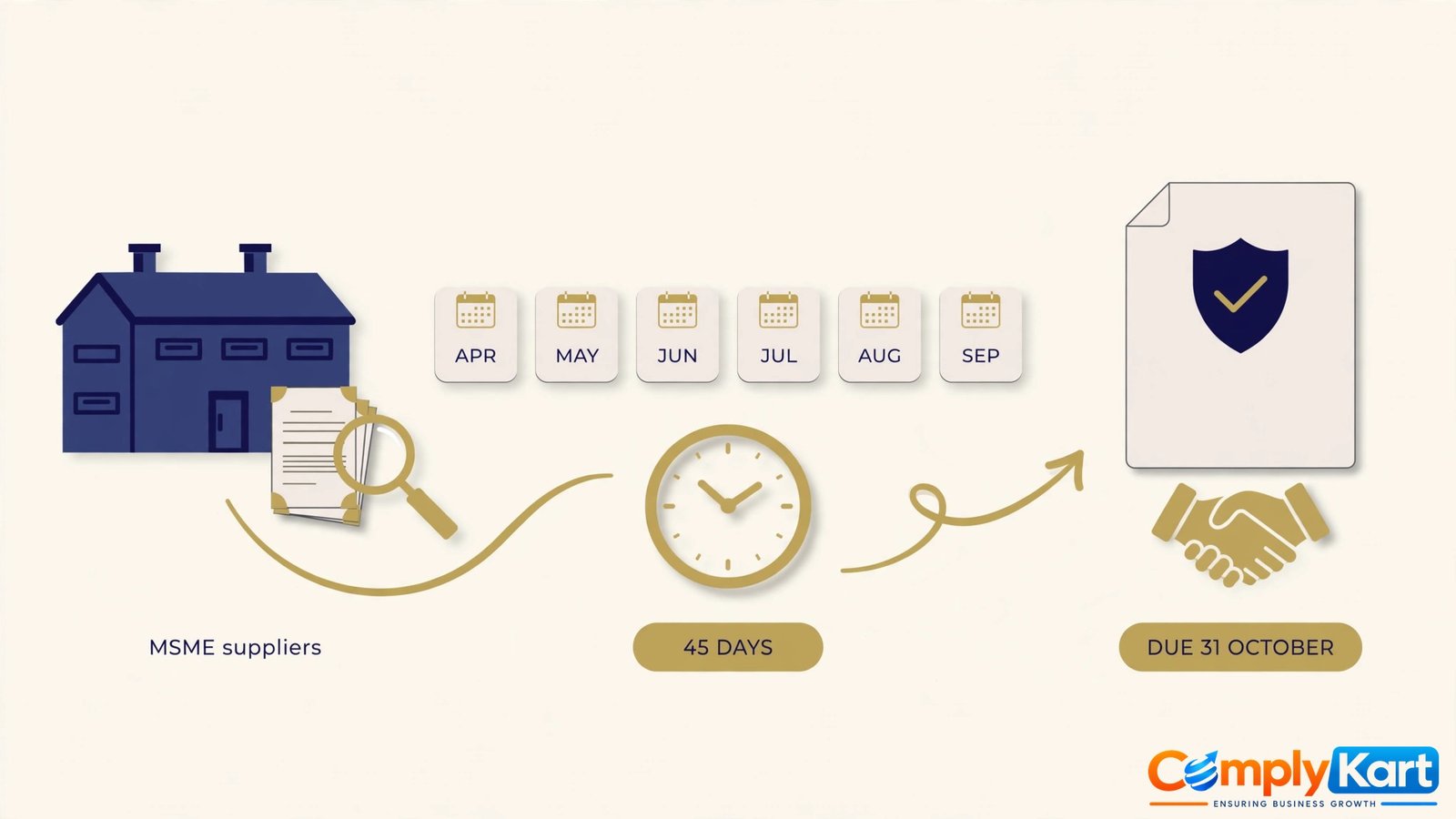
Eleven days. That's what's left before the half-yearly MSME Form 1 return falls due on 31 October 2026 — covering every rupee your company still owes micro and small suppliers from April to September. Most finance teams have never heard of this form. The ones who have usually discover it the week it's due.
The short answer: Specified companies must file Form MSME-1 twice a year under Section 405 of the Companies Act, 2013 — by 31 October for the April–September half and 30 April for the October–March half. It reports amounts outstanding to micro and small enterprise suppliers beyond 45 days, with the reasons for delay.
Who actually has to file?
The trigger is specific, and most companies misread it. You file if your company received goods or services from micro or small enterprise suppliers and the payment has been outstanding for more than 45 days from the date of acceptance (or deemed acceptance). Both conditions. A company with 200 MSME suppliers and zero overdue payments files nothing, though documenting why the trigger is absent is good practice. A company with one MSME supplier and one overdue invoice files.
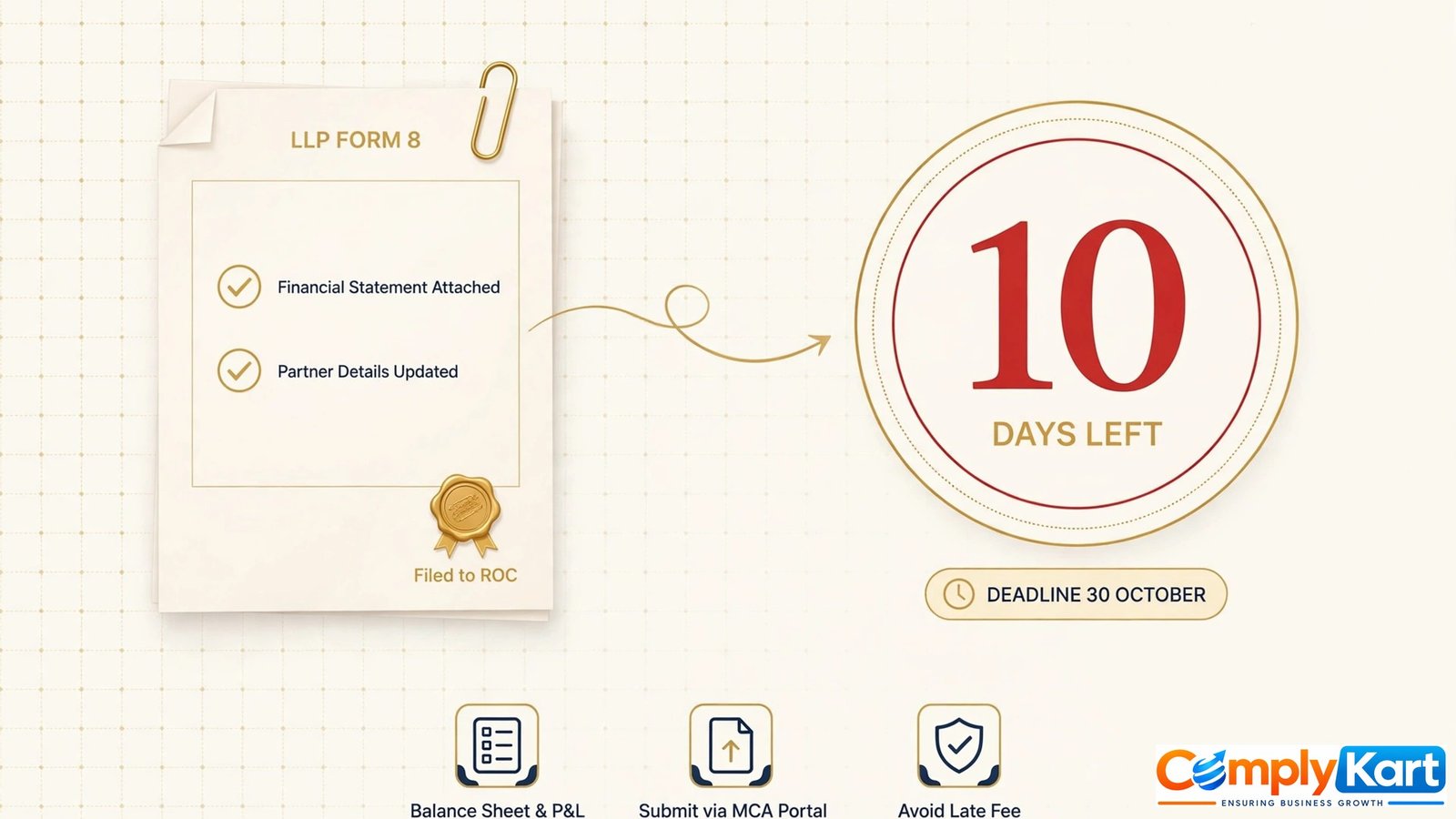
Three boundaries people get wrong: First, it covers micro and small enterprises only — medium enterprises are outside this form. Second, LLPs, partnerships and proprietorships don't file this MCA form; it's a company filing (LLPs run on their own Form 8 and Form 11 calendar instead — see our LLP guide). Third, you don't file a nil return — no qualifying overdue balance, no filing for that half.
What goes into the return?
Two things per overdue supplier: the amount outstanding and the reasons for the delay. That's the whole form. Preparation is an invoice-level ageing report, not a glance at the vendor master. Pull every invoice from micro and small suppliers, age each from its acceptance date, flag everything past 45 days still unpaid at 30 September.
One change that caught companies out: since the July 2024 MCA update, even payments that were delayed but settled before the half-year end must now be reported. Paid late in August? It's still reportable for the April–September half. The old habit of "we cleared it before the return, so it doesn't count" no longer works.
Why does MSME Form 1 affect your income tax?
Here's why this form deserves more than a compliance shrug. Under Section 43B(h) of the Income-tax Act, payments to micro and small enterprises that cross the 45-day window cannot be claimed as a deduction until they're actually paid — the expense gets pushed out of this year's tax computation into a later one. The MSME-1 return and the tax disallowance sit on the same set of unpaid invoices. Most finance teams look at one of them.
So the same overdue invoice costs you twice: once in the MCA disclosure, once in higher taxable income. Clearing MSME dues before year-end isn't generosity — it's tax arithmetic.
How do you know a supplier is micro or small?
Check Udyam registration — it's the official marker. And note the definitions changed from 1 April 2025: micro now means investment up to ₹2.5 crore and turnover up to ₹10 crore; small means investment up to ₹25 crore and turnover up to ₹100 crore. A supplier who was "medium" last year may be "small" this year, which pulls them into your MSME-1 population. Re-run the classification; don't rely on last year's vendor master.
What does non-filing cost?
The form itself carries the standard MCA additional-fee framework for delayed filing, but the sharper edge is reputational and regulatory: the return exists so the Registrar can see which companies aren't paying small suppliers on time, and persistent defaulters have faced action including prosecution exposure for directors. The system was built to act on this disclosure. Treat it accordingly.
The 43B(h) playbook: turning compliance into tax saving
Since the same overdue invoices drive both the MSME-1 disclosure and the Section 43B(h) disallowance, the smartest move is to treat the next eleven days as a payment sprint, not just a filing exercise. Every MSME invoice you actually pay before year-end restores its deduction to this year's computation. The return then reports a smaller overdue balance — or none at all — and your taxable income drops by the same stroke.
Clear the oldest invoices first — they're the closest to drawing scrutiny — then the largest. And fix the process that created the backlog — most chronic MSME delays come from a purchase-order-to-payment cycle with no 45-day checkpoint. Add one — a weekly ageing review with payment authority attached. The companies that never file MSME-1 aren't lucky. They just pay on time.
This week's action plan
One: run the invoice-level ageing report for micro and small suppliers as of 30 September. Two: for every invoice past 45 days, decide — pay it now (which also restores the 43B(h) deduction) or document the reason for delay. Three: file Form MSME-1 on the MCA V3 portal by 31 October with amounts and reasons.
MSME Form 1: quick answers
What happens if I miss the 31 October MSME Form 1 deadline?
Delayed filing attracts the MCA's additional-fee framework, but the sharper cost is regulatory: the return exists so the Registrar can see which companies aren't paying small suppliers on time, and persistent defaulters have faced action including prosecution exposure for directors. The system was built to act on this disclosure.
Do I file a nil MSME Form 1 if nothing is overdue?
No. Unlike most MCA filings, there's no nil return here — no qualifying overdue balance past 45 days, no filing for that half. But document why the trigger is absent; "we had nothing overdue" should be a conclusion from an ageing report, not an assumption.
Do medium enterprises count for MSME Form 1?
No — only micro and small enterprises. Note the definitions changed from 1 April 2025 (micro: investment up to ₹2.5 crore, turnover up to ₹10 crore; small: investment up to ₹25 crore, turnover up to ₹100 crore), so a supplier who was "medium" last year may be "small" this year. Re-run the classification against Udyam registration.
How does the 45-day rule affect my income tax?
Under Section 43B(h), payments to micro and small enterprises outstanding beyond 45 days can't be claimed as a deduction until actually paid — the expense is pushed into a later year's computation. The same unpaid invoices drive both the MSME-1 disclosure and the tax disallowance, so clearing dues before year-end fixes both at once. Want the full year's filing costs in one number? Our compliance fee calculator estimates them in under a minute.
Eleven days, one ageing report, one filing. If your vendor ledger has never been aged against the 45-day rule, start this week — the first review always finds something.



Comments
No comments yet — ask the first question below.
Join the discussion
Questions go straight to our expert desk. Comments appear after a quick review — no spam, no noise.