
IN BRIEF
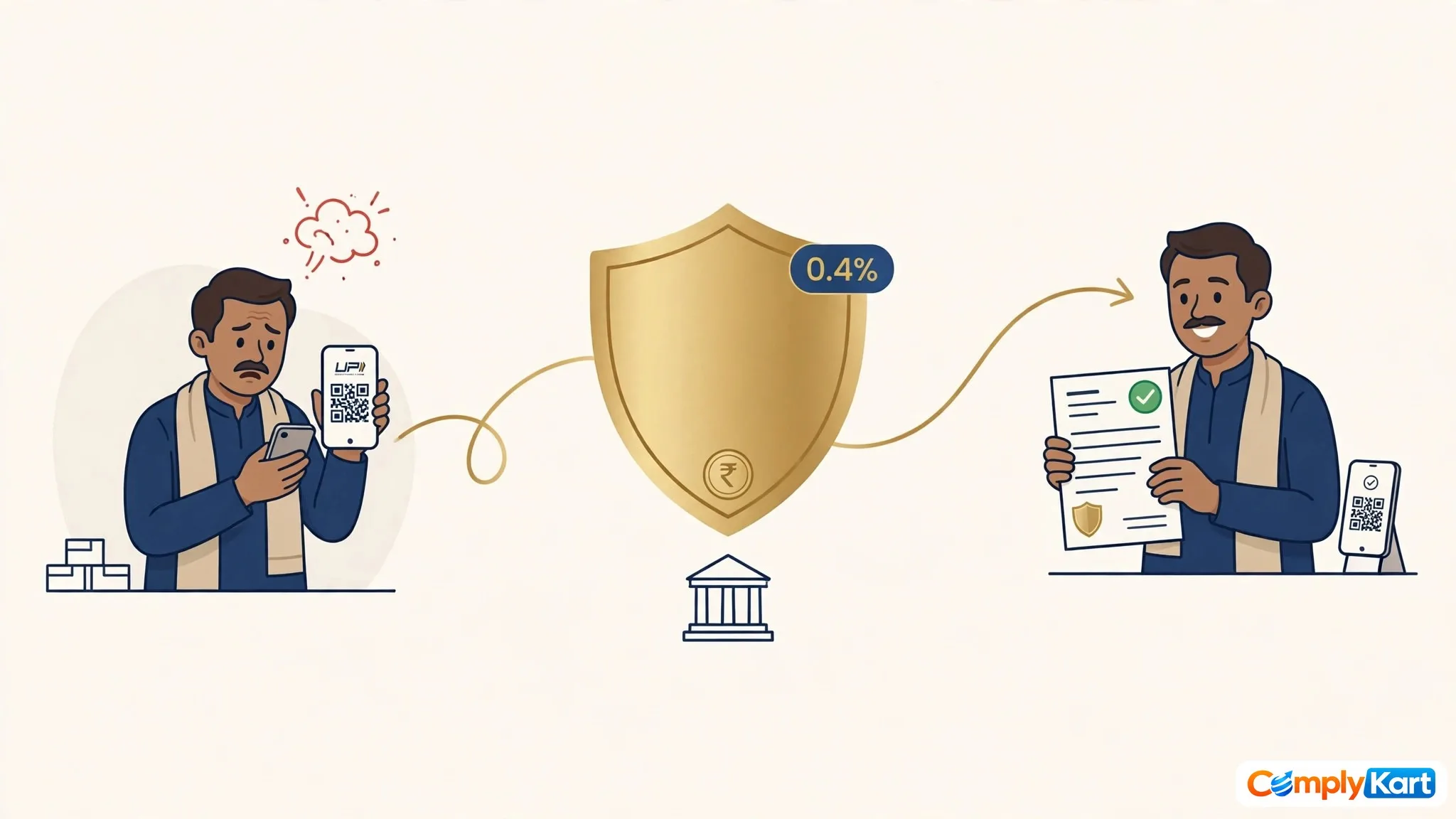
GST on UPI payments is not a tax on the money you send or receive through UPI. UPI only moves money, and money is neither a good nor a service under the CGST Act, so the payment itself attracts no GST. Only the Merchant Discount Rate — a bank's fee on a merchant's UPI payment above ₹2,000 — attracts 18% GST, and only on that fee.
If you take UPI payments in your shop, someone has forwarded you the message by now. "GST on UPI above ₹2,000 from October." "UPI will no longer be free." "The government is taxing every QR payment." Half of it is wrong. The other half is real — but it is not what the forwards say it is.
Here is the straight answer, in under a minute. There is no GST on a UPI payment, at any value. UPI only moves money, and money is neither a good nor a service under the CGST Act, so the payment can't be taxed. GST at 18% applies only to the Merchant Discount Rate — the fee a bank charges a merchant — and only on that fee, never on the payment. And as of 12 November 2026, that fee hasn't even started yet.
I write this for the shopkeeper staring at a QR code stand and wondering whether to keep it there. Keep it. The rest of this piece is the detail behind that sentence, the exact rupees involved, and the short list of things worth doing before the fee arrives.
The rumour, and why it keeps coming back
This scare has done the rounds before. In April 2025, social media lit up with claims that the government was about to levy GST on UPI transactions above ₹2,000. The Finance Ministry answered on 18 April 2025, in words that left no room for doubt: the claims were "completely false, misleading, and without any basis" and "currently, there is no such proposal before the Government."
The Ministry's reasoning was simple, and it still holds. GST is levied on charges, such as the Merchant Discount Rate, that attach to certain payment instruments. Since January 2020, the CBDT has charged no MDR on person-to-merchant UPI transactions — the Gazette notification of 30 December 2019 removed it. No MDR meant no charge to tax. No charge meant no GST. That was the whole story in April 2025.
So why did the rumour return, louder, in September 2026? Because this time something real happened underneath it. The government changed the rule that had kept UPI free. The rumour got the direction right and the detail wrong — the most dangerous kind of half-truth, because it spreads fastest among the people it frightens most.
What actually changed in September 2026
Think of UPI as a courier van, not the parcel inside it. For six years the van ran free for merchants. In September 2026, the people who run the van said the ride would no longer be free for the biggest parcels. GST taxes the courier's fee. It never taxes the parcel's value. Hold that picture and the rest falls into place.
The legal groundwork came first. In August 2026, Parliament passed the Taxation and Other Laws (Amendment) Bill, 2026, amending Section 10A of the Payment and Settlement Systems Act, 2007 — the provision that had barred any charge on RuPay debit and BHIM-UPI merchant payments since 1 January 2020. The blanket ban went. In its place, the government can now notify which payment modes stay free. On 14 September 2026, Gazette notification S.O. 5067(E) drew the line: UPI and RuPay transactions up to ₹2,000 stay protected. Charging on them, directly or indirectly, is barred.
Then, on 15 September 2026, NPCI — the body that runs UPI — issued circular OC-No.237/2026-27 with the new framework:
- 0.4% MDR on specified person-to-merchant UPI payments above ₹2,000, capped at ₹300 per transaction. The cap bites at ₹75,000 — above that, the fee stays ₹300 however large the payment.
- Flat ₹5 per transaction above ₹2,000 for railways, telecom, insurance, fuel and agricultural inputs.
- 0.02% for capital-market transactions such as mutual funds and securities.
- Nothing on person-to-person transfers, at any value. Nothing on merchant payments of ₹2,000 or less. Nothing for small merchants in the P2PM band — more on them below.
The framework was to take effect on 15 October 2026. The Finance Ministry published FAQs the same week: consumers pay nothing, merchants cannot pass the fee to customers, and UPI apps cannot add a platform fee to UPI payments. Around 96% of person-to-merchant UPI transactions are ₹2,000 or less, so roughly 96% of merchant payments would never see the fee at all.
| Date | What happened |
|---|---|
| 1 January 2020 | MDR on UPI merchant payments removed; UPI free for merchants |
| 18 April 2025 | Finance Ministry calls "GST on UPI above ₹2,000" claims completely false |
| August 2026 | Section 10A amended — the blanket ban on UPI charges goes |
| 14 September 2026 | Gazette S.O. 5067(E) protects UPI payments up to ₹2,000 |
| 15 September 2026 | NPCI circular OC-No.237/2026-27 sets the 0.4% MDR framework |
| 13 October 2026 | NPCI defers the start to immediately after Diwali, date to be notified |
| 8 November 2026 | Diwali — still no start date announced |
| 11 November 2026 | NPCI confirms to The Hindu: no announcement on a date yet |
Where things stand today — 12 November 2026
Here is the part most explainers get wrong, because they were written in September and never updated. The fee has not started.
On 13 October 2026, NPCI's UPI and Services Steering Committee decided the charge would be "implemented immediately post Diwali at a date to be notified separately". Diwali fell on 8 November 2026. Two days later, The Hindu reported that NPCI had still not announced a date — "there is no announcement on this at the moment", an NPCI spokesperson said. As I write this on 12 November 2026, nothing has changed since: no notification, no date, no charge.
That means two dates doing the rounds are not dates at all. 15 October 2026 was the original start — it is gone. 1 January 2027 appears in some reports as a possible date — NPCI has never confirmed it. Treat any specific date you see in a forward or a video as speculation until NPCI itself notifies one. The charge is deferred, not withdrawn, and the framework behind it is real. But deferred means deferred: your settlements today carry no MDR and no GST on MDR.
The courts are watching too. Advocate Anjan Datta filed a public interest petition challenging the framework. On 28 September 2026 the Supreme Court refused to stay the decision, and on 3 November 2026 NPCI filed its counter-affidavit, arguing the charge touches only about 4% of person-to-merchant transactions and that fears of the fee being passed to customers have no foundation. The case continues. It does not change what you pay today — which is nothing.
The GST bit, precisely
When the MDR does start, here is the tax treatment. GST at 18% applies to the MDR — the bank's fee — because that fee is the bank's taxable supply of a service. It never applies to the payment value. The distinction is the whole story, so here it is in rupees.
| UPI payment | MDR (0.4%) | GST at 18% on the MDR | Total cost to the merchant |
|---|---|---|---|
| ₹2,000 | ₹0 — at or below the threshold | ₹0 | ₹0 |
| ₹10,000 | ₹40 | ₹7.20 | ₹47.20 |
| ₹25,000 | ₹100 | ₹18 | ₹118 |
| ₹1,00,000 | ₹300 — capped | ₹54 | ₹354 |
Read the ₹10,000 row again, because it is the number the forwards never show. A ₹10,000 sale through UPI costs the merchant ₹47.20 once the framework is live — four rupees in ten thousand on the fee, plus ₹7.20 of GST on that fee. On a ₹1,00,000 payment the cap holds the fee at ₹300, so the GST is ₹54 and the total is ₹354. Small money against the sale. The pain, where it exists, is for merchants who take many large UPI payments every day and never claim the GST back — which brings us to input tax credit.
One honest caveat. There is no standalone GST Council notification on the MDR's GST treatment yet. The 18% position rests on the Finance Ministry's and CBIC's statements of September 2026 and on the settled rule that a bank's processing fee is a taxable service. The 57th GST Council, which met on 8 October 2026, did not discuss MDR at all. If a notification lands, the treatment will be confirmed in writing — until then, this is the position the authorities themselves have stated. And if the arithmetic still feels abstract, run your own numbers through a GST calculator before you quote a figure to anyone.
Who pays nothing
Most readers of this piece will pay nothing, even after the framework starts. Check which of these you are.
- Customers — everyone. You pay nothing for sending money on UPI, at any value, now or after the framework starts. Person-to-person transfers stay free at any amount.
- Any merchant, on payments up to ₹2,000. A payment of exactly ₹2,000 is free. The fee applies only above it.
- Small merchants in the P2PM band. If you receive up to ₹1 lakh a month through a UPI QR code, you stay at zero MDR whatever the ticket size. You don't need GST registration to qualify for that protection — the band is about your monthly QR receipts, not your registration status.
- Fuel, railway, telecom, insurance and farm-input payments carry only the flat ₹5 fee above ₹2,000, not 0.4%.
Put together, NPCI's own figures say about 96% of merchant UPI payments sit at or below ₹2,000. The fee is aimed at the thin slice above that line — large-ticket merchants, not the kirana store.
Input tax credit — who gets the GST back
The 18% GST on the MDR is not the same cost for every merchant. It depends on your registration.
- GST-registered merchants can claim the GST paid on MDR as input tax credit, subject to the usual conditions — the charge must appear in your GSTR-2B, which is why your GSTIN needs to be with your bank or payment aggregator. For a registered merchant, the real cost of the framework is close to the 0.4% fee alone; the GST flows back through credit.
- Composition taxpayers cannot claim input tax credit. The GST on MDR becomes a real cost for them.
- Unregistered merchants cannot claim it either. If your turnover is below the registration threshold and you stay unregistered, the ₹7.20 on a ₹10,000 payment is money you don't get back.
That split is the quiet trap in this framework. The headlines argue about 0.4%. The real question for a small merchant is whether the GST on the fee is recoverable — and that turns entirely on registration. If you are registered, make sure your GSTIN is recorded with the bank that settles your UPI payments, and check your GST returns show the MDR credit in GSTR-2B once the fee starts. If you are unregistered and taking large UPI payments regularly, the maths may quietly favour registering — but that is a decision to take with your own figures in front of you, not from a forwarded message.
Two things the rumour mill gets wrong about merchants
First, the idea that "accepting UPI means GST registration". It doesn't — not by itself. GST registration turns on your aggregate turnover: ₹40 lakh a year for goods, ₹20 lakh for services. What counts is the value of the supplies you make, not how the customer pays for them. A ₹5,000 sale is a ₹5,000 sale whether the customer pays by UPI, cash or card. So UPI receipts do count toward your turnover — they are sales, after all — but the payment mode adds nothing and triggers nothing on its own. If your turnover crosses the threshold, registration is due whether you take UPI or not. If it doesn't, taking UPI doesn't push you over it. The GST registration rules and the fees involved are worth reading before anyone tells you otherwise.
Second, the idea that UPI is somehow invisible to the tax department. It isn't, and it never was. Your UPI receipts land in your bank account, and bank credits show up in your Annual Information Statement. A merchant whose UPI receipts run far ahead of the sales declared in their returns is exactly the mismatch the department's systems are built to spot. The risk was never a "GST on UPI". The risk is, and always was, declaring less than you receive. Keep your books honest and the payment mode stops mattering.
There is also a separate income-tax rule worth knowing if you are a large business. Section 269SU of the Income-tax Act requires every business whose turnover exceeded ₹50 crore in the preceding year to offer prescribed electronic payment modes — RuPay debit card, UPI and UPI QR code under Rule 119AA. Fail to offer them and Section 271DB levies a penalty of ₹5,000 for every day the failure continues. That rule has nothing to do with GST on UPI, and it applies to big businesses, not small shops — but it is the reason every large store you walk into already takes UPI.
What to do now
Nothing is being charged today. Use the quiet weeks well. Five things, in order.
- Don't surcharge your customers. Merchants are barred from passing the MDR to customers, and UPI apps cannot add a platform fee to UPI payments. A "UPI charge" added to a bill is not a fee recovery — it is a violation, and NPCI has told the Supreme Court it is enforceable through contract, up to termination of a payment provider's UPI membership.
- Give your GSTIN to your bank or payment aggregator now. If you are GST-registered, the MDR's GST can only reach your GSTR-2B if the bank knows your GSTIN. Do it before the fee starts, not after the first deduction. Check the credit the way you would check any other — and if you want a second opinion on the numbers, a compliance fee calculator will put the framework's cost next to your other filing costs.
- Check whether you are in the P2PM band. If your UPI QR receipts stay within ₹1 lakh a month, you are in the zero-MDR band. Know your monthly number. If you are close to the edge, decide deliberately whether crossing it is worth it — don't discover it from a deduction.
- Watch NPCI, not forwards. The start date will come from NPCI, the Finance Ministry, the RBI or PIB. Check those four before you believe any date. Ignore every forwarded "UPI tax" message until one of them confirms it.
- Look at your own ticket sizes. Pull one month of settlements. Count how many payments crossed ₹2,000. Multiply the value above the line by 0.4% and add 18% GST on the fee. That is your real exposure — for most small merchants it is a small number, and knowing it beats fearing it.
Five mistakes that cost merchants money
- Believing the forward and dropping UPI. Merchants who stopped taking UPI in April 2025 lost sales to a tax that never existed. Cash has its own costs — handling, theft, no trail. The QR code stays.
- Adding a "UPI charge" to bills. Barred, as above. It also drives customers to the shop next door, which is the bigger loss.
- Not giving the bank your GSTIN. The most expensive small omission in this framework. Without it, the MDR's GST never reaches your GSTR-2B and the credit is lost.
- Assuming composition means the same ITC. Composition taxpayers can't claim input tax credit on the MDR's GST. If you are on composition and take large UPI payments, that changes the maths — check it before the fee starts.
- Planning around a fake date. 15 October 2026 is gone. 1 January 2027 is unconfirmed. Budget for the framework, but don't reprice, renegotiate or restructure anything on a date NPCI hasn't notified.
Questions merchants keep asking
Is there GST on UPI payments above ₹2,000?
No. There is no GST on the payment itself at any value. When the MDR framework starts, 18% GST will apply only to the 0.4% fee the bank charges the merchant — ₹7.20 on a ₹10,000 payment — and registered merchants can claim that as input tax credit.
When will the UPI MDR start?
No date has been notified. NPCI deferred the 0.4% MDR on 13 October 2026 to immediately after Diwali, and as of 11 November 2026 it has announced no start date. 15 October 2026 is no longer the date, and 1 January 2027 is unconfirmed speculation.
Do customers pay anything for UPI?
No. Customers pay nothing for UPI payments, at any value, now or after the framework starts. Person-to-person transfers stay free, and merchants are barred from passing the fee to customers.
Will small merchants pay the MDR?
Not while they stay in the P2PM band. Merchants receiving up to ₹1 lakh a month through a UPI QR code pay zero MDR whatever the ticket size. And every merchant's payments up to ₹2,000 are free.
Does taking UPI payments mean I need GST registration?
No, not by itself. Registration turns on aggregate turnover — ₹40 lakh a year for goods, ₹20 lakh for services. UPI receipts count toward turnover because they are sales, but the payment mode itself triggers nothing.
Can I claim input tax credit on the GST on MDR?
Yes, if you are a GST-registered merchant and the charge appears in your GSTR-2B — which needs your GSTIN to be with your bank. Composition taxpayers and unregistered merchants cannot claim it.
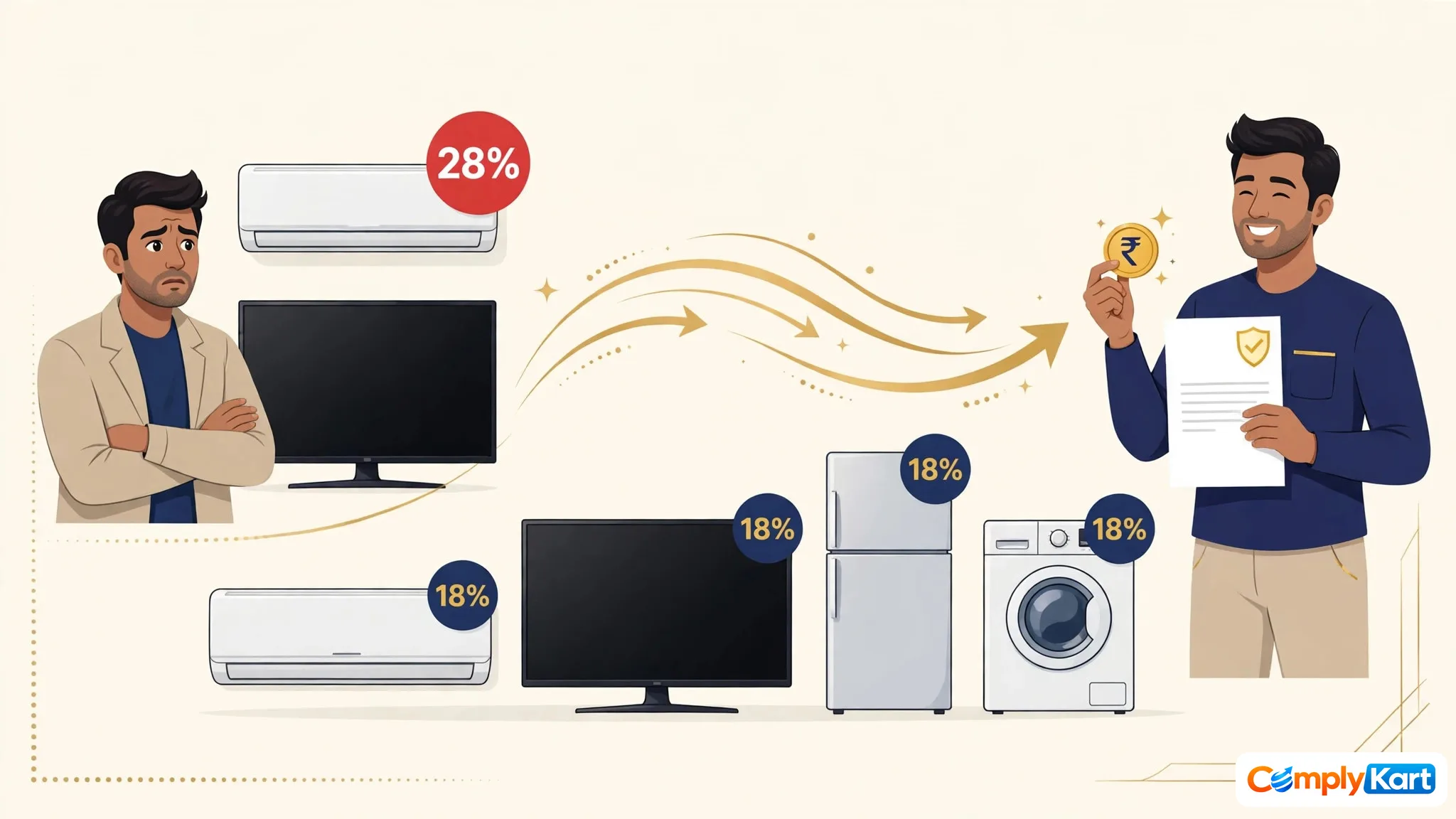
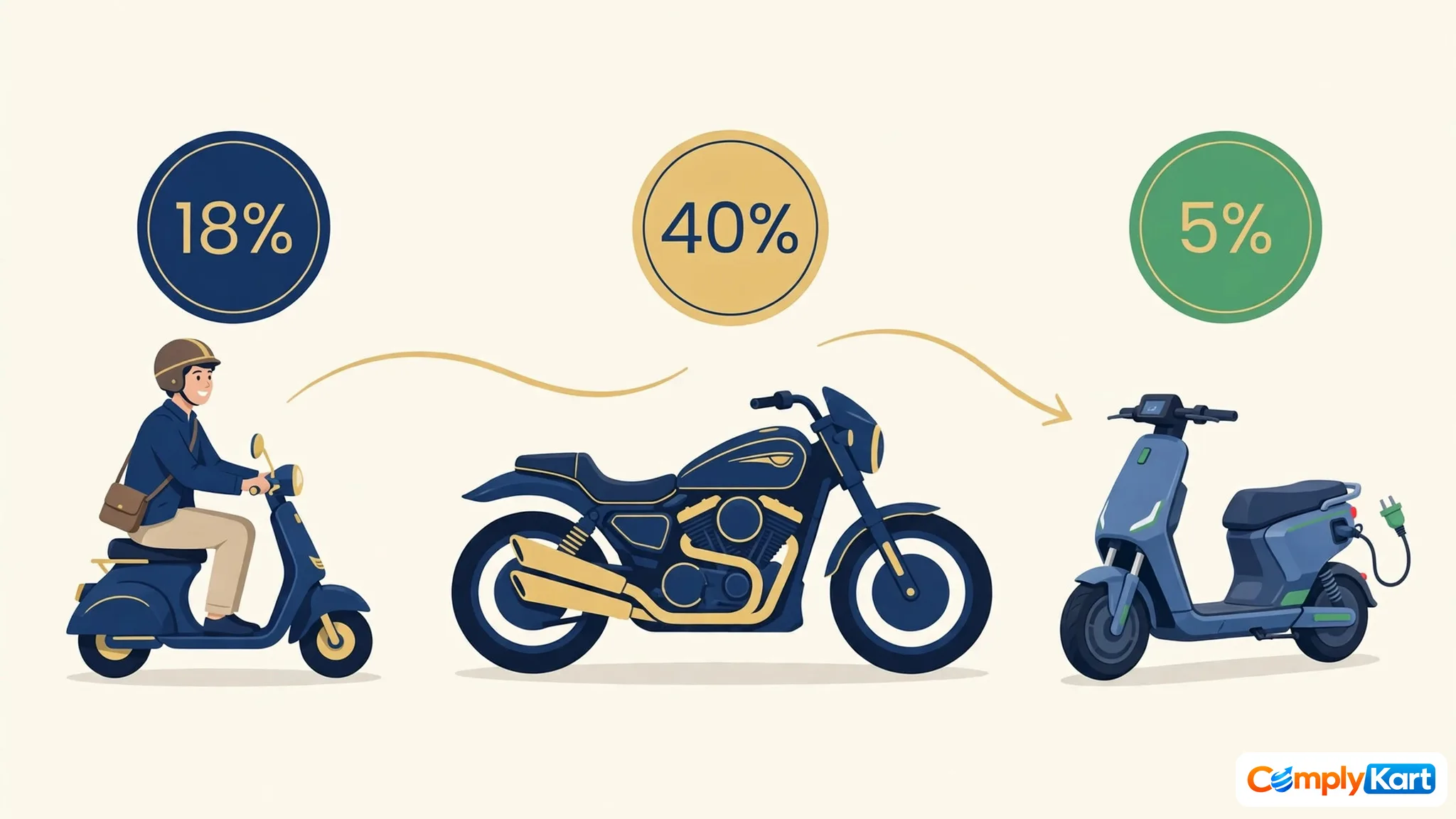
The scare around UPI and GST has now run twice — once as a pure rumour in April 2025, and once as a real framework wrapped in wrong numbers in September 2026. Both times, the merchants who lost out were the ones who acted on the forward instead of the rule. The rule, as of today, is short: no GST on your customer's payment, a small fee coming for large merchant payments, no date yet, and a credit for the GST on that fee if you are registered and your bank has your GSTIN. Keep the QR code up. Check NPCI before you believe a date. And if your ticket sizes or your registration position make the maths unclear, that is the point to sit with a professional — the GST rate changes of 2026 moved more than UPI, and the car rates and two-wheeler rates show how the same 18%-or-40% logic now runs across the board.



Comments
No comments yet — ask the first question below.
Join the discussion
Questions go straight to our expert desk. Comments appear after a quick review — no spam, no noise.