

Every week, someone walks into a bank with a sound little business — a tailoring unit, a food cart, a repair shop — and walks out because the loan conversation started with one question: "What property do you have?" MUDRA loans were built for exactly that borrower. No property, no guarantor — just a business that needs a modest amount of money to start or grow.
The short answer: Pradhan Mantri MUDRA Yojana (PMMY), launched on 8 April 2015, gives collateral-free loans to non-corporate, non-farm micro enterprises through banks, NBFCs and microfinance institutions. Loans run in four categories — Shishu up to ₹50,000, Kishore up to ₹5 lakh, Tarun up to ₹10 lakh, and Tarun Plus up to ₹20 lakh for borrowers who have repaid a Tarun loan. MUDRA itself does not lend; it refinances the lenders. Apply at a bank branch or on the Udyami Mitra portal.
What is a MUDRA loan, really?
MUDRA stands for Micro Units Development and Refinance Agency — and "refinance" is the word everyone skips. MUDRA Ltd, a subsidiary of SIDBI, does not hand money to borrowers. It supports and refinances the banks, NBFCs and MFIs that do, and those loans are covered by the Credit Guarantee Fund for Micro Units (CGFMU), which is why lenders can offer them without collateral.
Practical consequence: there is no MUDRA office to visit. Your application lives and dies at the lender. MUDRA says this plainly on its own website — it engages no agents or middlemen, and anyone posing as one is running a scam. If someone asks for a fee to "arrange" your MUDRA loan, walk away.
The four categories: which one is yours?
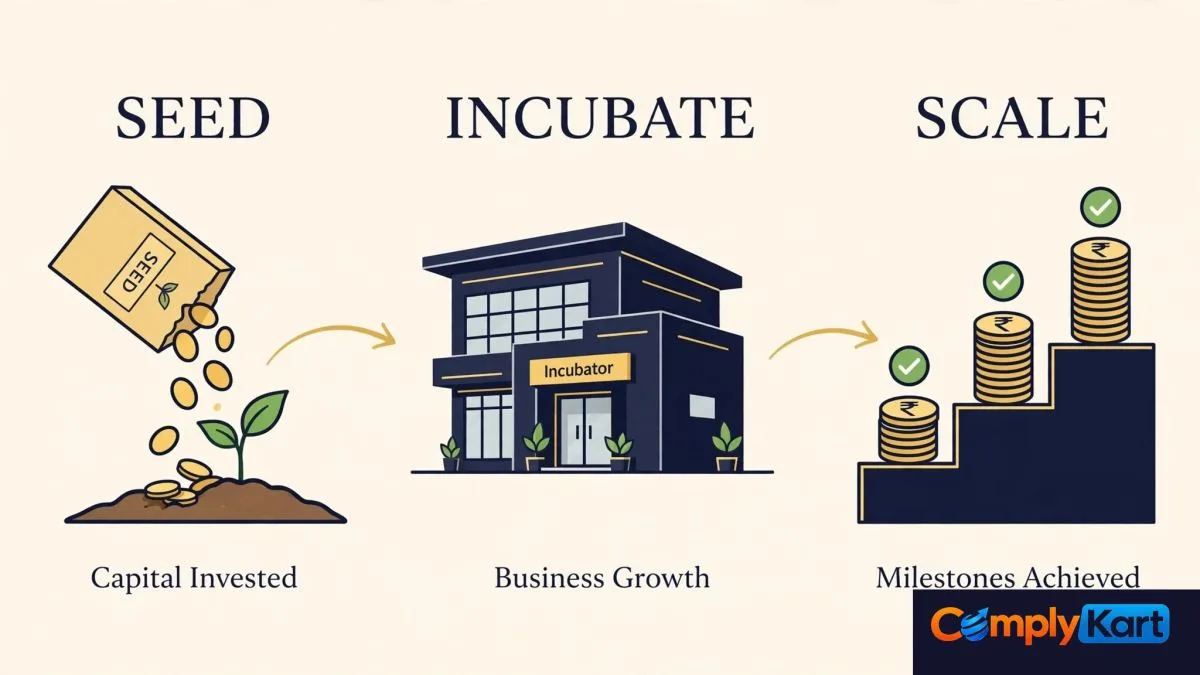
The categories work like school classes. You enter at the level that matches your business today, and your repayment record is what promotes you to the next one.
| Category | Loan amount | Who it fits |
|---|---|---|
| Shishu | Up to ₹50,000 | Starting out — first equipment, initial stock, a new cart or machine |
| Kishore | Above ₹50,000, up to ₹5 lakh | Running units that need working capital or a step-up in capacity |
| Tarun | Above ₹5 lakh, up to ₹10 lakh | Established micro units expanding — bigger machinery, a second outlet |
| Tarun Plus | Above ₹10 lakh, up to ₹20 lakh | Only for entrepreneurs who took a Tarun loan and repaid it successfully (category live since 24 October 2024) |
Tarun Plus is the newest rung, and its condition is the whole point of the design: the larger limit rewards a clean repayment history — it is not a bigger first loan. A first-time borrower asking for ₹18 lakh under MUDRA will be refused. The ladder has to be climbed.
Who can apply for a MUDRA loan?
Any Indian running — or genuinely starting — a non-corporate, non-farm micro enterprise: individuals, proprietorship concerns, partnership firms, private limited companies and other legal forms are all eligible applicants. The activity must generate income in manufacturing, trading or services; activities allied to agriculture such as dairy, poultry, fisheries and food processing are covered. Crop loans and pure farming are not — that is Kisan Credit Card territory, not MUDRA.
You do not need DPIIT startup recognition, and you do not need to be a "startup" at all. A twenty-year-old kirana store qualifies on the same terms as a two-month-old D2C brand. The hard disqualifier is your record: a borrower in default to any bank or financial institution is not eligible. New units apply with a business plan; existing units should expect the lender to ask for bank statements, and for the larger categories, financial records and income tax returns.
How and where do you apply?
Three routes, all legitimate. Walk into any branch of a commercial bank, regional rural bank or small finance bank — or approach an NBFC or MFI — and ask for a PMMY loan in your category. Or apply online on the Udyami Mitra portal (udyamimitra.in), which routes applications to lenders; MUDRA loans also surface on the Jan Samarth portal. The loan can be a term loan, a working-capital limit, or a composite of both; the working-capital part can come with a MUDRA Card — a RuPay debit card you draw against as needed.
Interest is set by the lender under RBI norms — the government fixes no MUDRA rate, and a public-sector bank and an MFI can differ by a wide margin. Compare at least two lenders before you sign. Several banks charge no processing fee on smaller loans; whatever the fee, it belongs in your sanction letter — never as cash to a person.
What do banks actually look at?
Collateral-free does not mean scrutiny-free. For Shishu, basic KYC and a believable plan for the money usually carry the file. Kishore adds business proof — registration, bank statements, some record of sales. Tarun and Tarun Plus files are appraised like real credit: financials, ITRs, and a track record the bank can verify. Housekeeping pays here. Udyam registration, a current account that reflects your sales, and GST registration once you cross the threshold all make the file easier to approve. If your registrations are a mess, fix your MSME registration and shop and establishment registration before you apply, not after a rejection.
Mistakes that get MUDRA applications rejected
- Asking for Tarun Plus money as a first loan. It is reserved for repaid Tarun borrowers. Start on your rung.
- Paying an "agent". MUDRA engages no agents. Every rupee paid to a middleman is a rupee lost.
- Applying with a default on record. A live default to any lender disqualifies you — clear it, or regularise it, first.
- A plan that doesn't match the category. A ₹40,000 Shishu application attached to a ₹3 lakh project invites a straight refusal. Size the ask to the rung.
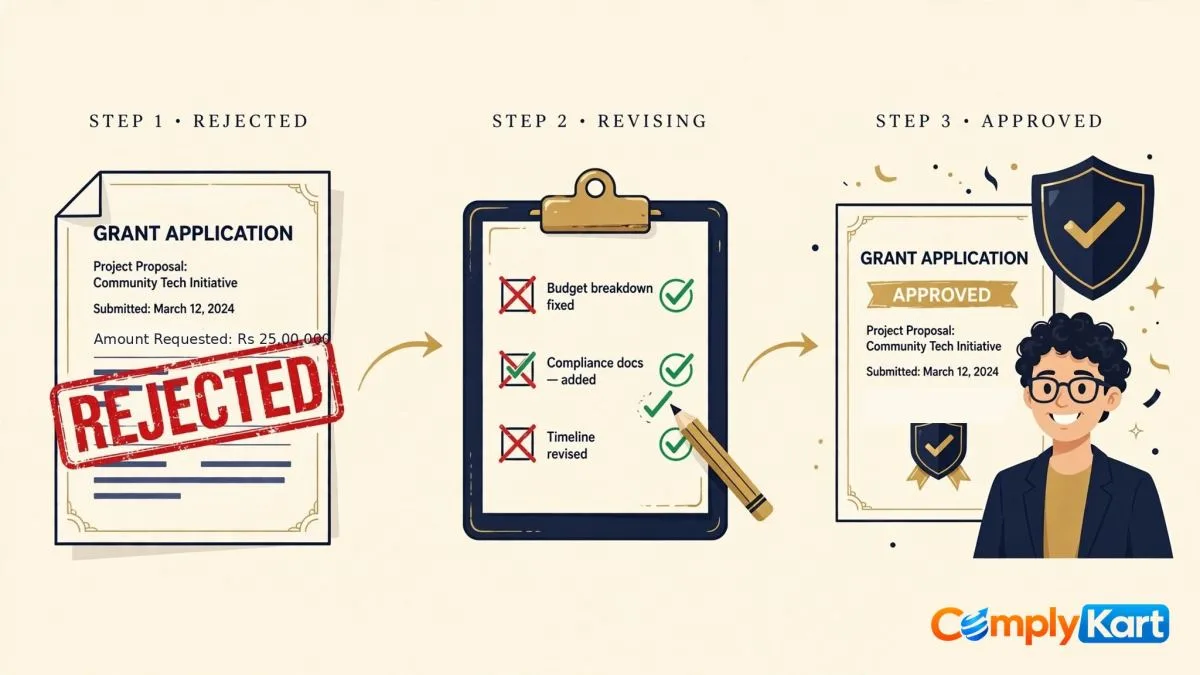
- Treating it as a grant. MUDRA money is a loan — interest, EMIs, credit-score consequences and all. Our startup grants playbook shows which schemes are actually grants, and how founders sequence the two.
If you are structuring a new venture around this first loan, get the entity and registrations right at the start — a proprietorship is fine for Shishu, but lenders read a properly incorporated business differently at Tarun level. The compliance fee calculator shows what the paperwork costs before you commit.
And if a loan is the wrong instrument altogether, our government grants advisory team can map the grant and scheme routes your startup actually qualifies for.
Frequently asked questions
Is a MUDRA loan interest-free or subsidised?
No. The interest rate is set by the lending institution under RBI guidelines, and the loan is repaid with interest like any other credit. What the scheme removes is the collateral requirement — not the cost of borrowing.
Can I get a MUDRA loan to start a business, or only for existing ones?
Both. New units are eligible, most naturally in Shishu and Kishore. Expect the bank to test the business plan harder when there is no trading history behind it.
Can a private limited company take a MUDRA loan?
Yes — companies are eligible alongside individuals, proprietorships and partnership firms, as long as the unit is a non-farm micro enterprise and the borrowing fits the category limits.
What happens if I repay early and want a bigger loan?
That is precisely the graduation the scheme wants. A successfully repaid Tarun loan is the entry ticket to Tarun Plus and its ₹20 lakh ceiling — your repayment record, not a fresh property document, is what opens the bigger limit.



Comments
No comments yet — ask the first question below.
Join the discussion
Questions go straight to our expert desk. Comments appear after a quick review — no spam, no noise.